
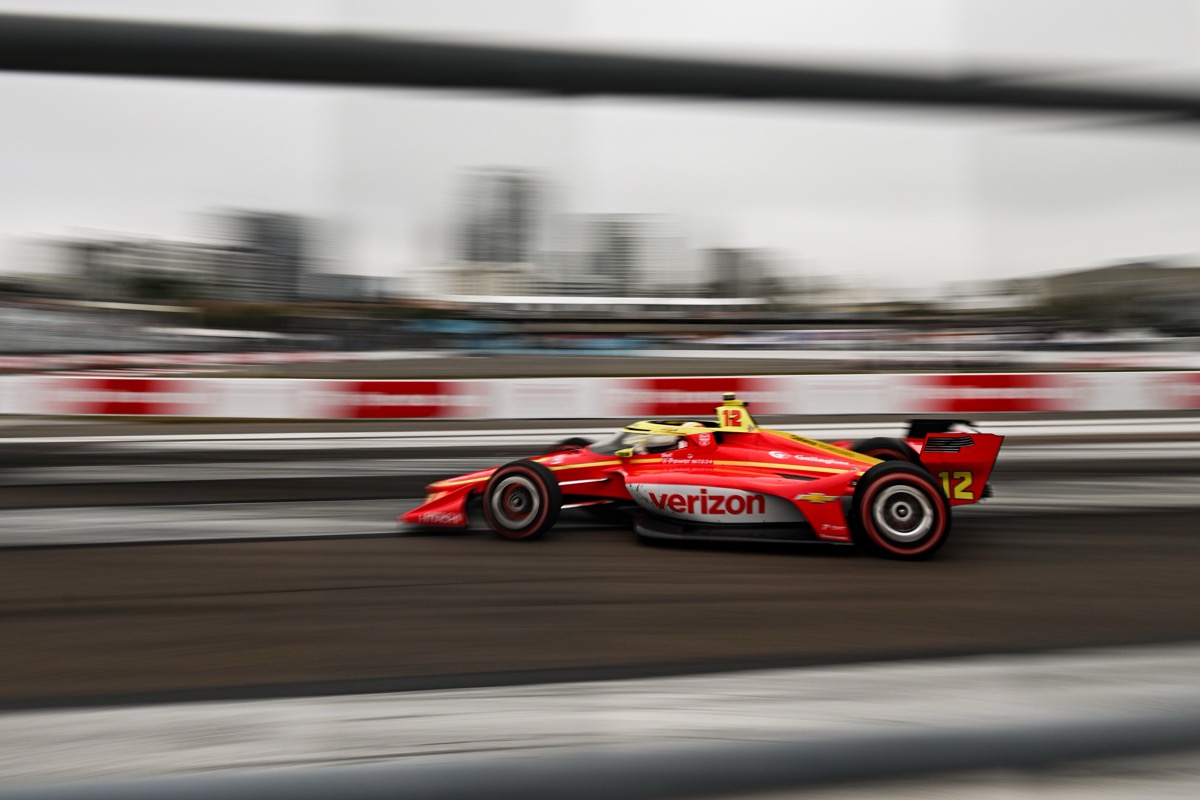
For about twenty years, since the arrival of road and street circuits in what was then called the Indy Racing League IndyCar In the Series, qualifying has seen few changes on these particular tracks, with a Q1 where the field is divided into two groups, followed by a Q2 with the six fastest drivers from each group, and a Q3 with the six fastest times from Q2. The durations of the different sessions have evolved over the years, but the basic principle has remained the same, very close to the format of the Formula 1.
For the inaugural Arlington Grand Prix, IndyCar decided to modify its system, continuing Q1 and Q2 as usual, but changing the format of Q3 so that the six drivers in contention would take to the track one after the other, each against the clock. Thus, the sixth-fastest time in Q2 would start their lap, followed by the fifth, and so on until the fastest time in the second part of qualifying.
The change will also serve as a test, with the championship evaluating the feasibility of using the same system at other road course and street circuit races, should it prove successful in Texas this weekend. The Arlington race is very important for IndyCar, given that it is organized in partnership with the Dallas Cowboys (American football) and the Texas Rangers (baseball). The track layout will even connect the stadiums of both teams.
“I’m thrilled with this opportunity, which will allow us to place more emphasis on the teams and individual drivers, and I thank FOX Sports for granting IndyCar an expanded broadcast window to accommodate this change.”said IndyCar president Doug Boles. “This format will allow competitors and sponsors who have secured a spot in the Firestone Fast Six to receive the full broadcast attention during their qualifying attempt. It will also allow viewers to see what makes IndyCar qualifying so competitive and the perfection required to reach the front of the grid and earn the right to lead the field to the green flag on race day.”

FOX, the championship’s broadcaster since the start of the 2025 season, became an IndyCar shareholder at the end of last season. This format change for Arlington is therefore one of the innovations being tested to improve the television product broadcast by the American network. If the new format cannot be implemented due to weather conditions, IndyCar reserves the right to revert to the previous Q3 format or to use the Q2 times to determine the starting grid.
ALSO READ > “We weren’t the best”: With clear-sightedness, Josef Newgarden leaves Phoenix a winner