
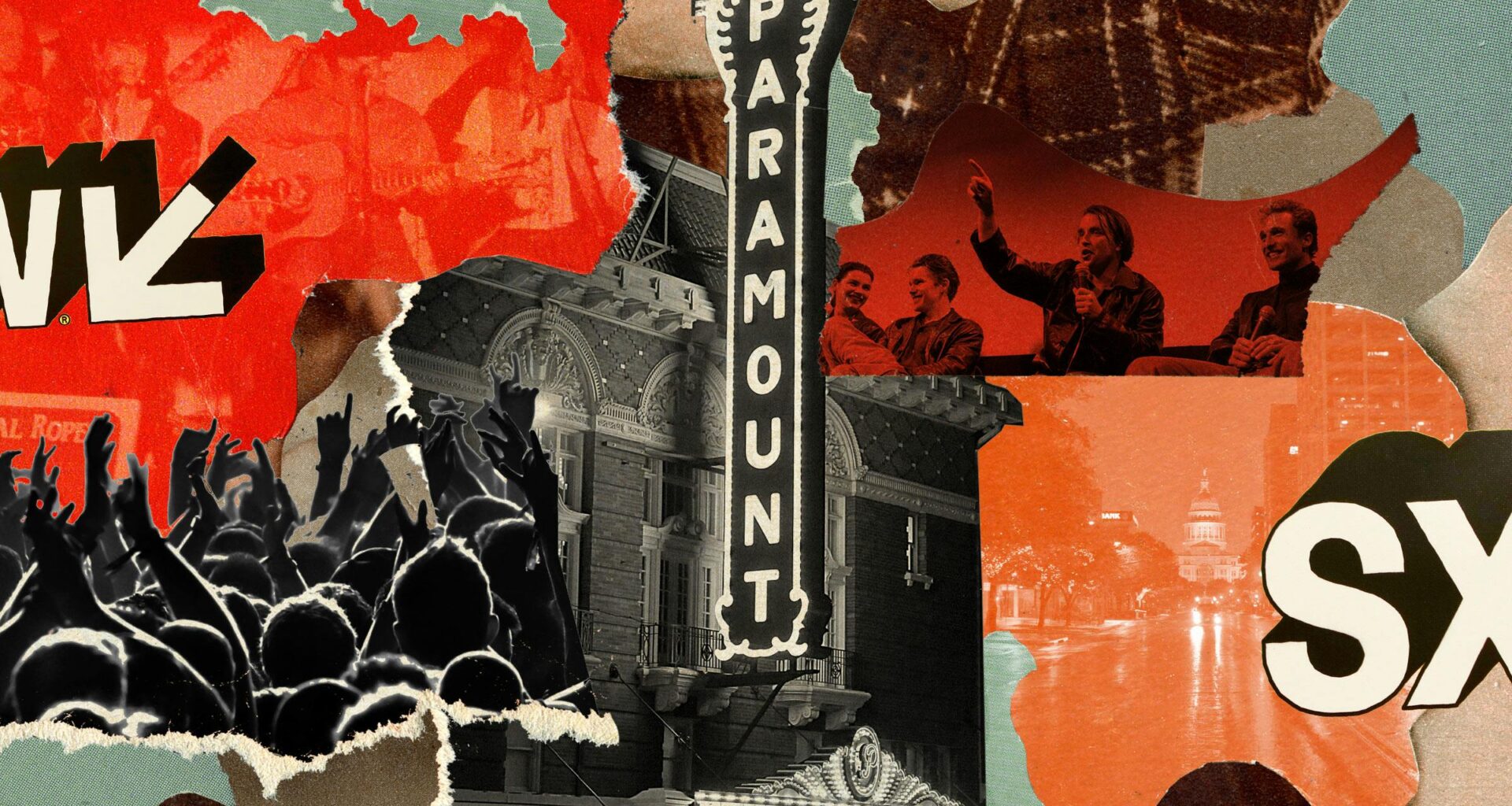
In the days and weeks before the City of Austin pulled the plug on South by Southwest in 2020, the event’s leaders cycled through the five Kübler-Ross stages of grief. Most of that time was devoted to the first: denial.
To be fair, most of the country was doing likewise during the earliest days of the COVID-19 pandemic. President Donald Trump seemed unconcerned. Severe lockdowns had begun in China and Italy, and some international events had been canceled, but American institutions were mostly still humming along.
And SXSW had very much become an important institution, one with a global reputation. Each year it brought together attendees from all corners of the world for conference sessions, concerts, and film screenings. Mark Zuckerberg, Barack Obama, and Bruce Springsteen had all keynoted the event; Drake, the Foo Fighters, and Metallica had played sets; and Bridesmaids, A Quiet Place, and Everything Everywhere All at Once had all had their world premieres there.
Hugh Forrest, then SXSW’s chief programming officer, was better aware than many Americans of what was happening overseas, as the novel coronavirus and attendant lockdowns spread. His wife, who is from China, had traveled there to visit family in mid-January and ended up stuck, unable to get a flight out. Yet even he couldn’t fathom the possibility that one of the nation’s premier annual cultural events might be called off. “We had been meeting with Austin Public Health,” he recalls. “They were saying, ‘You’ll be fine. Just have lots of hand sanitizer.’ ”
Even as the news worsened, with the first confirmed U.S. cases and deaths, Forrest and his colleagues inside SXSW Center, the company’s newly built downtown-Austin office tower, had incentives to remain in denial. If they believed their own economic-impact reports, the event was worth hundreds of millions of dollars to Austin each year. If they called it off, would they be responsible for returning the tens of millions of dollars that attendees had paid for badges? And millions more to sponsors? Would their insurance policy cover such costs?
Alongside denial came the second stage of grief: anger, expressed through defensiveness. A senior SXSW staffer told me that organizers were receiving daily calls from reporters asking whether it was wise to gather tens of thousands of international visitors, and would push back. Forrest remembers being particularly annoyed by a conversation with one author and entrepreneur, who was among the future-facing speakers who had helped build SXSW’s reputation. “He had been talking to his doctor friends, and [they were saying] this was much worse than anything else,” Forrest told me. “On the one hand, I like him a lot. On the other hand, he’s kind of a know-it-all.”
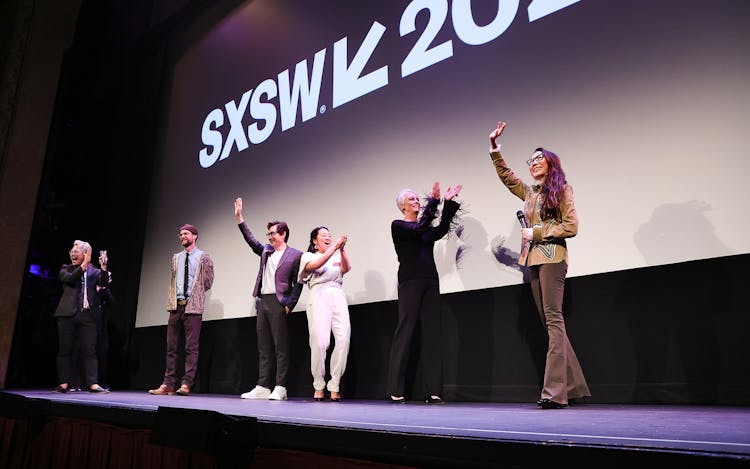 Cast members of Everything Everywhere All at Once attending the film’s premiere at SXSW in 2022, at the Paramount Theatre, in Austin. Rich Fury/SXSW via Getty
 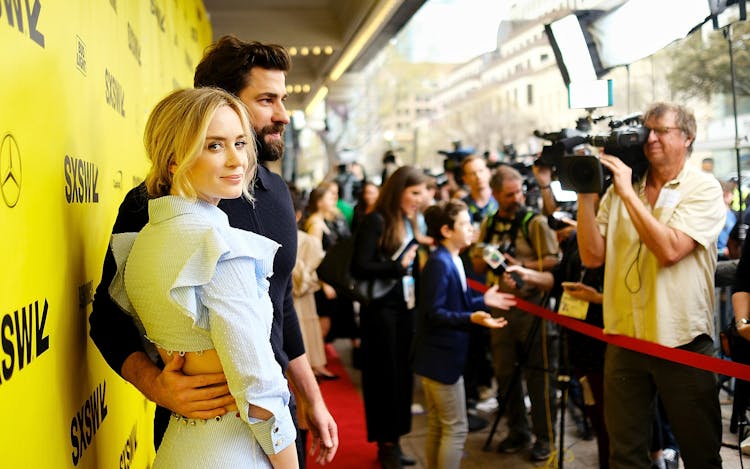 Emily Blunt and John Krasinski on the red carpet for the premiere of A Quiet Place at SXSW in 2018. Matt Winkelmeyer/SXSW via Getty
As speakers and performers began pulling out, Forrest and his colleagues shifted to bargaining. They convinced themselves they could pull off the last major U.S. event before the pandemic forced a nationwide shutdown. Conference sessions and music showcases were shuffled into different venues and spots on the schedule to fill the sudden programming gaps. But those attempts fell apart as the number of cancellations rapidly grew.
By the first week of March, it became clear that SXSW couldn’t bargain its way out of a global crisis. There was a confirmed case of the coronavirus in the Houston area. Depression, the fourth stage of grief, set in as organizers grappled with the implications.
SXSW leaders spent days in meetings—with their own staff, with city public health officials, with sponsors and speakers and other stakeholders—trying to figure out how canceling the event would even work. It was far more complicated than simply making an announcement. “Lots of stuff had arrived in town,” recalled Nick Barbaro, the festival’s cofounder. Shipping crates full of exhibit materials were piling up at the convention center. “We had to tell them not to accept anything more—‘Just don’t even take it in, because if we do, we have to figure out how to send it back. Keep it on the truck, so they have to take it away.’ ”
Logistics were just one part of the problem. The bigger—downright existential—issue was financial. If SXSW leaders were ever truly going to reach the acceptance stage, it was important to them that the city, not the company itself, cancel the event. That would place them on firmer legal ground in sticking to their no-refund policy, filing a claim with their insurer, and declining to return sponsorship money. “It was clear that we weren’t going to do the event,” Barbaro said. “But we needed to have the city tell us that we couldn’t.”
So Barbaro, Forrest, and other SXSW leaders met with Austin officials and public health experts at City Hall on March 6, less than a week before the event was set to begin. The city had already decided SXSW must be cancelled, on the advice of the area’s major hospital groups and Dell Medical School’s top infectious disease specialist. At a press conference that afternoon, Mayor Steve Adler announced a local state of disaster, which gave officials the necessary authority to call off SXSW.
SXSW staffers were devastated to learn that the work they’d put in over the previous year would not come to fruition. “People were crying,” Forrest recalled.
SXSW Edu, a smaller, education-focused conference that typically starts a few days before the main festival, was called off with only a weekend’s notice. “There were people who had left Europe on a flight and everything was good. They got off the flight to Houston or Dallas and realized that the event had been canceled,” Forrest said. “They had been given verbal assurances that it was going to happen.” Bars and restaurants and hotels that were counting on a revenue boost from the tens of thousands of visitors were similarly left out in the cold.
The lasting effects of 2020 irrevocably transformed SXSW. The company’s insurance policy didn’t include coverage in the case of a disease outbreak or a declaration of a local state of disaster. In the immediate aftermath of the cancellation, staffers had been assured there would be no layoffs, but days later, a third of the company’s employees were let go.
Having no financial choice but to stick to its no-refund policy, SXSW offered badge holders—who’d paid as much as $1,600 to attend—deferred admission to a future event instead of returning their money. As a consequence, a class-action lawsuit was filed against SXSW the following month. (The suit was eventually settled, with plaintiffs who opted not to accept the deferral receiving a 40 percent refund.)
The headwinds grew even stronger in 2021, after the still-raging pandemic limited SXSW to hosting a virtual event. Ownership sought an outside investor in order to stay afloat. Los Angeles-based Penske Media Corporation bought a 50 percent stake and eventually secured a controlling interest. Subsequent editions of the festival limped along, with various factors, both internal and external, decreasing the scale, scope, and perception of the event.
Then, shortly after SXSW 2025, Penske forced a seismic shift. Several of SXSW’s longtime staffers, including Forrest, were fired. It was an ugly breakup; during an all-staff meeting announcing the changes, staffers were told that Forrest had “concluded his role” atop the festival; Forrest took to the media to clarify that he had not left then company by choice. A secret recording of the meeting was leaked, and the company found itself split between longtime employees loyal to Forrest and the founders, and those eager for an overhaul by the new out-of-state ownership.
Decades of institutional knowledge, from those who had helped to build SXSW’s reputation, was discarded. Now a new crop of leaders will attempt to revitalize an event whose attendance, revenue, and cultural impact have declined significantly.
What was a thriving business now faces unprecedented challenges, many of which will shape the 2026 edition that kicks off March 12. The question of whether SXSW will survive long-term has grown steadily louder in the post-pandemic years, not quieter.
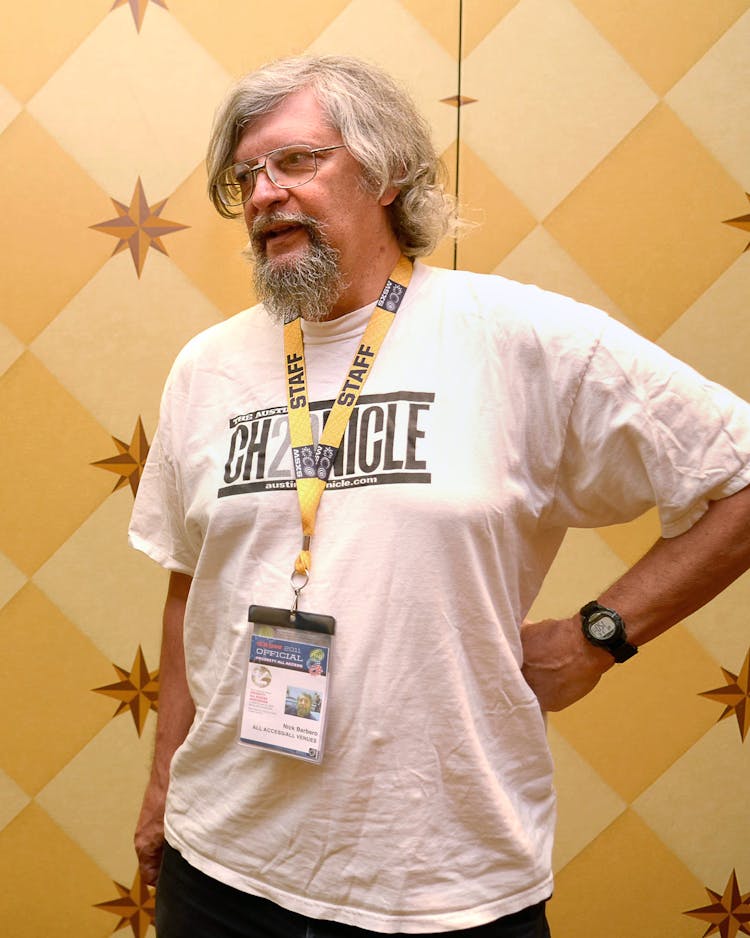 Cofounder Nick Barbaro at SXSW in 2011. Jesse Knish/Getty
 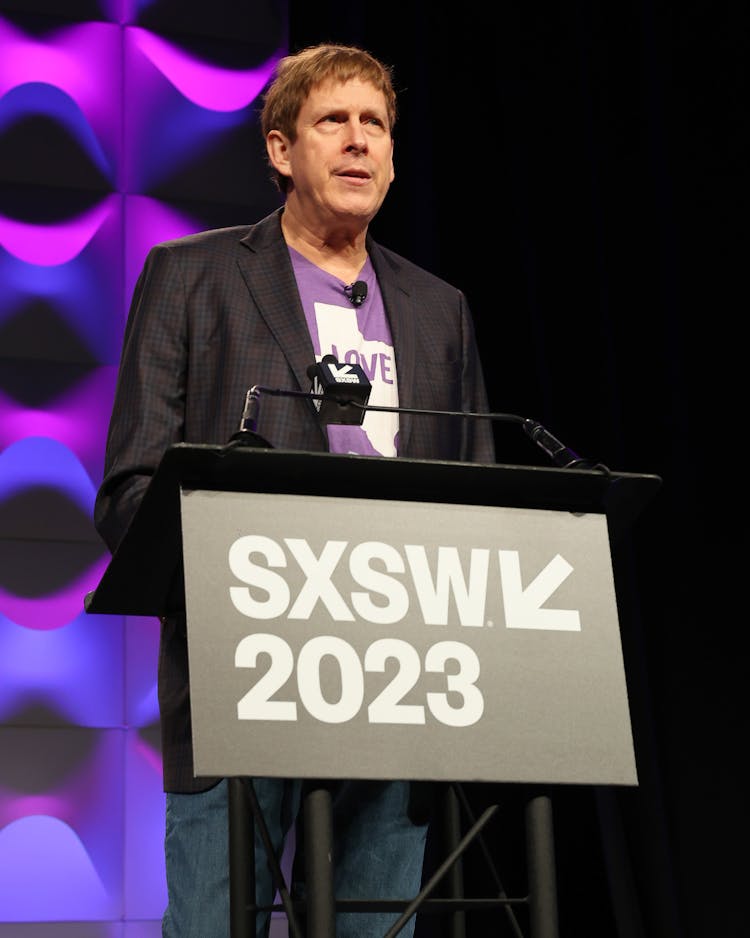 Hugh Forrest, SXSW’s former chief programming officer, speaking at the event in 2023. Diego Donamaria/SXSW via Getty
South by Southwest wasn’t designed to be what it became. It was dreamt up by band managers Roland Swenson and Louis Jay Meyers, along with the Austin Chronicle’s former editor, Louis Black, and publisher, Nick Barbaro. Modeled on a similar event in New York, it was intended to be a regional gathering for music-industry professionals. Artists, managers, and club owners could come together to build connections, learn from one another, and work out their differences. It would be part conference, part concert festival.
The first edition, in 1987, lasted four nights, with performances from 177 acts at fifteen clubs in and near downtown Austin. Its earliest years were short on headliners, though keen-eared listeners had a chance to discover future chart-toppers, including the Gin Blossoms, the Dixie Chicks, and Billy Ray Cyrus (his name misspelled in the program). Those modestly sized events fit the relatively sleepy college town that Austin then was—the nation’s twenty-seventh-largest city in 1990 (near the top ten today), with a population of 465,622 (now about 1 million).
SXSW and Austin grew in tandem. It’s difficult to tease out the distinction between the parallel booms that both experienced in the subsequent decades. “South By defined our city, and it made our city a better place,” said Alan Berg, a former TV-news journalist who directed a 2011 documentary about the event. “It brought all these artists here who decided to stay here. That’s why I think it’s so important to our city’s identity.”
In 1994, with the music festival a proven success, a Film and Multimedia track was launched. The following year, Film spun off on its own. Multimedia, which started with an emphasis on CD-ROM games—“It was the height of technology at that point,” Barbaro said—soon broadened its scope to encompass all sorts of innovations and was renamed Interactive. Before long, registrations for Interactive badges exceeded those for Music and Film. The three-track approach proved to be SXSW’s secret sauce.
Richard Garriott, an entrepreneur and investor who made his fortune as an Austin-based video game developer in the eighties, has attended or spoken at SXSW almost every year since it started. In his view, the cross-pollination of industries didn’t just make SXSW fun; it made it essential. Where other tech events, like Las Vegas’s Consumer Electronics Show or San Francisco’s Game Developers Conference, were narrowly focused, SXSW was expansive.
“What South By did so well is, it was multidisciplinary,” he said. “Everybody around the country saw the value in this cross-discipline, creation-focused gathering, which is still to a large degree unique to South By.” Tech leaders could learn what advances would be useful in the film industry; filmmakers could find the soundtrack to their next project playing on Red River Street; bands could learn about apps that could help audiences discover their music.
Thousands of attendees began shelling out four figures for “platinum” badges to join the party in Austin each March—many on their employers’ dime. Conference sessions, mostly panel discussions and keynotes, fostered conversations about the shape of things to come. Festival concerts and screenings offered the chance to see and hear that fast-arriving future. An attendee in 1999 could watch Tom Waits perform live, see Matthew McConaughey and Woody Harrelson at the premiere of EDtv, and attend an address by Mark Cuban—all while enjoying tacos and Austin’s temperate spring weather. It was an experience unlike any cultural happening anywhere else.
That irresistible combination brought huge amounts of attention—and money—to Austin. Kirk Watson, who served as Austin’s mayor during the boom years between 1997 and 2001, and who returned to the role in 2023, believes those things transformed the city. “When I was mayor the first time, Austin was becoming an international city,” he told me. Owing in large part to the festival, he said, “Austin today is an international city.”
Musicians, filmmakers, and tech companies came to view SXSW as an important networking opportunity and vital to their promotional plans. A nascent social media platform called Twitter famously broke through in a big way at SXSW in 2007. An unsigned trio of sisters playing music under their family name, Haim, caught national attention after playing in 2012. Destin Daniel Cretton, the young director of the film festival’s 2013 Grand Jury and Audience Award winner, Short Term 12, just wrapped production on the new Spider-Man movie.
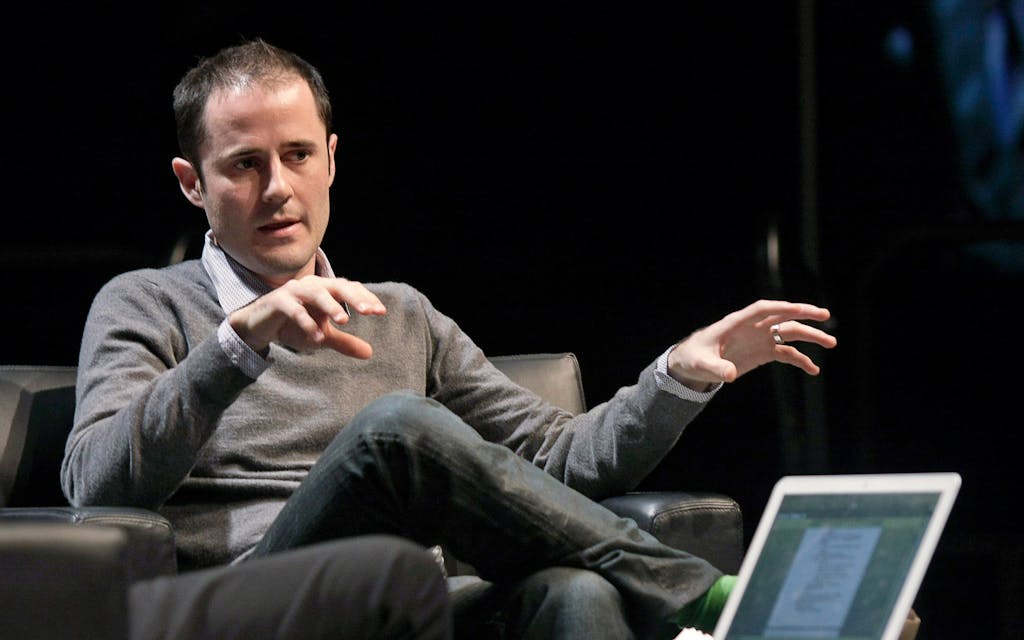 Former Twitter CEO Evan Williams speaking at SXSW in 2010.Jack Plunkett/Bloomberg via Getty
Brands like American Express, Apple, Fiat, Levi’s, or Samsung cut huge checks to associate themselves with the pop stars, screen idols, and tech titans who packed fans into East Austin warehouse shows, the Paramount Theatre’s balcony, or the Austin Convention Center’s Ballroom D. Lady Gaga, infamously, was scheduled to perform inside a giant Doritos vending machine in 2014. (The city refused a permit, and she played on a Doritos-branded stage at Stubb’s Bar-B-Q instead.) Corporate dollars and SXSW’s aura of cool came to work in sync, enjoying a symbiotic relationship.
The benefits trickled down into the pockets of servers, bartenders, caterers, pedicab drivers, restaurant owners, neon sign-makers, stagehands, sound engineers, folks who put their spare bedrooms up on Airbnb—you name it. SXSW commissioned annual reports to remind the city how much the event infused into the local economy, with those estimates exceeding $300 million in some years. Even allowing for the fact that the big numbers trumpeted in such studies are often inflated, it’s hard to argue that the financial benefits didn’t work out well for many.
During the era of Peak SXSW—roughly from 2011 to 2019, the year the festival drew a record 86,643 attendees to its official events—it felt like the good times might never end.
The timing of the COVID-19 pandemic—first hitting the U.S. in January 2020, with vaccines not widely available until spring 2021—was particularly unkind to an event that happens every March. The 2021 virtual event “went pretty well, but financially, it was not a whole lot of revenue,” Barbaro said. Two straight years of next-to-no income was “not really survivable without outside investment.”
So in April 2021, SXSW’s founders sold half of the company to Penske Media Corporation, led by Jay Penske, scion of the transportation-services company that shares his name. SXSW joined a portfolio that also includes Variety, Rolling Stone, and the Hollywood Reporter, among other entertainment and media properties. “We met with Jay and liked him,” Barbaro said, noting that there were four finalists when they solicited bids. “He seemed to get what we were doing and appreciated the event that we had built.”
The Penske deal didn’t resolve the challenges SXSW continued to face. Live events of all kinds failed to return to the attendance levels they enjoyed prior to the pandemic. In 2022, the event drew fewer than 42,491 attendees, a drop of 51 percent from the pre-pandemic height.
The caliber of sponsors was notably diminished as well. Instead of blue-chip consumer brands, cryptocurrency-related start-ups were everywhere. A parking lot across from the Austin Convention Center that in past years had hosted big, branded parties—like Subway giving away flatbread pizzas—instead housed a gallery of non-fungible tokens, NFTs. In lieu of the likes of Samsung bringing Prince to town, something called Blockchain Creative Labs got Dolly Parton to perform at ACL Live, streaming the show on the blockchain to promote “an audience-centric Web3 experience” at which one could purchase “official and certified Dolly NFT collectibles.” Despite a brief hype bubble, NFTs haven’t proven to be a Twitter-sized success.
In 2024, SXSW faced a backlash for accepting the United States Army as one of its primary sponsors. Dozens of performers withdrew, including marquee acts such as New York R&B singer Yaya Bey and Irish rap group Kneecap, in protest of U.S. policy toward Israel and its war in Gaza. SXSW’s relationship with artists was already strained by the years it had spent paying bands a pittance. Musicians had been willing to put up with the pay when they could also make cash playing for the unofficial showcases hosted by sponsors or network with bigger acts who might boost their careers, but those opportunities were greatly reduced post-pandemic.
The event’s cachet isn’t what it used to be either. “In the old days, long before the age of tech bros, when the tech people were the nerds, we were telling them, ‘Hey, you can be on the same stage as your favorite rock star or your favorite movie star,’ and that was a compelling thing to them,” Forrest said. “That was part of the growth pattern from 2010, and I’m not sure it’s as relevant now.” Big Tech leaders have come to see themselves as stars in their own right, so the draw of standing alongside celebrity artists has been significantly reduced.
It also doesn’t help that pop, rock, and hip-hop megastars like Jay-Z and Lady Gaga have largely stopped performing at SXSW, as corporations stopped dropping big bucks in their bank accounts to bring them to Austin. That has had ripple effects throughout the Music track. Some industry insiders told me they no longer see a clear benefit to attending SXSW. “Seven years ago, the [label] presidents stopped coming; six years ago, the vice presidents stopped; five years ago, the senior execs stopped,” one artist manager told me. “Then the pandemic happened, and nobody I needed to talk to was there.”
In other words, SXSW no longer matters in quite the way that it did when it made Austin, as Alan Berg puts it, “the center of the cultural universe.” Back in 2012, the annual economic -impact report, commissioned by the event’s organizers, boasted that “for most other cities, reaching such a massive audience is possible only by hosting a mega-event such as the Olympics, the World Cup, or the Super Bowl,” suggesting that those events are “fleeting,” while SXSW is forever. But what if it isn’t?
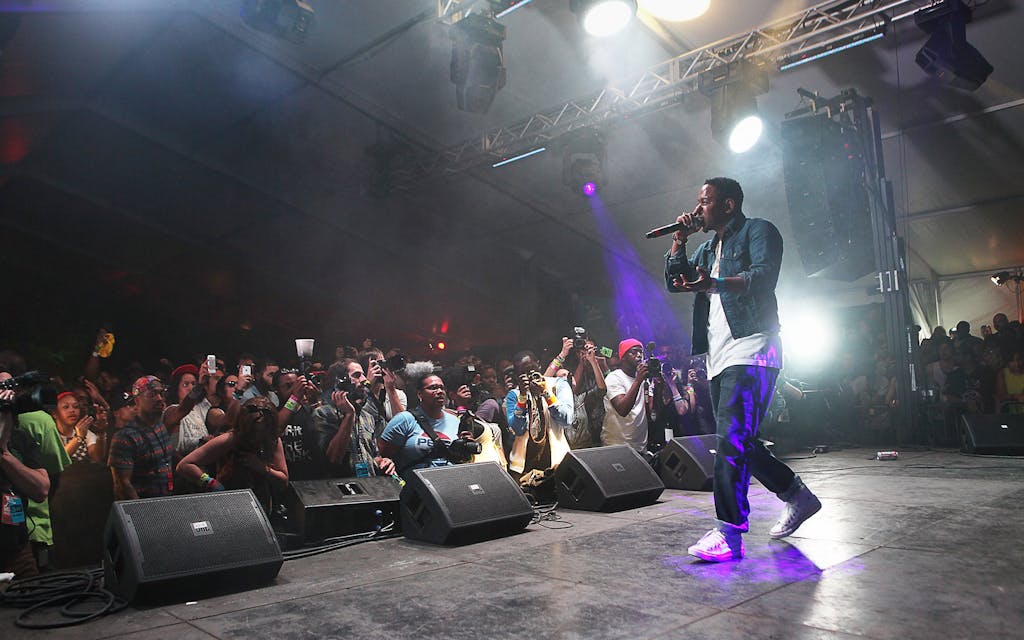 Kendrick Lamar performing during SXSW in 2012.Roger Kisby/Getty
It’s 2025, and the lineup for SXSW is surprisingly stacked. The mix of talent ranges from young acts scrambling to play as many sets as they can to headliners performing for crowds who lined up around the block hours before the doors opened. Among the clear standouts are genre-bending, rap-soul-metal hybrid the Color 8, from Phoenix; the post-punk fury of rising Irish rockers Gurriers; and high-profile DJ sets from English actor Idris Elba and neo-soul icon Erykah Badu, the pride of Dallas.
Many fans at these shows spent the day at future-casting conference sessions. Ben Lamm, founder and CEO of Dallas-based Colossal Biosciences, spoke about his company’s efforts to clone and reintroduce extinct species. Wikipedia cofounder Jimmy Wales engaged in a panel discussion at a local brewery about how to build trust in an age of information overload. There have been high-profile film premieres too, with stars like Orlando Bloom, Tom Hiddleston, and Bryce Dallas Howard in attendance. If not quite the vibrant chaos of SXSW in the mid-2010s, an energetic buzz still surrounds the event.
As I leave my hotel each morning, I’m certain that attending SXSW was worth the flight to London.
International expansion began soon after Penske bought into the ownership. Last year was the first event in London and the third in Sydney, Australia. There were fewer tacos, and the festival footprint was significantly smaller in both cities, which dwarf Austin. But both offered experiences not too far from what attendees have historically enjoyed in Texas.
SXSW licensed its branding, as well as the expertise of the Austin staff, to the overseas partners who run each of these events. It’s a new revenue stream for the company, one that it’s looking to grow, though the effort suffered a setback earlier this year when the government of New South Wales, which funded SXSW Sydney, called off future editions. A sources at SXSW in Austin suggested that the decision was partly motivated by politics, and that an Australian government putting on an American-branded event would play differently in the wake of recent Trump administration actions than it had previously.
“We have talked about having four around the world, and not more than four,” said Jenny Connelly, who took the helm of SXSW on an interim basis after Forrest was fired. “This isn’t like the Hard Rock Cafe. They’re not going to be in every airport.” Ideally, she said, they’d have the spring event in Austin, the summer edition in London, and fall and winter events elsewhere.
Connelly told me that the company received bids from several European countries before settling on London. She described the process as a “mini Olympics,” with strong contenders in Copenhagen and Athens. When I asked about a rumor I’d heard from former SXSW employees, about a forthcoming Riyadh edition, she said Middle East locales are interested, but Saudi Arabia isn’t among them.
She confirmed that a bidder from Brazil has also expressed interest. This raises a question, since Brazil ranks among the top countries sending visitors to Austin each March. Part of the appeal of SXSW has been that it’s a chance to see, meet, and listen to folks from all over the world in one place. About one quarter of SXSW badge holders typically come from abroad. Do the international editions risk cannibalizing the audience for the main event? If there’s a SXSW São Paulo, do Brazilians still trek to Texas?
“We talk about that,” Connelly acknowledged. “It’s a hypothesis, but businesses that are afraid of their own scary hypotheses are businesses that atrophy. If you’re afraid of something so much that you don’t change, then you’re a business that’s in trouble.”
Shortly after SXSW concluded last year, the Austin Convention Center was demolished. A bigger replacement is under construction, but it won’t be ready for a few years. The event’s leaders had no choice but to reimagine the 2026 edition.
Deprived of the building that had been the event’s home base since 1993, the organizers opted for three “clubhouses”—separate hubs for the Music, Film, and Innovation (rebranded from Interactive) badge holders—much like the similarly decentralized approach in London. They also cut the offerings down from nine days to seven and slightly lowered badge prices.
In the optimistic vision of Connelly and SXSW’s other new leaders, the changes foster a rejuvenated event, with the new team free of old baggage and able to rebuild relationships that were strained by things like the Army sponsorship. The shorter schedule and loss of the convention center become assets, with the condensed time frame and use of hipper, smaller downtown hubs imbuing the event with a scrappy, start-up energy appreciated by newcomers and old-timers alike. “We might not go back in that convention center,” Connelly said. “I know it’s going to be gorgeous, but these clubhouses are going to be better than shoving a lot of people in a big building.”
There are reasons to buy into this version of what’s to come. SXSW’s film festival has become one of the most important film festivals on the continent. Its reputation has helped programmers attract both Oscar contenders and summer tentpoles. Film’s recent successes can benefit the other tracks too. This year, documentaries about Charley Crockett and Lainey Wilson will bring both superstars to town for concerts and screenings.
The hope is that all of that results in headlines in the entertainment press declaring “SXSW is Back!” (That’s especially plausible if the publications are Variety, Hollywood Reporter, Deadline, Billboard, and Rolling Stone—all Penske outlets.) As the wish-casting continues, a roaring 2026 success inspires former sponsors, who had cooled on the event, to make room again for SXSW in their budgets.
“I don’t even want to say if it comes back. When it comes back, because I believe that everything is cyclical,” Brian Hobbs, SXSW’s new head of music, said of the beleaguered portion of the event he now oversees. “I’m already seeing things starting to take shape this year that weren’t taking shape in 2022 and 2023, because people were spending money differently coming out of the pandemic.”
A more skeptical projection of SXSW’s future might anticipate that the loss of the convention center will silo the three tracks—Film, Music, and Innovation—away from each other. Unlike in recent years, badge holders won’t have access to events outside their designated track. (Organizers say the change will ensure badge holders won’t have to compete for limited space with folks primarily attending for another discipline.) This could leave some attendees feeling as though they’re being upsold—required to buy the most expensive, all-access platinum badge—to marinate in the event’s secret sauce. It’s not hard to imagine tech workers staying home without the draw of the SXSW entertainment options.
Outside factors could further depress attendance numbers. The Trump administration’s aggressive immigration enforcement could make international visitors wary of a trip to Texas. Even if the film festival maintains its industry standing, it could suffer as the theatrical movie business contracts in the face of diminishing box office returns. In this timeline, sponsors desert en masse. Penske, deciding the magic is gone in Austin, decides to move the whole thing to Las Vegas and use its Rolling Stone-branded hotel as the hub. (Connelly was dismissive when I asked about the possibility of SXSW ever leaving Austin. “That made me laugh,” she said. “Austin is South By, and South By is Austin.”)
I asked Jenell Moffett, an executive at the Downtown Austin Alliance, what it would mean to the city if SXSW didn’t make it. She focused first on the lost revenue for restaurants, shops, and hotels. Then she spoke to larger implications. “The bigger loss is the brand erosion,” she said. “ ‘What happened? Is Austin not as cool as it needs to be to attract something like this? Are we changing? Who are we?’ ”
Such fears aren’t universally shared. When I asked Alan Berg what he thought Austin would look like in a SXSW-less future, he was surprisingly chipper. He said the event has already changed the city in indelible ways, thanks in part to transplants who relocated after being inspired by their SXSW experiences, when they came to see Austin as, “this locus, where you had the people who were at the front edge of what was going on in technology, music, film, sports, fashion, the finance industry, all in the same place,” he said. “South By is intertwined with the spirit of who we are, and that’s not going to go anywhere.”
And even if SXSW does collapse under all of this weight, Berg speculates there’s enough new wealth and talent in the city that someone—like, say, Forrest—could wrangle investors and start something that fills the gap. (Forrest wouldn’t comment about such possibilities.)
The promise of SXSW—even if it was always something of a myth—is that it’s the place where the future is happening now. But for every artist who blows up at SXSW and goes on to be a Kendrick Lamar–sized superstar, for every filmmaker who parlays a short-film premiere at SXSW into directing an Oscar-winning feature, for every technology that launches at the event and goes on to change the world, there are many others that peaked with a single, unremarkable showcase or screening or scarcely-attended panel. Those successes and failures, collectively, tell the checkered story of SXSW. The overwhelming majority of them failed to predict anything that looks like what actually came to pass.
The people running SXSW may know better than anyone that assembling the smartest people from across the cultural spectrum can’t necessarily tell you what’s going to happen next. When it comes to their festival’s fate, they’ll have to wait for the future to come one day at a time, like the rest of us.
Featured image credits: downtown Austin: Jeff Newman; logo: Hutton Supancic/SXSW via Getty; Paramount: Gary Miller/FilmMagic via Getty; Linklater and McConaughey: John Anderson/Getty; Joe Ely and friends: Ebet Roberts/Redferns via Getty
Read Next