
In his cross-examination of expert witnesses, criminal defense attorney Miles Brissette is often unrelenting in his pursuit of information on matters of procedure.
Brissette’s questions on process routinely trip up unprepared witnesses.
With a firm grasp of the fine points of cellphone extraction, arson investigation and other technical subjects, Brissette explores any deviation, no matter the scale of the impact, from a law enforcement agency’s general orders. Departures from procedure are his fertile ground.
If minor matters are overlooked, consequential elements are also in question, Brissette suggests to juries. Sloppiness fuels reasonable doubt. Every video hash, evidence placard and roll of a booking fingerprint must be placed in accordance with protocol, or Brissette will ask about it.
Brissette has been a member of the defense team in three capital murder death penalty cases in the last two years. He also represented former Fort Worth police officer Aaron Dean, who was indicted on murder and convicted of manslaughter in the shooting death of Atatiana Jefferson.
In the case of his client Jason Thornburg, a serial killer who was responsible for the deaths of five people, including a roommate who died in a house explosion, Brissette at a pretrial hearing asked a Fort Worth Fire Department arson investigator to define the word “fire” and watched as the witness sat silent, unable to answer the question.
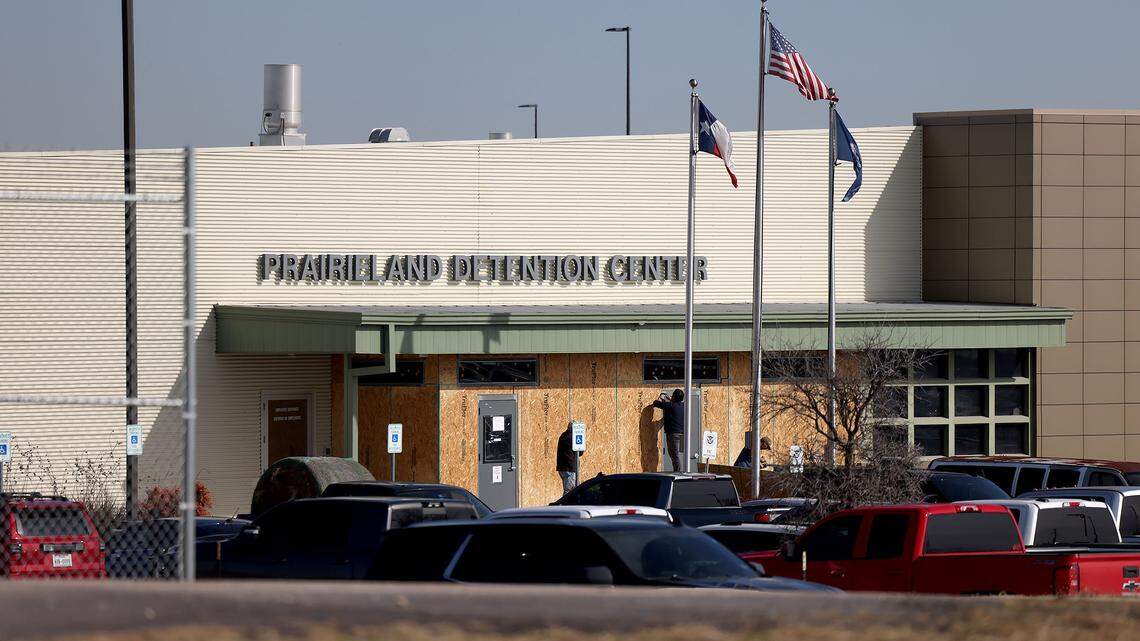
Brissette’s dogged expert cross was on display on Monday. With defense attorney Warren St. John, Brissette represents Meagan Morris in the ongoing trial in U.S. District Court in Fort Worth of nine defendants in a case in which the government alleges a group of violent antifa cell members were connected to the shooting of a police officer outside ICE’s Prairieland Detention Center.
ATF Special Agent Stephen Brenneman, who examined fireworks found in a cooler at the scene, took the witness stand on the trial’s tenth day. Before the shooting, some of the defendants, prosecutors allege, fired fireworks at the facility, in which the government holds immigrants it intends to deport.
Brissette probed the accuracy of Brenneman’s curriculum vitae and tried to get the special agent to acknowledge that he earned a certification in 2017, not 2015, when his training began.
Beyond fireworks, the cooler also contained a jar of bubbles. Surely they were subjected to analysis, Brissette suggested.
“Did you test anything to see if there were any liquid explosives in there?” the defense attorney asked.
“I did not,” Brenneman said.
Brissette and the special agent got in a back-and-forth on what states of matter can burn.
“Your official position for ATF is: solids burn?” Brissette asked.
That the Prairieland fireworks were consumer grade “does not mean that they’re not powerful and certainly doesn’t mean that they’re not explosives,” Brenneman testified.
The defendants’ attorneys refer to their clients as noise demonstrators and argue that they wanted, in a protest, to bring hope to immigrants detained by ICE.
The assailant who shot Lt. Thomas Gross, federal prosecutors allege, was Benjamin Song, a 32-year-old former Marine Corps reservist. Gross was shot after he responded to a call at the ICE detention center and drew and pointed his pistol when he saw a person dressed in black tactical gear running away.
The government on Monday also called to the stand Texas Department of Public Safety forensic scientists who testified that they had concluded that Song’s right thumbprint was on cartridge cases in the rifle’s magazine and his DNA was a contributor to the profile found on a neck gaiter at the scene.
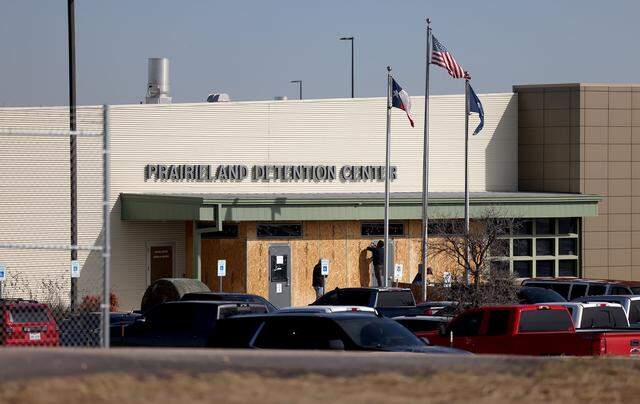 The Prairieland Detention Facility in Alvarado, Texas, on Jan. 30, 2026. Amanda McCoy amccoy@star-telegram.com
Early in the trial, defense attorneys suggested in cross-examination of government witnesses that Song may have been justified by defense of a third party because he believed that he was protecting the running person. Judge Mark Pittman later granted the prosecution’s motion to block defense attorneys from arguing that line of defense.
That Gross drew his pistol was “extremely reasonable” under the set of facts, FBI Special Agent Clark Wiethorn, the case agent, testified.
Gross was shot in his upper shoulder, and the projectile left the back of his neck after it took a path through tissue and muscle, but avoided vital organs, Gross testified.
Thirteen people wearing black clothes were at Prairieland at the time of the shooting late on July 4, 2025, Wiethorn testified.
Some ignited fireworks and others spoke from a bullhorn or spray-painted anti-ICE phrases on vehicles and an unoccupied guard booth.
Beyond Song and Morris, who is referred to as Bradford Morris in the indictment, the defendants are Autumn Hill, who is referred to as Cameron Arnold in the indictment, Zachary Evetts, Savanna Batten, Maricela Rueda, Elizabeth Soto, Ines Soto and Daniel Rolando Sanchez Estrada.
Song is charged with attempted murder and discharging a firearm during, in relation to and in furtherance of a crime of violence. Evetts, Hill, Morris and Rueda are charged with aiding and abetting.
Song, Batten, Evetts, Hill, Morris, Rueda, and Elizabeth and Ines Soto also were indicted on charges including rioting, providing material support to terrorists, and conspiracy to use and carry an explosive.
Rueda and Sanchez Estrada also are charged with conspiracy to conceal documents, and Sanchez Estrada is charged with corruptly concealing a document or record.
Five additional defendants pleaded guilty in November to the charge of providing material support to terrorists and have testified at the trial.
The government is expected to rest its case in chief on Tuesday.
This story was originally published March 10, 2026 at 8:51 AM.
Related Stories from Fort Worth Star-Telegram
Fort Worth Star-Telegram
Emerson Clarridge covers crime and other breaking news for the Fort Worth Star-Telegram. He works days and reports on law enforcement affairs in Tarrant County. He previously was a reporter at the Omaha World-Herald and the Observer-Dispatch in Utica, New York.