
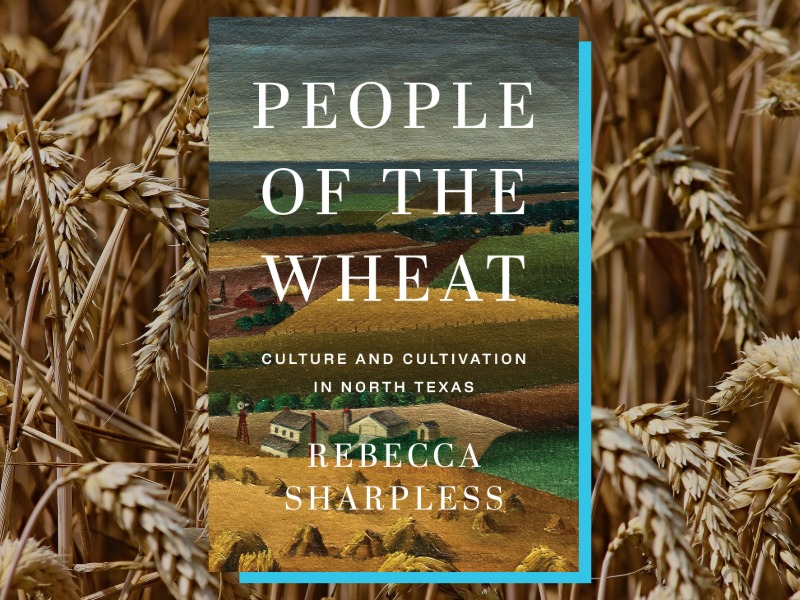
The business of growing and milling wheat is still alive in Texas. The crop is a staple for many farmers, but the grain industry used to look much different here, particularly in a set of six North Texas counties where wheat was king.
Rebecca Sharpless is a professor of history at Texas Christian University in Fort Worth and author of “People of the Wheat: Culture and Cultivation in North Texas.” Sharpless spoke to the Texas Standard about how the crop helped grow the region. Listen to the interview in the player above or read the transcript below.
This transcript has been edited lightly for clarity:
Texas Standard: For those not familiar, where exactly are we talking about?
We are talking about the six counties that start with Dallas and Fort Worth and then go up to the Red River. So Dallas, Denton, Collin, Cook, and Grayson, which Cook and Graysons are right on the Red River.
Well, of course, people looking at this area now, especially the Dallas-Fort Worth Metroplex, know how huge and thriving it has become. How did the wheat business of the 1800s and 1900s help develop what we know as DFW today?
A couple of different ways. One is for the farmers, of course, who grew the wheat, grew the crop, and sold it. At first, they would just barter it or get their own flour back in wheat form. But gradually, that became more of a business.
And then, as the milling got started, it was jobs for the workers and a good number of the millers made pretty good money and some made fortunes. So from those fortunes, those folks did things like endow churches and collect art and help with cultural institutions of various kinds.
So direct money into people’s pockets as wages and then fortunes that turned into cultural institutions.
And this money was made in part by some creative marketing techniques that flour companies and bakeries used. Could you tell us about some of those that stuck out to you?
Absolutely. The best known one is the musical form called Western Swing. It was like country and western but it had brass and it had drums and that was new in that day.
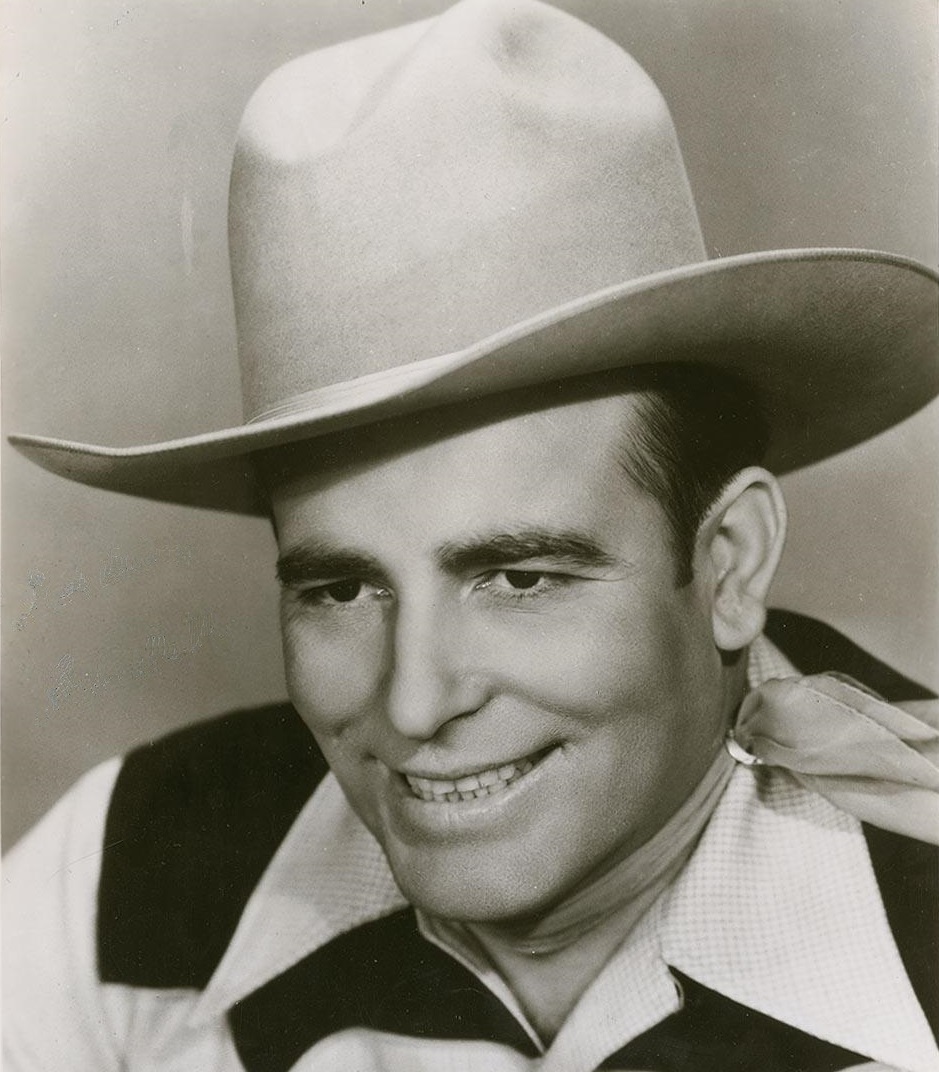
Legendary Western Swing musician Bob Wills. Paul Parry, Public domain, via Wikimedia Commons
That got started in the early days of radio in the 1920s. There were various bands and various musical acts, but the best-known one was Bob Wills.
The mills had various marketing ploys, as you said, and one of them was by sponsoring radio shows. Radio was just getting started and the stations were often not very powerful. They were more local in nature and the programming would be local in nature, too.
So Bob Will’s band was playing for a Fort Worth radio station and their sponsor backed out. And the radio station went looking for a sponsor and they asked Burrus Mills. And the marketing director of Burrus Mills was a kind of notorious character named W. Lee O’Daniel. And O’Daniel didn’t know much about music and he didn’t much about radio, but he thought this sounded like a good idea.
So he agreed, signed up to sponsor the Bob Wills program, and it became wildly popular. And O’Daniel took over as the announcer for the program. Turned out he was a natural for it.
So you’ve got a couple of things going for it — one is this remarkable music that’s still around and the other is this magnetic personality in the form of W. Lee O’Daniel.
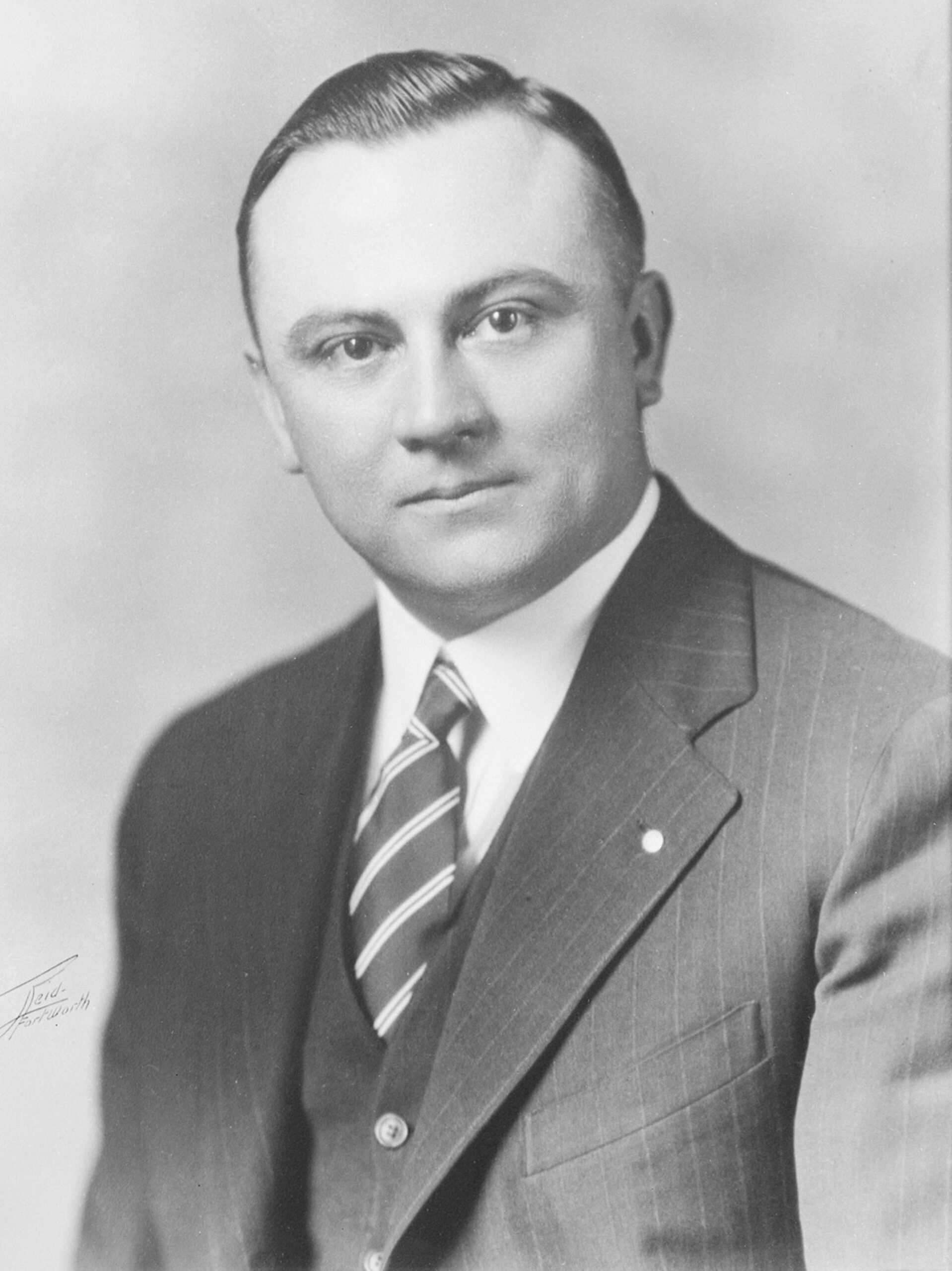
W. Lee “Pappy” O’Daniel. Public domain, via Wikimedia Commons
And one day, O’Daniel casually asked the viewers, so he says, I suppose it was casual, saying, “hey, you think I ought to run for governor?” And the postcards poured in saying, “yes, please run for governor.” And he did, and he won. So he became the governor of Texas.
This was in the 1930s. And then when one of the U.S. senators died, O’Daniel got his seat in the U.S. Senate. So he went from flour mill manager to U.S. senator.
You know, we look at North Texas now, and we see much of the wheat-growing has shifted further west into the Panhandle. So how did that happen?
Okay, so harvest started getting mechanized in the early 19th century. And first they developed machines that just would cut and people would have to follow along and pick it up and bundle it and make it into sheaves and all that. And it was extremely tedious and time-consuming.
Gradually, the mechanization included machines with what we call combines that would cut the wheat and then bundle it. And you can imagine that cut greatly down on the labor that was required for harvest. And farmers who could afford to buy a harvester or could rent or lease a harvester from their neighbors were thrilled to do this. And so it’s a matter of economy of scale.
Now, people who look at North Texas think it’s flat. But it’s actually not completely flat. West Texas, on the other hand, is in places completely flat and so they could use harvesting machines that were several times wider and longer than the ones that could be used in North Texas. So it’s just a matter of economy of scale.
» GET MORE NEWS FROM AROUND THE STATE: Sign up for Texas Standard’s weekly newsletters
Well, you end this book in 1972 at the dedication of the Kimbell Art Museum in Fort Worth. What about that scene made it the right spot to finish the story?
The Kimbell Museum is one of Fort Worth’s cultural treasures. It’s not a big collection. It’s not a big museum, but if they have, let’s say, a Matisse and a Matisse that is considered to be of higher quality comes on the market, they’ll buy the second Matisse and sell the first one.
So, their motto is to have only the best of the best, and people come from far and wide to the Kimbell. It’s just a lovely museum, and hosts all manner of remarkable exhibits, and they never would ever in a million years put that collection together with wheat. But that is, in fact, where the Kimbell fortune started.
They lived in Whitewright, Texas, and Kay Kimbell’s father started in the milling business. And when Kay was about 13, he started working in the mill and just grew the business and grew the business and grew the business.
And people don’t know that. You know, when you think of money in North Texas, you think oil and cattle and now technology, but you don’t think of wheat. And so it seemed to me that the dedication of the Kimbell was the place to remind people of the role that we actually did have in building the metropolitan area.