
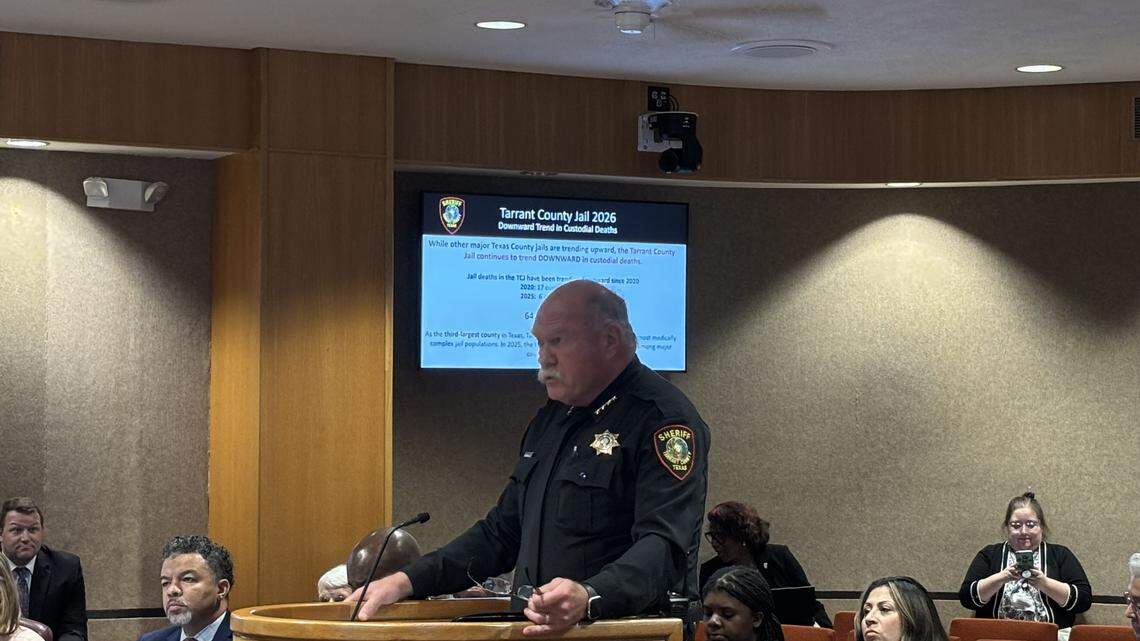
Tarrant County Sheriff Bill Waybourn presented statistics to the county commissioners on the decrease in deaths in the jail since 2020.
Rachel Royster
rroyster@star-telegram.com
During a briefing Tuesday about the decline of jail deaths in Tarrant County, Democratic Commissioner Alisa Simmons pressed Republican Sheriff Bill Waybourn on why she has to continuously intervene to help constituents concerned about the safety of their loved ones.
Waybourn said there has been a 64.7% reduction in jail deaths, from 17 in 2020 to 6 in 2025. In the four years between, the total annual jail deaths declined or stayed the same. Due to COVID-19, 2020 saw the most deaths in the county jail between 2017 and 2025. Last year, the Tarrant County jail — in the third-most populous county in the state — ranked fifth in custodial deaths among the state’s largest county jails.
In 2017, the county jail had zero in-custody deaths. There have been 73 since, the most recent in December.
Ahead of the briefing, 10 people spoke out during public comment, alleging inhumane conditions. Christy Bridgman, one of the speakers, is the mother of a 26-year-old man who has been jailed since December 2024 on a charge of domestic assault against his mother.
⭐ Our editors also recommend:
Bridgman has asked the district attorney’s office not to prosecute her son, Shawn Fraraccio, who has the intellectual ability of a 7-year-old. He needs care, not a cage, Bridgman told commissioners.
“I am so afraid my Shawn will die in this cell like many others,” Bridgman said while holding back tears. “He does not have the ability to care for himself. He has lost a tremendous amount of weight, walks around barefoot … and keeps hitting his head against the wall. He needs to be transferred to a state supported living center immediately.”
Fraraccio is one of three inmates Simmons brought up to the sheriff because of conversations she had with their families in the days ahead of Waybourn’s briefing.
Waybourn said he would happily look into the cases Simmons spoke about if she sends him the names. Simmons said she shouldn’t have to be the go-between for families.
“I’m not interested in getting deep into the jail business, doing your job, but our constituents need you to be accessible,” Simmons said.
Waybourn said he and the jail staff are advocating to get the inmates to a better place every day.
“The challenge with our mental health issue is, clearly, we do not have a good handle as a state and a country, for that matter, on what to do with our mental health, which is rising rapidly,” Waybourn said.
Of roughly 45,000 inmates booked annually, 50% disclose chronic illness and approximately 30% of the remaining half are unaware or don’t reveal a chronic sickness. JPS medical staff dispensed over 4 million pharmaceutical pills to an average annual population of 4,500 inmates in 2025.
Waybourn said jail conditions have improved dramatically since new jail administrator Shannon Herklotz arrived in January because of a more proactive approach to health care.
The medical staff has increased from 200 to 300, Waybourn said in the presentation. There is now one medical staff member for every 15 inmates and one doctor for every 225. Doctors and nurses are available all hours of the day.
Valencia Edner, who spoke during public comments, said families are still waiting to hear what happened to their loved ones who died in the jail. She said improvement under scrutiny does not erase the obligation to explain what has already happened. “If this administration wants the public to believe conditions are improving, then start with the people who have already died,” Edner said. “Tell the truth about what happened. Resolve the investigation. Show the families their loved ones matter. Until then, briefing about decreasing the number will ring hollow, especially when people have died at this jail at an alarming rate.”
Fort Worth Star-Telegram
Rachel Royster is a news and government reporter for the Fort Worth Star-Telegram, specifically focused on Tarrant County. She joined the newsroom after interning at the Austin American-Statesman, the Waco Tribune-Herald and Capital Community News in DC. A Houston native and Baylor grad, Rachel enjoys traveling, reading and being outside. She welcomes any and all news tips to her email.