
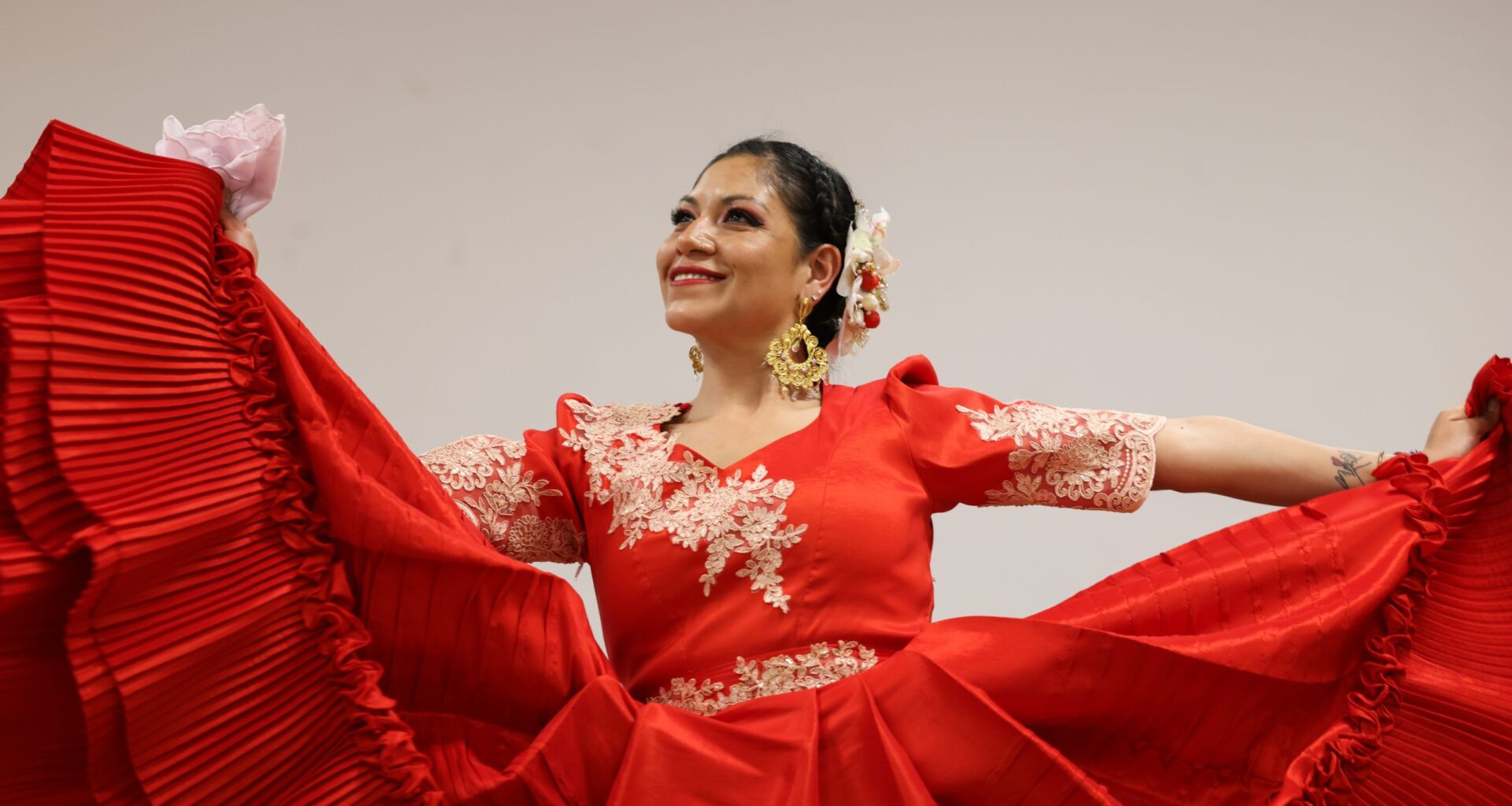
The thumping percussion of cajón criollo punctuates Sarah Helfers’ voice, echoing through a Fort Worth dance studio on a Friday night.
Jesús Monteverde and Marcelo Avendaño, a traditional Peruvian box-shaped wood drum positioned between their knees, use their hands to strike the front panels in the staccato beats of festejo, a high-energy dance with African roots.
Dancers follow Helfers’ lead, practicing the footwork and hip movements that make the Afro-Peruvian dance come alive.
This is Academia Asi es mi Peru, a nonprofit Peruvian dance academy founded by Helfers and Lisset Caramantin in 2022. It started with a flash mob at Sundance Square and the desire to keep dancing. Now the two lead weekly classes for children and adults at Barbara’s Dance Studio and put on an annual cultural festival.
Members play the cajón criollo during a rehearsal at Barbara’s Dance Studio on Feb. 20, 2026, in Fort Worth. (Christine Vo | Fort Worth Report)
“We wanted to show Peruvian culture because you don’t see many Peruvians in Fort Worth,” Caramantin said.
Back in Lima, the country’s capital city, Helfers would take long bus rides across town for rehearsals or performances. She admits she’d have to sneak around her parents who didn’t approve.
“All just to dance,” Helfers said, laughing to remember those trips across the city in 2009.
That was before her immigration papers came through, and she left Peru at what she describes as the peak of her dance career.
The transition to the United States was challenging, she said. While she was excited to join her husband, the realization that she was leaving dance behind set in.
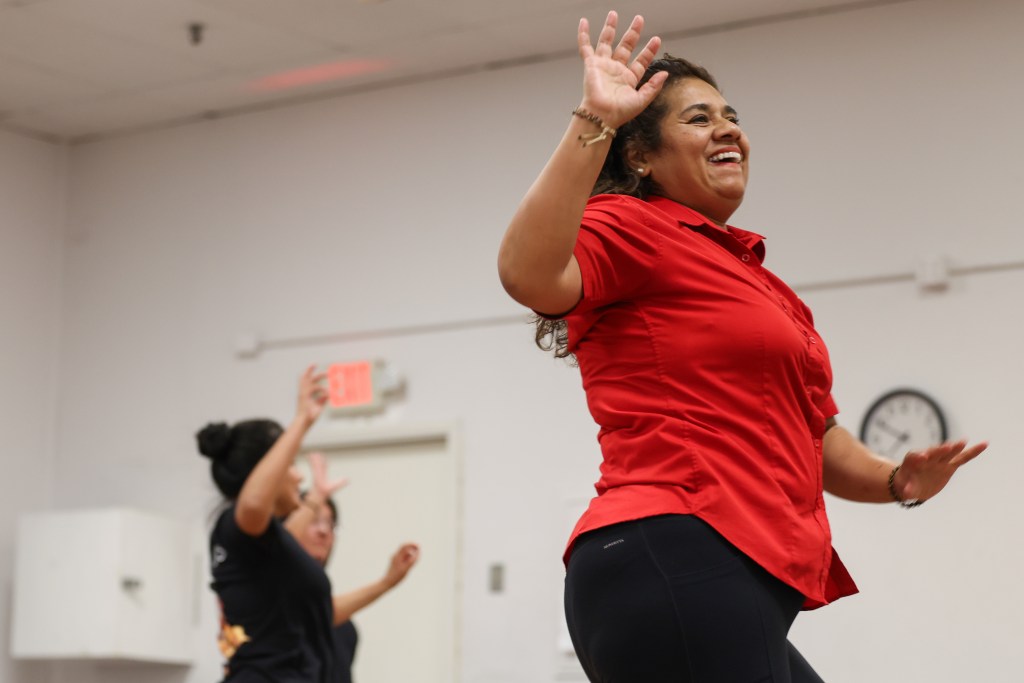 Instructor Sarah Helfers leads rehearsal at Barbara’s Dance Studio on Feb. 20, 2026, in Fort Worth. (Christine Vo | Fort Worth Report)
For more than a decade, dance took a back seat. Helfers went to cosmetology school and had a baby.
Caramantin, who immigrated to Houston at age 10 and danced with Raices Del Peru until she was 18 had a similar story — bachelor’s degree, master’s degree and children.
The pair met in 2021 while Helfers was teaching a children’s Peruvian dance class, where both agreed they missed dancing.
“She wanted to dance, and so did I,” Helfers said.
Helfers had just learned what a flash mob was and pitched the idea to Caramantin as a way to start.
“Ya pues,” Caramantin said. Let’s do it.
Helfers handled choreography, while Caramantin found the cajóns. The percussion instrument delivers the core sound of many dances from Peru’s coast and has a history dating back to when Spanish colonizers banned enslaved Africans from using drums in 16th century Peru. Musicians found other ways, striking out a beat on wooden crates, tables or chairs.
Caramantin posted a Facebook callout for cajóneros to start the ensemble, and two men answered the call.
“It all started in my garage,” Helfers said.
The four began rehearsing, recruited friends and later moved practice to a nearby park. Within two months, they prepared a festejo routine to perform at their first flash mob at Sundance Square.
About 200 to 250 people arrived to watch the performance. Jael Cardenas, now 10, remembers watching the flash mob with his twin sister, Mía. Today, the twins dance in the children’s group.
“I have one story from when I was little,” Jael said, recalling how he and his sister made their way into the group photo.
Helfers remembers the twins, too, how little they were, pushing their way to the front.
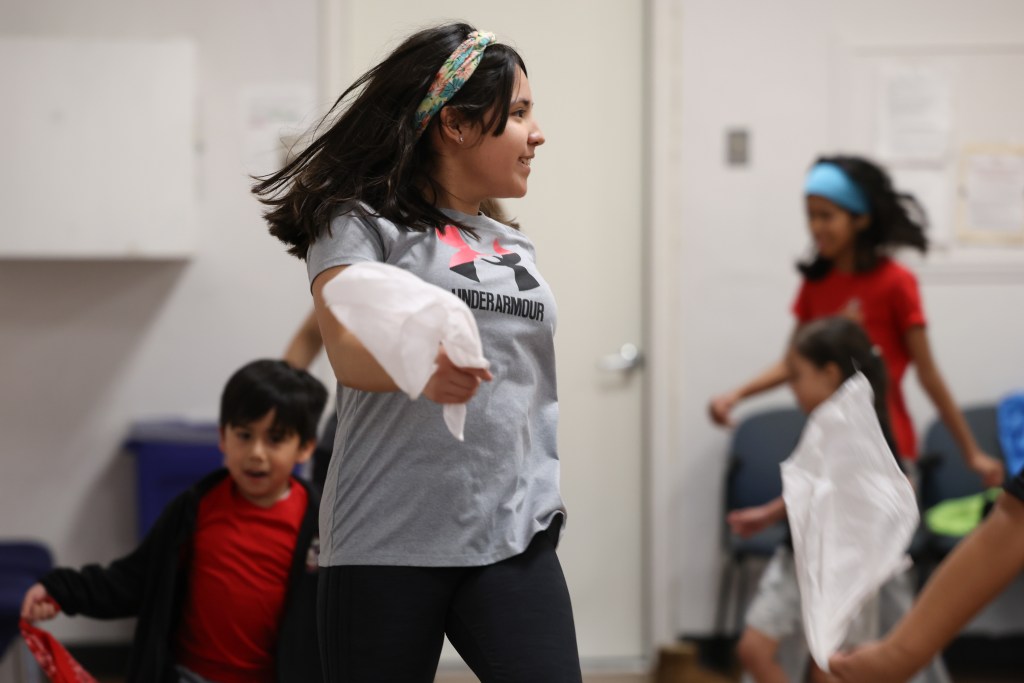 Mía Cardenas, 11, runs to her next formation during a rehearsal at Barbara’s Dance Studio on Feb. 20, 2026 in Fort Worth. (Christine Vo | Fort Worth Report)
“Así nació todo,” Caramantin said. That’s how it all started.
After the flash mob, the pair registered the academy as a nonprofit and began planning their first indoor festival in 2023, which took place at Artes de la Rosa, a theater and cultural center in north Fort Worth.
“Teaching and seeing everyone come together to learn and show something beautiful to not just the Hispanic community but all of Fort Worth.”
Peru has more than 1,500 recognized dances, divided among three main regions, the coast, the mountains and the jungle. At the festivals, Helfers and Caramantin showcase various dances and narrate the history of each in both English and Spanish.
“It’s a cultural festival where we want to show not just people dancing, but for people from other countries to know a little bit of the history of the dance,” Helfers said.
The harvesting motion in one dance, for example, represents gathering crops. The hand movements, meanwhile, tell a different story.
“Every movement has meaning,” Caramantin said.
Helfers now leads weekly classes on Fridays in Hurst: children’s class at 6:30 p.m., adults at 7:30 p.m. and a Sunday lesson in Dallas.
How to enroll
Weekly classes are held on Fridays in Hurst and Sundays in Dallas.
Hurst
When: Children’s class: 6:30 p.m., Adults class: 7:30 p.m.
Where: Barbara’s Dance Studio, 426 W. Bedford Euless Road, Hurst
Dallas
When: Peruvian dance: 2 p.m., Cajón class: 3 p.m.
Where: Alpha Midway Dance Studio, 13740 Midway Road, Suite 714, Dallas
Email: asiesmiperuacademia@gmail.com
Facebook: Academia Asi es mi Peru
Isabella Lange, 12, has danced with Helfers since she was 5. Her mom is Peruvian, her dad is American.
“I just feel comfortable here because I’ve known them for a long time,” Isabella said.
Her mom, Kattia Zucchetti Lange, attends the adult class. Zucchetti Lange moved from Lima to the United States in 2008. She didn’t grow up dancing — it was a lujo, a privilege her family couldn’t afford. When she met Helfers at a Peruvian embassy event, she saw an opportunity for her daughters.
“When I saw this, I said, learn the culture, love the culture,” Zucchetti Lange said.
Michelle Laynez found the academy through a google search. She was born in Venezuela to Peruvian parents and moved to the United States as a baby. She takes the adult class while her 6-year-old son Henry Aguayo is in the children’s class.
“It’s important to always remember your roots, your culture, where your ancestors come from,” Laynez said. “Peru is beautiful — its culture, its music, its people, everything.”
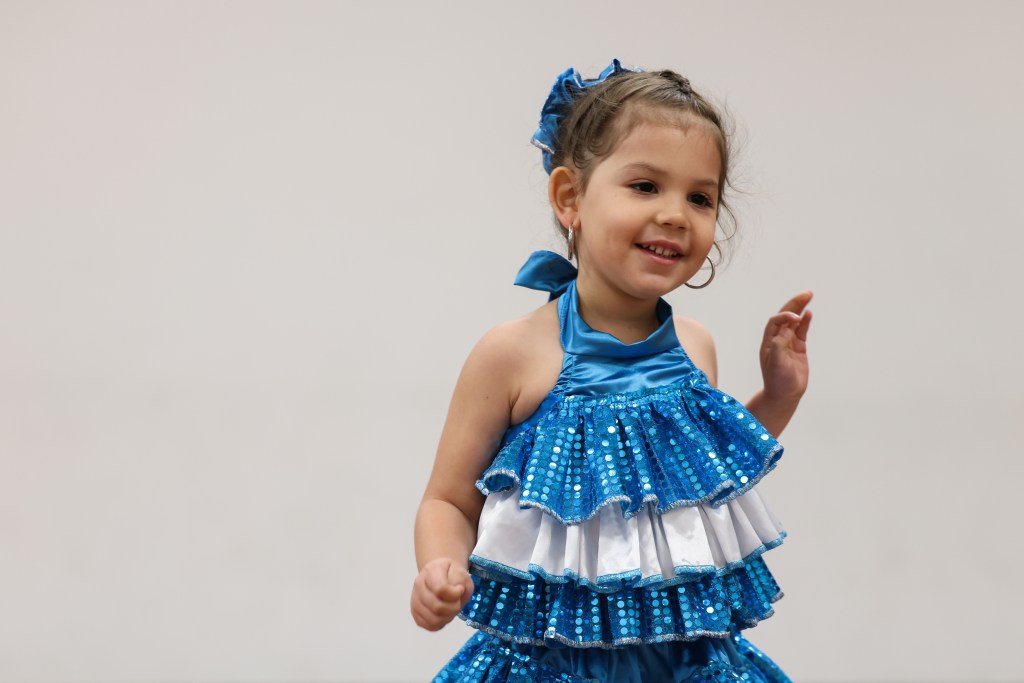 Itzel Edwards, 7, practices “Carnaval de Cajamarca” during a rehearsal at Barbara’s Dance Studio on Feb. 20, 2026, in Fort Worth. (Christine Vo | Fort Worth Report)
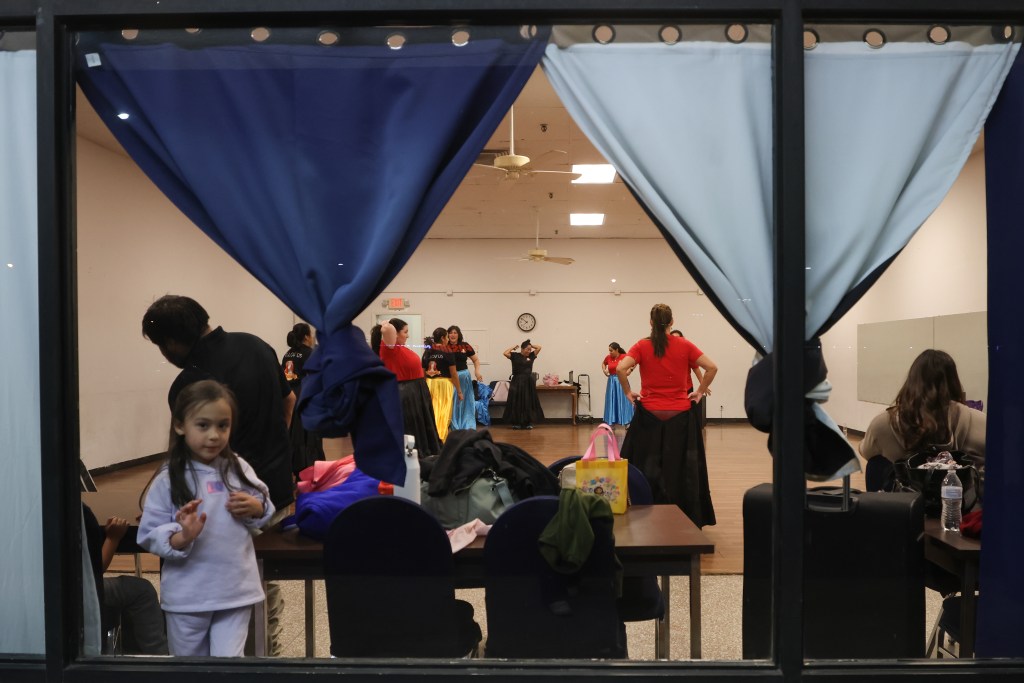 Dancers prepare for rehearsal at Barbara’s Dance Studio on Feb. 20, 2026 in Fort Worth. (Christine Vo | Fort Worth Report)
Gabriela Lima, joined the academy recently with her daughter Mikaela, 6.
“For me, what’s important is that she learns the Peruvian dances,” Lima said.
A 65-year-old woman called recently asking about the Dallas classes. Helfers reassured her that everyone is welcome at any skill level. Their oldest dancer is 74.
“The limit is in the sky,” Helfers said. “You set your own limit.”
For now, students pay monthly fees to cover rent and instructor costs, but Helfers and Caramantin dream of eventually offering free classes through sponsorships and grants. The duo’s mission is simple: teach Peruvian culture through music and dance, and welcome anyone who wants to learn.
When Helfers reflects on how quickly everything has grown, from four people in a garage to two locations and an annual festival — she attributes it to one thing.
“It has been our energy, our desire to want to dance and our love for Peru.”
Editor’s note: The majority of the interviews for this story were conducted in Spanish and translated into English by the reporter.
Nicole Williams Quezada is a reporting fellow for the Fort Worth Report. Contact her at nicole.williams@fortworthreport.org.
At the Fort Worth Report, news decisions are made independently of our board members and financial supporters. Read more about our editorial independence policy here.
This <a target=”_blank” href=”https://fortworthreport.org/2026/03/10/made-in-peru-taught-in-texas-south-american-dance-finds-a-home-in-north-texas/”>article</a> first appeared on <a target=”_blank” href=”https://fortworthreport.org”>Fort Worth Report</a> and is republished here under a <a target=”_blank” href=”https://creativecommons.org/licenses/by-nd/4.0/”>Creative Commons Attribution-NoDerivatives 4.0 International License</a>.<img src=”https://i0.wp.com/fortworthreport.org/wp-content/uploads/2021/04/cropped-favicon.png?resize=150%2C150&quality=80&ssl=1″ style=”width:1em;height:1em;margin-left:10px;”>
<img id=”republication-tracker-tool-source” src=”https://fortworthreport.org/?republication-pixel=true&post=442155&ga4=2820184429″ style=”width:1px;height:1px;”><script> PARSELY = { autotrack: false, onload: function() { PARSELY.beacon.trackPageView({ url: “https://fortworthreport.org/2026/03/10/made-in-peru-taught-in-texas-south-american-dance-finds-a-home-in-north-texas/”, urlref: window.location.href }); } } </script> <script id=”parsely-cfg” src=”//cdn.parsely.com/keys/fortworthreport.org/p.js”></script>