
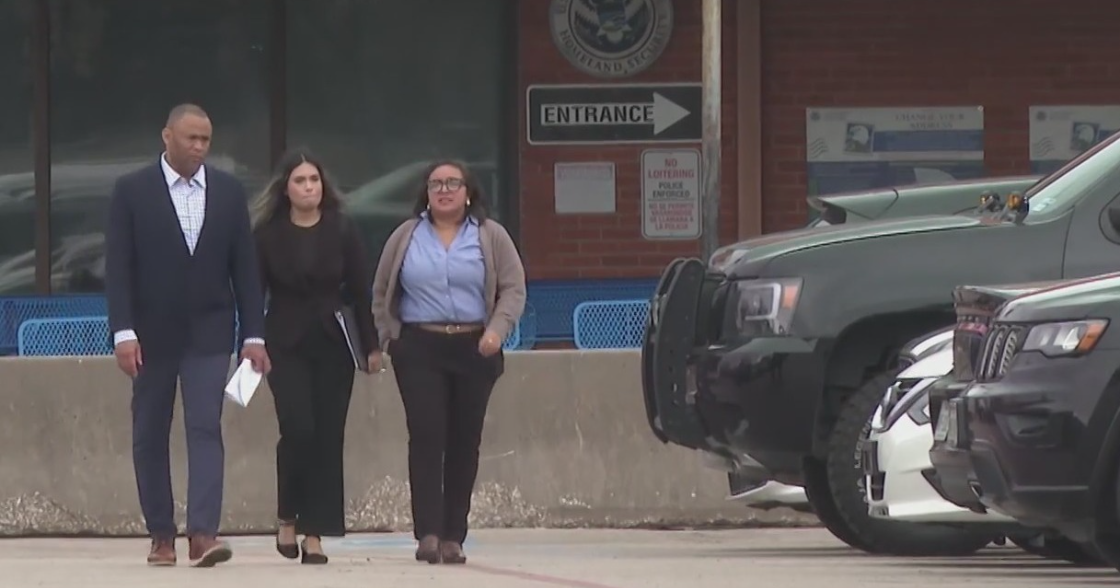
Tuesday, North Texas Congressman Marc Veasey got a firsthand look inside the U.S. Immigration and Customs Enforcement Dallas field office. While security was not the focus of the visit, Veasey said he toured the facility to address community concerns about living conditions and how the center operates.
Veasey spent Tuesday morning touring the field office, addressing community concerns about conditions inside the processing center.
“What we saw here was people being processed, people getting their fingerprints, DNA swabs,” he said. “The facility that we saw, you know, it was clean. Of course, we don’t know what it smells like in there or what it looks like in there. You know, after it’s been, after people have been held there for five, six, 12 hours… and so, it was pretty clear to me that the room that I saw was probably just recently power-washed.”
Veasey noted that detainees are not provided undergarments, something he says should be addressed. He also questioned the practice of transferring children from North Texas to the detention facility in Dilley near San Antonio.
Concerns about treatment and transfers
“A lot of this is about border theater and optics, and I just think that’s really disturbing,” said Veasey.
There have also been reports that some migrants are being held at the processing center longer than ICE policy allows, something Veasey called unacceptable.
“We were told that people here aren’t being held for long periods of time, but if anybody here is being held for a long period, it is a big, big problem because these are not meant for long-term stays at all historically,” he said.
ICE response pending
Ahead of the tour, CBS News Texas reached out to ICE officials to ask them about the conditions at this processing center, as well as some of the concerns that Congressman Veasey raised, but we were told we would not get a response before this report.
Previously, ICE officials have said their enforcement efforts are focused on immigrants with criminal records. The agency said nearly 70 percent of ICE arrests involve people who have been charged with or convicted of a crime in the United States.