
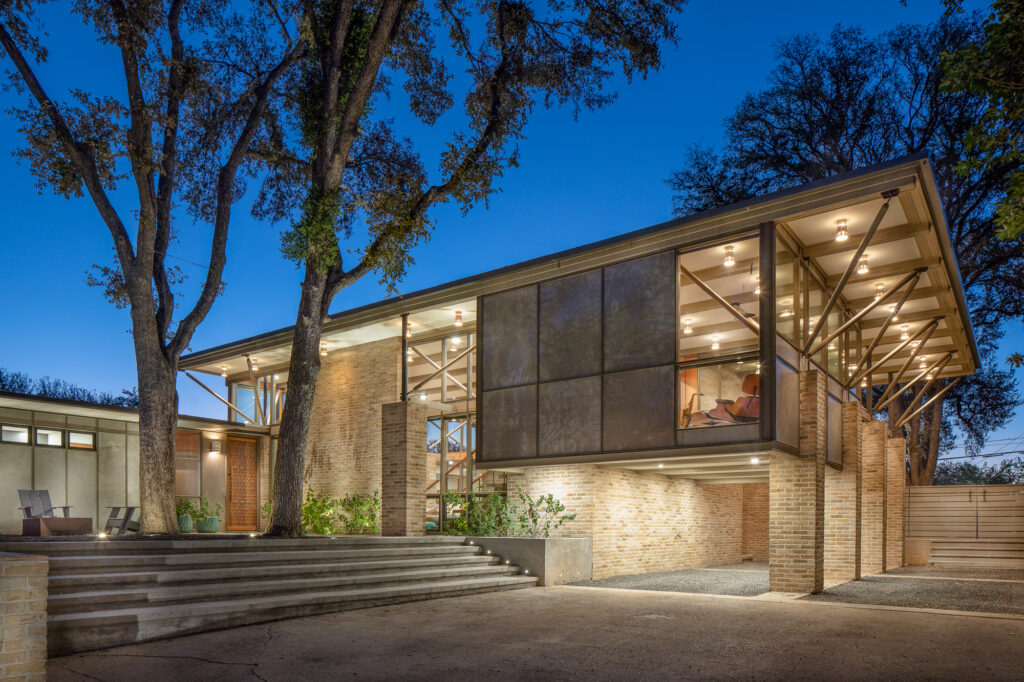
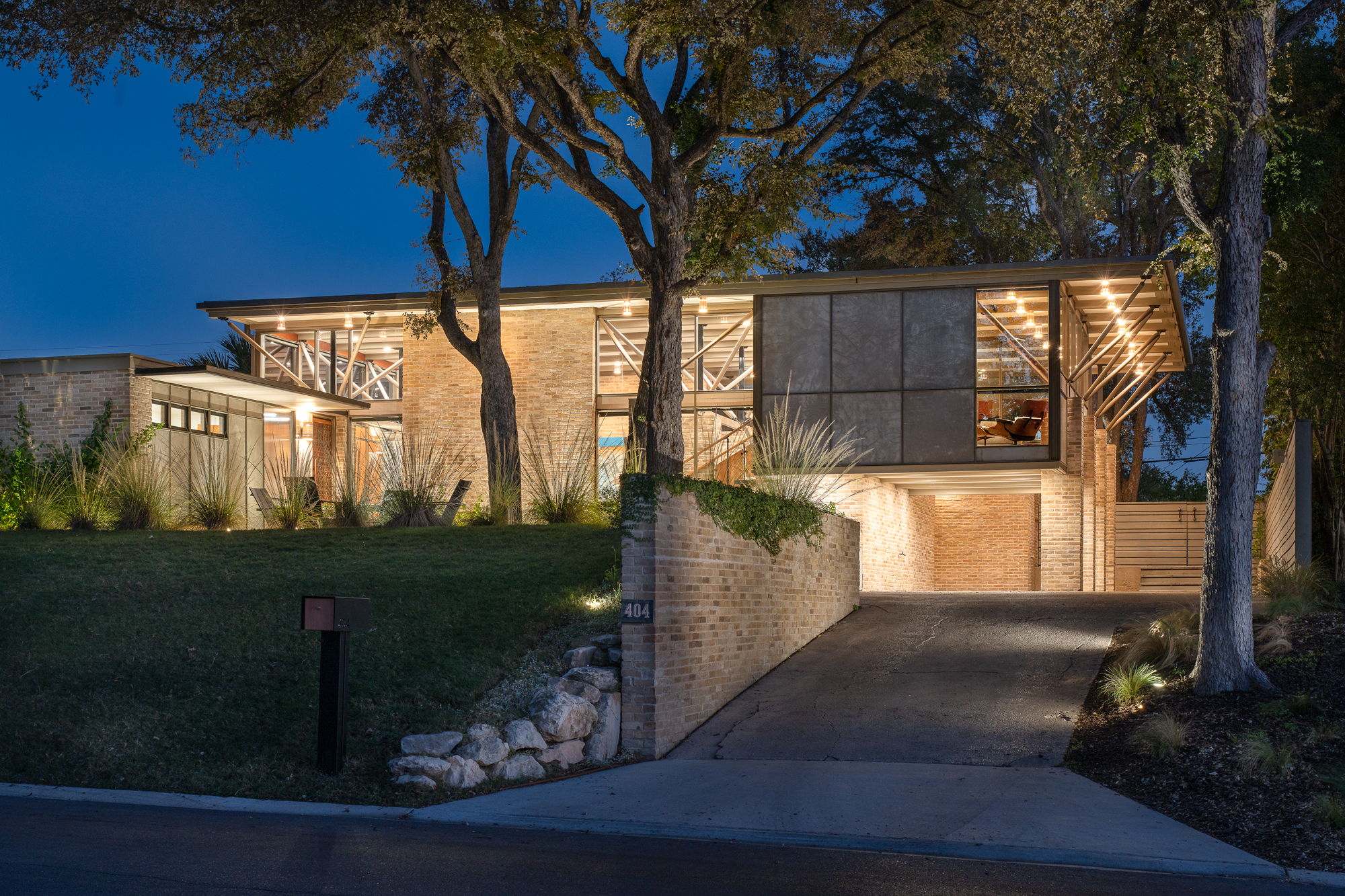
Every morning, as the sun climbs east over San Antonio, light dances inside the McMahons’ Castle Hills home.
“It’s fun to see how the sun moves through,” said architect Craig McMahon, who runs an award-winning eponymous design practice in the city. “In the living room, you get these really unique shadows on the brick walls, and the glass is filled with light.”
Today, the 1961 residence, originally designed by architect William Duke as his personal family home, is layered with history and stories. The McMahons’ involvement began in 2012 when Craig’s wife, Molly, encountered it on a drive through the neighborhood.
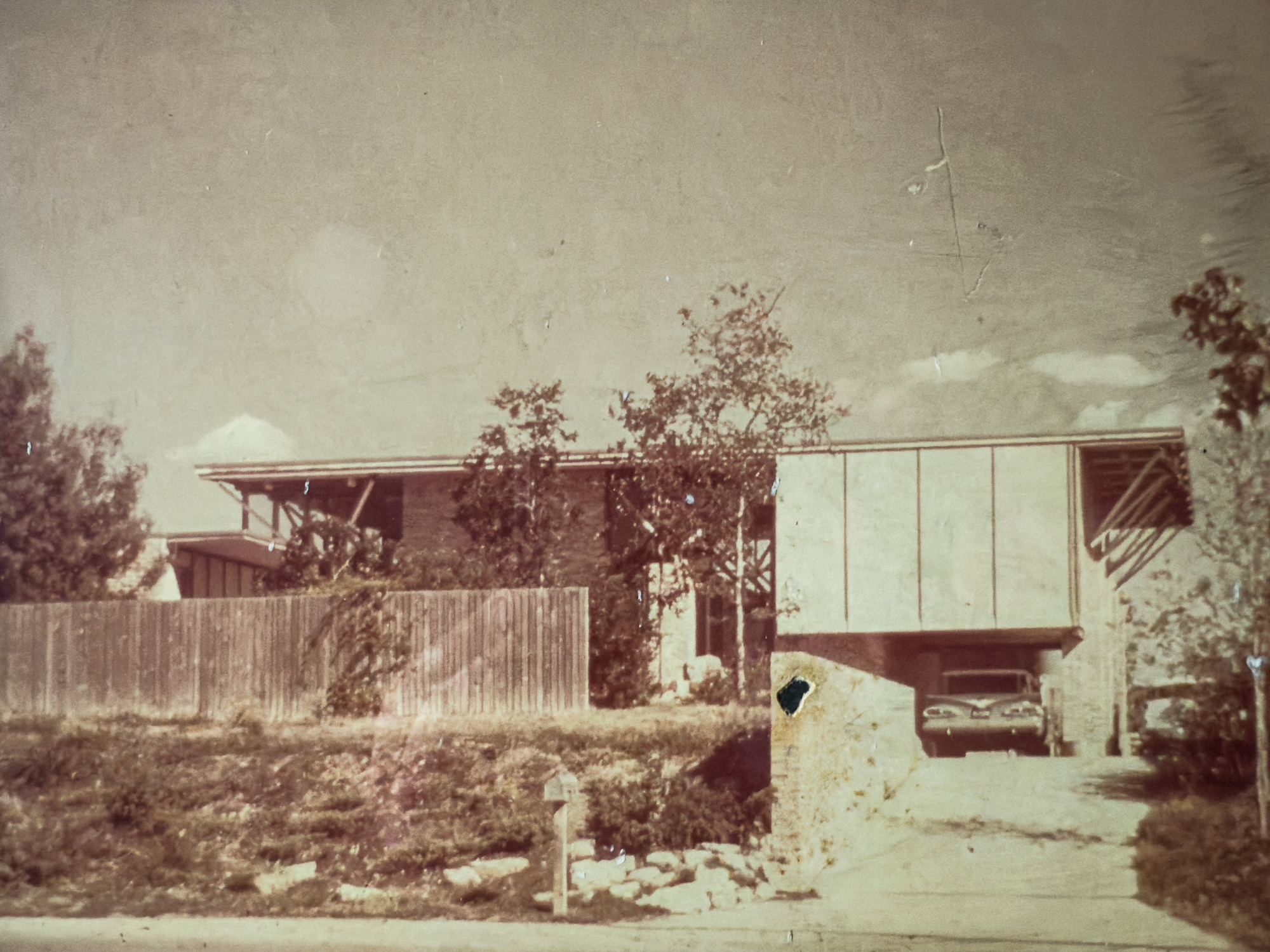
“I knew she’d found something exciting, but we were in the middle of building our own home at the time,” he remembered.
Still, after spending years living in Los Angeles researching the modern Case Study Houses of greats like John Entenza, Richard Neutra and Eero Saarinen, he was surprised to see such an elevated modern manse tucked into this quiet, leafy pocket of South Texas.
2026 AIA San Antonio’s Residential Design Awards Call for Entries
aiasa.org/residential-design-awards
The submission period is open for the 2026 awards, which recognizes and celebrates outstanding residential work. Entered projects must be designed by members of AIA San Antonio and constructed within the 23 counties represented by the chapter.
Submissions are due by midnight March 23; late entries are due by midnight March 30. The “Top Prize” winner in each category will be revealed at the Residential Design Awards Ceremony on May 14 and featured in San Antonio Magazine‘s Mi Casa issue in June.
Sadly, the property fell into neglect and disrepair over the next couple of years until 2016, when it sold to investors. Unaware of its special history and notable design, the buyers began demolishing the original details. Later, it sold again, though progress halted due to exorbitant restoration costs.
In 2018, the residence hit the market once more, and in a strange twist of fate, Craig’s sister- and-brother-in-law purchased it a week later.
“My wife cried, she was so happy they made an offer,” he said, adding, “and I dove in to help them.”
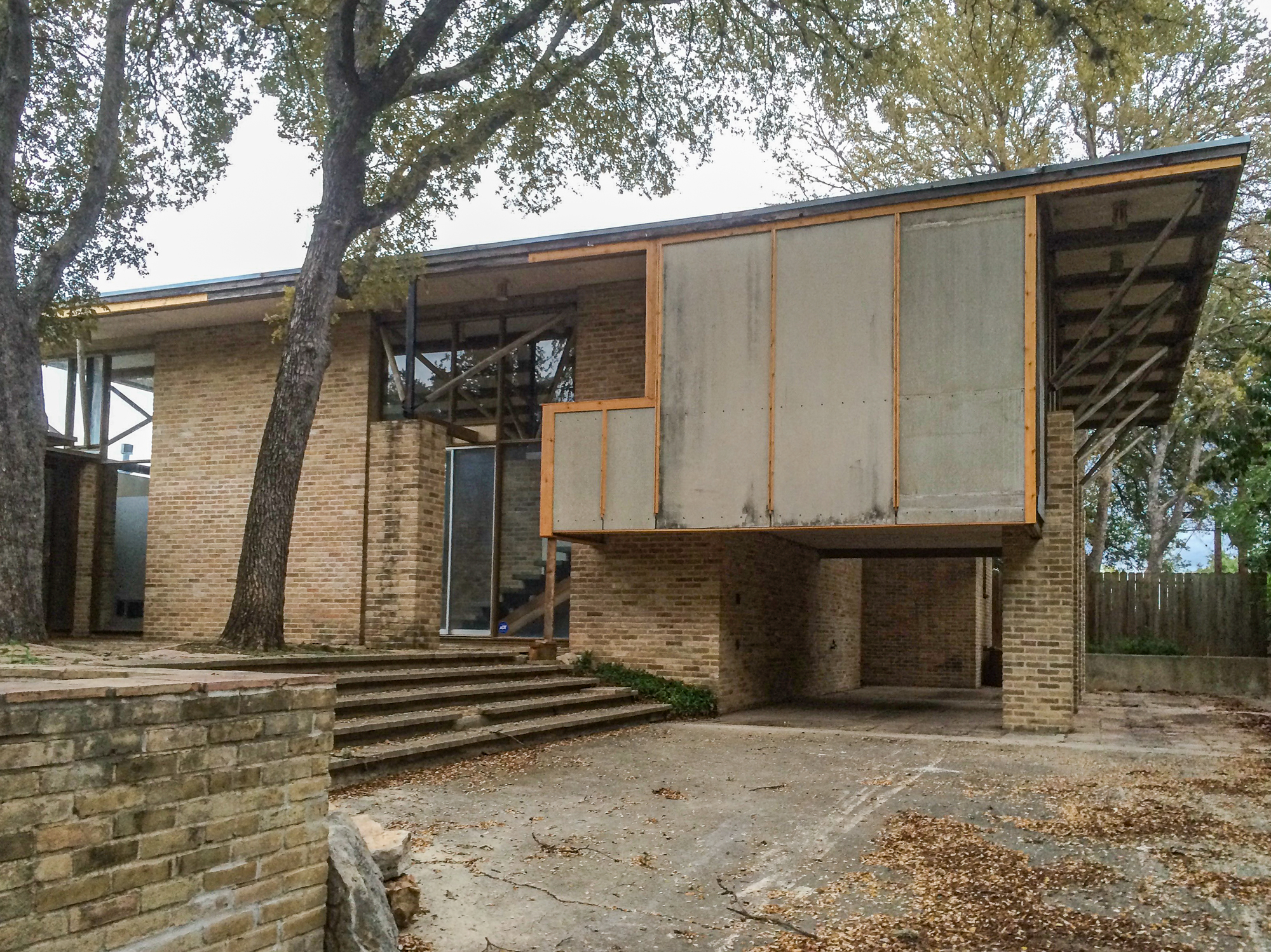 The renovation project took three years to complete. The original concrete veneer exterior Cemestos (cement-asbestos) panels had been destroyed or painted over. New panels were made on-site to replicate the concrete look.
Midway through the renovations, the new owners were unexpectedly transferred to Houston for work, leaving the McMahons to make a decision.
“It was just too important of a house,” he said. “We were too connected to the project to let it go, so we decided to take it on for ourselves.”
When the McMahons officially acquired it in 2020, the pandemic was raging. Despite the shortage of materials and craftsmen, however, the duo pushed through, researching the most cost-effective and resourceful means to restore the historic residence.
“The hardest part was getting it to where it could be a livable home,” he said of the site, with its lack of insulation, extensive termite and water damage, and structural holes exposing the interiors to the elements.
Ultimately, nearly every utility had to be addressed and replaced, from sewer lines to electrical and HVAC, to save it from demolition.
Luckily, Craig had the aid of a tight crew, including family members who lent a hand in the renovation, from cleaning to jackhammering the foundation and even woodworking. Furthermore, they had access to Duke’s original construction documents, which gave them a blueprint to revert to over the 3 1/2-year project.
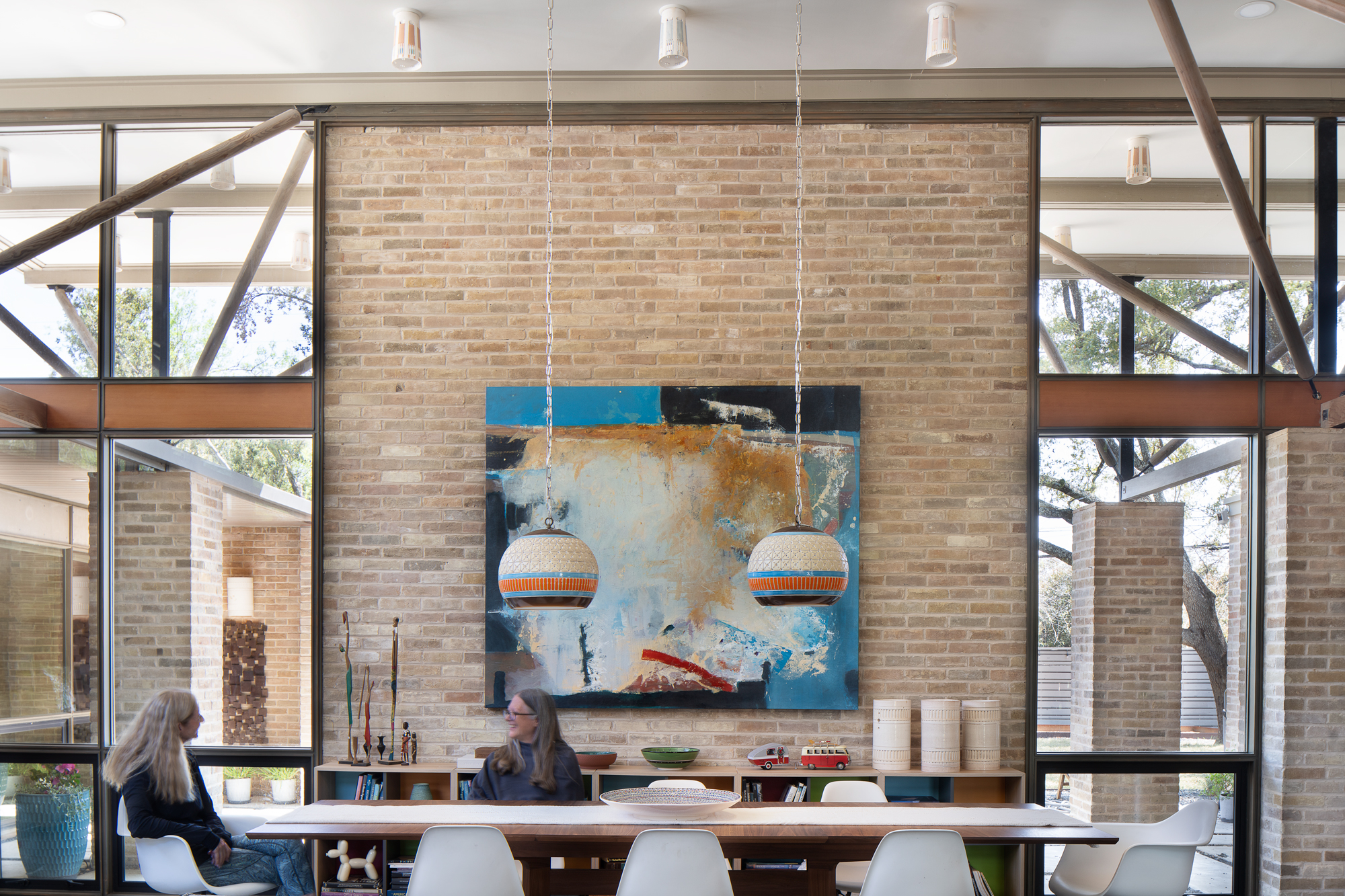
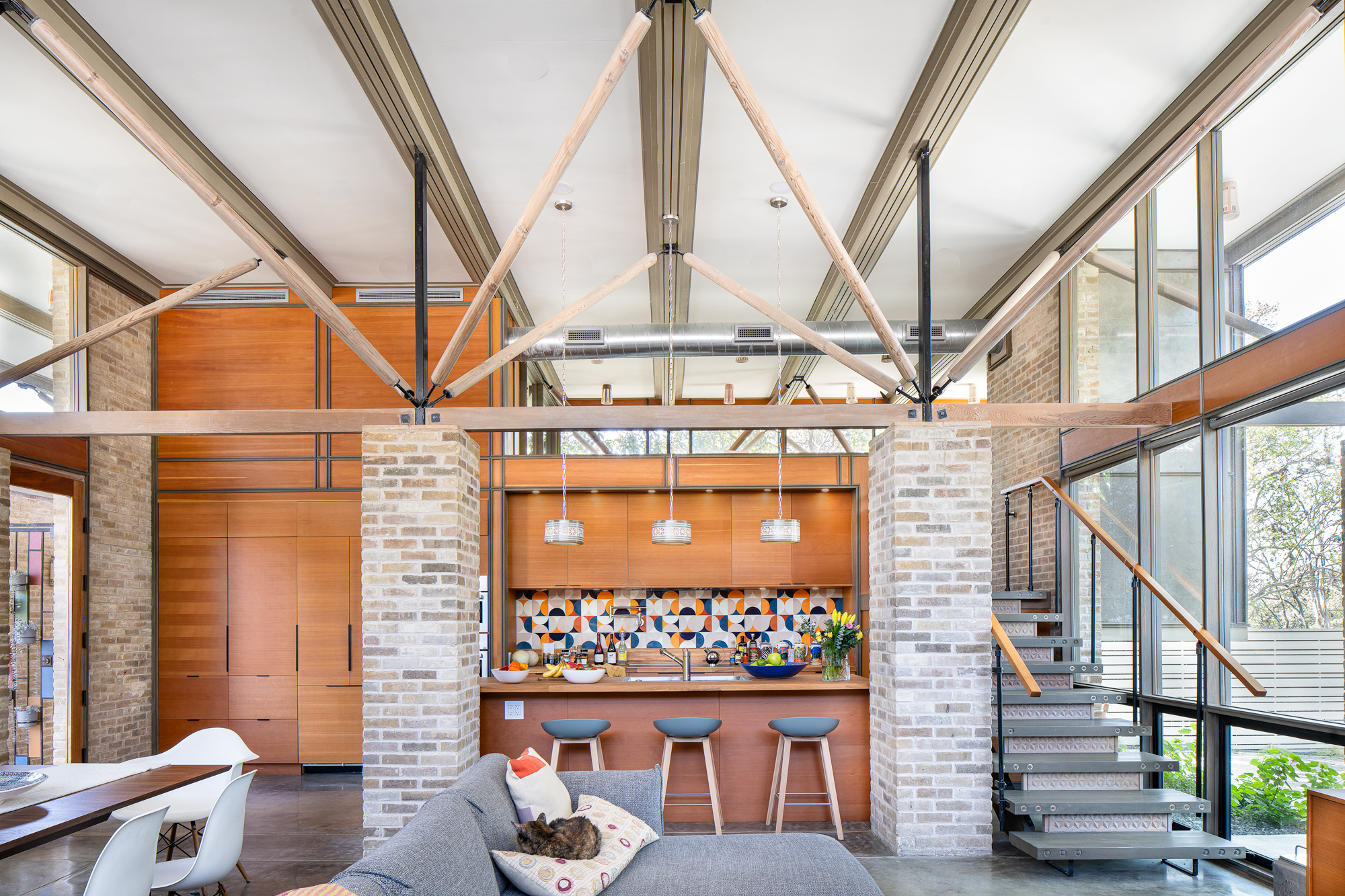
Bringing the residence back to Duke’s initial intent was a labor of love for the architect, who, with his team, constructed a mill shop in the backyard. There, all the doors and window frames were remade of salvaged wood. Meanwhile, the deteriorated concrete veneer panels cladding the exterior of the home were replaced with new fabrications custom made on-site.
In certain cases, Craig took small architectural liberties, including moving the primary bedroom from the front to the back of the house, with its intimate views overlooking the landscaped yard and moonlit patio.
One of the architect’s favorite spaces is the study loft, which was Duke’s personal office. While the previous owners had enclosed the room, shrouding it in darkness, Craig removed the paneling and added windows to reinfuse it with light.
Meanwhile, the damaged Saltillo tile floors were replaced with poured polished concrete, and Douglas fir panels were installed to conceal the cabinetry and appliances in the open kitchen.
Of all the public spaces, the living room remains the heart of the family’s home, with walls of glass catching shadows and sunrays as the day goes by. Despite seamlessly blending the built and natural environments, however, this “glass house,” as it’s locally called, offers a privacy one wouldn’t expect.
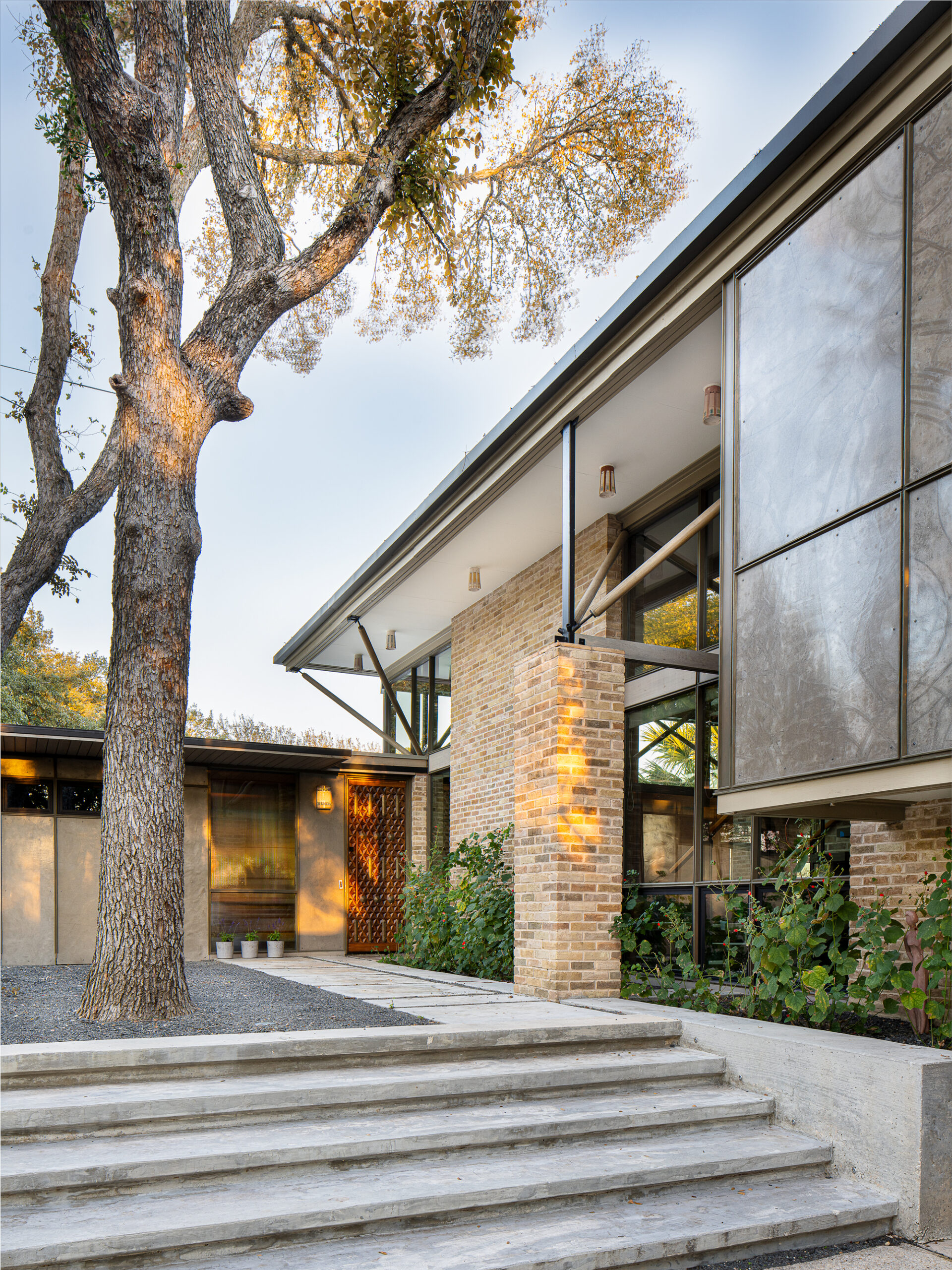
Another surprise? The home’s humble footprint. At just 2,450 square feet, it feels notably larger, thanks to the airy open floor plan.
Since finishing the project last year, Craig has received numerous accolades for his tireless dedication and unflinching vision, among them design awards from the AIA San Antonio and Texas Tech University’s College of Architecture. He’s also hosted several AIA functions there, with the indoor-outdoor layout readily accommodating large groups.
Now, as he reflects on the long journey spent resurrecting this once-dilapidated 1960s house, there’s a palpable sense that the reward was well worth the risk.
“O’Neil Ford gets all of the credit in South Texas for local modernism, but Mr. Duke’s home is something special, and we are incredibly fortunate and proud of how it turned out,” he said. “Every architect should hope that someone might see the unique nature of their work long after they are gone and decide that it’s special enough to fight for.”