
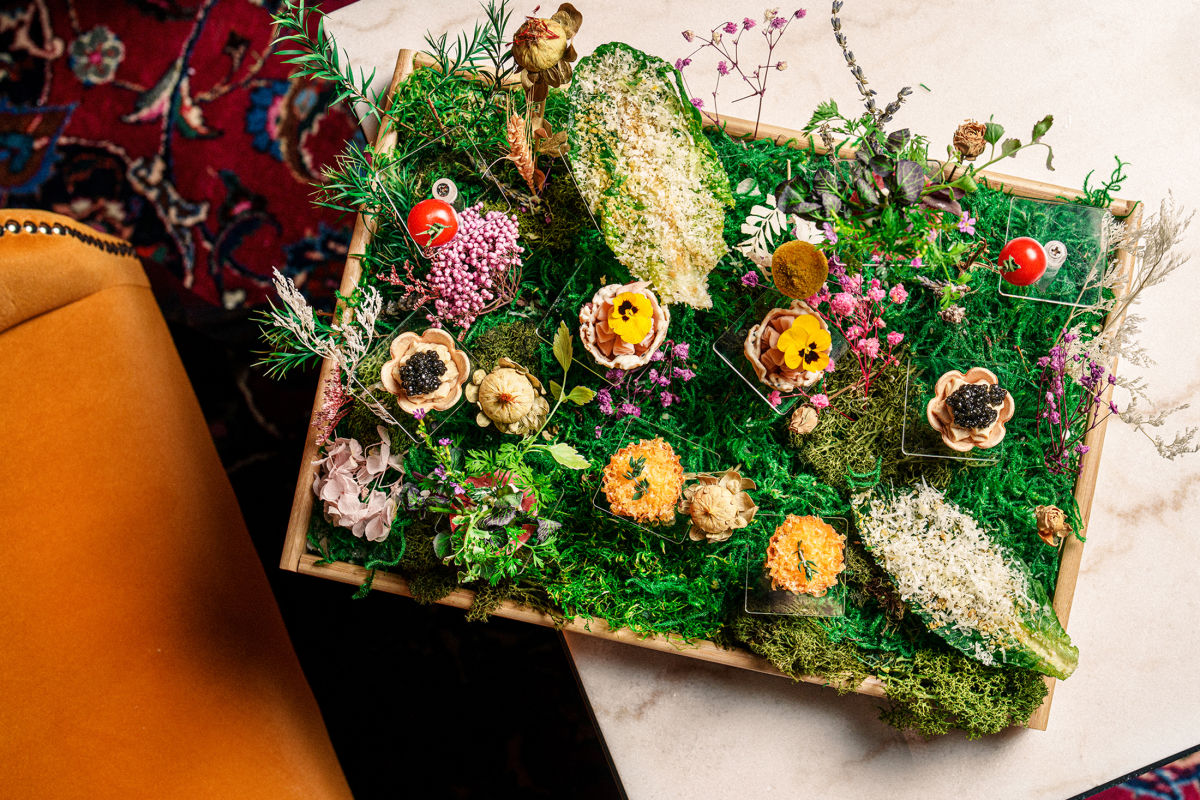
Eculent is back.
It doesn’t get more playful than what shows up at the table at Eculent.
I first discovered the Kemah restaurant in its earlier, reservations-only iteration in 2023. By that time, Eculent had already been featured in Houstonia and national publications, with chef David Skinner deemed the “Willy Wonka of Food” for his distinct and playful use of molecular gastronomy.
Despite my research and the elaborate descriptions, I still didn’t know what to truly expect. On my first visit, Skinner unleashed his tasting menu, capturing the flavors of a BLT sandwich inside a cherry tomato and Julia Child’s beef bourguignon recipe in a bite-sized morsel. That night, the Choctaw chef introduced diners to percebes, or gooseneck barnacles—a Spanish delicacy shaped like a miniature “dinosaur toe”—and a mound of meringue resembling a beehive filled with Pop Rocks that buzzed in your mouth. He was akin to a mad scientist, shifting lights and sounds to fit each dish. I still think about the salad, inspired by his time in nature, that required diners to dig through the leaves to unearth snails with a scented fork that evoked a damp forest.
Only later would I get a behind-the-scenes tour of his lab, filled with 3D food printers, dehydrators, machines whose names I likely cannot pronounce, and his garden, where winding beanstalks grew longer than my arms.
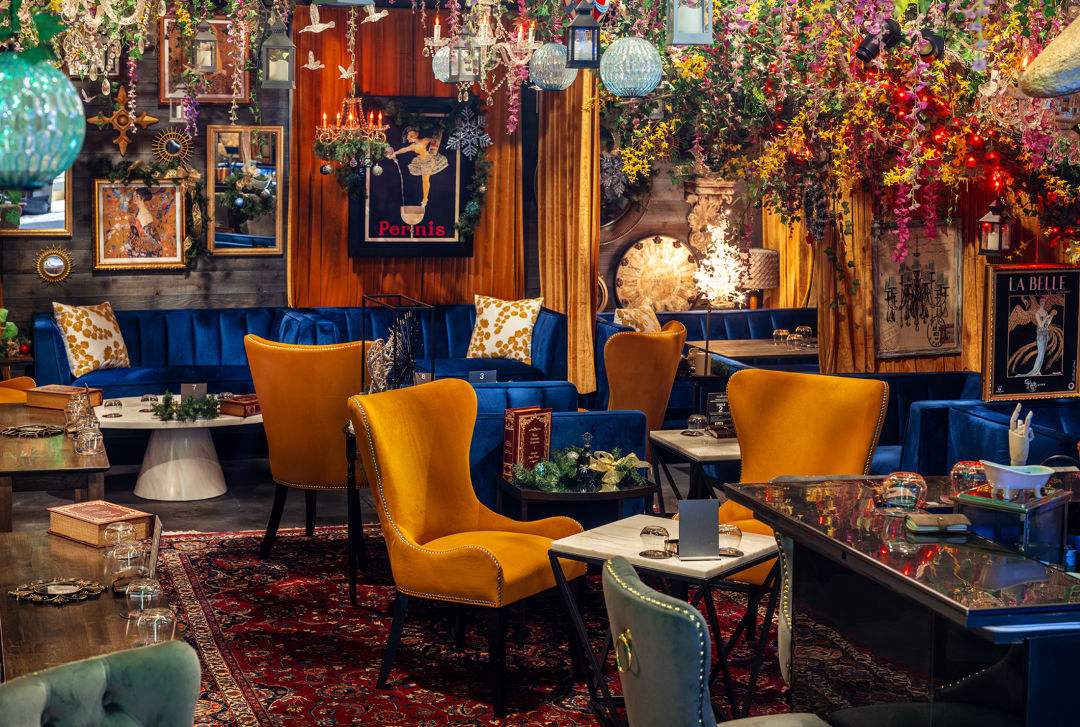
Eculent’s decor is just as wild as its menu.
Skinner was as inventive as he was thoughtful. In his dining room, nearly every dish was tied to a personal story. His walls were filled with mementos, books, and pictures, which meant diners were bound to linger. And at the end of the meal, the chef’s counter opened to reveal a compartment; hidden inside were an additional take-home dessert for each diner and a leather notebook filled with messages from all the people who had sat in those very seats before us (we were encouraged to leave our own notes for future diners). I’d learn that the tiny dining room had served astronauts, award-winning chefs, and foodies from all over the country, some of whom had flown in for just one night to experience Eculent. Somehow, it still felt like a secret, tucked away in Kemah, albeit a pricey one (seats started around $200).
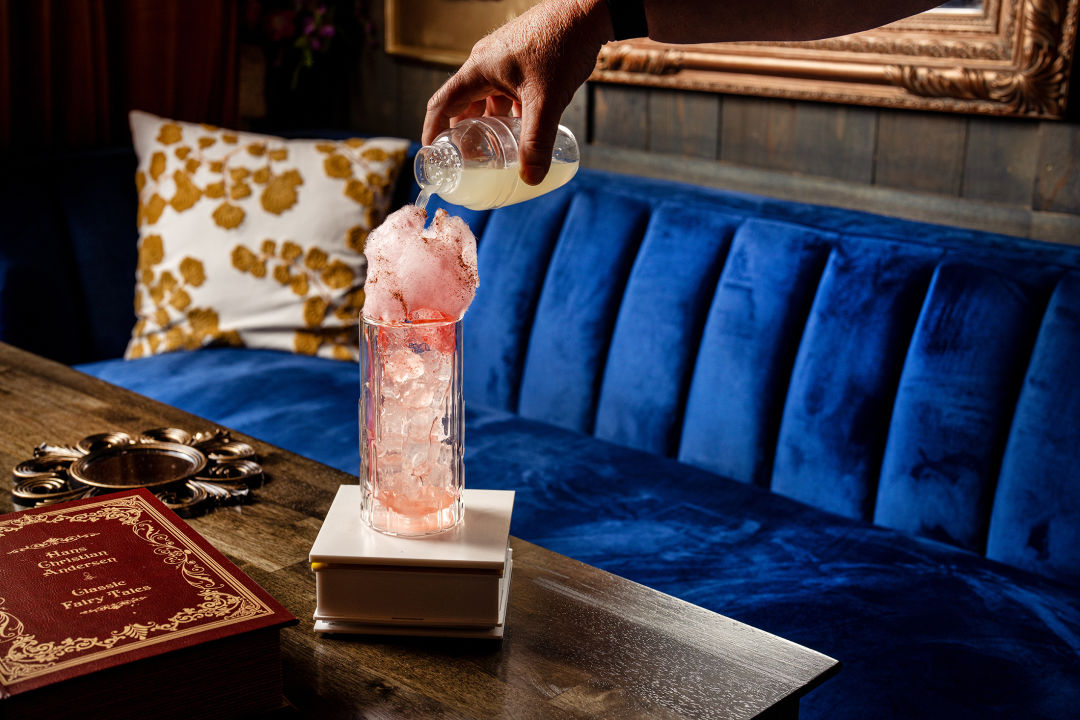
Eculent Restaurant and Liquid Lab features zany cocktails with thoughtful ingredients, many made in-house.
You can imagine my dismay when Skinner announced that Eculent would close in March 2024 after roughly a decade. Everyone needs to experience this, I thought, but I kept my disappointment mostly to myself. I was also excited about what Skinner was making way for. Ishtia, a restaurant entirely dedicated to Native American cuisine, would showcase familiar ingredients—squash, beans, corn—in a refined format with the chef’s signature presentations: smudge stick salads that cleared the air and whet the palate, tender scallops with corn puree surrounded by bursts of seaweed steam, and a sneaky snake-shaped noodle in a bath of chicken broth. It still had the showy flair and technique Skinner was known for, and the need for diners to understand—to more deeply recognize—how Indigenous cuisine has shaped our entire foodways could not be overstated.
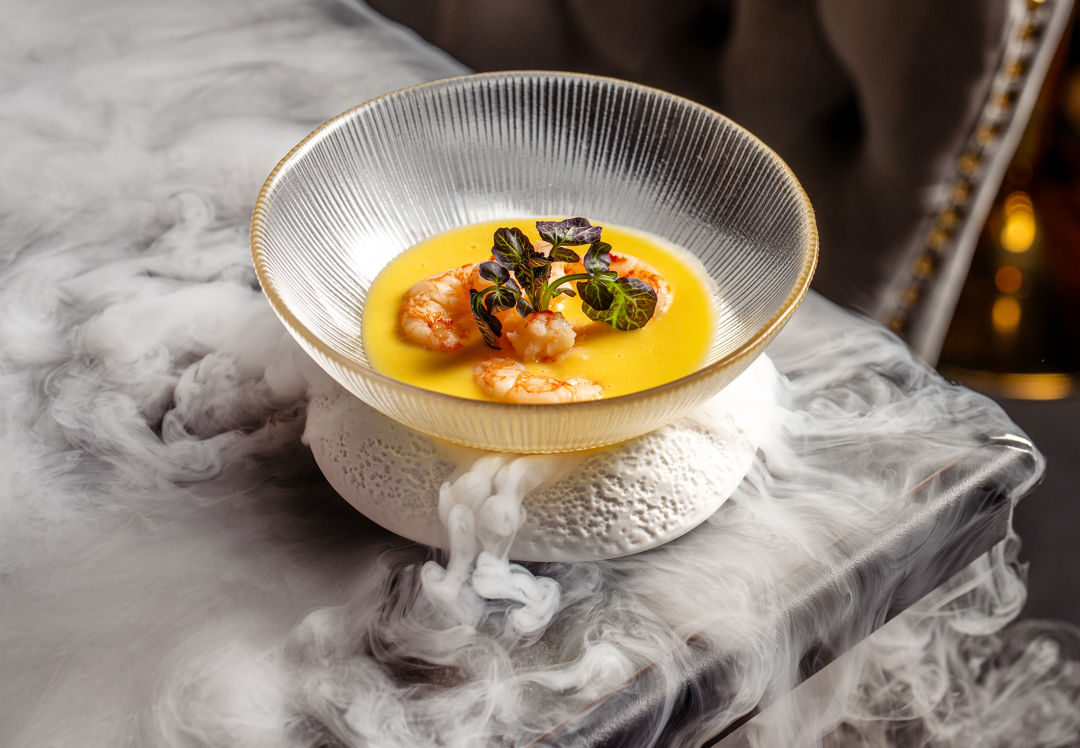
The lobster in corn butter is an Eculent favorite.
Alas, even after a spectacular dinner at Ishtia, I felt a sense of mourning for what had been—the excitement of Eculent, the mystery, the rare playfulness harnessed in what would typically be a stuffy tasting menu setting.
But now, it’s back.
Skinner has revived Eculent, setting it in the majestic, lush next-door space that once housed Th Prsrv. Reopened in October 2025 as the Eculent Restaurant & Liquid Lab, the chef offers an entirely new format, one where reservations are encouraged, but not required, and the menu is mostly à la carte.
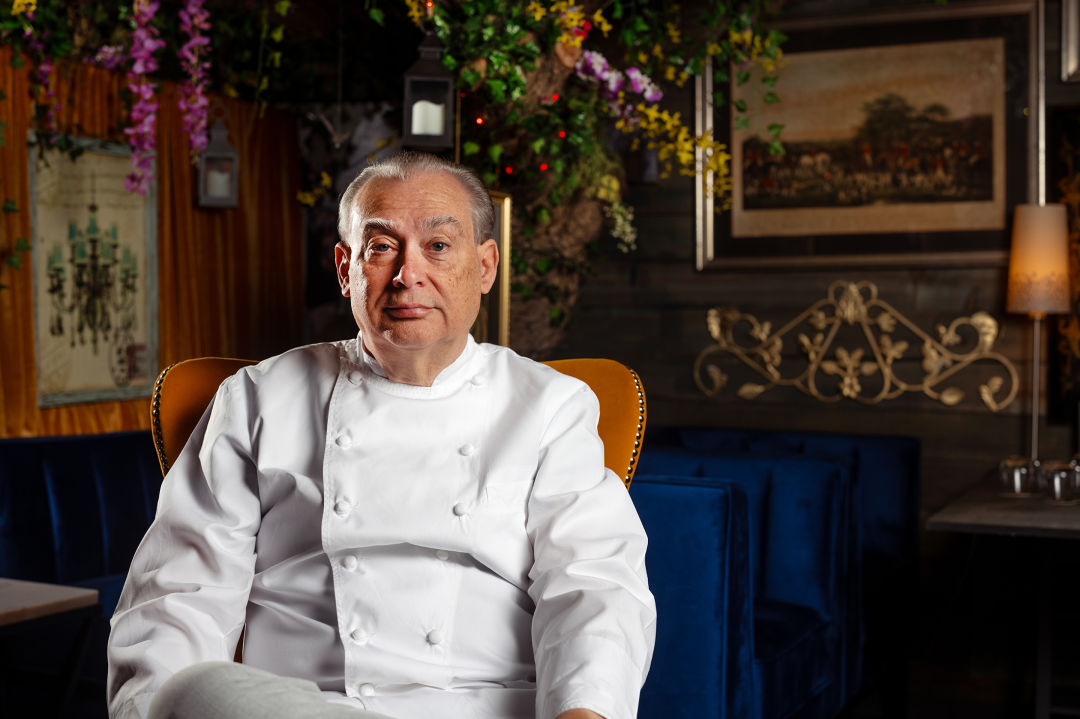
Choctaw chef David Skinner has built a reputation for both his Native American cuisine and using molecular gastronomy techniques in his food.
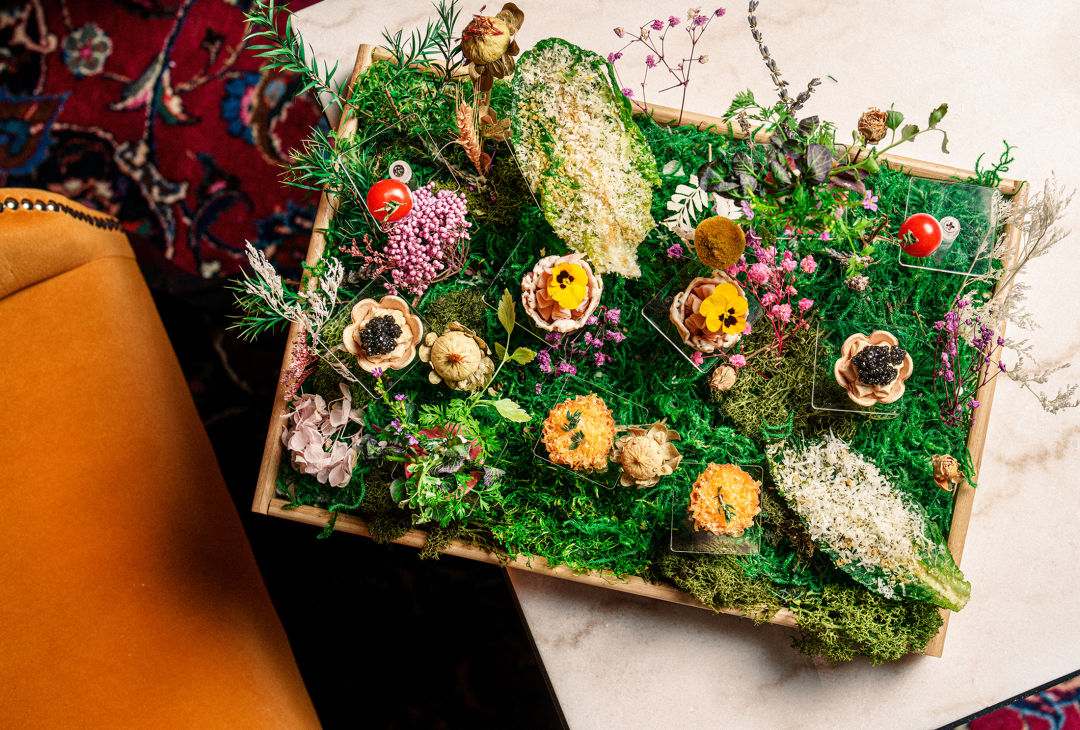
The playful spirit of the original Eculent remains. Sitting underneath the illuminated leaves of live trees, diners can order some of the former tasting-menu-only establishment’s greatest hits. The elaborate 13-course tasting menu, which is set in a mossy, forestlike tray, features star bites, like that tomato BLT, a decadent savory mousse with a bump of caviar, and a sphere of French onion soup. There are new items, too, like Pig in a Cloud (pork belly enveloped in a tuft of pink cotton candy); lobster in silky corn butter; a semideconstructed, open-faced beef Wellington that puts traditional forms to shame; and Skinner’s signature 14-day dry-aged duck—delicious no matter how it’s served (even as a garnish on one of the old-fashioneds).
In this more casual setting, diners can also curate smaller menus, meaning there’s no set price point. This makes the space more inviting and affordable for all occasions, unlike more costly fine-dining or tasting-menu restaurants. “We have something for everybody now, I think, without making it for everybody, right?” Skinner says. “You find sort of what speaks to you.”
The biggest change: Skinner’s incorporation of technology and AI. The menu, available through a QR code set on the table, could elicit some groans—but give it a chance.
Skinner says he’s spent years designing his own app that lets diners order from the menu and customize their meal through an AI concierge, Alasdair Popplewell, a “British butler.” Alasdair asks diners a series of questions about what they hope to experience, including price point and allergies. This easy-to-use platform also fuels Eculent’s new Liquid Lab, where diners are encouraged to use their devices to concoct their own cocktails made from thoughtfully sourced ingredients: spirits, elixirs, and juices made in-house, among more daring additions (camel fat, anyone?).
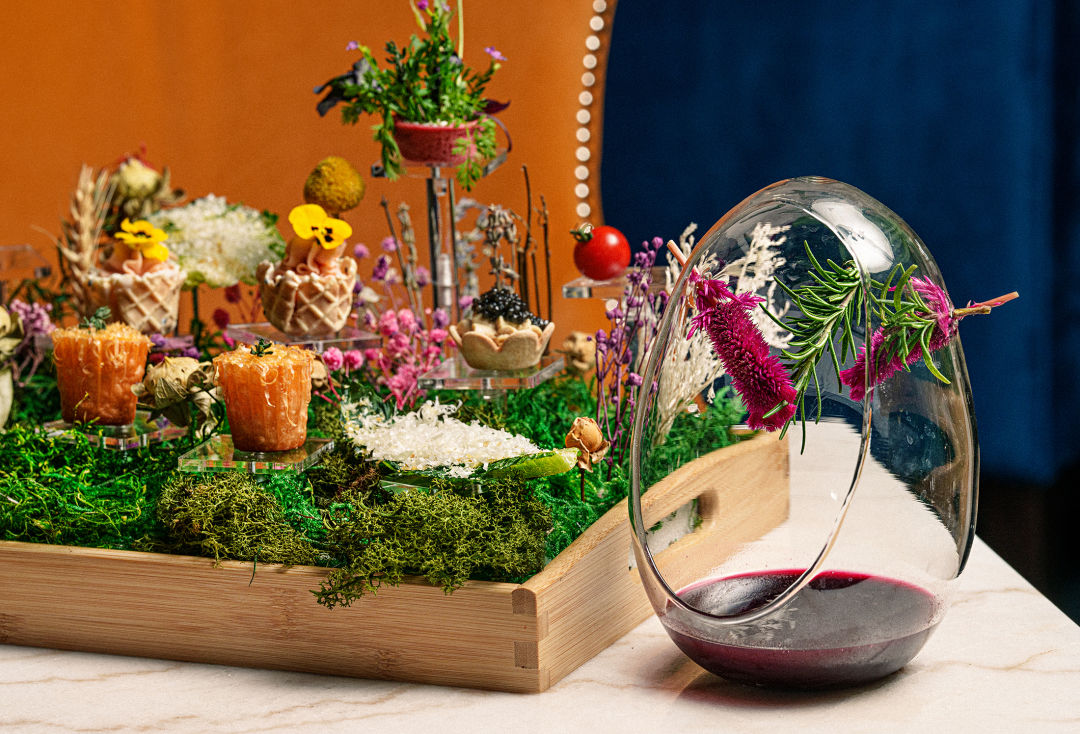
The presentation at Eculent is never dull.
“You can explore the menu. You can build your own tasting menu. You don’t have to ask Alasdair. You can just do it yourself,” Skinner says. A cocktail list is also available, featuring tried-and-true and often theatrical options, such as a sage-filled cocktail served in a glass resembling a mask, plus the most promising cocktails created in the app and ordered by other guests.
At the end, each diner’s entire order is saved to their personal profile, which they can edit and download, making it easy to reorder their favorites and tweak their experience for future visits.
Previously, Skinner said he made most of his technological investments to serve his restaurants. He built the system that let him adjust Eculent’s lighting, sounds, and smells to accentuate the dishes on the table. “This time, I flipped the script to where it’s now: ‘Let’s do everything we can to create this technology for the guest,’” he says. “…We’re going to put the guest in complete control of what they want to do.”
But don’t expect staff to skimp on service or hide behind screens. Mixologist Courtney Davis is always checking in, delivering drinks, and coming up with new ideas on the fly. (In fact, overhearing our table’s conversation about a recent craving for peach, Davis slid over an impromptu drink she made with us in mind). And it’s likely the pastry chef, Evie Scivally, will hand-deliver mind-boggling desserts, like a vertical crème brûlée lit aflame tableside (the spectacle doesn’t stop).
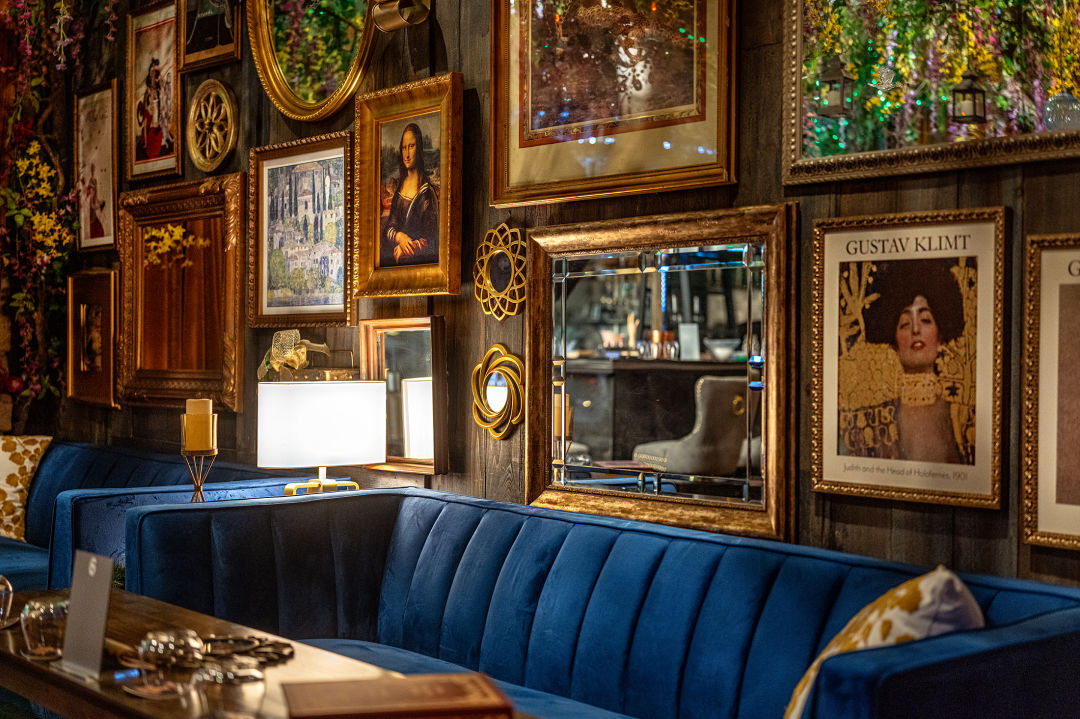
Eculent’s eclectic decor adds to the dining experience.
In some ways, Eculent is unfinished. Being the chef that he is, Skinner still has a lot up his sleeve. He continues to experiment, tinker, and consider the challenges and ever-changing nature of the restaurant industry. Come April 1, Eculent will debut new dishes and cocktails in its current space and slightly shift its format once again to serve its complete tasting menu exclusively in an area of Ishtia to meet increasing demand.
Eculent has also incorporated take-home alcoholic beverages and cocktails, a newer Texas hospitality offering that was a silver lining of the COVID-19 pandemic. It’s launching a new monthly meal subscription service through Table 22. For $125, diners can pick up a take-home spread from Eculent for two (with heating instructions included), and there’s a new speakeasy component coming soon.
In a world where fine dining can feel too formal, too serious, and too expensive, Skinner’s approach to food is refreshing. At Eculent, he is the scientist, the chef, and the magician, but diners aren’t just watching the magic anymore. Now, they’re part of it.