
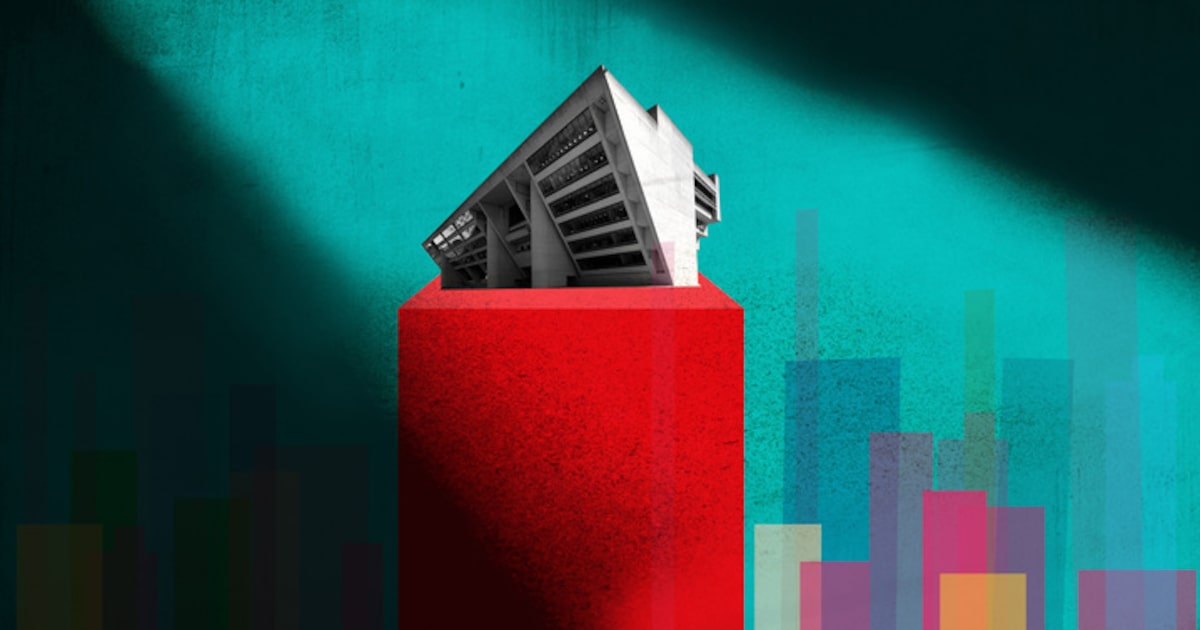
If there was any heartening news to be gleaned from last week’s City Council meetings on the future of City Hall, it was surely the show of public support for saving I.M. Pei’s iconic building. Over the course of two hearings, on Monday and Wednesday, speaker after speaker came to the council floor to argue for keeping Dallas government in the building — a remarkable outpouring for a work of brutalist architecture that can be hard to love. Some 90 individuals spoke in favor of repairing the building, with 20 arguing to abandon it.
“I was overjoyed to see that much interest from our taxpayers,” said Paul Ridley, one of the council’s chief opponents of the plan to jettison the building in the name of economic development. “They recognized this is a critical issue for the future of the city, and they came out.”
The response appeared to have at least some impact on members of the council. Toward the end of Wednesday’s marathon session — which ran more than 16 hours before concluding at 1:18 a.m. — the council agreed to add language to its directive to city staff ordering them to explore the options not just for moving out but also remaining in the building.
That language was a watered-down version of an amendment proposed by Ridley that would have forced city staff to complete an analysis of the costs and benefits of remaining in the building while conducting phased repairs, and to do this before exploring options for moving out and redeveloping the City Hall site.
News Roundups
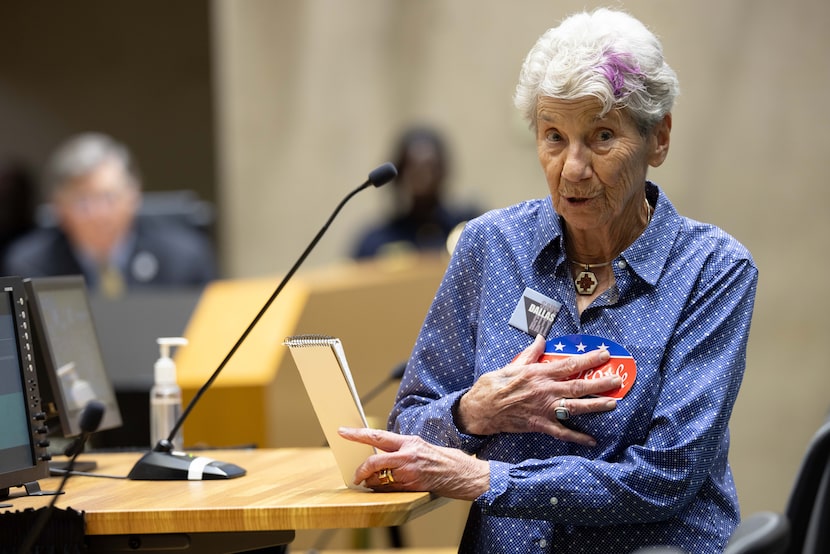
Martha Heimberg argues for saving City Hall during last Wednesday’s council hearing.
Juan Figueroa / Staff Photographer
“We got a bit of a reprieve. The question in my mind is, will they do that in good faith?” said Ridley, referring to the city staff’s analysis.
There was another positive development for those hoping to save the building. During Wednesday’s meeting, it came out that any attempt to sell the building or move city bureaucracy out of City Hall would require a supermajority vote, with a minimum of 12 out of 15 council members in support. At present, nine council members appear to be leaning in that direction, with six in opposition.
The legality of selling or building on City Hall’s much-maligned plaza is another unresolved complication, because state law requires the sale of park land to be put to a public vote, and advocates can make a compelling argument that the plaza — which was funded as a park when it was built, is listed as a park in the city’s downtown park master plan and is administered by the Park and Recreation Department — is a public park.
That these issues are now coming to light is indicative of a planning process that — in typical Dallas fashion — has been disorganized, rushed and lacking in transparency from its inception. Indeed, as Wednesday’s meeting dragged on past midnight, several council members seemed visibly confused about the resolution on which they were voting. Given the number of amendments, amendments to amendments, and amendments to amendments to amendments (some approved only to be retracted), it was easy to understand why.
This, to state the obvious, is no way to make decisions about the future of downtown.
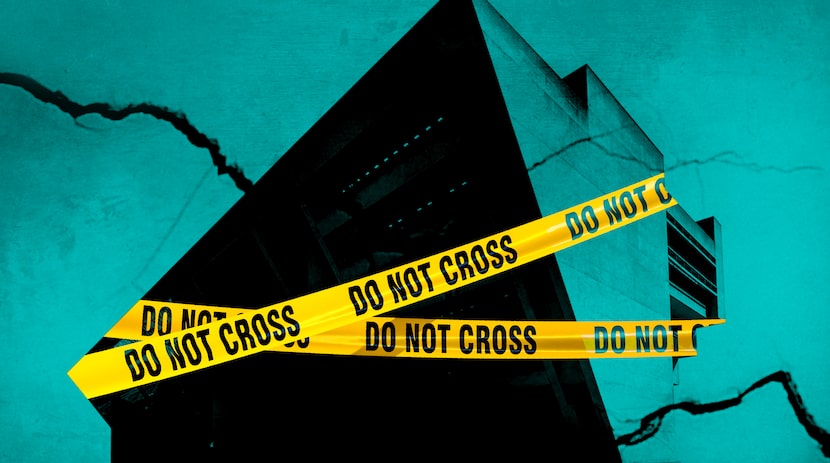
A report says City Hall requires $1 billion in repairs. Architects question that number.
Jeff Meddaugh / Jeff Meddaugh
Reason for skepticism
As became abundantly clear during last week’s testimony, there is good reason to be skeptical of a recently released report produced by the nonprofit Economic Development Corporation — an independent entity created by the city and led by real estate professionals — at the direction of the City Council. An analysis by a group of leading architects showed that only $329 million of that report’s $1 billion assessment for the city to remain in City Hall would be devoted to repairs, and even that estimate was, according to the architects, vastly inflated.
“The cost projections provided to date by both staff and the EDC team of consultants are overtly biased toward achieving an outcome that would require relocation,” Robert Meckfessel, one of the architects who provided that analysis, told the council. “They are filled with contradictions, gaps and fuzzy numbers, and do not give consideration to responsible phased renovation that would renew City Hall as a major civic asset and driver of revitalization.”
That there could be differing opinions on what should be done about City Hall is understandable. But those opinions should be based on an objective analysis on which all parties can agree. Right now, there is broad suspicion that the fix is in. “There is a secret agenda operating here, which is to abandon City Hall and move elsewhere,” says Ridley, who noted that selected council members had been given tours of potential downtown relocation sites. That assertion was confirmed in a trove of emails from city officials reviewed this week by The Dallas Morning News.
This kind of behavior is no way to inspire public confidence. At this point, there is little secret that a majority (though not a supermajority) of the council, not to mention city staff and downtown developers, seem ready and willing to move city government into vacant space in one of downtown’s aging office towers and to replace City Hall with a new arena for the Mavericks.
If moving out of an aging City Hall building only to move into an aging office tower seems absurd, that’s because it is. Even if the EDC’s numbers are taken as gospel, the costs of moving into a retrofitted tower could exceed the costs of rehabilitating Pei’s building.
There is also good reason to question the urgency with which this decision is being foisted on the city. At Wednesday’s hearing, members of the EDC team argued that market conditions — that is, the high commercial vacancy rate in the downtown core — mean the city must act now if it is to get a good deal on space in a nearby tower. But this would seem to contradict the argument that moving city government into such a tower is necessary to jump-start vitality in the core — one of the principal arguments for ditching Pei’s building.
As several council members noted, EDC’s consultant team included firms that could benefit from a move out of City Hall. The real estate consultant CBRE, for example, represents several downtown property owners. AECOM, which reviewed costs for repairing City Hall, builds basketball arenas, including the Intuit Dome, the recently completed home of the NBA’s Los Angeles Clippers.
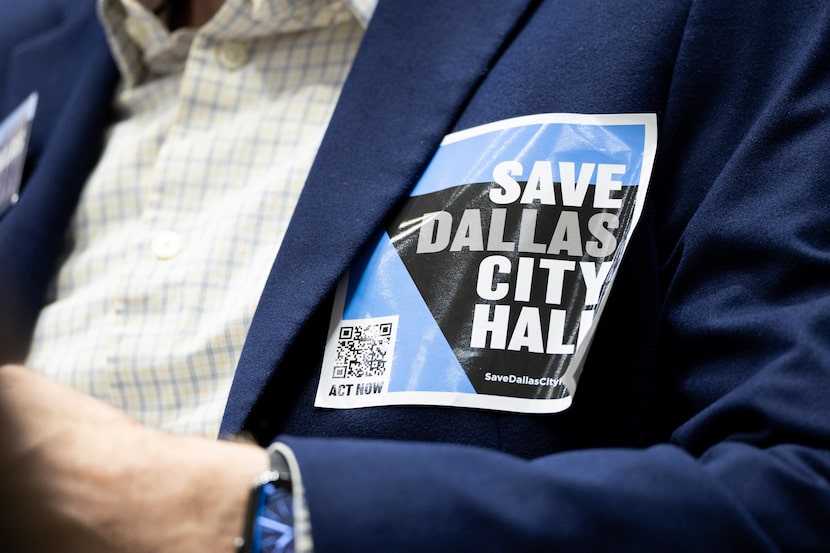
A “SAVE DALLAS CITY HALL” sticker worn by a speaker at last Wednesday’s council hearing.
Juan Figueroa / Staff Photographer
No comprehensive plan
Above all, Dallasites should be asking civic leaders why a decision about City Hall is being fast-tracked when there is still no plan for the space freed by the remaking of the adjacent Kay Bailey Hutchison Convention Center. The area vacated by that project — more than 30 acres — is large enough to build a new arena, obviating the need to tear down City Hall for that purpose.
Demolition has already begun for the convention center, so if the Mavericks want to begin building on an expedited timeline, that site would be a superior option. Even if the council were to vote to move out of City Hall, it will be years before that could be accomplished, never mind the time, expense and environmental cost of demolishing the immense concrete building.
Just as the city has made no plan for the vacated land at the convention center site, it has offered no analysis of the impact on Victory Park if and when the Mavericks (and the Stars) leave American Airlines Center. The decades-long struggle to make Victory a viable neighborhood should give pause to proponents of tearing down City Hall to build an arena and entertainment district. Why would this new up-from-zero neighborhood be more successful than Victory, which was created from scratch on a reclaimed brown field, even as it siphons off Victory’s financial engine?
This cavalier attitude toward urban planning has been conjoined to a disingenuousness in the discussion of City Hall’s fate. Proponents of abandoning the building have consistently characterized this debate as a choice between aesthetics and rational financial planning, effectively gaslighting those who argue it is the plan to move out of the building that would be the epic boondoggle.
Also unhelpful has been the emergence of a racial dynamic in the discussions, highlighted by a campaign slogan — “Connect the Core” — promoting the argument that replacing City Hall with an arena would be an economic catalyst for historically Black South Dallas. “It’s obviously coming from development interests that want City Hall abandoned and demolished,” says Ridley. “I don’t understand how building an arena on the site of City Hall is going to create linkage to South Dallas.”
That said, it would likely benefit the developers and property holders in the area adjacent to City Hall and in the neighboring Cedars.
“This discussion is being driven by the economics of personal wealth, rather than the value of human-scale urban planning,” former council member and preservationist Veletta Forsythe Lill said during the public comment section of Wednesday’s hearings. “Our downtown should be connected and activated throughout. Hire a planner, not a developer.”
The city should follow that advice, and scrap the idea of demolishing its historic civic architecture.
 Karen Buchanan, first director of Dallas Architecture Forum, dies at 70
Buchanan was a beloved member of the region’s design community.
 Christine Ten Eyck, designer of downtown’s Harwood Park, wins National Design Award
The Austin-based landscape architect awarded for sustainable environments in the Southwest.