
Provided by Texas Marine Mammal Stranding Network
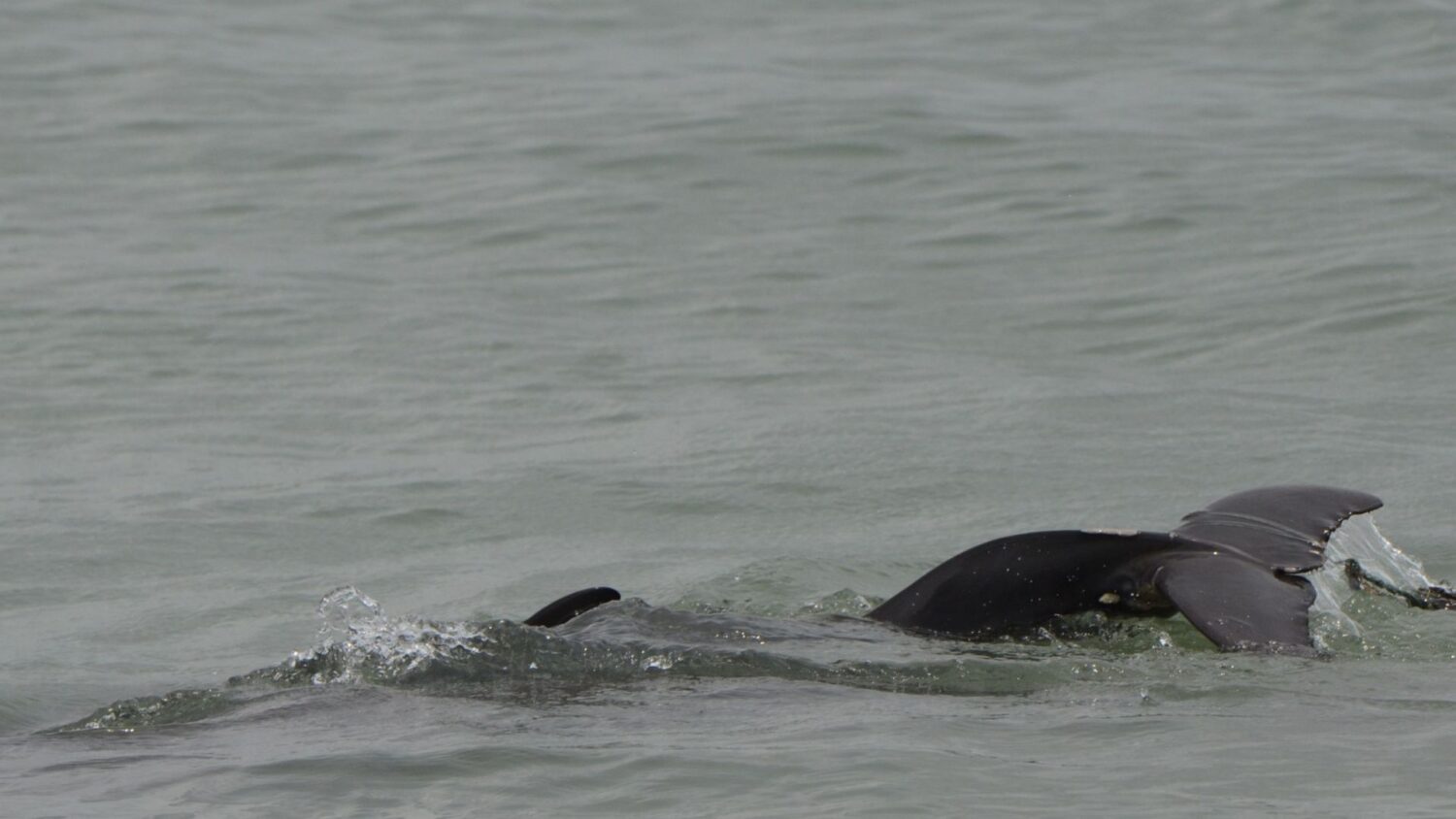
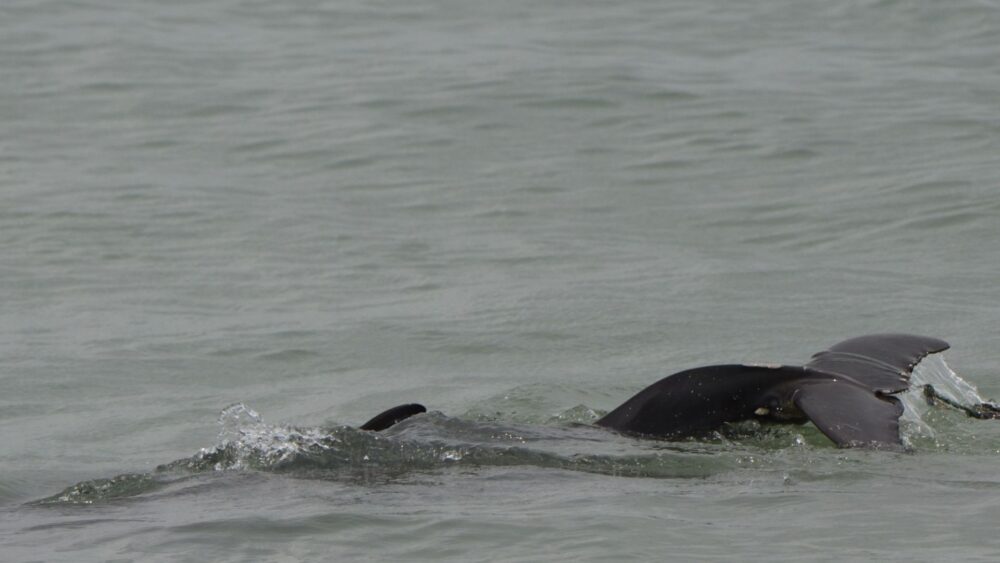
An entangled dolphin calf swims next to its mother off Port Aransas, TX.
As spring breakers gather along the Texas coast for vacation and more people cast their fishing lines into the water, marine mammal activists warn about “ghost fishing.”
“Ghost fishing” can occur when improperly discarded fishing gear, also known as “ghost gear,” floats in the marine environment, continuing to trap animals in the water.
“These entanglements are essentially life-threatening wraps at times,” said Heidi Whitehead, the executive director of the Texas Marine Mammal Stranding Network, a nonprofit that helps stranded marine mammals across the entire Texas coast.
Sign up for the Hello, Houston! daily newsletter to get local reports like this delivered directly to your inbox.
“It can include really extensive links of fishing gear that can weigh them down over time and prevent them from becoming streamlined enough to feed properly. It can basically cause amputations of their limbs,” Whitehead added. “Dolphins in particular tend to get these entanglements around their pectoral flippers or their tail flukes or their dorsal fin.”
RELATED: Galveston gears up for hundreds of thousands of visitors as spring break begins
Whitehead said the nonprofit responds to a total of about 150 mammal strandings each year, for all different reasons. She said on average, about 4-5% of those strandings are documented as entanglements.
“However, it’s really important to note that those numbers are very conservative because those are only the ones that we’re able to detect,” Whitehead said.
From September 2022 to November 2024, the Texas Sea Grant College Program at Texas A&M University worked with the coastal Texas recreational fishing industry to help prevent marine debris from fishing activities. The partnership reported that they collected and recycled 321 pounds of monofilament fishing line, equivalent to 436 miles of line.
“There are likely many animals that are becoming entangled that we don’t become aware of if the stranding doesn’t come ashore or they don’t get seen and reported on the water,” Whitehead said.
Whitehead recommended reusing leftover bait, using circle hooks and recycling fishing line as ways to prevent “ghost fishing.” She also said it’s important to never feed wild dolphins and never cast a line toward them. Whitehead said if someone does see an entangled, stranded or injured marine mammal off the Texas coast, it should be reported to the 1-800-9MAMMAL hotline.