

The New York Stock Exchange’s Lone Star State outpost, NYSE Texas, got off to a hot start. After announcing in February of 2025, it quickly amassed dozens of dual listings by the summer.
But what if a company wanted to do its initial public offering and get a primary listing on NYSE Texas tomorrow?
“We could do it,” the exchange’s president Bryan Daniel told The Dallas Morning News.
In an interview on March 4, Daniel spoke on his vision for NYSE Texas, his background in economic development, and what the future holds for capital markets in the Lone Star State. Here’s what he said, edited for length and clarity.
Business Briefing
Related

What is your vision for NYSE Texas?
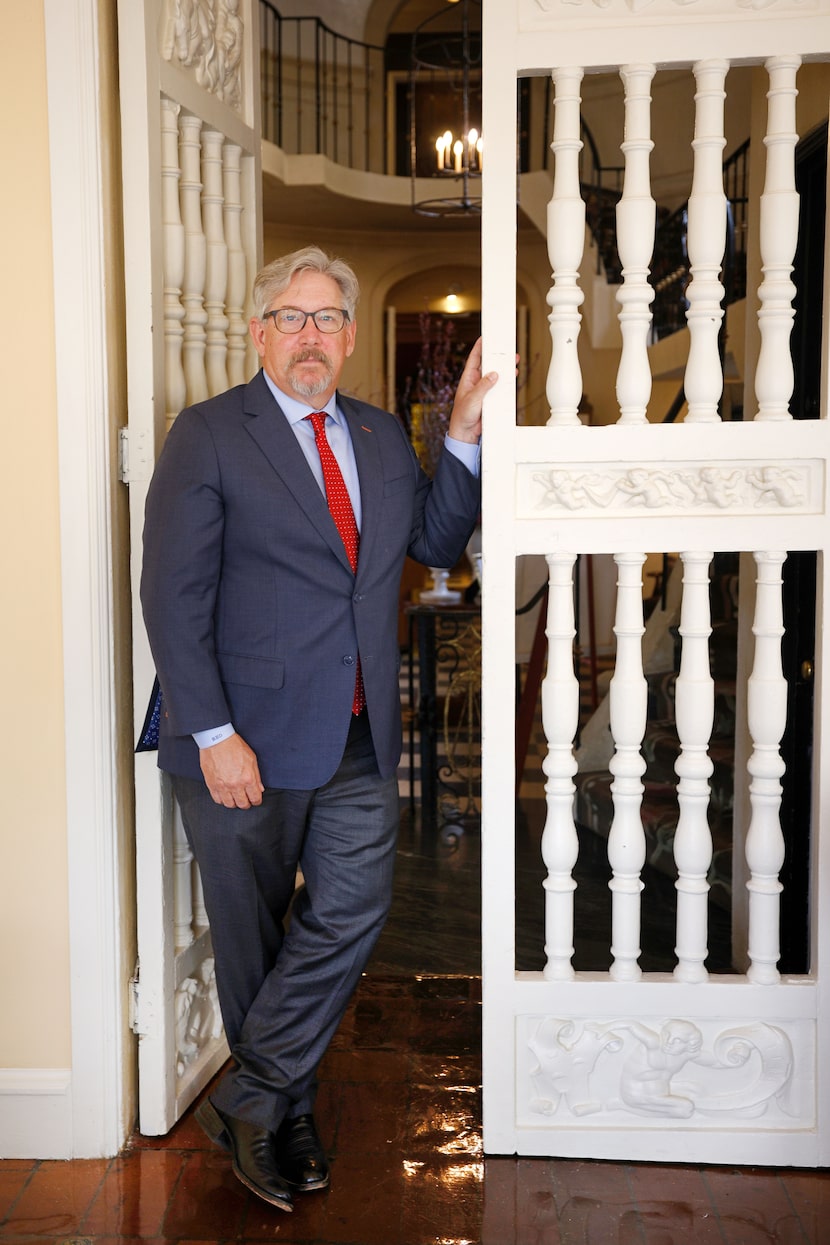
Bryan Daniel, president of NYSE Texas, poses for a photo, Wednesday, March 4, 2026, in Dallas.
Chitose Suzuki / Staff Photographer
Daniel: “When we talk to our companies, I think the excitement’s really been three distinct things. For a lot of companies who are based in Texas, I think there’s a lot of state pride and having this opportunity to have a listing on an exchange here in Texas. For other companies, having this anchor point in Texas is important to them in terms of how businesses do business in Texas. I think there’s probably a third group of companies who may not be headquartered here, but have a lot of either customers here or they have a lot of investors here and being listed on NYSE Texas helps them zero in on that customer base or their investor base.
“The reason we came here, all the things we’ve seen in Texas for the last 10 years or so. We saw a lot of concentrated business activity, and we saw opportunities. … I think our role here is where we can really help a company amplify those things. And so I think our listed companies, they want people around them that can really help make sure we’re all successful on this, and I think that helps drive a lot of the success that we’re seeing so far.”
Dual listings historically came from a pre-digital trading age where you needed physical access to different time zones and different markets. Today, what do you think a dual listing offers a company?
Daniel: “We’ve seen what technology has done. We see where technology is going. I think what a dual listing does today is it lets you zero in on a particular part of your marketplace. From a trading mechanics standpoint, your stock’s going to trade where your stock’s going to trade, and we understand that that’s going to happen. The dual listing, though, really helps a listed company amplify a particular message in a particular area in a particular way, to somebody specific. That could be customers, investors, the public at large.
“So instead of thinking of a dual listing as a necessity for trading, they tend to think of it more broadly. A dual listing gives us more exposure. It gives us possible access to liquidity that we know is out there. But it also helps us be part of a place, whether it’s a geographic place or a financial marketplace.
“They tell us what they want. We tell them what we can do. And as long as you take care of those market mechanics, and as long as you are helping them advance the thing that they’re trying to advance, I think that’s the real value of the dual listing for them, and they’re telling us that back.”
The Texas Stock Exchange got U.S. Securities and Exchange Commission approval, NASDAQ announced their own dual listings exchange based in Texas. What’s your perspective on competition for Texas capital markets?
“My focus is really almost entirely on what we think we can accomplish at NYSE Texas, but obviously, we’re aware of the competition. We try to understand what they’re going to be providing to their customers.
Related
“So I think people were reading the same signs from Texas, meaning business activity, what the state government’s doing. But we’re still in an early stage of this where we’re trying to grow, and we’re trying to grow in the best way that we can. I think what we’re offering our customers is what they’re asking for. They continue to ask for dual listings, so we’re going to continue to structure those in the way that the customers are telling us that they want.”
Are there any plans to open NYSE Texas up to and court primary listings?
Daniel: “Yes, absolutely. I think primary listings are going to be pretty key for sustained growth for NYSE Texas. There are a lot of companies that I think intend to be regional in nature, a lot of companies that have a particular unique tie to Texas and so they want to be listed on an exchange based in Texas. We’re very aware of that.
“We’re well into structuring our exchange to handle not just those primary listings, but IPOs right here in Texas, and we want to have the best possible experience for them when we do that. So yes, we’ve spent a considerable amount of time on that already. When a company tells us, we’re ready to do a primary listing, we want to do that in Texas. We’re ready for that.
“Companies obviously are watching us and talking to us and telling us what their plans are. And so when that match can be made, that match will be made.”
So all the technology and bureaucratic questions are sorted out to support primary listings?
Daniel: “The systems are good to go. The rules that we have in place today can support them. When you think about the mechanics of the market, the NYSE pillar is such a tremendous platform. We got the best people working on that, and I think they took what felt like the right amount of time to make sure the technology’s up to date.”
What are your thoughts are on the dynamic that’s emerged of maybe New York versus Dallas in capital markets?
Daniel: “I think if you look at this from an American perspective, we should be really proud as Americans that we have these two phenomenal capital centers. I think Dallas has done a great job.
“This idea that we would go court companies and somehow convince them to give up one for the other, that’s not really our focus. Our focus is to have the best possible exchange in Texas, and we’re headquartered in Dallas, and we’re proud of that, and we want to be a part of that. And I would say that the New York Stock Exchange, there on Wall Street, they feel the same way about the space that they occupy.
“For us, I don’t think it’s like competition between the two cities. I think it’s the ability to get the very best out of those cities. I actually was going through my phone and found pictures of where I was on the training floor in New York with Governor [Greg] Abbott in 2015. We’ve been building this economic base in Texas for a long time.
“There are a lot of companies, particularly financial services sector companies, who are headquartered in New York who have extensive operations in Texas. And I think there’s a lot of understanding that things are happening in Texas, and you have a lot of elected officials that want to make sure that the success continues. The growth of our workforce in this state, the growth of our GDP, I don’t think either one of those things happened by accident.”
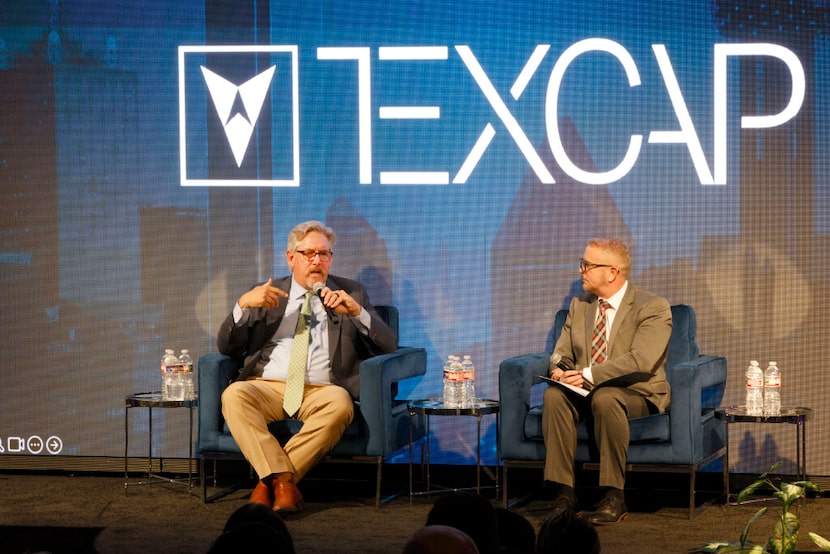
Bryan Daniel, president of NYSE Texas, left, speaks as moderator Eric F. Hinton, director of Center for Business Law & Leadership, SMU, listens during TexCap 2025, a capital markets conference, Wednesday, Oct. 8, 2025, at James M. Collins Executive Education Center in University Park.
Chitose Suzuki / Staff Photographer
The conversation around Texas’ growth sometimes positions it in opposition to centers like New York and California. Would you characterize it differently?
Daniel: “The way I would look at it is this: we’ve seen so much growth in the United States over the last five years or so. And I think a lot of companies, not just the financial services sector, but manufacturing, healthcare, technology companies see the need to diversify out of one particular center in the country and be a part of more focal points in the country. I think that’s become increasingly important.
“I think the conversation gets started because Texas is relatively new on the scene.”
The New York Stock Exchange is 233 years old.
Daniel: “Texas is younger than that as a state, so sometimes we’re viewed through this lens of, Texas is making a run for it, but it’s really been quite systemic growth and incremental growth over time. I’m sure when California came on the scene in the middle part of last century, there’s always this push and pull, when companies realize, oh, there’s a lot of customers out there, we need to move out there.
“This is just another chapter of the American economic success story. We are successful economically as the United States because we see opportunities, and we figure out ways to capitalize on those opportunities.”
Related
Tell me about NYSE Texas’ choice to build its homebase in Old Parkland, which is a really unique space in Oak Lawn.
Daniel: “You mentioned history. That’s obviously important to the New York Stock Exchange. It’s a historic entity on its own. And when we’re looking for space, I think the way that Old Parkland has been developed, history has been very important to that.
“The other offices and firms that are headquartered there, many of those would operate in a similar space that we operate in. And I think there’s always this draw to create a community.”
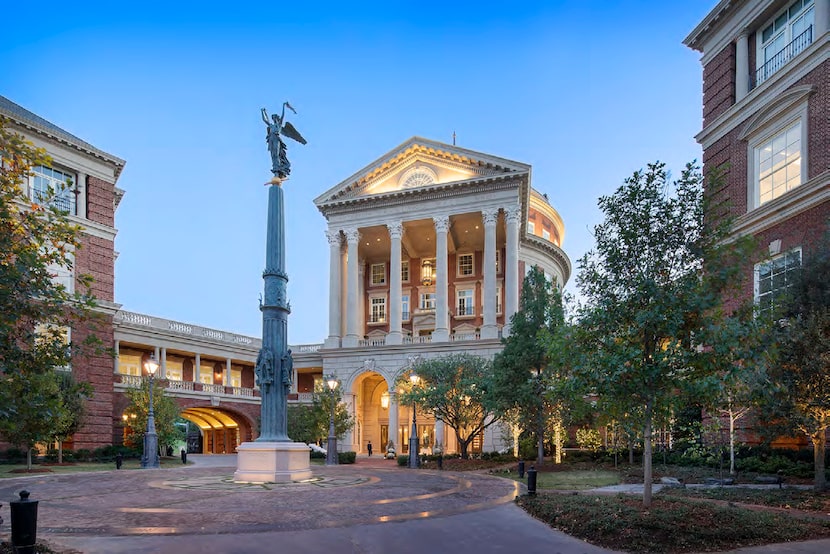
Crow Holdings built the landmark Old Parkland office campus in Dallas.
Crow Holdings
“But honestly, the folks at Parkland have really created an environment that is, in a lot of ways, focused on that economic success for the region, for the state, and for the United States, and that basic desire to be successful. That’s part of the draw too.
“So we end up with an incredible space that is really steeped in both Texas and American history. And then on top of that, it’s creating this ecosystem where the people you see in the cafeteria, in the parking lot, they’re not working on the same thing you are, but they’re working on a similar thing, and the spontaneous collaboration, good things come from that.”
Your background is not really a traditional stock market background. How do you think your background in economic development and as the chairman of the Texas Workforce Commission helps you lead NYSE Texas?
Daniel: “My particular background in helping the state of Texas grow its business base, there’s just a lot of overlap with what I do today. It’s about relationships and working with people who are trying to grow. So when I need to sit down and talk with a company about their growth and how they think we can help with that growth, I’ve had those conversations before, but in a different format.
“I’m not doing this by myself. There’s a phenomenal team of people that I get to work with, lots of experts in lots of different subjects. And so my job is bring all that together, make sure all the experts understand what we need and how we’re going to get there, and then I get to help communicate that to Texans and Americans and all the folks that are interested in what we’re doing.
“I have to admit, this was not on the Career Day schedule when I was getting started. But this, I hate say it this way, but it’s so true. This is so cool. This is brand new in Texas. This is history-making. This is groundbreaking. Like, how can I not be part of this cool thing that’s happening? And I’ve been pleasantly surprised with how much the things that I was doing for the state have directly translated to the things that I now need to be doing for NYSE Texas.”
 Stocks swoon as Iran war stokes anxiety, oil jumps above $80 per barrel
The US-Israeli war on Iran waged for a sixth day with little sign of easing, extending a surge in energy prices.
Y’all Street turf war heats up as Nasdaq Texas debuts SEC approval, planned listings
Five companies plus Nasdaq Inc. are expected to list on Nasdaq Texas.