

Key Takeaways
$11.8M NIH grant awarded: University of Houston researchers received an $11.8 million grant from the National
Institutes of Health for a first-of-its-kind study on language development in early
childhood.
Tracking thousands of Houston toddlers: The study will follow infants ages 18–24 months to understand why some children experience
early speech delays and how those delays affect later development.
New UH research center launched: The funding establishes a Clinical Research Center on Developmental Language Disorders,
bringing together UH researchers and partners including Texas Children’s Hospital
and Baylor College of Medicine.
University of Houston researchers have secured an $11.8 million grant from the National
Institutes of Health to conduct a first-of-its-kind study of early language development,
tracking thousands of Houston toddlers during a critical period of early childhood.
Led by Elena Grigorenko, the Hugh Roy and Lillie Cranz Cullen Distinguished Professor
of Psychology, and research professor Jack Fletcher, the project will follow 3,600
children ages 18 to 24 months to better understand how language skills emerge during
this early stage and why some children experience delays that can shape later development.
“By studying early language development in Houston toddlers, we’re building the knowledge
needed to identify developmental challenges sooner and support children at the earliest
possible stages.”
—Elena Grigorenko
The NIH funding will support a new national Clinical Research Center on Developmental
Language Disorders at UH, bringing together experts from psychology, education, health
and measurement sciences to study one of the most fundamental questions in human development:
how children learn language.
This will be the 14th national research center established at UH.
How the Study Will Work
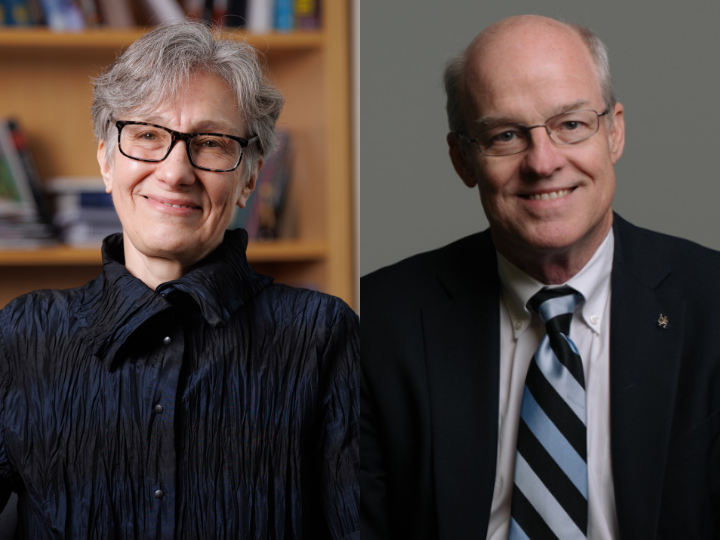
Prof. Elena Grigorenko and Prof. Jack Fletcher will lead the study.
To recruit participants, the research team will partner with the pediatric clinic
network at Texas Children’s Hospital, one of the largest in the region. Children will
be screened for early language development, allowing researchers to identify those
who show signs of delayed speech.
From that group, the team will follow a cohort of about 2,400 children — including
both late talkers and children with typical language development — through early childhood
to examine how language abilities evolve over time and how early delays may lead to
later challenges.
“This will be the first national study to estimate how common late talking is using
a large, representative sample of Houston toddlers,” Grigorenko said. “By following
these children as they grow, we hope to better understand the developmental pathways
that can lead to conditions such as developmental language disorder and autism.”
The Houston Community as a Partner in Discovery
Houston’s linguistic and cultural diversity makes it an ideal setting for this work.
The study will include children from a wide range of backgrounds who speak English,
Spanish or both, enabling researchers to examine how early communication develops
across different home environments and socioeconomic contexts.
“This level of investment from the National Institutes of Health reflects the significance
of this work to address a complex challenge affecting children, families and communities,”
said Claudia Neuhauser, vice president for research at UH. “By bringing together experts
from multiple disciplines and partnering with major health systems across the region,
the project reflects our commitment to advancing discoveries that impact our community.”
This research center brings together investigators from multiple UH colleges and departments,
along with partners at Baylor College of Medicine and the Texas Center for Learning
Disorders. The work also aligns closely with the mission of the Consortium for Translational
and Precision Health — a partnership led by Baylor College of Medicine and the University
of Houston to accelerate the translation of research into practical health solutions.
“By studying early language development in Houston toddlers, we’re building the knowledge
needed to identify developmental challenges sooner and support children at the earliest
possible stages,” Grigorenko said.