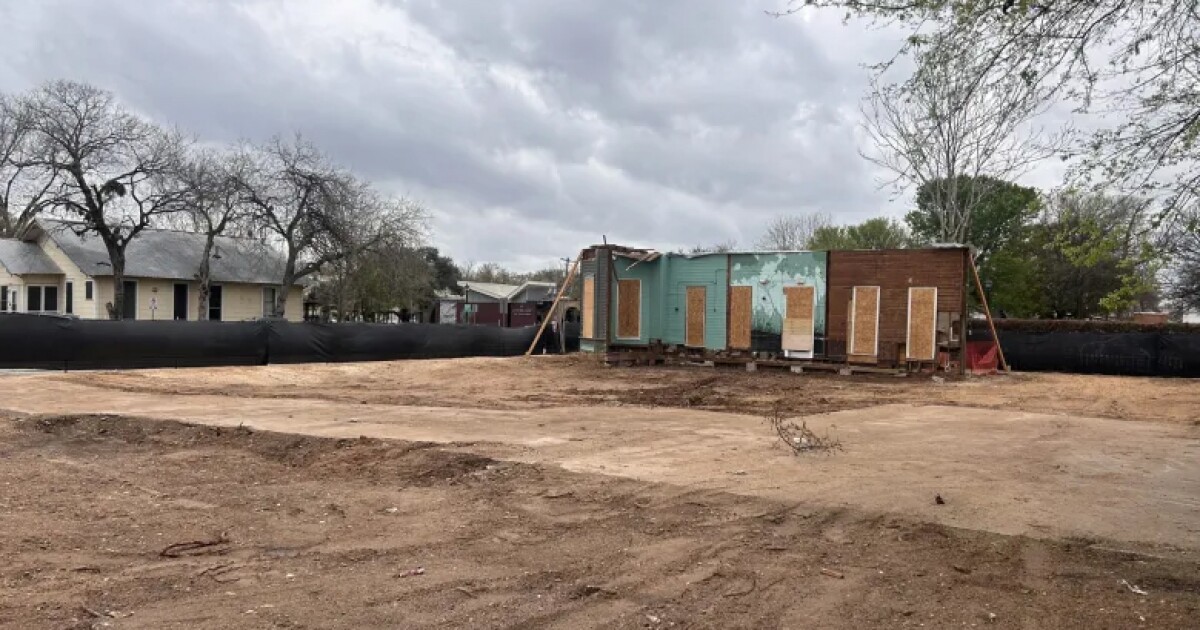
The city has stepped in to halt construction after a South Texas developer exceeded its approved demolition plans, tearing down all but a small portion of a 19th-century building in East Austin that preservationists say is part of the neighborhood’s rapidly disappearing historic fabric.
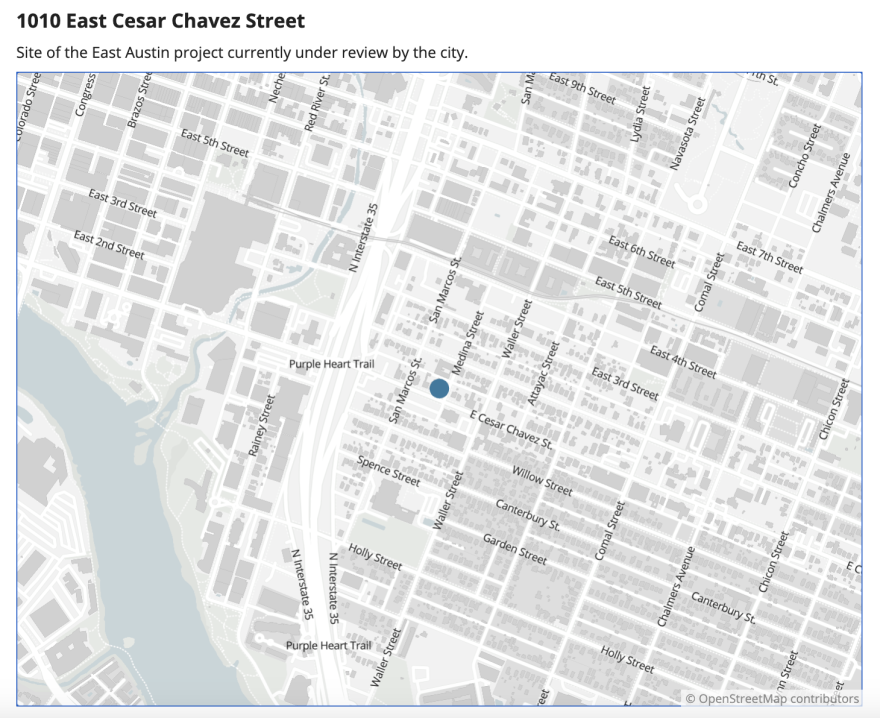
The structure at 1010 East Cesar Chavez Street was most recently home to the popular cafe and restaurant Cenote. The new owner, Haidar Properties, applied for a permit in 2024 to renovate the structure and bring in the Southern California-based coffee chain Urth Caffé. A little more than a year later, the lot is nearly bare, and the city has stepped in to halt work on the project and assess the demolition.
The developer presented its plans to Austin’s Historic Landmark Commission in December 2024, saying at the time “the intent would be to preserve as much as possible of the shell.” But looking at the remains on the site, critics say it’s clear that intent never became a reality. Despite the developer telling the commission it would preserve more than 3,000 square feet of the original property, only a small fraction of the historic facade remains standing, potentially jeopardizing its ability to receive historic landmark designation and underscoring the steady loss of historic structures on Austin’s east side.
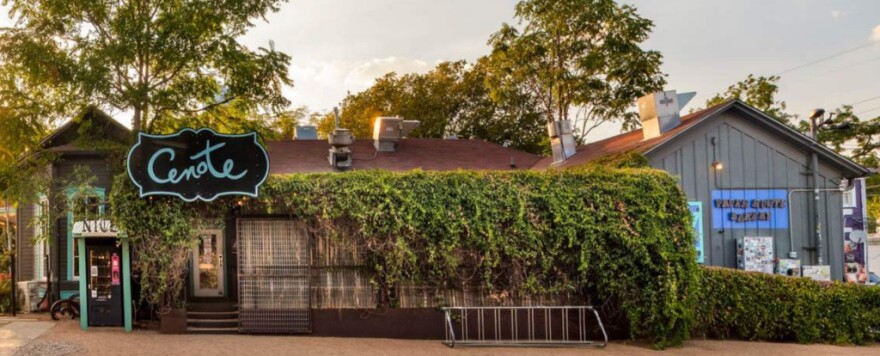
A photo from the Historic Landmark Commission showing the building in 2024.
“To see the building torn down like that, it was pretty heartbreaking,” said Mary Jenkins, who restored the building and opened Cenote in 2012.
Jenkins’ husband and business partner, Cody Symington, died in 2021. Following his death, Symington’s family, the majority owners of the property, decided to sell it.
Jenkins said she was sad to leave the neighborhood and the building, but “it turned out to be a good thing for us to relocate and to have a rebirth, in a sense.” Cenote’s new home is several blocks from its old one on East Seventh Street.
The mostly demolished structure on East Cesar Chavez Street was first built as early as 1887 and has been home to notable Austinites since. Despite being listed as a high priority for designation as a local landmark, the building was never formally designated.
Jenkins said that she and the other owners never sought landmark designation out of concern it could affect their ability to operate the restaurant.
“I wish we had now,” she said. “I thought I was leaving it in good hands.”
Haidar Properties declined to comment. A representative for the company, Ingrid Gonzalez Featherston, presented its plans for the new cafe at a December 2024 Historic Landmark Commission meeting, saying the developer had researched the building’s history to determine which elements were original in the hopes of preserving them.
According to backup documents from that presentation, the developers told commissioners that 2,622 square feet of the original structure would remain, while 959 square feet of an additional two-story structure would be remodeled. The plans also indicated the developers would replace the existing roof with one designed to match the original.
In a statement to Austin Current, the Development Service Department said the city visited the property last Friday after receiving a complaint and “confirmed that entire structures on the property had been demolished, with the exception of one wall that was not structurally sound.”
“A total demolition was not authorized, and in order to do so, the applicant would have needed to update the Site Plan Exemption and obtain a demolition permit,” the statement read.
The city said it has issued two stop-work orders in the hopes the developer can address the “unauthorized demolition and related code violations.”
Kevin Koch, who sits on the Historic Landmark Commission, acknowledged the plans he signed off on were pretty intensive, but agreed the recent work “looks more like a full demolition.”
“It’s upsetting that it went down this way,” he said. “There still would have been more facades than there are now … but they did maintain the front porch and the two exterior walls, which were original and most historic.”
Koch said he and other commissioners did not believe the originally proposed plan would not have prevented the property’s ability to become a historic landmark in the future. With much of it now gone, he said that possibility has diminished.
“People need to keep an eye on the bigger picture,” Koch said. “We’re losing buildings like this all the time.”