
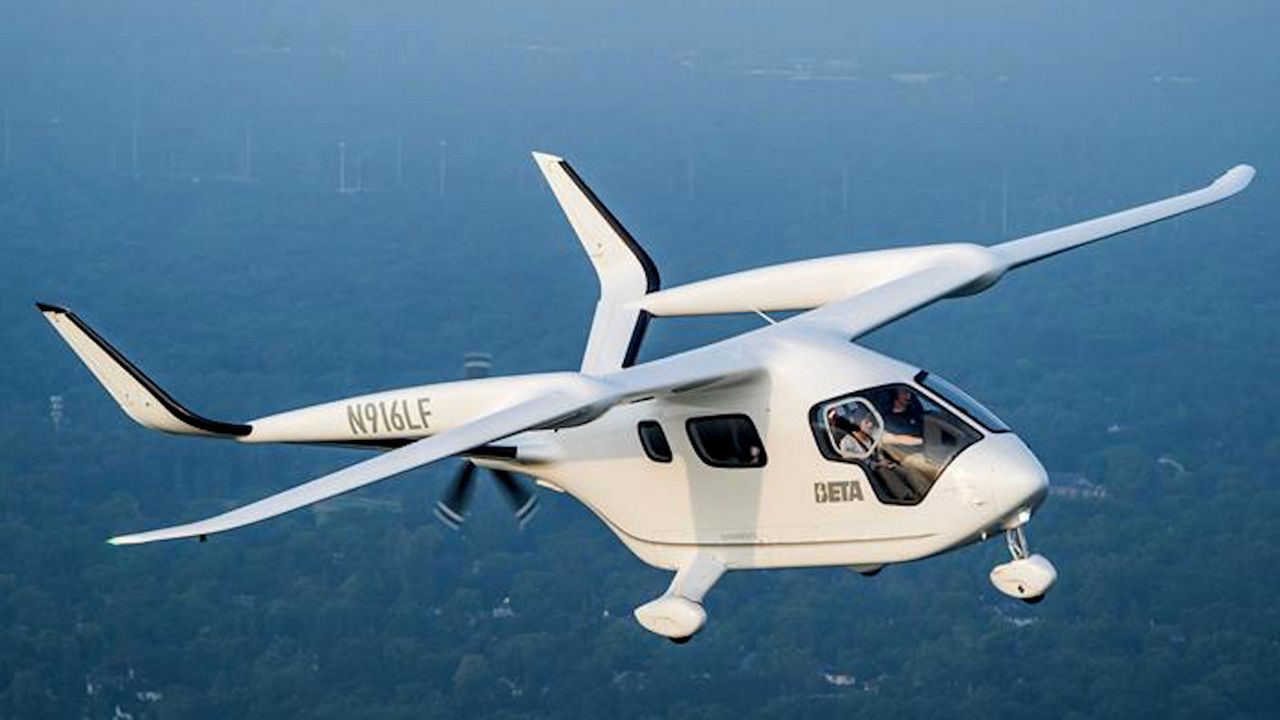
TEXAS — There’s Uber and Lyft, but many Texans will soon be able to add air taxis to their rideshare options, according to information released by the Federal Aviation Administration (FAA) and the Texas Department of Transportation (TxDOT). Both agencies announced the FAA’s plans to launch a pilot program conducting test flights between Dallas-Fort Worth, Austin, San Antonio and Houston.
North Texans like Matt McKay say they have realized that past visions of future air travel weren’t so far-fetched.
“I grew up in the era of ‘The Jetsons’ show, and it’s kind of hard to believe that we’re there now,” he said.
For Noah Wells, another North Texas driver, the air taxis will be a good way to skip the traffic and scale back on commute time.
“As somebody that’s traveled between Dallas and Houston a lot, thinking of ways to be able to get from one place to the other is pretty cool,” said Wells.
Texas, through TxDOT, represents one of eight states selected by the FAA to be part of the program, participating in the federal agency’s Electric Vertical Takeoff and Landing (eVTOL) Integration Program.
“One of the end states of this pilot program that we’re doing with Project Nexus is to enable air taxis for passenger movements as well as, you know, cargo, logistics, freight, medical, all those types of operations in the Lone Star State,” said Sergio Roman, TXDOT’s emerging aviation technical director.
TxDOT said some flights — which will operate between Dallas, San Antonio, Austin and Houston — will be manned, and others will fly autonomously. The seating capacities will vary from four to 12 passengers, depending on the eVTOL’s function.
“TxDOT maintains a very robust multidomain transportation system. When you think about roads and airports and rail and this is just going to unlock that third dimension for Texans and once it happens here, that’ll be able to expand nationally. So consider the idea that a drive that could take 40 minutes in pretty busy traffic now could one day take six, 10, maybe 15 minutes when you can just hop into one of these new technology power lift aircrafts,” Roman said.
The agencies are working with four different partners, including Joby Aviation, whose founder and CEO Joeben Bevirt called the program “a defining moment for American innovation.”
“We are rolling this out in three phases over three years. Our first phase is going to do a lot with validating the routes and the infrastructure that’s going to be required to make sure that this can be implemented safely and efficiently,” Roman said, indicating that the aircraft will start carrying passengers by the third phase. The first phase is expected to start in the summer of 2026.
President Donald Trump outlined the program in his “Unleashing Drone Dominance Executive Order.” TxDOT says the program is expected to create 2,130 jobs related to vertiport infrastructure and help connect the Texas triangle of Dallas, Houston and San Antonio, an economic super-region it said generates $2.1 trillion in gross domestic product.
However, it’s all happening during a shortage of air traffic controllers.
“The partners that we are working with have a plan for that, and that’s building that ground infrastructure, a digital infrastructure to make sure the traffic management like this is controlled,” said Roman.
He said, at this time, there is no word on how much this travel option will cost passengers just yet, but he said they hope to make the costs similar to what passengers pay for rideshares or trains.
“I’d probably wait and see how it develops over time from a safety standpoint,” McKay said, showing a little cautious optimism, yet looking forward to an overall safe landing.
Spectrum News asked people attending the South by Southwest Conference and Festival in Austin about their thoughts on the news. One attendee said it’s about time we have “flying cars,” but they won’t be the first in line to test them out.
“Flying cars? About time! We were supposed to have flying cars in the early 2000s. I’m not going to be one of the first people to try it but after a couple of them crash and they figure it out, then I’ll be into flying cars,” the attendee said.
Another festival-goer echoed similar nerves about the new technology.
“I would try it, I would try it at least once or twice, but I would have concerns. I’m the type of person, even with the whole electric car all that stuff, people have concerns, but I also think that sometimes, maybe it’s for the best,” they said.