
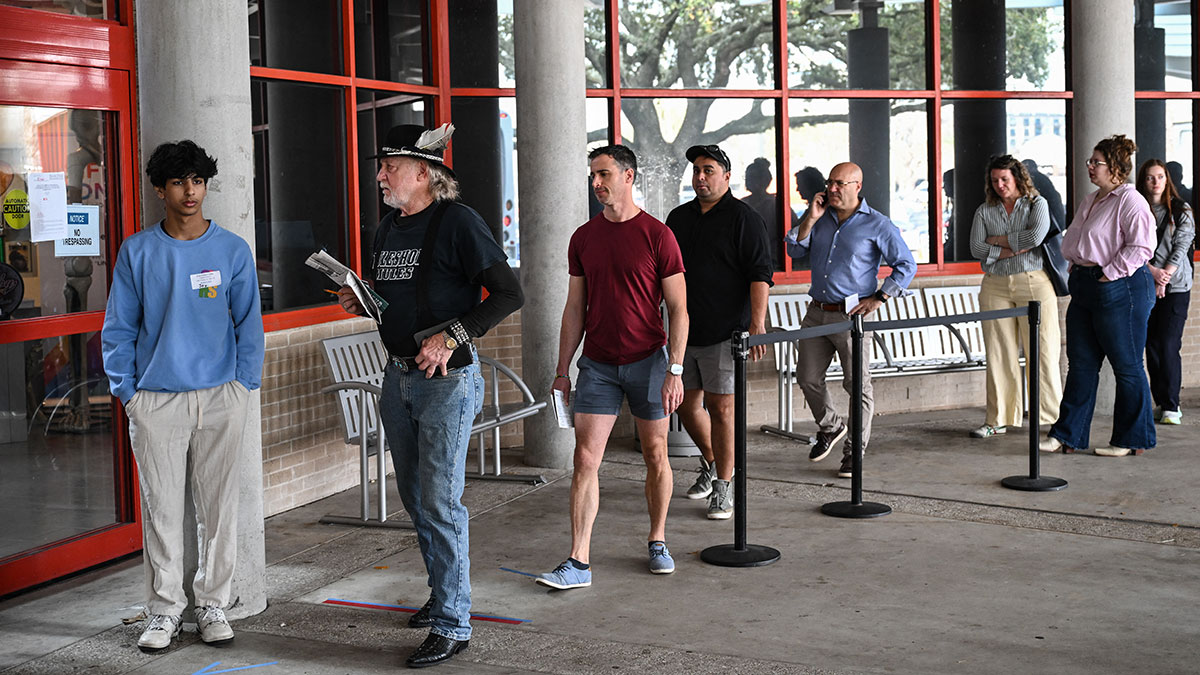
Earlier this month, Texas’s long-awaited primary showcased the state’s fight for control of the Republican Party. It was a clash between the old guard that first built Texas into a red fortress and an insurgent wing eager to raze it and rebuild one for the Trump era. The result was surprising: even in a changing party, experience and institutional power still matter.
Senator John Cornyn, seeking his fifth term, edged out Attorney General Ken Paxton. Out of 2.1 million votes cast, only 26,000 separated the two. Congressman Wesley Hunt, the third major candidate, finished with 13.5 percent—enough to deny Cornyn an outright win and to ensure Paxton remained runner-up rather than the highest vote getter. The top two now proceed to a runoff, to be held May 26.
Finally, a reason to check your email.
Sign up for our free newsletter today.
The race was the “most expensive Senate primary on record,” according to one tracking firm that spoke to ABC News. The spending included over $122 million dedicated to advertising.
Paxton, backed by some Trump allies and conservative activist groups, painted Cornyn as a creature of Washington, too comfortable with compromise and insufficiently loyal to the MAGA movement. Critics of Paxton have long labeled him unelectable, thanks to a securities fraud indictment, accusations of marital infidelity, and his 2023 impeachment by the Texas House (he was later acquitted by the Senate). He was even dragged into a runoff against George P. Bush in his 2022 reelection bid for attorney general.
Given the deep animosity between the two, Cornyn always seemed the likeliest target for Paxton’s rising ambition. Paxton has accused Cornyn of siding with Washington, D.C. and failing to accomplish “a single thing” for Texas or the country. Cornyn, meantime, was one of the first Texas elected officials to comment on the Paxton impeachment and later, in an X exchange, posted, “Hard to run from prison, Ken,” in response to Paxton saying that Texans needed a better senator.
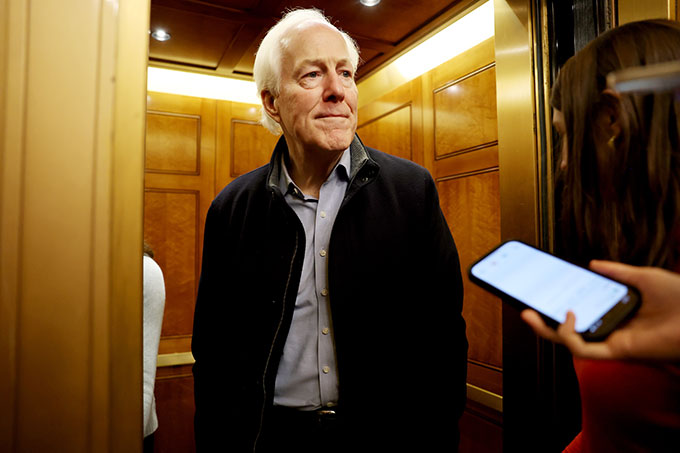 Senator John Cornyn (Photo by Anna Moneymaker/Getty Images)
Then came Wesley Hunt. A rising conservative star and Army veteran from Houston, he positioned himself as the new-generation alternative—conservative without Paxton’s baggage, and an effective leader without Cornyn’s establishment ties or compromising politics. Hunt’s 13.5 percent showing suggests there was indeed some interest in new blood—just not enough.
Some have claimed that the results demonstrate how weak Cornyn has become. But consider that in January, YouGov, Emerson, Quantus Insights, Chism/Blueprint, and the RealClearPolitics poll average all favored Paxton to win by anywhere between 3 and 12 points. In a party in transition—and in a race against Paxton and Hunt, both depicting themselves as stalwart Trump supporters and darlings of the conservative base—Cornyn not only survived but won.
As the two candidates head to the runoff, three main questions loom: Will Trump endorse one of them? If so, when? And how will the candidates respond?
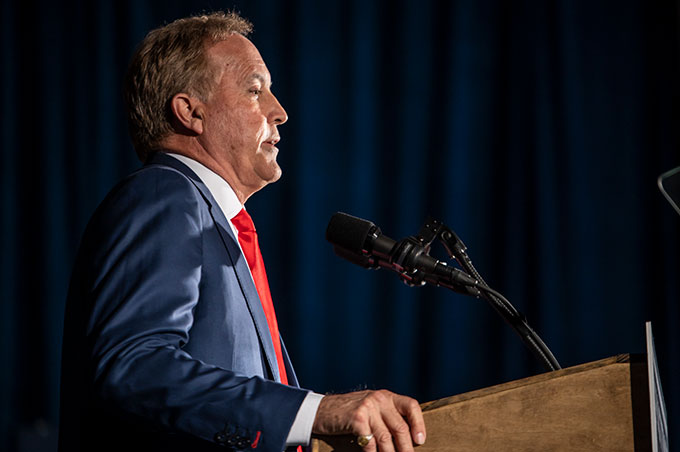 Ken Paxton (Photo by Sergio Flores/Getty Images)
Days after the primary, Trump said he would indeed be making an endorsement and would ask the other candidate to drop out of the race. When reports emerged that Trump was leaning toward Cornyn, Paxton quickly said that he wouldn’t be dropping out.
Trump then warned Paxton, telling Politico, “That’s bad for him to say.” In response, Paxton said that he would consider dropping out if the Senate broke the filibuster to pass Trump’s SAVE America Act. If it has accomplished nothing else, the back-and-forth has bought time for allies of both candidates to make their case.
The general election will pit the winner of the runoff against the Democratic nominee, State Representative James Talarico. Talarico is an ultra-progressive class warrior who defeated Congresswoman Jasmine Crockett by over 6 points in their primary.
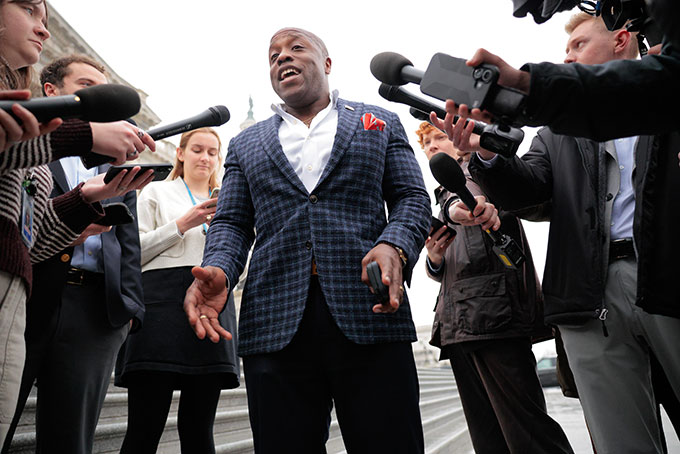 Wesley Hunt (Photo by Chip Somodevilla/Getty Images)
Assuming Trump does not drive one of them out, the runoff will clarify what Texas Republicans truly want: Cornyn’s incremental wins through legislative compromise, or Paxton’s bare-knuckle brand of politics.
Either way, the GOP’s old guard has proved harder to dislodge than many expected. In a party refashioned by MAGA, Texas Republicans appear to have decided that institutional power, relationships, and “dance with the one who brung ya” are the way to go—for the first dance, at least.
Charles Blain (@cjblain10) is a Houston-based writer and author of the forthcoming book, The Brotherhood Effect, to be published by Johns Hopkins University Press in 2026.
Top Photo by RONALDO SCHEMIDT / AFP via Getty Images
City Journal is a publication of the Manhattan Institute for Policy Research (MI), a leading free-market think tank. Are you interested in supporting the magazine? As a 501(c)(3) nonprofit, donations in support of MI and City Journal are fully tax-deductible as provided by law (EIN #13-2912529).