
With one eye on the 10-day forecast, another on the rototiller, and yet another on the plot of ground, it’s easy to get overwhelmed this time of year. The average date for the last killing freeze is so close we can touch it, and those impatient ones among us can’t wait to get started. Let me give you tips to success. Along the way I’m going to point out places where I’ve seen people run aground.
Pick a great garden spot
Full sun is highly preferred. Leafy and root crops can get by with eight or 10 hours of sunlight, but even they won’t be as productive as they could be in full sun.
Keep it close to the house so you can watch things during the season. You’ll need to know when to water, and you’ll want to step out to get early alerts to pest problems should they arise.
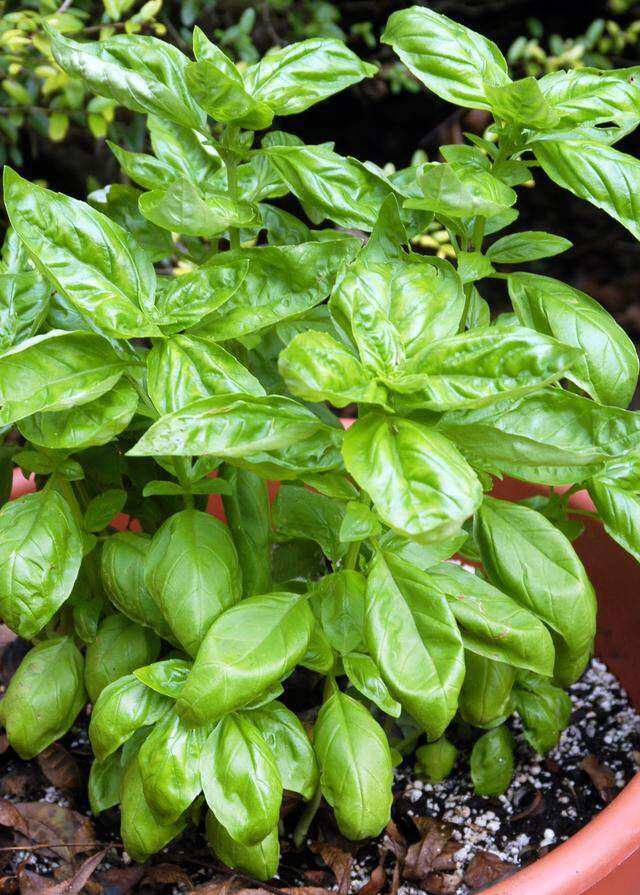 Basil in all its varieties is a beautiful container plant. Neil Sperry Special to the Star-Telegram Then comes the great soil
If you don’t prepare the soil carefully, you’re going to fail even before you begin. It’s like building a house. You must have a strong foundation. Successful gardeners spend time working up their soil by rototilling to a depth of 10 or 12 inches and incorporating 4 or 5 inches of organic matter (equal amounts of sphagnum peat moss, finely ground bark mulch, well-rotted manure, and high-quality compost). Most of us garden in the Blackland Prairie clay gumbo soils, and Texas A&M research has shown us that including 1 inch of expanded shale along with the organic matter will give great long-term results. Finally, we add half that much new organic matter annually to replenish what has decomposed over that time.
Rake the planting beds into rounded mounds to ensure good drainage. Many gardeners prefer to enclose them in prefabricated structures that elevate the gardens by 8 to 12 inches, and that’s even better. All this is to provide a way for standing water to drain away during rainstorms. It also helps keep grasses from invading.
If you don’t have open ground to dedicate to a vegetable plot, for example in a town house or apartment, many vegetables can be grown in containers. Peppers and tomatoes do well in patio pots, and so will most herbs. Certainly, the large types like melons, corn, okra, and summer squash would be difficult in containers, but others will surprise you.
Choose your varieties carefully
Plant only the crops your family likes. And plant only the types that will be productive in the space you have available. Melons, for example, eat up valuable ground. Unless you’re cultivating rural grounds, it’s better just to buy those at the grocery. Corn must be planted in large, square blocks 20 by 20 feet and larger to ensure the best pollination. Corn is pollinated by wind, and if you don’t have a large planting of corn shedding pollen, the ears will be sparsely filled with juicy kernels.
You’re also late for some of the cool-season vegetables. Many of them are of lesser importance, but you probably won’t want to spend space dabbling with turnips, radishes, carrots, beets, and perhaps even onions, cabbage, broccoli, cauliflower, and Brussels sprouts this late. Try those next February.
Beans, summer squash, zucchini, corn, and cucumbers could be planted now as long as you realize there is still a chance of a late frost or freeze. You’ll want to make provision for such a happening, either with “hot caps” over individual plants or frost cloth over the entire garden. Cold spells this time of year typically don’t last too long, so covering shouldn’t be much more than a 1- or 2-night affair.
Tomatoes and peppers are planted as transplants, so there’s a bit more of an investment with them. Again, covering will generally be sufficient with cold spells.
Even before that, however, let me warn you about varieties of tomatoes you do and don’t want to buy. Here are some facts to remember.
• It gets quite hot here in North Texas toward the end of our springtime. If you’ve gardened here very long you are already aware.
• Tomatoes are self-pollinating. The pollen sheds within a flower and lands on the female parts of the same flower. It is triggered by mechanical agitation, usually of the wind.
• Tomatoes take 75 to 90 days to hit full stride in their production. Larger varieties take longer.
• There is a direct physiological relationship between a tomato variety’s fruit size and its ability to set fruit when temperatures climb above 90 on a regular basis.
• Therefore, large-fruiting types like Big Boy, Beefsteak, Whopper, and the other burger-sized varieties shut down production of fruit first — very early. There will be years when you’ll get only five or six fruit per plant. They’re not worth the effort.
• Small-fruiting types, by comparison, will set well far into the summer.
• Best types for Texas: Red Cherry, Super Sweet 100, Yellow Pear, Porter, Roma, Super Fantastic, Early Girl, Better Boy, Celebrity.
Care for your plants regularly
The best production comes from crops that are kept growing at a vigorous pace. That means watering deeply as the soil begins to feel dry to the touch. Drip irrigation can work well if it’s carefully installed. A simple twist of the wrist will turn the drippers on at the same time so that they can soak the soil slowly. Your plants’ roots will develop right where the irrigation is applied.
Fertilize every two to three weeks. Water-soluble plant foods will need to be used more often since they dissolve instantly. If you prefer granules, use a high-nitrogen plant food with 30% to 40% of that nitrogen in encapsulated or coated slow-release form. Side band it along each row of crop at the rate recommended on the bag.
Mulch your garden to slow development of weeds, also to keep produce out of contact with the soil. Bark mulch works well, as will well-rotted compost you have produced yourself.
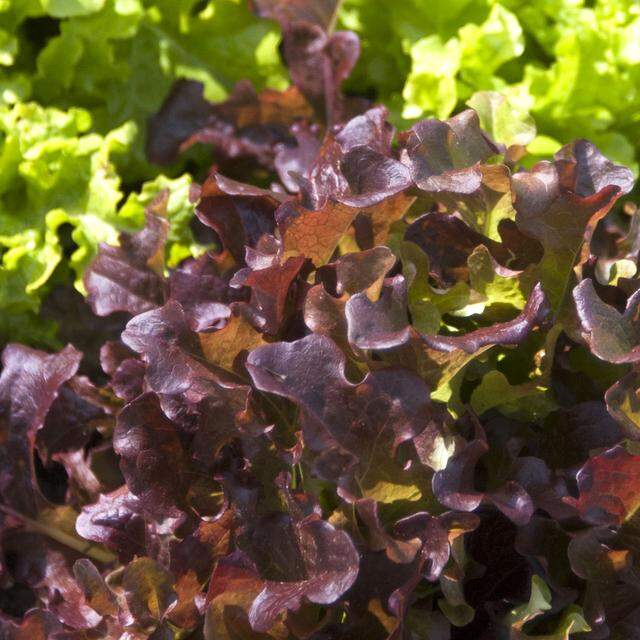 Leaf lettuce is an example of a vegetable that’s pretty enough for containers. Neil Sperry Special to the Star-Telegram
 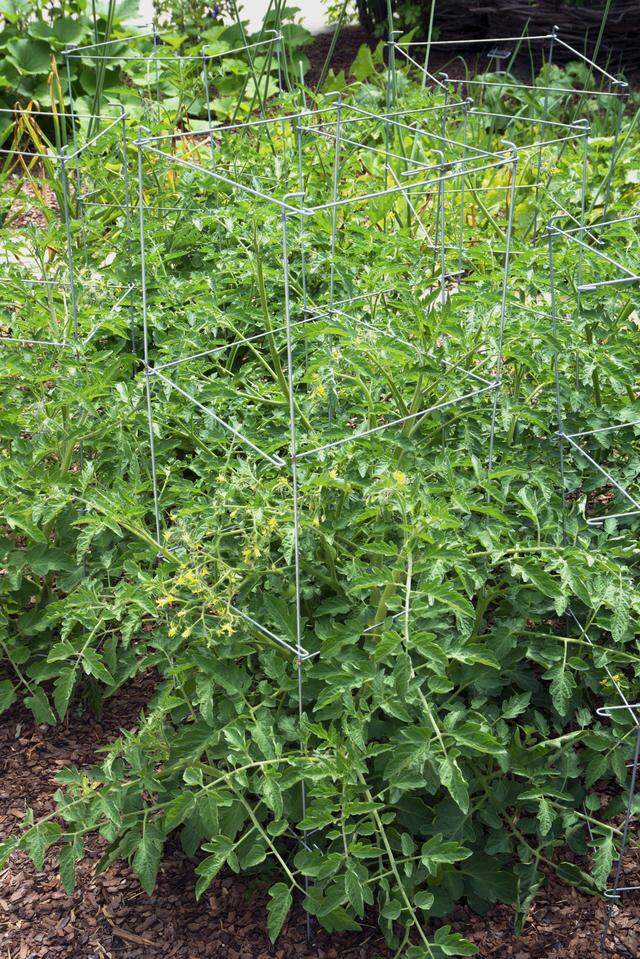 Grow tomatoes in cages to maximize use of garden space. Neil Sperry Special to the Star-Telegram
 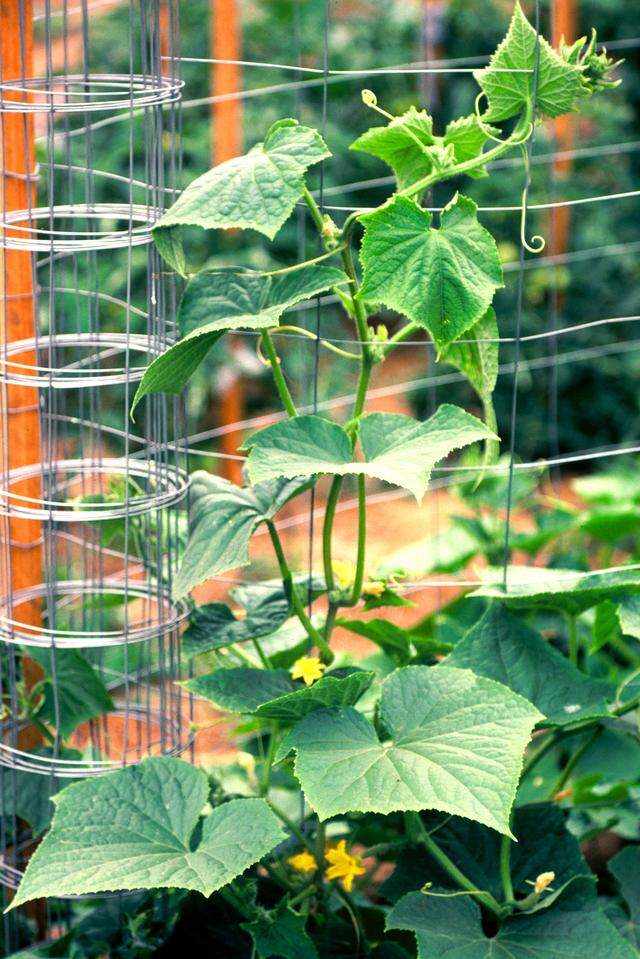 Cucumbers are excellent in containers. Neil Sperry Special to the Star-Telegram
 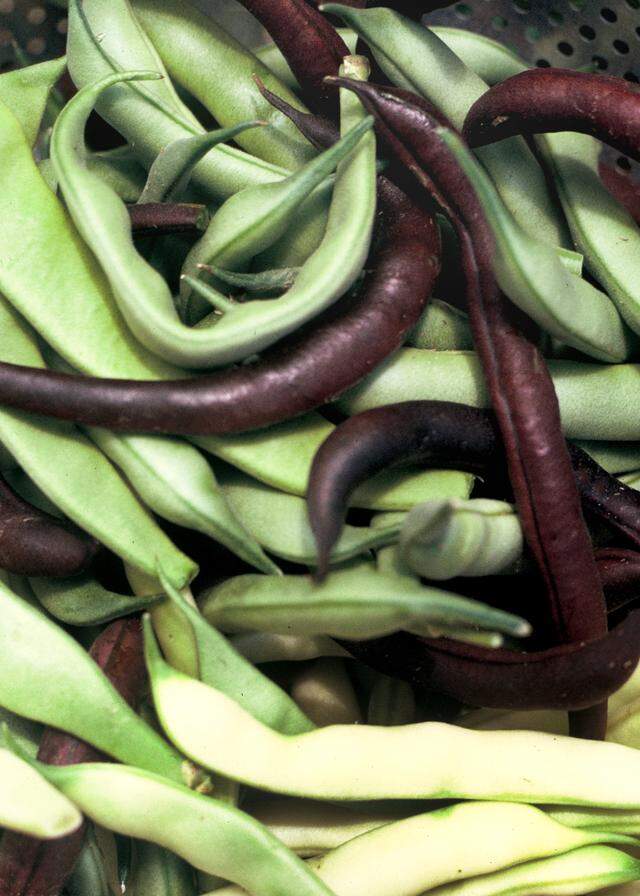 Bush beans are one of the easiest crops for new gardeners. Neil Sperry Special to the Star-Telegram
 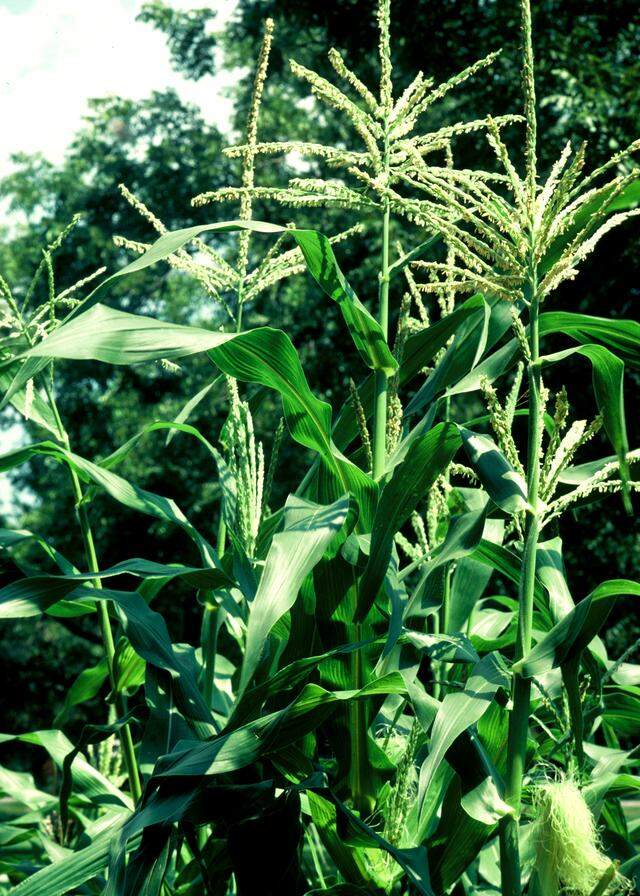 Corn pollen is carried from by wind from tassels to silks. It requires large-block plantings. Neil Sperry Special to the Star-Telegram