
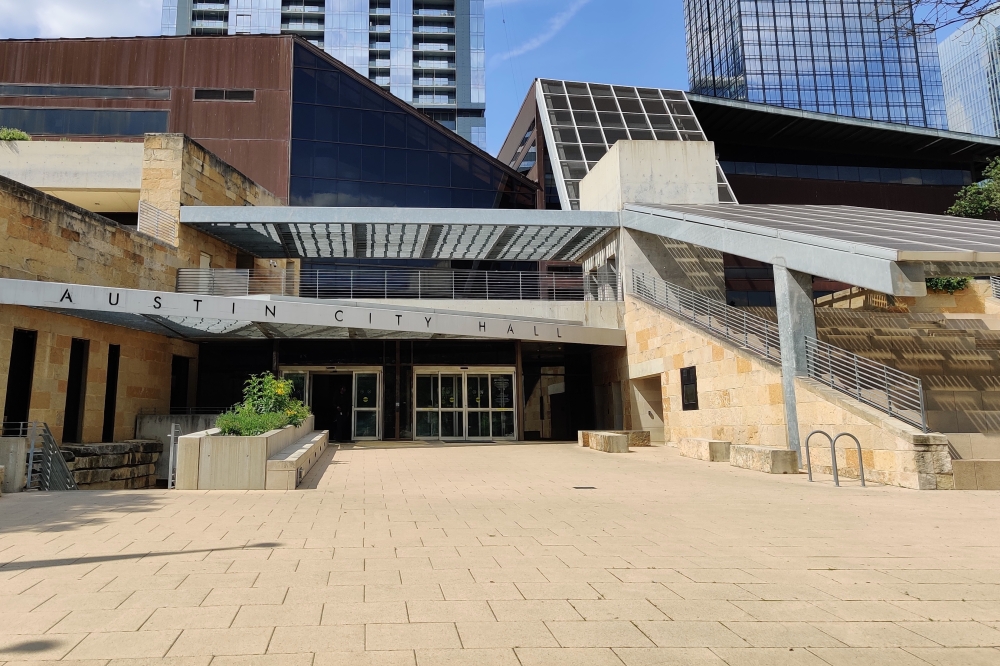
City Council called to re-evaluate Austin and Travis County summer youth internship and jobs programs as officials seek to strengthen those offerings and their workforce development potential.
“I think this review is going to help us better train the next generation of workers, encourage folks to enter the professional workforce earlier in life, and distribute opportunity,” council member Marc Duchen said.
The big picture
For years, Austin’s Summer Internship Program and Travis County’s Summer Youth Employment Program have connected area teens with working experience and connections to career skills and information.
The programs have been viewed as positive offerings for employment assistance and summer crime prevention. However, Austin’s Economic Prosperity Commission recently highlighted the “underutilized workforce development tool” after finding most students who appied didn’t secure jobs, and that other structural issues may be creating barriers for those seeking to participate.
Based on a November recommendation from that commission, Austin council members on March 12 asked for a formal review of both the city and county initiatives, and for recommendations to strengthen the programming and potential employment opportunities. Council member Vanessa Fuentes, the measure’s sponsor, said the action recognizes the important of investing in area youth and stems from discussions between Austin, Travis County and Austin ISD.
“We really are taking advantage that there are conversations between the city and the county on renewing our agreement on the internship program that we have available,” she said. “This item really sets forward that renewed interest, the ability for us to bring in other school districts, to increase employer participation all in the spirit of empowering our workforce and investing in our youth.”
By the numbers
Only 26% of students who applied to the city’s summer program, or 190 of 717 applicants, were offered jobs, according to the economic commission’s review. Private sector job experience was also limited, with only about 30% of positions provided by those employers.
Despite an intended focus on disadvantaged communities and crime prevention, only about 36% of participants came from Title I schools that serve a larger share of low-income households. The commission’s recent report noted that may be due to reliance on individual teachers promoting the offerings, rather than structured and school-based outreach from local governments.
The commission also found both the Austin and Travis County summer youth programs don’t keep publicly accessible data to track success, and proposed measuring results like students’ job placement types and locations, their academic performance after working, and their future career outcomes and pay.
“Right now, students, every year they’re turned away because there’s not enough employers offering jobs in this program,” commission Chair Aaron Gonzales told council members. “Investing in this program and having the city manager look at new pathways allows us to look at solving that problem into the future and changing that.”
The approach
Council’s March resolution seeks to centralize applications for both students and local employers, improve coordination between governments and school districts, and providing other training opportunities and public information about the programs. It also addresses the outreach and data reporting issues identified by the commission last year.
Additionally, council members are looking to consider adding the internships as a benefit to city economic development deals, like current provisions aimed at child care support. Businesses seeking financial incentives from Austin could commit to hiring students or paying into the programs under that piece of the proposal.
“It’s an opportunity to revisit, re-engage and make it a very successful program for our students, our families and our community,” commissioner Ofelia Zapata said.
Council member Krista Laine said the upcoming review should ensure students all across Austin, including those outside AISD, are reached as offerings evolve. The city’s work with youth employment initiatives should be reviewed during an upcoming meeting of City Council’s Economic Opportunity Committee, council member Zo Qadri said. A full update on the city’s review is expected by mid-July.