
ODESSA, Texas (KMID/KPEJ) – Texas legal experts warn of consequences for speaking your mind, as public rhetoric heats up on contentious topics like immigration, antisemitism, and countless other political frustrations.
The slew of latest workplace terminations, following political remarks, leaves many asking what we are allowed to say.
Labor law and employment attorney Holly Williams of Midland says employees are particularly susceptible to repercussion.
“One of the primary limits [to free speech] that I’m not sure people always realize, is that the Constitution applies to our relationship to our government. So, there is technically no right to freedom of speech in a private workplace,” Williams said.
Texas employees’ speech, other than what pertains to wages and working conditions, is not protected under our First Amendment, and is punishable, according to Williams.
“Texas is what we call an employment-at-will jurisdiction, which means generally, and just like an employee can quit for any reason they want, at any time, an employer can terminate an employee at any time, for any reason. There are certain exceptions to that, but in a private workplace, the First Amendment would not apply.”
Williams warns people to use caution when posting to social media, for the sake of their jobs.
“An employer might claim that if you’re affiliated with them, it could cause injury to the employer if you say something offensive, but as an employee, if you are doing things out of work, say not posting publicly, only posting on social media with your friends, you would certainly, I would say, be less likely to cause injury to the employer, but the bottom line is that employers can generally fire employees if they do not like their public speech.”
Different exceptions and limits apply to those who work in government, according to Williams, who adds that she expects many recent teacher terminations to be challenged in court.
“…really landmark decisions in First Amendment law, over the years, have related to public school teachers, for example,” Williams said. “Generally, there are certain criteria for public speech. One, the individual has to be speaking on a matter of public concern. It can’t just be a personal grievance about the employer or complaint about the employer. It has to be a matter of public concern. Further, it has to be something that is outside the person’s job duties.”
Backlash against college students and school officials, amid ongoing campus protests, also has many asking what they are allowed to say, and when and where they may say it.
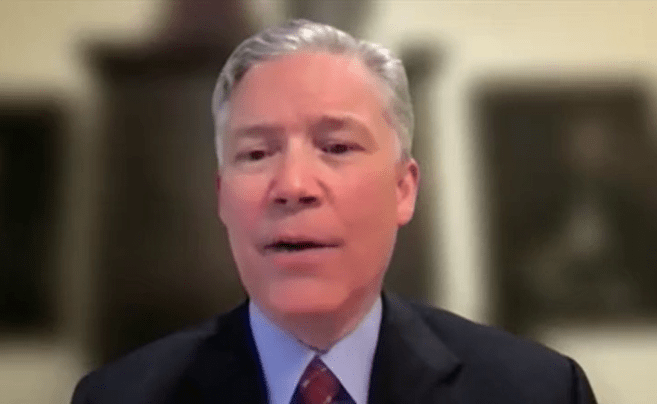
Galveston lawyer Joe Jaworski is an active and staunch supporter of free speech on school campuses.
“The idea that we have a robust exchange of ideas; even ones that are unpopular; even ones that could be potentially considered odious, allows for a robust marketplace, and the First Amendment is so important to essentially who we are as Americans,” Jaworski said, ahead of his run in the primary election, for Texas Attorney General.
“…students on other University of Texas campuses have already filed suit against the UT system for its application of a new law that was passed… called the Campus Protection Act, Senate Bill 2972… It potentially limits even speaking at all on campus… It is clearly unconstitutional, and I’m glad that student groups have already filed suit against it.”
Free speech on college campuses is dictated by individual school policies and is ultimately left for a judge to decide what is permissible, when school policies are challenged.
Jaworski went on to explain that the first amendment does not however, generally allow us to say anything, anywhere.
“… I think that the example that people are most familiar with is say what you want, but you can’t yell fire in a crowded theater, and I think the thought behind that is, your rights are numerous, but they end when you touch me.”
Limits to free speech include inciting lawless action, making threats, and defamation when allegations against a person are untrue.
“You can say whatever is on your mind, as long as it is not going to hurt people, and I don’t mean hurt their feelings, but I mean physically damage another human being, and so I think that there are limits, but if you read all the United States Supreme Court opinions, we know you can burn an American flag,” Jaworski said. “As odious as that is, it is an expression of free speech.”
Copyright 2026 Nexstar Media, Inc. All rights reserved. This material may not be published, broadcast, rewritten, or redistributed.
For the latest news, weather, sports, and streaming video, head to Yourbasin.