
AUSTIN, Texas — Austin Mayor Kirk Watson remembers coming to Austin over 40 years ago with plans to leave but ended up falling in love with the city. It’s a story he says is common, but what’s different from the 1980s to present day is affordability.
“We have thousands of young people show up in this town with new thinking, new ideas, new culture, greater diversity, new music. And they, after about three months, say, ‘I never want to leave,’” Watson said, talking about the college students coming to study in Austin. “But if they can’t afford to live in this town, they will leave or they won’t come here in the first place.”
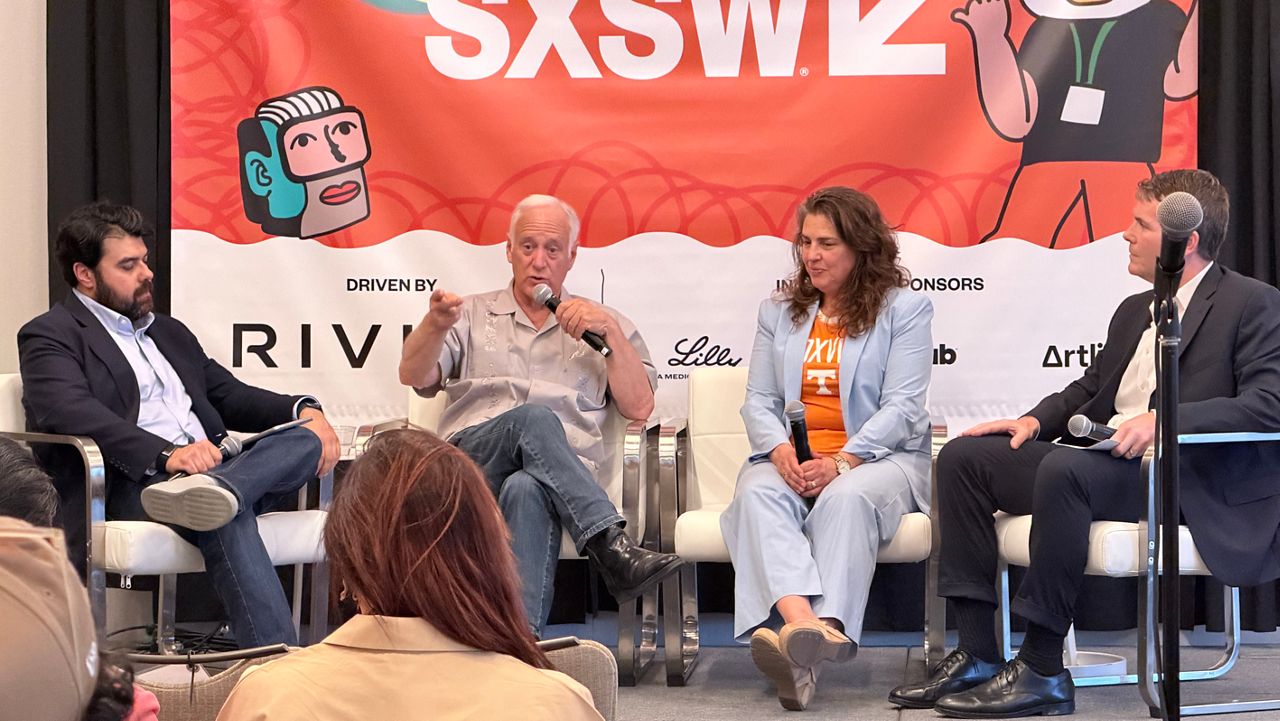
Watson talked about his administration’s “laser focus” on affordability and housing and many other topics at the South by Southwest Conference and Festival (SXSW) on Friday afternoon. He spoke at a panel called “Cities and Colleges Powering Innovation, Culture & Community” and was joined by Knoxville, Tenn., Mayor Indya Kincannon and Tuscaloosa, Ala., Mayor Walt Maddox.
The mayors of the three cities, all home to Southeastern Conference (SEC) universities, discussed the roles they play as leaders of cities with such large and prominent universities and addressed topics like public safety, infrastructure and jobs for young adults. All three of the mayors agreed on the “symbiotic” relationship necessary for success between the cities and the large universities.
“Austin wouldn’t be Austin without the University of Texas at Austin. And the University of Texas at Austin wouldn’t be the University University of Texas at Austin without Austin,” Watson said. “And so a key part of the reason we are now, I think, a global economic hub, a center of innovation on a global scale, is because of the University of Texas at Austin, and that’s just never lost on any of us.”
Watson acknowledged that there is sometimes tension between the university and the city, like when it comes to zoning and development planning.
“We’re collaborating with UT because they don’t completely agree with what some advocates for more housing want the city to do in terms of zoning because of height, and that has become a real issue, because the university doesn’t want to be walled off and with that height,” Watson said. “So we’re having to work directly with them and make sure that there is collaboration.”
Kincannon echoed the importance of “radical collaboration” when it comes to working with the University of Tennessee, Knoxville, for things like housing and public safety.
This panel, and SXSW in general, took place just less two weeks after a mass shooting occurred at Buford’s on West 6th Street, a popular bar for college students and young adults in Austin. Watson addressed the shooting, saying one of the first calls he made in the early morning hours of March 1 was to UT President Jim Davis.
“As everybody’s aware in the room, we’re still kind of fragile right now in Austin because of a mass shooting that was just very recent,” Watson explained. “I was on the scene at about 2:20 in the morning… and one of my first phone calls was to the president of the university. And woke him up in the middle of the night because it was at a club on Sixth Street, and I had no knowledge specific at the time, but the reason I was calling him was I knew that we were probably involved, going to be involved with some students.”
One UT student died in the shooting, along with two other people, and some of the over a dozen injured were also university students.
Watson said the early morning phone call shows what he believes is the relationship needed between a mayor and the president of a large university. Both Kincannon and Maddox agreed that collaboration and communication are needed between city staff and university leadership in order for the area to thrive.
Maddox talked about feeling nervous regarding the University of Alabama football games, not because of the final score, but because he worries about everyone getting home safely.
“The public safety outlay is intense, and frankly, with what’s going on today, it’s not going to get any less,” Maddox said. “I never thought I would be nervous about a football game, or an event of the university, other than the outcome of the score.”
The panel also touched on the relationship between local, state and federal governments when it comes to funding. Watson talked about the federal government cutting funding for the Interstate 35 cap-and-stitch project, which was approved during President Joe Biden’s administration and cut just last year under President Donald Trump.
“I worry that too much right now is focused on just pure politics and not on the results that we want to see, things like research, money, things like, how do we make sure that we continue to have a very diverse population of people being able to come to the University of Texas at Austin,” said Watson. “Because that actually enhances the economy, enhances the university.”
Kincannon said the Trump admnistration cut similar funding for the Reconnecting Communities Pilot Grant Program in Knoxville, which was the single biggest grant in the history of the city.
“We had a Reconnecting Communities grant too, and because it had the word equity in it, DOGE killed it,” Kincannon said.
While federal funding for the cap-and-stitch project was cut, the city had already dedicated $104 million to its funding and faces future decisions on the project with construction already underway.
With the I-35 construction and the considerable growth Austin has seen over the past few years, Watson emphasized the need for close collaboration between the city and UT in order for the area to see success while also keeping its culture. He said young people are the key to making sure Austin continues to thrive for many years to come, and his focus is on making sure they can afford to stay in the city.
“How do you keep Austin, Austin? And my answer to that is often, you’ve got to keep Austin where it’s open to change. It’s open to new thinking. And the best way to do that is to keep Austin a place where young people can afford to stay here and find their jobs,” Watson said.