
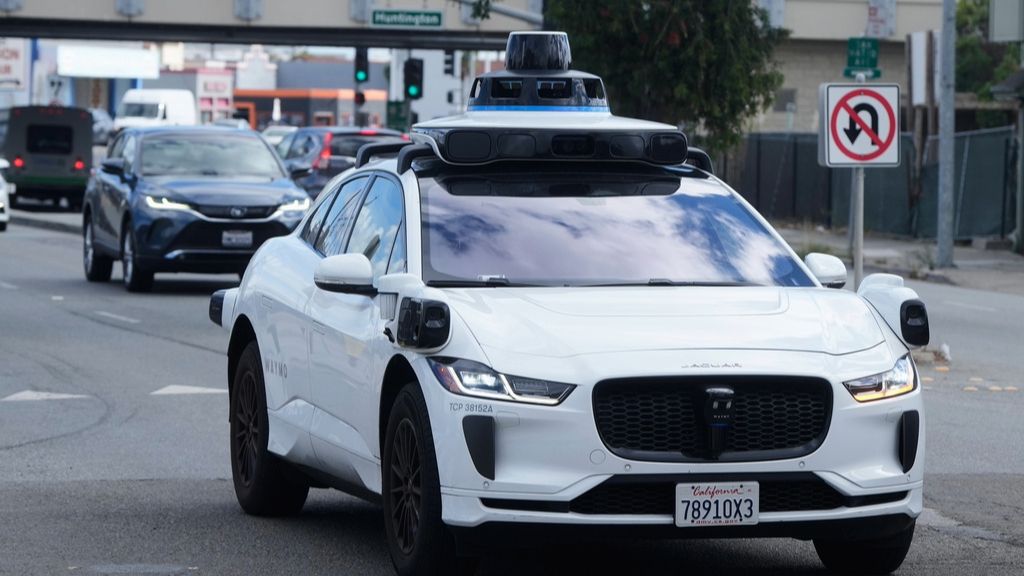
TEXAS — As first responders were responding to a mass shooting on Austin’s West 6th Street on March 1, a bystander recorded a driverless vehicle blocking an ambulance heading to the scene.
The video was posted to TikTok, where it garnered hundreds of thousands of views. In the video, bystanders are yelling at the Waymo to move, with another witness calling out, “This is why we should not have self-driving cars.”
An Austin police officer was seen communicating with a representative through the car’s internal communication technology, saying “there is an active shooter; I need you to open the door so I can move the car,” and he was eventually given control of the vehicle to move it out of the way.
Despite the officer being able to move the vehicle, officials called the ambulance blockage another moment where autonomous vehicles (AVs) had not operated how they were supposed to.
The AV was operated by Waymo, a company that has a strong presence in the capital city since initial testing in 2015.
The hundreds of white Jaguar I-PACE vehicles have a track record of causing issues on public roads in Austin, with the Austin Independent School District recently citing at least 20 school bus stop-arm violations since the beginning of the 2025-26 school year.
According to one Waymo representative, as the response to the shooting scene was underway, a passenger requested the ride, but as the Waymo approached the pickup spot, it noticed a blockage and decided to conduct a U-turn. It shortly noticed the ambulance mid U-turn, and that’s when it stalled.
At a March 2 press conference with City of Austin officials, one reporter asked the city to comment on the Waymo car blocking the ambulance during the shooting response. The chief of emergency medical services, Robert Luckritz, said first responders were able to get to the scene in under a minute and that the blockage did not cause any delay in response.
Additionally, Brad Cesak from Austin Transportation and Public Works shared a statement saying, “The City’s AV Working Group continues to coordinate with companies operating autonomous vehicles in our area to ensure their systems and our response procedures work together safely and effectively.”
However, five Austin City Council members — José “Chito” Vela, José Velásquez, Paige Ellis, Krista Laine and Zohai “Zo” Qadri (Dis. 9) — sent a letter to Waymo inviting them to their Public Safety and Mobility meeting in late April to discuss the incident and steps the city and company can take together to make Waymo vehicles work better around first responder vehicles.
Spectrum News reached out to the AV company shortly after the shooting, and Waymo officials also stated that they are dedicated to learning more about this incident.
Waymo officials said they had a meeting with city officials on March 9 and are assessing their plan for the April meeting. They also shared resources they send to police departments and other first responders in cities where they operate, saying they make sure those departments are aware of how to navigate a similar situation to the March 1 incident.
As City of Austin officials communicate and work with Waymo, other cities in Texas are figuring out how they will handle similar situations.
Waymo announced its expansion to Dallas, Houston and San Antonio on Feb. 24. Spectrum News reached out to the three cities’ police departments on how they will respond.
Dallas police said Waymo vehicles just started operating in the city, and they are working with the company to get guidelines.
San Antonio police provided the following statement, saying in part, “When asked about yielding to emergency vehicles, Waymo shared that the software is constantly being evaluated and updated.”
In Houston, the mayor’s chief of staff, Mary Benton, points to the fact that state legislation does not allow for local governments to create their own AV rules. She continued to say, “Waymo has kept the City of Houston informed about the majority of its plans. Mayor Whitmore is monitoring the rollout closely and with caution.”
The lack of local and federal government oversight is what one AV safety expert strongly advocates for.
“Congress has tried for a few years now to pass a sort of legislative framework,” said Cooper Lohr, a senior policy analyst of transportation and safety for Consumer Reports. “Our position is simple. We need oversight that gets ahead of the problem; that’s proactive, not reactive.”