
Home » AIRLINE NEWS » Hundreds of Travelers Stranded at Houston Bush Intercontinental Airport in the United States as 110 Flights Are Delayed and 12 Canceled, Disrupting Plans for Passengers Heading to Destinations Including New York, Los Angeles, Chicago, and Miami
Published on
March 15, 2026
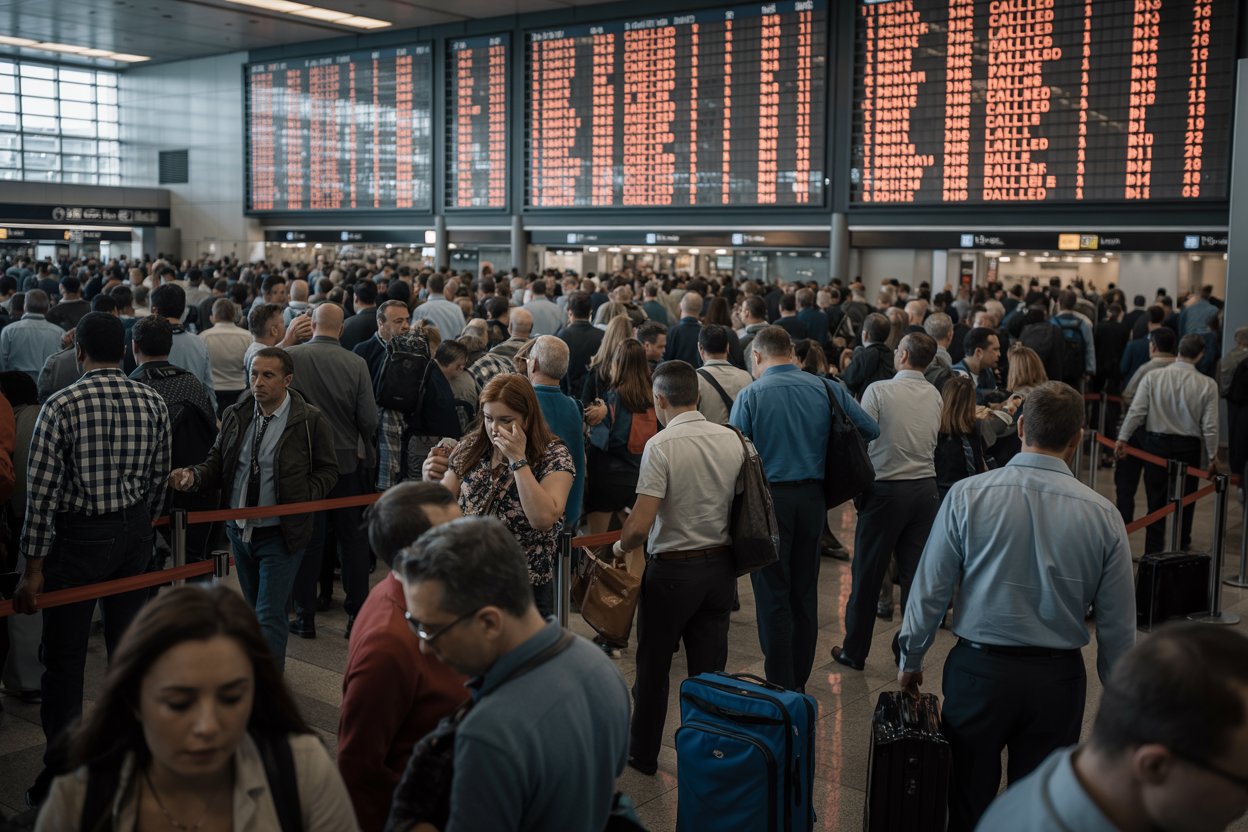
Image generated with Ai
Travel chaos rippled across Houston, Texas, United States today as Houston Bush Intercontinental Airport (IAH), one of the nation’s busiest aviation hubs, reported 110 flight delays and 12 cancellations in its scheduled operations. Thousands of passengers were left waiting in terminals, scrambling for updates and rearranging travel plans. Many described the frustration of missing connections, being stuck in security queues and receiving last‑minute alerts from their airlines.
Data from live flight tracking confirmed the tally of delays and cancellations affecting routes both into and out of Houston, triggering alerts for travellers across the US and internationally. The sudden disruption has hit families, business visitors and holidaymakers during a peak travel period, intensifying concerns over airline punctuality and airport performance.
Operational Chaos at One of America’s Key Aviation Hubs
IAH, officially known as George Bush Intercontinental Airport, has been a cornerstone of commercial aviation since the late 1960s, serving as a major hub for United Airlines and connecting millions of travellers globally every year.
On this day, however, operations diverged from the norm. Flight tracking platforms reported over a hundred flights delayed beyond departure gates, while 12 scheduled flights were forced to cancel altogether. There was no isolated cause identified in the data, but experts point to a combination of factors, including weather‑related ground delays, logistical pressures and systemic stresses across the aviation network.
Officials from the airport system emphasised that flight status can be highly fluid, and passengers are strongly advised to check with their airlines and official airport flight status pages for the most current updates.
FAA Reports Ground Delays Amid Changing Weather Conditions
According to the Federal Aviation Administration (FAA) airport status centre, IAH experienced ongoing ground delays linked to thunderstorms in the Houston area. Ground delays mandate that aircraft remain on the tarmac until conditions improve, effectively slowing the entire network of departures. In some cases, the airport had earlier placed a ground stop, where all departures and arrivals were temporarily suspended until weather conditions stabilised.
Advertisement
Advertisement
These delays extended wait times significantly, contributing to the backlog of flights failing to depart on schedule. While weather warnings were lifted later in the day, the buildup from earlier conditions continued to affect the schedule well into the evening.
Travelers Report Long Lines, Missed Connections, Emotional Toll
At key terminals, travellers described anxiety and exhaustion as departure boards flickered with updated times and abrupt cancellations. Passengers spoke of families missing cruise connections, executives postponing business meetings, and holiday plans thrown into turmoil.
Advertisement
Advertisement
In crowded gate lounges, many rebooked flights with lengthy delays, while others were offered travel vouchers or hotel accommodation by airlines struggling to manage the backlog. Videos shared on social media showed long queues at check‑in counters and scattered groups with luggage, awaiting call‑ups.
Airport staff sought to assist as best they could, but with so many impacted flights, the logistical challenge proved overwhelming for the day.
Officials Advise Early Arrival as Travel Peak Continues
Airport authorities and airline partners urged travellers heading through IAH in the coming days to arrive substantially earlier than normal. With spring travel surges in effect and unpredictable weather patterns still possible, passengers were advised to expect extended security wait times, potential rebookings, and periodic schedule changes.
According to official FAA guidance, passengers should also monitor status updates via airline apps and official airport sites, particularly during peak travel windows. These tools offer real‑time arrival and departure status that may not be reflected immediately on third‑party trackers.
TSA Lines and Security Protocols Remain Under Pressure
While today’s figures primarily relate to flight delays and cancellations, broader reports from airport news outlets highlighted continued pressure on Transportation Security Administration (TSA) checkpoints across Houston’s airports in recent weeks. Staffing shortages sometimes lead to elongated security queues, underscoring another layer of stress for travellers hoping to make flights on time.
Although IAH did not report the longest queues in the country, security wait times fluctuate depending on staffing, shift schedules and passenger volume, particularly during holidays and travel peaks — a recurring challenge noted both locally and nationally.
Wider Industry Context: Systemic Strain on America’s Airports
IAH’s disruptions mirror a larger trend across major U.S. airports, where flight delays and cancellations have increased in recent months. Seasonal travel peaks, weather volatility, and operational bottlenecks have stressed airline and airport infrastructure alike.
Despite long‑term traffic growth, airlines and airports have struggled to keep on schedule, with occasional weather events or air traffic control constraints causing cascading effects. This ongoing challenge underscores the complexity of modern aviation, where multiple factors must align to ensure punctual operations.
How Travelers Can Cope with Unexpected Delays
Passengers impacted by cancellations or significant delays are reminded that airlines are responsible for providing updates and rebooking options. Most carriers offer mobile notifications and online rebooking tools. If delayed overnight, travellers should contact their airline agents for accommodation options, vouchers or alternative routing.
Travel insurance can also offset financial losses from cancellation‑related hotel or transit costs. Travellers who book with flexible tickets often find fewer disruptions in their overall journey.
Local Economy Stings as Travel Confidence Wavers
Houston’s economy, supported heavily by domestic and international travel — from business hubs to leisure tourism — feels reverberations from transport disruptions. Hotel bookings, rental car companies and auxiliary services are linked to steady air travel patterns. When disruptions occur, the flow of commerce and tourism can slow, affecting hospitality, gastronomy, and service sectors.
Airports play a pivotal role in connecting Houston with global markets. Disruption at a major hub like IAH can ripple through multiple sectors, highlighting the importance of robust travel infrastructure.
A Day of Disruption, A Test of Resilience
Today at Houston Bush Intercontinental Airport was more than just an operational anomaly — it was an emotional experience for travellers navigating uncertainty and a stark reminder of the fragility of complex travel systems. Passengers left the terminals with new itineraries, hopes still intact despite setbacks.
As travel resumes and operations stabilise, those affected remember the frustration, the long waits and the sudden changes. For many, it was a lesson in patience, adaptability and the ever‑present influence of weather, logistics and human factors on air travel.
In the end, IAH’s 110 delays and 12 cancellations became a collective story shared by thousands of flyers — one day in the life of travel disrupted, navigated and ultimately persevered.
