
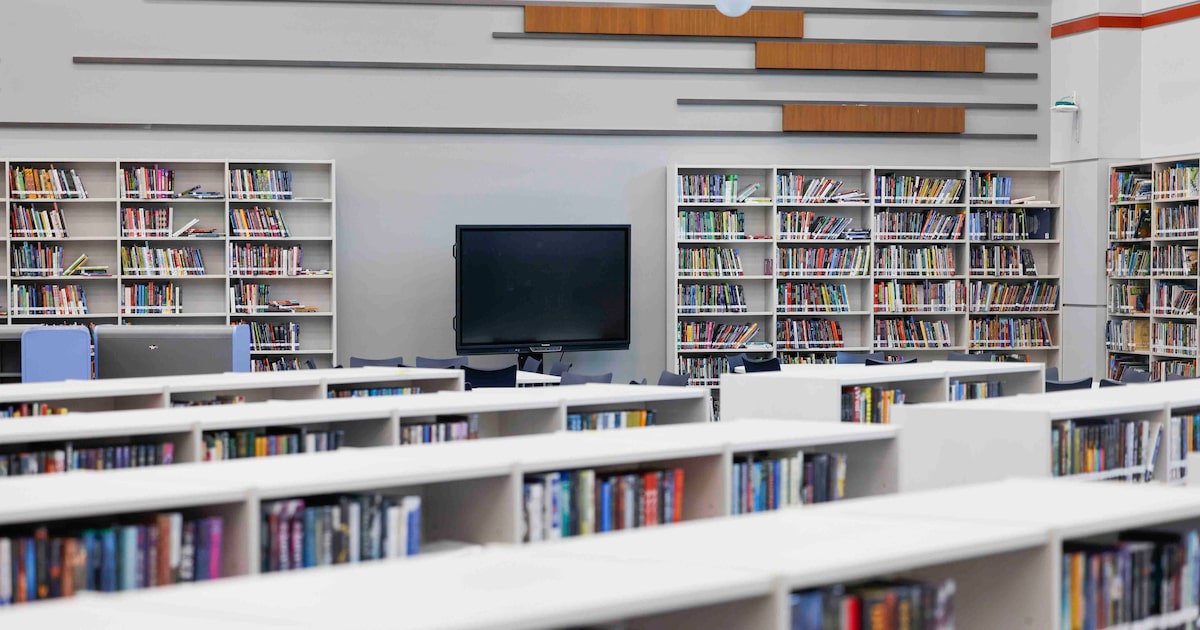
Something magical is happening in school libraries: Students are checking out more books. In an era where reading is at historic lows, it seems implausible. The reason? Well, it’s not magic. The most likely cause is another upside of a recent change in state policy.
Book checkouts have increased notably since a state cellphone ban began in August. Dallas ISD officials told us checkouts are way up across the district.
Hillcrest High School librarian Nina Canales told NBC 5 (KXAS-TV), which first reported on this trend, that their checkout numbers doubled in just the first three weeks of school. She was so dumbfounded by the results that she had to run the numbers twice.
But she was right. Book circulation has increased districtwide by about 100,000 books between the last and current school years, DISD officials said.
Opinion
In some high schools, the trend has been jaw-dropping: Irma Rangel Young Women’s Leadership School reports a 42% increase in book checkouts; at Yvonne A. Ewell Townview Magnet Center, there is a 63% increase. At E.D. Walker Middle School, there is an increase of 89%, from roughly 3,500 books to over 6,700 this school year.
Meanwhile, the school library in Hillcrest High – where there is a 44% increase – is becoming a hangout place. Students who are done with their work and who don’t have access to their phones are stopping in and reading books.
This Editorial Board has long supported the state cellphone ban policy in the hope that, without their electronic devices, students would have fewer distractions, leading to more learning. School districts have already reported some positive results: more instruction time, fewer disciplinary cases and improved social interactions. These are all welcome results.
But a greater interest in reading could be another positive outcome. And it is not only happening in Dallas. In September 2025, schools in Jefferson County, Ky., also reported a spike in book checkouts from their libraries.
Nearly 30 states are enforcing cellphone bans. According to a recent Brookings Institution survey, there is growing support for electronic device restrictions, even among teens.
Would more book checkouts lead to more reading? We are hopeful it does.
Remember that the 2024 National Assessment of Educational Progress, also known as the nation’s report card, was beyond discouraging, with the worst scores in reading for high school seniors since the assessment began in 1992.
Students today are graduating with low reading skills at a moment when their critical thinking is needed the most. College professors are reporting that students are unable to complete basic reading assignments.
Endless scrolling has damaged attention spans, not only in young children but in adults as well. This needs to change, and cellphone bans in schools offer an opportunity to turn the tide.
Renowned social psychologist Jonathan Haidt, whose work establishing a link between teen social media use and mood disorders was instrumental in laying out the groundwork for cellphone bans, recently wrote online:
“Do you want your kids to read books? The day you give them their own smart device is the day they’re going to stop reading.”
Many of us have found this to be true in our own lives. And we are adults. Parents have an important role in supervising screen time with their kids, but this is a social problem that needs a society-wide solution. Thank goodness for people like Haidt, who has led this movement, and for parent groups that are pushing for cutting even more screen time, including school devices that are used for educational purposes, as The New York Times recently reported.
Even with cellphone bans, 88% of schools nationwide provide students with tablets, laptops and more. That includes Chromebooks that are ubiquitous in DISD and other schools around the state. While there may be an educational purpose for devices at some times, school districts need to reconsider how their widespread use is negatively affecting learning, something recent reports suggest.
Haidt, author of The Anxious Generation: How the Great Rewiring of Childhood is Causing an Epidemic of Mental Illness, was recently at the World Economic Forum in Davos advocating for phone-free schools globally.
There is growing momentum to keep devices away from children while learning, but it is still an uphill battle. Recently, a Pew Research study reported that 46% of teens are almost constantly online, and we know social media companies are always finding ways to keep them hooked, from endless scrolling to AI chatbots.
Despite cellphone bans, teens will keep trying to find ways to sneak in their devices. Many report checking out their phones a few times a day, according to the Brookings Institution survey. But this analysis also found that restrictions are working better when there is a bell-to-bell policy ban, such as the one in Texas, as opposed to only during instruction time.
This is a victory. Kids in our schools are picking up books again. They are spending time in the library. They are engaging their minds. Let’s celebrate this and build on it.
We welcome your thoughts in a letter to the editor. See the guidelines and submit your letter here.
If you have problems with the form, you can submit via email at letters@dallasnews.com