
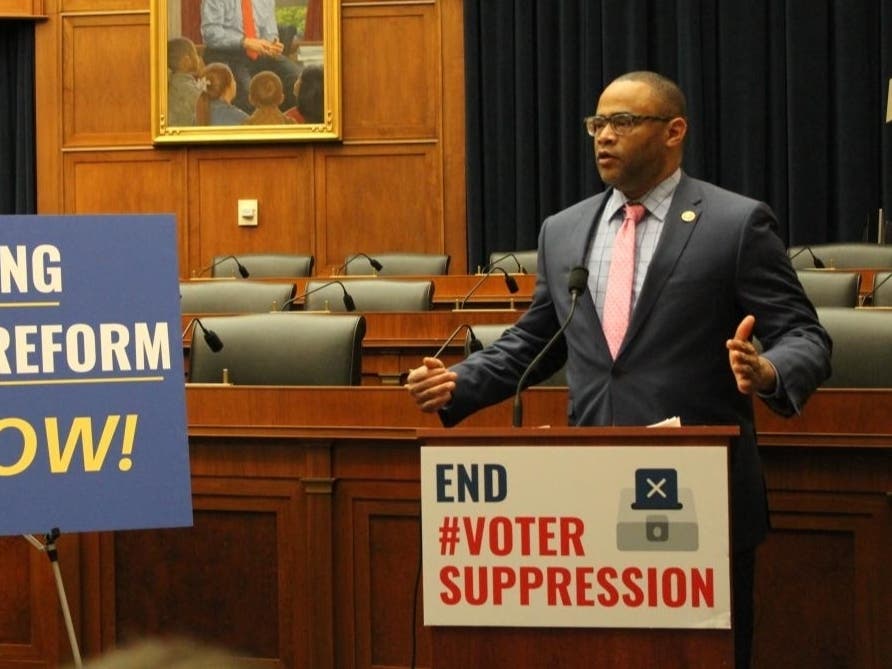
For the first time in more than two decades, Marc Veasey’s name will not appear on a ballot. The quietness of that absence, for the Fort Worth Democrat, carries the weight of a political career undone not by voters, or wrongdoing by Veasey, but by cartographers. “It’s been a long time since I haven’t been on the ballot,” Veasey told CBS News Texas in his first extended interview on the decision. “It’s been over 20 years.”
The seven-term congressman, who in 2012 became the first Black representative elected from Tarrant County, watched the GOP-led Legislature redraw his 33rd Congressional District entirely into Dallas County last summer—severing his Fort Worth base with surgical precision. The stated objective was five additional Republican seats. Veasey calls it “rigging the game.” He briefly filed for Tarrant County Judge against Republican incumbent Tim O’Hare, then suspended that campaign a week later. “I don’t think that is the door that God is showing me,” he said.
There is a particular irony: redistricting created the seat that launched Veasey’s career in 2012, and, a decade-plus later, redistricting effectively demolished it. The open 33rd now features former Congressman Colin Allred and state Rep. Julie Johnson competing in what forecasters are calling a solid Democratic seat. But this is minus Veasey, the man who built it. “I’m never going to say never,” Veasey offered, with the practiced evenness of someone who has already reconciled the loss. “Right now I don’t see myself getting back into elective politics.”
He plans to spend his final year in Congress focused on constituents and to help elect Democrats locally and statewide, from, as he put it, “the other side of the desk.”