
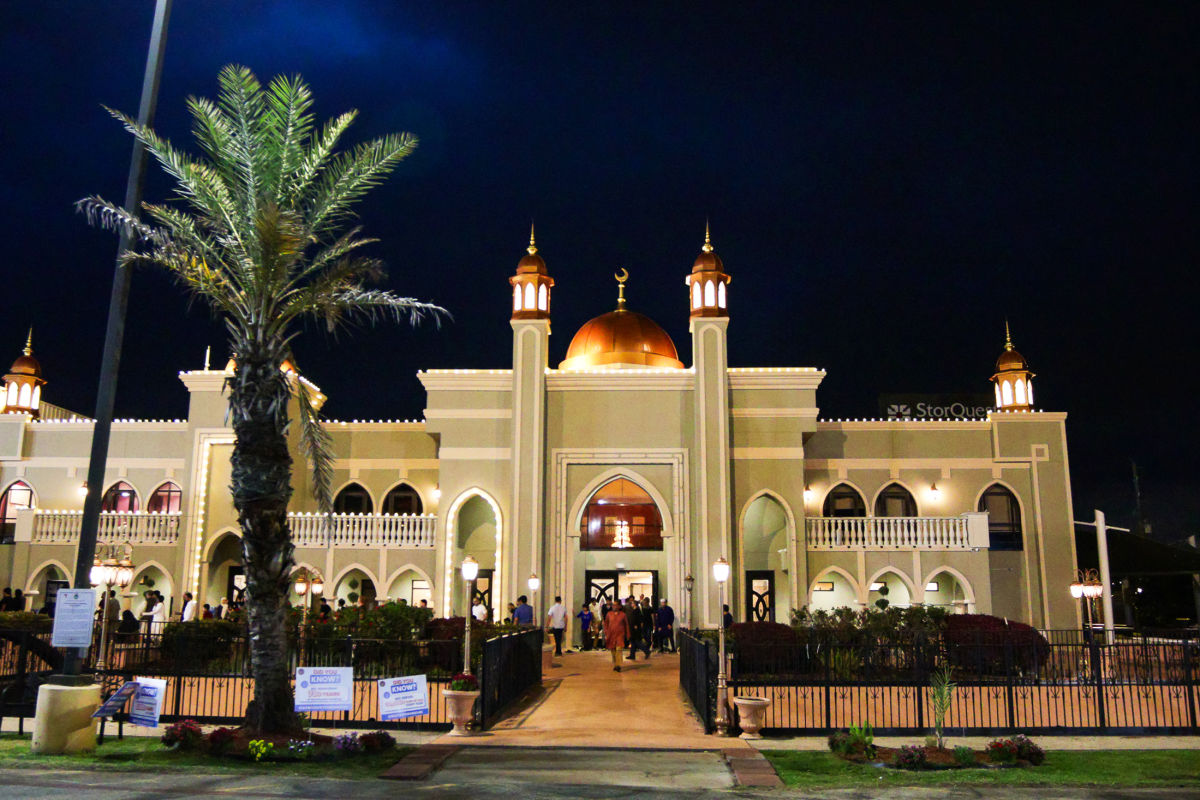
At Brand Lane Islamic Center, Ramadan is a time for community.
Tables set beneath the open sky fill quickly as volunteers distribute premade iftar plates of dates, fruit, and chana chaat, a chickpea dish dressed in chutney. The entire mosque quiets for this moment: Children pause their playing and volunteers get their plates, too, as final prayers commence before the first bite.
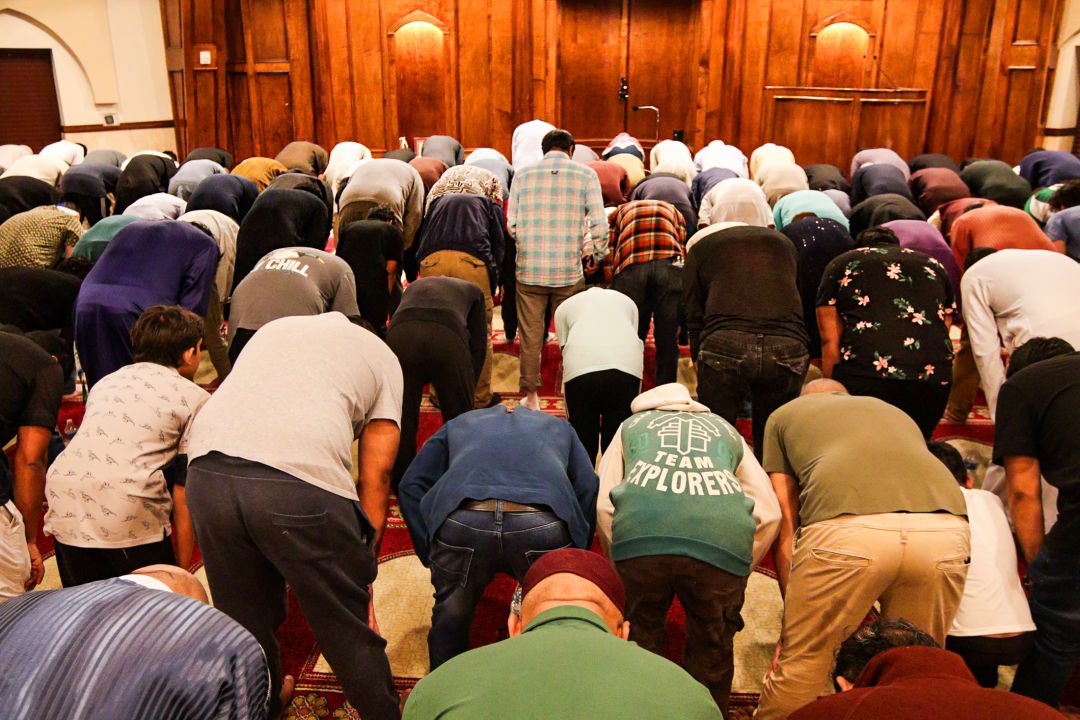
With a nibble of date, Sheikh Imam Tauqeer Shah breaks his first fast of Ramadan. Moments later, his voice rises through the prayer hall as he delivers the adhan, a call to prayer signaling sunset to hundreds gathered for iftar at the Brand Lane Islamic Center.
Leader of the Brand Lane Islamic Center, Shah has celebrated at the Houston mosque for five years, and each time, as soon as the fasting month’s moon is sighted, he rushes to the place of worship. “It’s like returning home and celebrating the commencement of this month with my community,” he says.
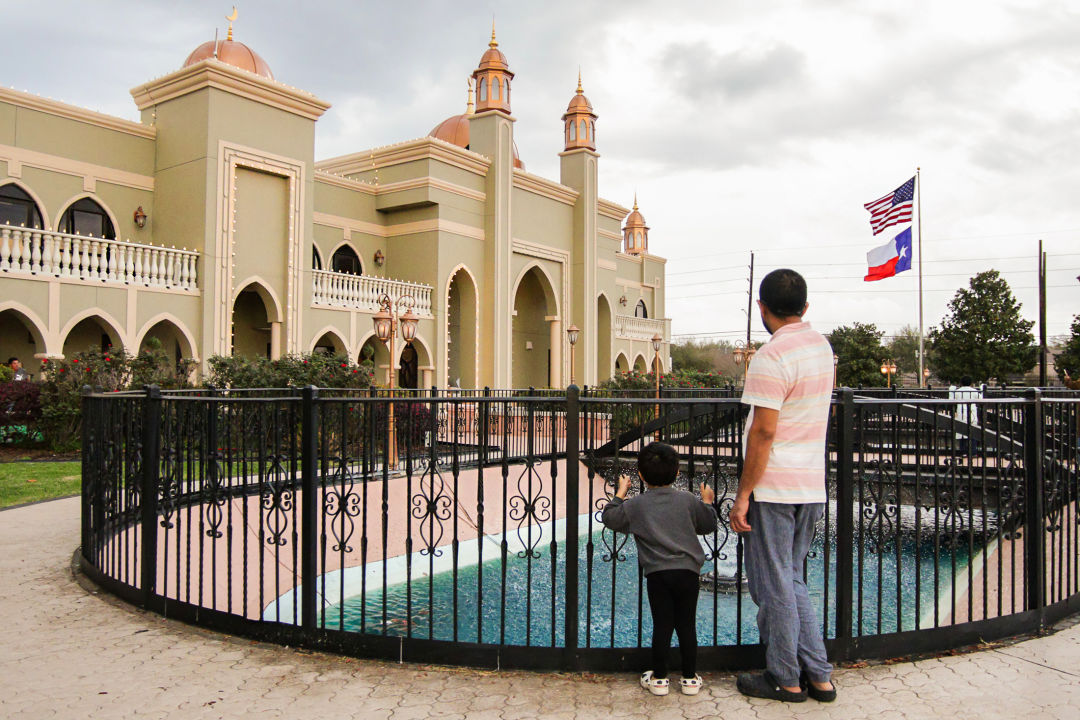
Worshippers join together for prayers, then break fast.
For the estimated 250,000 Muslims in Houston, Ramadan is a time for fasting and reflection. Observed during the ninth month of the Islamic lunar calendar, it’s a time when Muslims across the world focus on prayer, charity, and community, and as one of the five pillars of Islam, fast from dawn till sunset. It’s also defined as the point when the Quran, Muslims’ holy book, was first revealed. As such, the Ramadan moon rewrites Houston after dark, as members of the Muslim community come together at sunset to break a roughly 14-hour fast and celebrate a month of rituals.
Festivities typically begin with evening prayers at religious centers, but these days, celebrations have migrated beyond the confines of mosques. Worshippers spill out from prayer halls into parking lots, trading family tables for late-night festivals that run until dawn, and across Houston, the city comes alive with Ramadan celebrations long after most residents go to sleep.
At Sugar Land’s Maryam Islamic Center, which has hosted community iftars for more than a decade, friends and families gather in the garden while volunteers in blue vests serve the premade iftar boxes of dates, samosas, and chaat. Maryam Mustafa, who serves as a board member, says volunteers are the foundation of the operation, organizing meals and ensuring cups of chai are ready after dinner. Each year, they serve over 30,000 cups of chai—the number skyrocketing during Ramadan, Mustafa says.
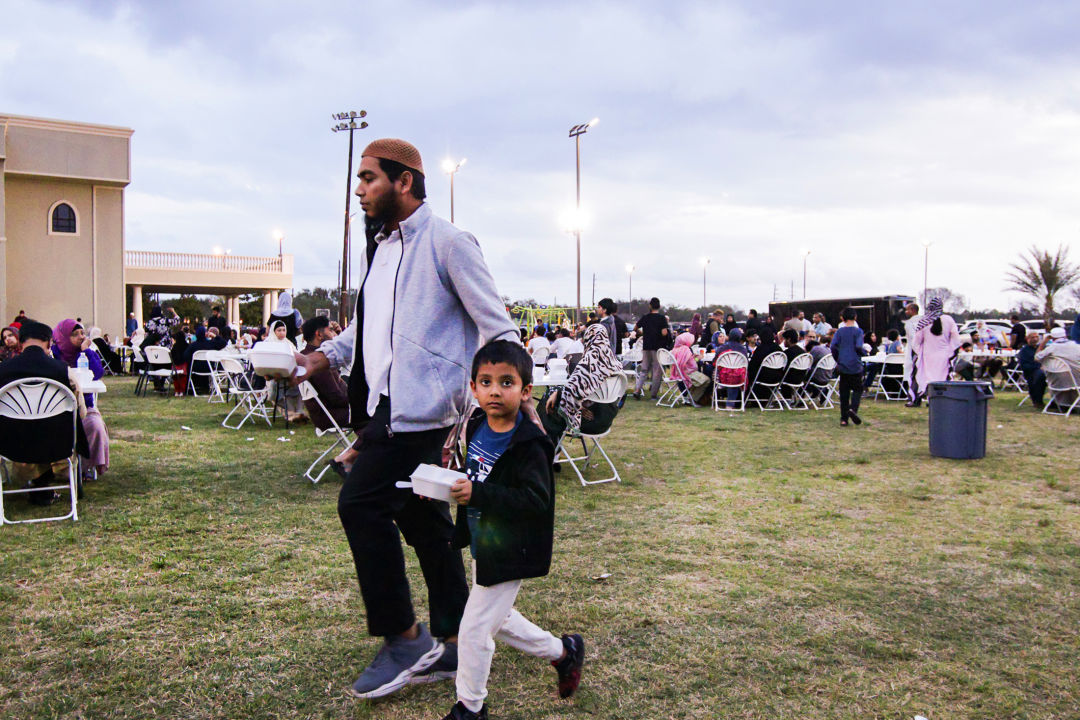
During Ramadan, families spill into parking lots to feast on iftar meals.
Asif Malik, lead of the food committee at Brand Lane, also speaks enthusiastically about tea as a must-have ritual during Ramadan evenings and says attendance has also grown. “Twenty years back, we had a maximum of 50 people, and everybody used to contribute by bringing something from their house to eat together,” he says. Now, the food volunteer committee plans the budget and secures caterers 20 days before Ramadan to prepare for as many as 500 people on weekends.
Considering the weighty responsibility, volunteers must carve out time from their everyday lives to serve the community. Omar Ahmed, the secretary of education at Brand Lane, has his own system. Each evening, he arrives at the mosque with his flask of chai, takes his orange volunteer vest, and begins directing hundreds of cars into the parking lot—one hand waving, one eye on the growing line. It’s a process he’s done every night of the fasting month for three years, and he’ll return next year, too.
Aayan Khan, a college freshman and lead of the youth committee at Brand Lane, spends many of his Ramadan evenings helping wherever he is needed, whether it’s assisting with food distribution or guiding cars in the parking lot. He returns every year to volunteer, an opportunity that he says helps him connect with the community. “I found a home here,” he says with a smile. “And I volunteer to make sure everyone in our home is happy.”
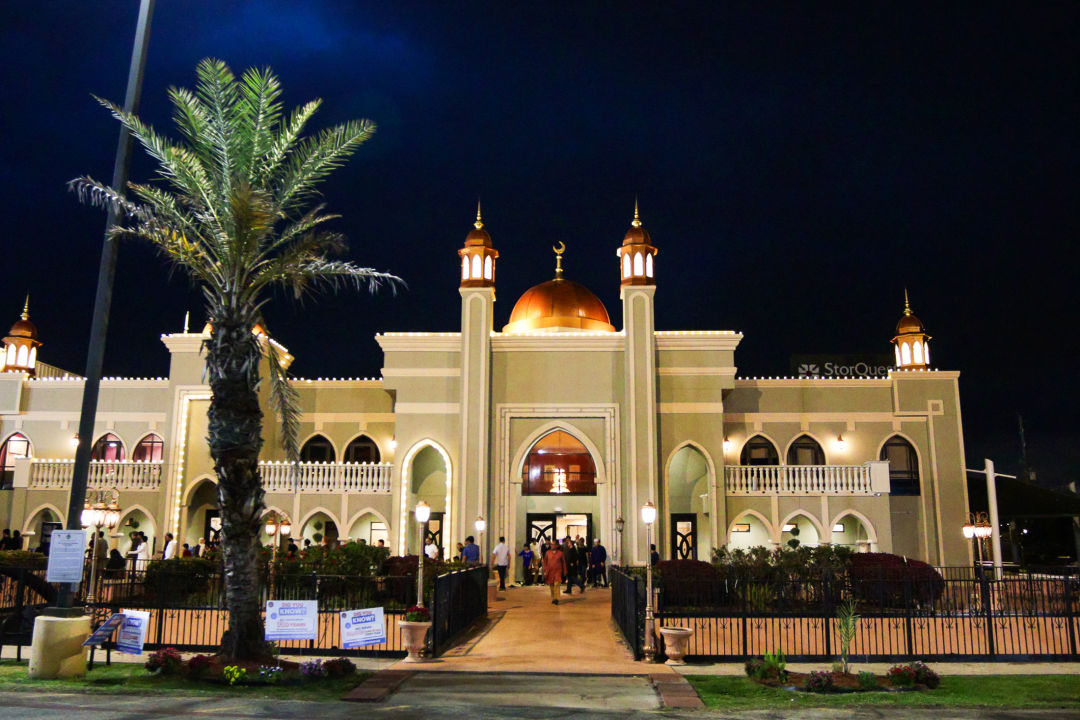
For a few weeks each year, the city stretches its nights a little longer—making space for prayers, food, and community.
Outside of the city’s mosques, Ramadan celebrations reach into Houston’s most popular restaurants. Lush, Reza Persian Grill, and Indo-Pak favorite Aga’s introduce special iftar and suhoor buffets, while nearby parking lots are filled with food vendors catering to late-night diners. One of the newer draws of the season is festivals like Suhoor Vibes and Texas Suhoor Fest, the latter being one of the largest suhoor festivals in the state. Centered around halal-friendly food vendors and Muslim-owned businesses, these festivals run from midnight until dawn, inviting first-time visitors to experience Ramadan with the community.
According to organizers, in 2026, Suhoor Vibes welcomed 10,000 attendees to experience food, drinks, and clothing from 100 vendors. Rida Saeed, an organizing team member for Suhoor Vibes, says the festival captures the spirit of the month. “During Ramadan, you really see the liveliness of the community come to life,” Saeed says.
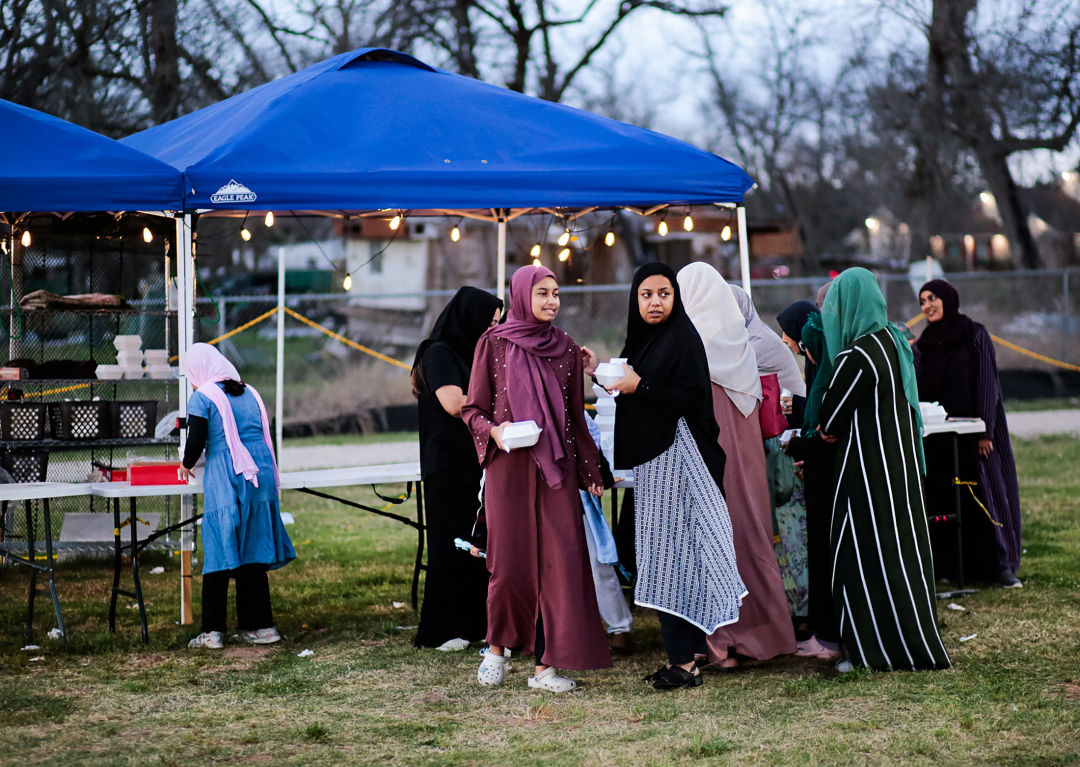
Volunteers are the backbone of Ramadan celebrations.
Following its events in Austin and Dallas, the Texas Suhoor Fest returned to Houston in mid-March, expecting more than 20,000 attendees, many of them first-timers, and more than 130 vendors. Touting free and open admission and an environment that welcomes people from all backgrounds, founding member Faraz Ahmed says the goal “has always been to highlight and uplift locally owned Muslim businesses and give them a platform.”
At this event, it isn’t uncommon to see curious newcomers and interfaith friends sharing tables with families who have observed the fasting month their entire lives. Conversations flow seamlessly between languages, cuisines from different cultures appear side by side at food stalls, and visitors understand the month’s emphasis on generosity and togetherness.
Year after year, these gatherings grow, giving each member of the community a place to belong and call home. And each day, long after midnight, as the crowds thin at suhoor festivals and the last cups of chai are poured at mosques, Houston’s streets slowly quiet again. When Ramadan ends on March 19, the suhoor and iftars will come to an end. But for a few weeks each year, the city stretches its nights a little longer—making space for prayers, food, and community long after the rest of the city sleeps.