
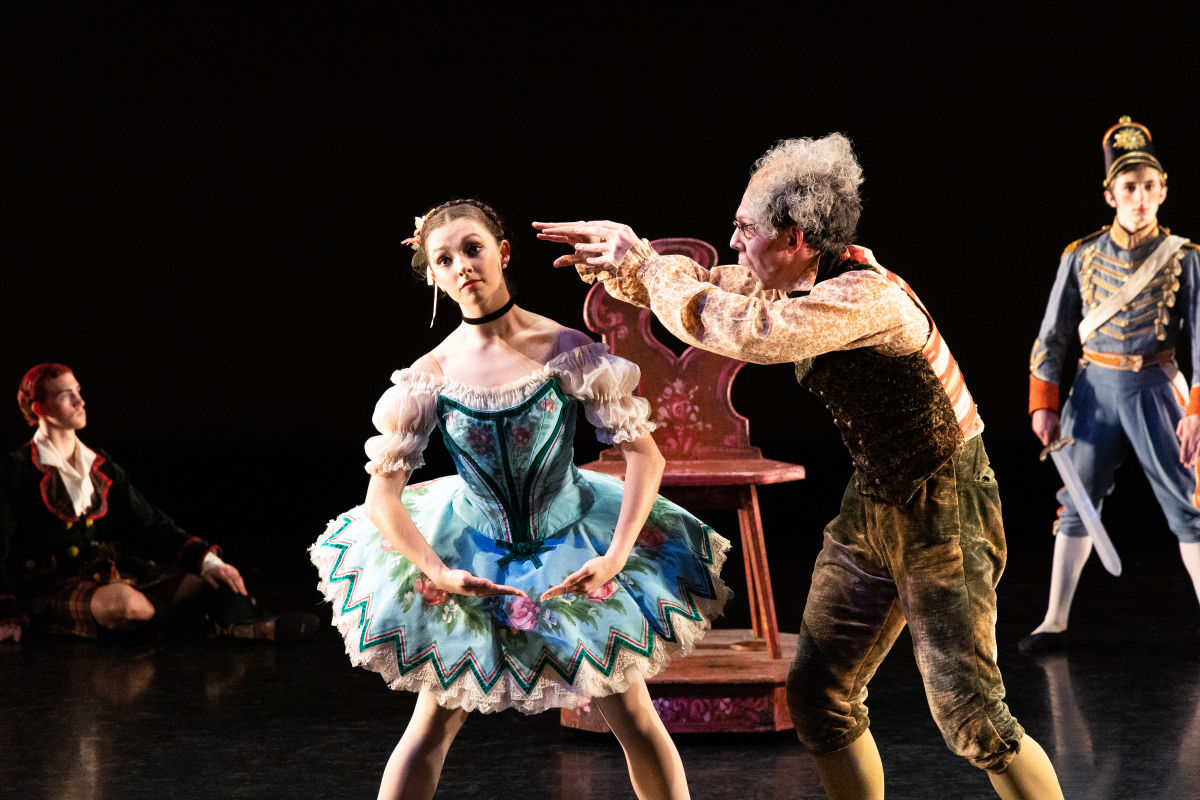
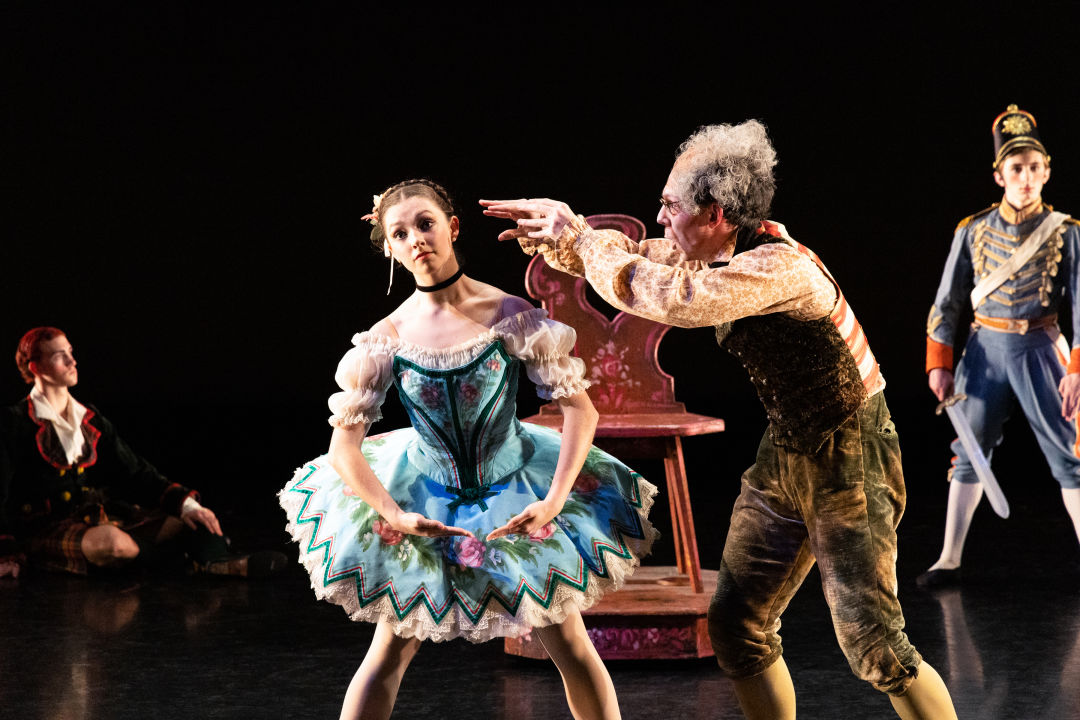
The comic ballet Coppélia is one of many Houston Ballet performances that center the accessible neurological needs of attendees.
Kimberly Larkspur, president of the Dauntless Dance and Movement studio and performance company, never intentionally set out to offer sensory-friendly classes or shows. Considering they planned to spend most of their time in the space, it started with a desire to create the most comfortable surroundings for themself.
Dauntless plays music at lower volumes than a typical venue, incorporates lighting from several ambient sources rather than bright overheads, offers frequent breaks for performers to decompress as needed, and reduces anything that may create what Larkspur calls “uncomfortable textures or visual clutter.”
It was only later, when Larkspur found out that they were neurodivergent, that the realization struck—Dauntless was already inclusive. They didn’t need to retrofit their practices to allow for sensory-friendly accommodations.
“A large percentage of [students, performers, and audience members] found that they were unusually comfortable in [our] environment and that kind of bubbled up; in my case, years prior to, say, a diagnosis,” Larkspur says. “Then, things clicked into place for me and for a lot of the other people in our existing community… As years have gone on, it has really solidified into things that are sometimes very, very simple.”
Sensory differences are often associated with autism in popular parlance, though they’re present in a much broader spectrum of neurological wirings such as attention deficit disorder/attention deficit hyperactivity disorder (ADD/ADHD), sensory processing disorder, PTSD, developmental disabilities, dementia, and others. These manifest in different ways depending on the individual, but typically entail sensory avoidance or hypersensitivity, which involves feeling overwhelmed by stimuli; sensory seeking, or actively seeking out satisfying inputs for the sake of self-soothing and/or self-regulation; and/or low registration, which requires a higher degree of sensory input than the average person. Depending on the environment, some or all of these sensitivities can be present in a single person at the same time.
As accessibility rises in public consciousness and the disability community continues to assert that it deserves accommodations wherever its members wish to go, performing arts organizations have taken note. They’ve tailored shows and classes alike to ensure a wider variety of people can enjoy theater, dance, and live music. Many of them, including Hobby Center, Houston Symphony, Museum of Fine Arts, Houston, and Houston Public Library, consult with Reed Walker and Rachel Petmecky of Sensory Stages. This neurodivergent-owned and -operated consulting firm helps arts nonprofits, sports franchises, zoos, and other venues design sensory-friendly programming. Walker estimates that since 2020, he and Petmecky have worked with at least 60 different Houston-area institutions and businesses to make their spaces more inclusive for people with sensory differences.
“We have really tried to move away from telling people exactly how to do something, because everybody is very different. So, there’s not going to be a one-size-fits-all kind of thing,” Walker says. “…What we have done, and what we consider sensory-friendly, is there are accommodations made that can help different people with different sensory sensitivities, or maybe just social anxieties, that can make them feel more welcome and accepted and included at different events.”
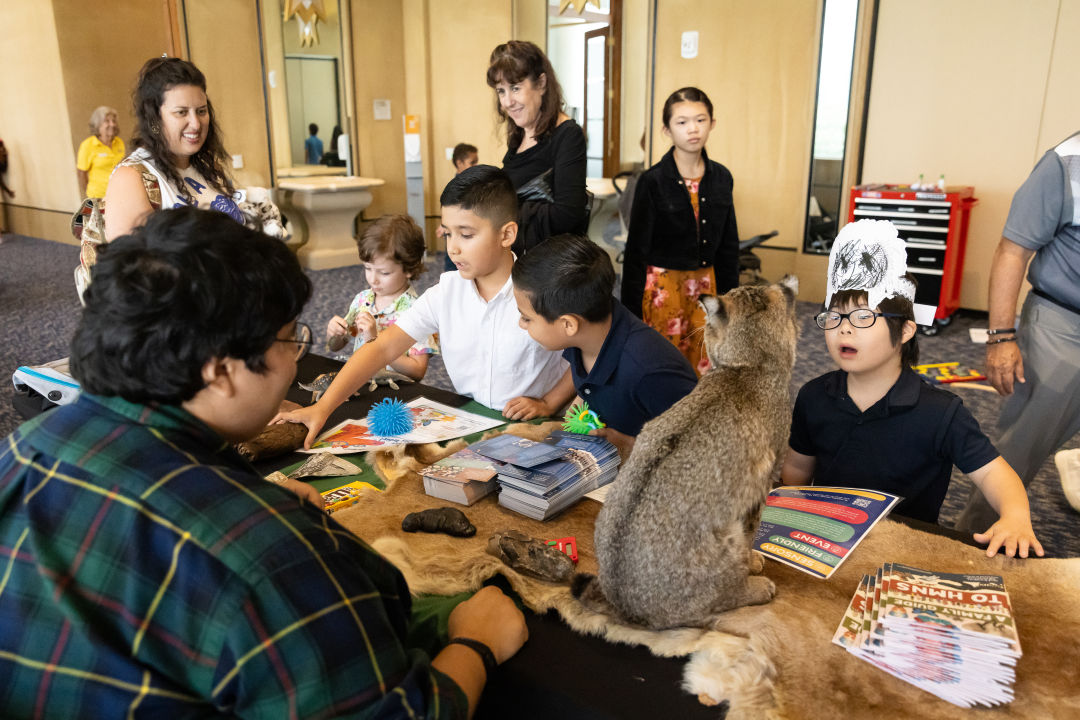
Hobby Center’s sensory-friendly Lion King performances include opportunities for kids to engage in other activities in the lobby.
Although sensory differences are not a monolithic experience, Petmecky points out that a little adaptability is sometimes all that’s needed to include people who have them. “You might not have thought about it, but the front row is really close to the stage, and some people might not enjoy that,” she says as an example. “So, flexible seating is an option, because you don’t always know until you get there as a patron. So, really feeling up a space physically with our own eyes and bodies is one of the first steps of how we are able to draft recommendations for accommodations.”
Robin Anderson, education and engagement manager at Hobby Center, has worked with Sensory Stages before, but the Downtown space has offered sensory-friendly performances since 2012. In fact, she says it was the first Broadway theater outside of New York to host Lion King shows accessible to people with sensory differences. She notes that over the past decade, many of the disability consultants she’s met with believe that the philosophies behind accommodations have “moved from protecting the disabled individual to giving them information and choice.” Because of this, Hobby Center has shifted its own approach to center autonomy. “Sometimes there is no change to the art,” Anderson says. “The focus is on changing the audience environment, so creating a focus, a welcoming and inclusive environment, having a relaxed theater etiquette that allows audiences to come and go as they please.”
When working with Sensory Stages, Walker and Petmecky suggested that Hobby Center adjust sound levels and train volunteers to communicate with audiences about available accommodations. This all builds on a flexible foundation that allows both the freedom of movement and devices like fidget spinners and headphones to be brought into the theater.
“Everyone is welcome to experience the performance in their own way and on their own terms, in their own needs,” Anderson says. The same goes for shows at A.D. Players at the George Theater, which offers sensory-friendly and “relaxed performances” once or twice per run. Tickets to these are $5 to help offset the costs often associated with caring for a child or adult with access needs. In addition to the comparatively relaxed theater etiquette and reduced sound and lighting, the theater offers a live feed of the show above its snack bar, so that patrons needing a little more space can keep up with what’s happening on stage.
“People don’t feel that they have to conform to anything that makes them feel uncomfortable or gives them anxiety,” says Andy Pederson, director of education and theater for young audiences at A.D. Players. He also trains a team of volunteers nicknamed “Purple Shirts,” who provide on-the-ground assistance to families; they also serve as greeters and occasionally as lobby entertainment. Pederson believes this helps “erase that line” between performing artists and audiences with access needs, giving attendees a chance to perhaps see themselves as actors, dancers, musicians, or singers
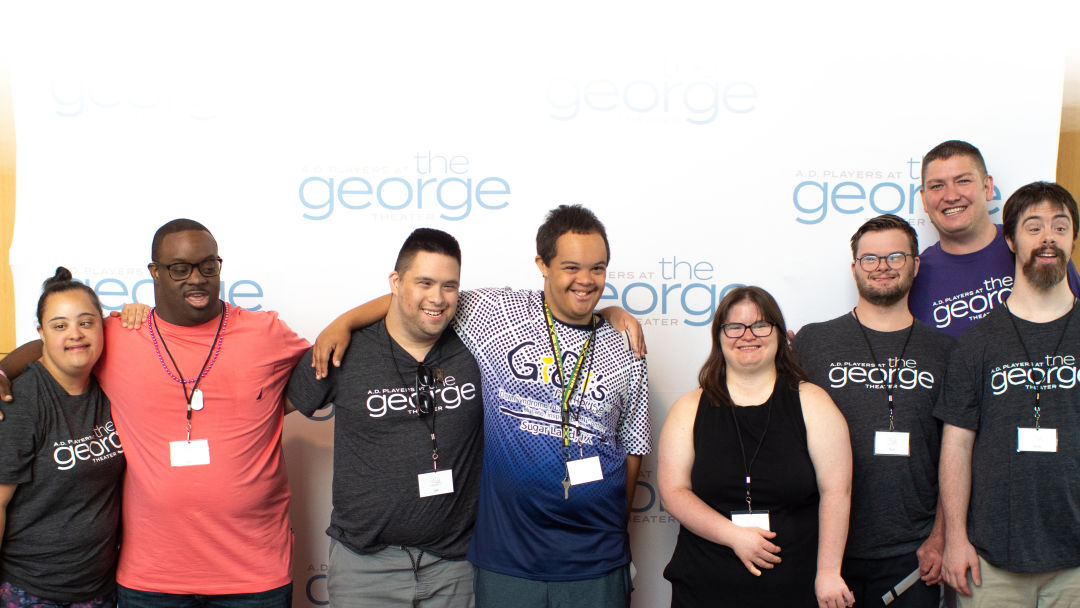
For the A.D. Players and other theater and dance companies in Houston, all audiences deserve to check out a great show.
Houston Ballet’s adaptive dance program similarly encourages students to learn and love participating in the arts just as much as watching. As with Dauntless, the organization offers both classes and performances that center on the needs of people with sensory differences. “We take the class and change it to whoever is in front of us to fit their needs, because movement is movement, and everyone can do it,” says Lauren Anderson, Houston Ballet’s associate director of education and community engagement.
Sensory-friendly shows presented by the ballet at both the Wortham Center and Margaret Alkek Williams Center for Dance are referred to as “no shush zone[s]” where audience members are allowed to make noise as they feel inspired. This isn’t a disruptive experience. It’s simply a different experience, one designed specifically to ensure more people can participate in public life free of stigma.
“It’s not changing the art. It’s changing the environment that the art happens,” she says. “It’s basically welcoming everyone.”