
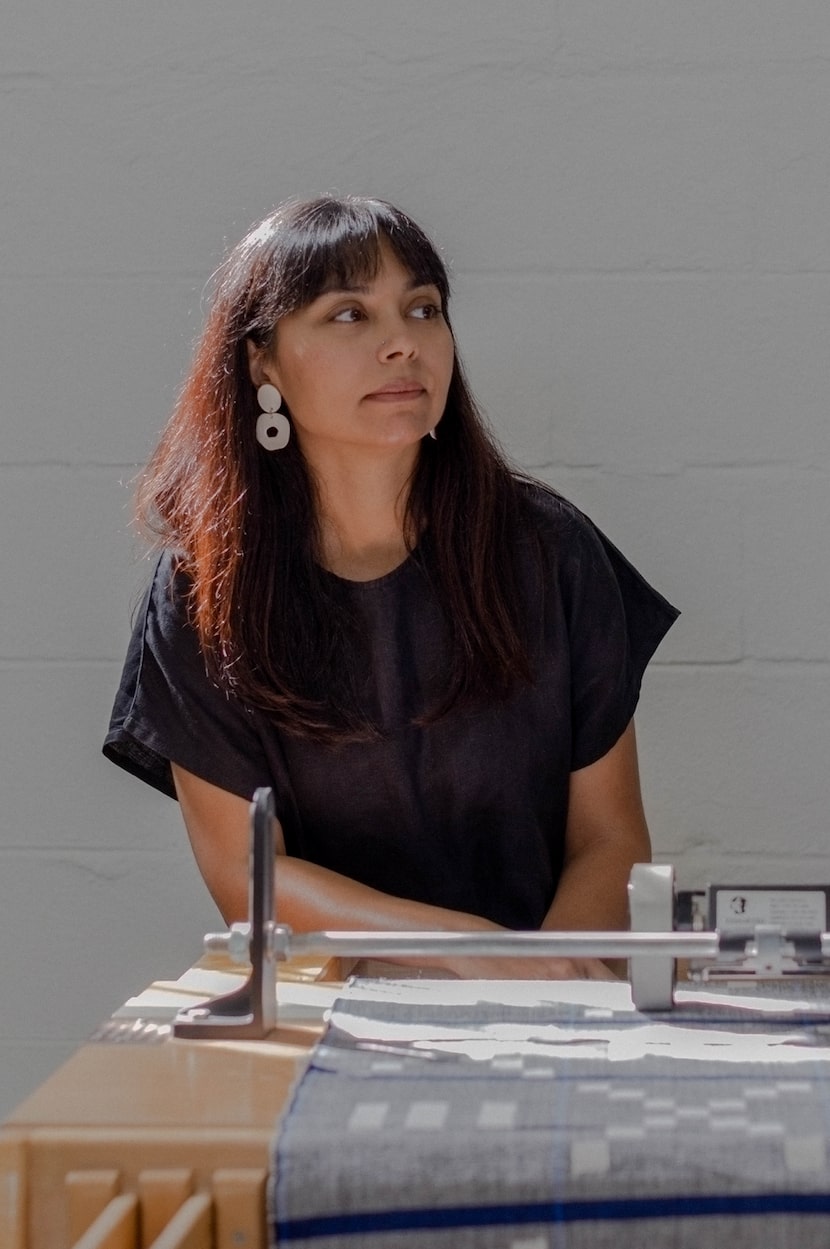
“We’re not interested in perfect fabrics,” says Kufri designer Mili Suleman. “We’re interested in fabrics that are imperfectly perfect.”
Alexandra Hulsey
Between emails and meetings, Mili Suleman makes a cup of tea. Lately, the designer has been drinking a delicate black tea grown on a friend’s family estate in the foothills of the Himalayas. The blend, lightly scented with rose, has a soft flavor and balance.
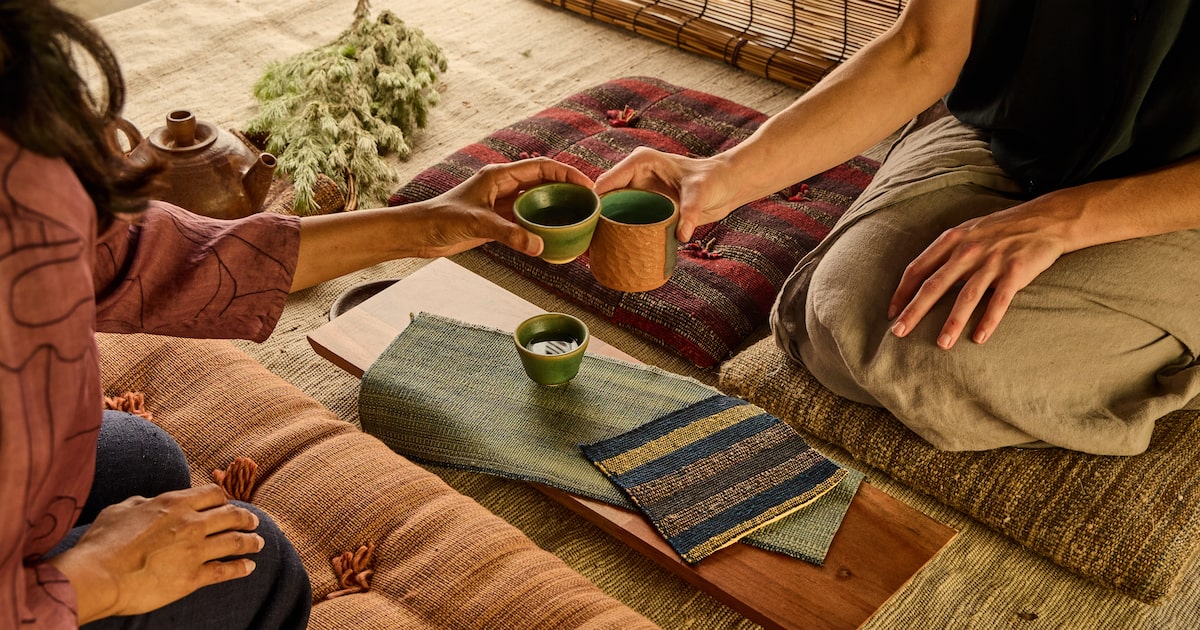
Ready for a break in the day, she opens a container and gathers the loose leaves in her hand. She lifts them to her nose, inhaling their fragrance. Once the leaves have steeped, she notes the color of the liquid when she pours it into a cup. Before she drinks, she notes the warmth of the tea cup in her hands. She inhales another breath. Only then does she bring the cup to her mouth and let the liquid slip between her lips and coat the inside of her mouth. The ritual takes only a few minutes, but it’s deliberate. “Tea is a sensory experience,” Suleman says.
That experience is the inspiration behind Suleman’s newest textile collection. The founder of textile studio Kufri recently introduced Ritual, a group of fabrics inspired by tea’s sensory pleasures — the places it grows, the textures it evokes and the slower rhythms it encourages.
“Tea has become this pause in my day,” Suleman says. “I thought, if I feel this way, maybe other people feel this way too about the pace of life. Everything keeps getting bigger and faster, more people, more demands. If you keep going nonstop, when do you pause to think about what you’re actually doing? Tea is that moment for me.”
Get updates from Abode
Three designs anchor the Ritual collection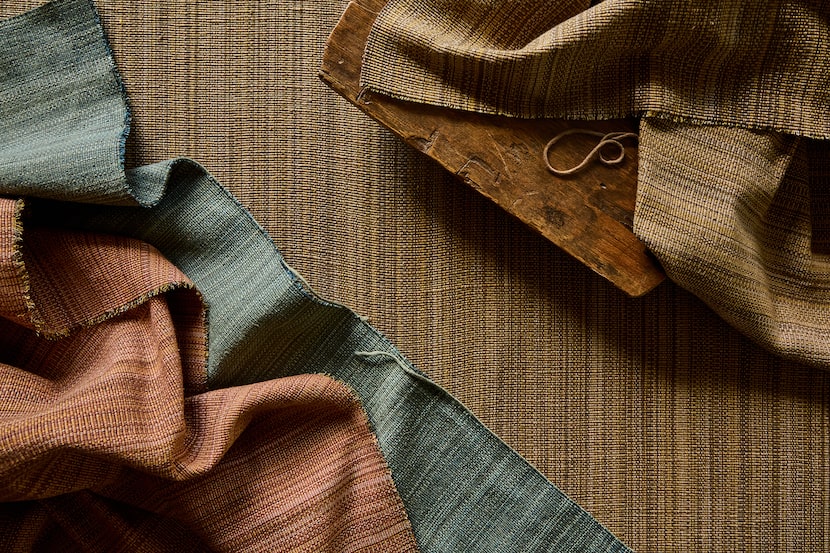
The silk-cotton Ritual fabric, from which the collection draws its name, comes in three colorways.
Marshall Cox/Stylist: Doug Voisin
Made from natural materials including jute, cotton and silk, the Ritual collection emphasizes texture and touch. “For me, when a fabric is really tactile, it invites pause,” Suleman says. “If I sit on my sofa and the fabric is a natural fiber with texture, I find myself running my hand over it. It’s a sensory experience. Drinking tea is the same.”
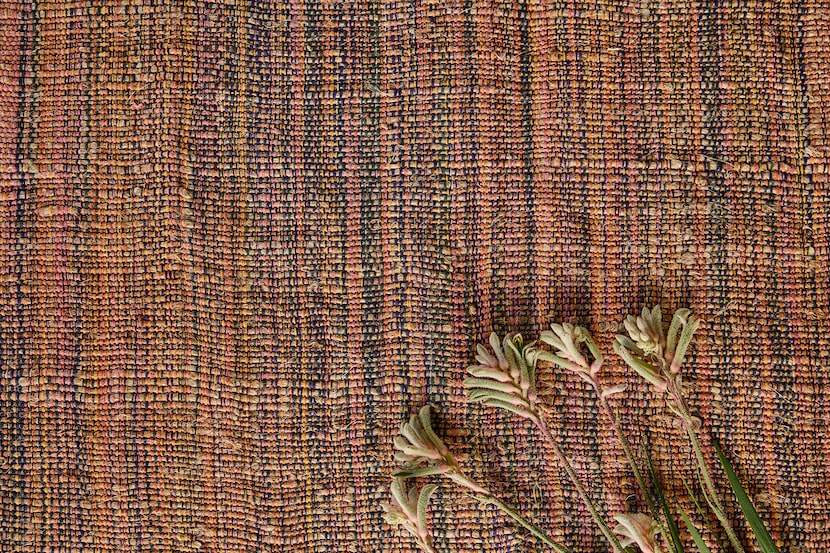
Terroir blends jute and cotton. This is the multicolor style called Ceylon.
Marshall Cox/Stylist: Doug Voisin
Named for the agricultural term describing how soil and climate shape flavor, Terroir blends jute and cotton to create a richly tactile surface inspired by tea-growing landscapes. Three colors reference three of the world’s tea-growing regions: Malawi, Ceylon and Darjeeling. The handwoven effect of the different materials is meant to evoke misty mountain air and mineral-rich soils. Of the entire collection, Suleman may like Terroir in Ceylon best. “It’s multicolored, almost like a rainbow coming together. … You can really see the texture throughout,” she says.
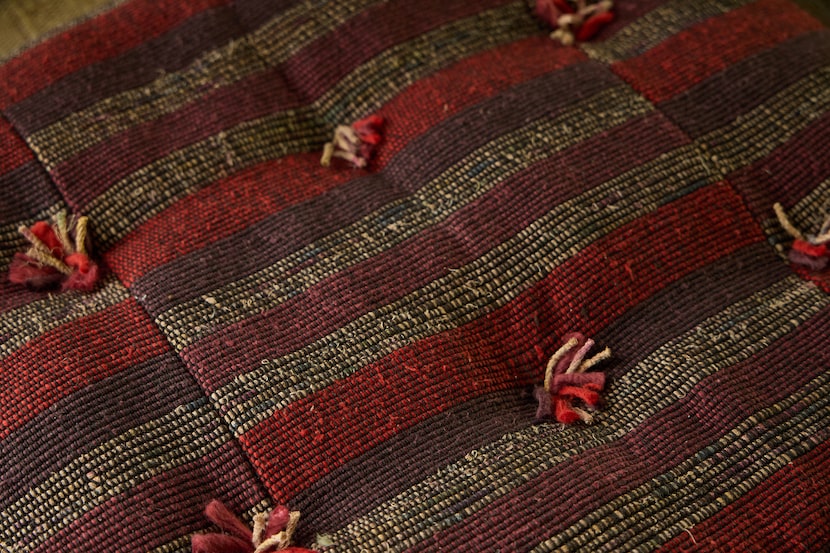
The Obi design, shown here in Imperiale, is handwoven with recycled cotton yarns.
Marshall Cox/Stylist: Doug Voisin
The design with the same name as the collection itself, Ritual, is a silk-cotton blend with gentle, undulating lines and subtle shifts in tone intended to echo intimate moments of connection shared over tea. Its three colors — Oolong, Dragonwell and Rooibos — are named for types of tea.
The third design, Obi, is handwoven from recycled cotton yarns and constructed from narrow strips of fabric joined together. It’s a Japanese technique that creates a rhythmic pattern. With two versions — rust-and-burgundy Imperiale and indigo-and-ochre Ceremony — it recalls rows of tea bushes stretching across a hillside.
Like all Kufri textiles, the fabrics are woven in artisan villages in India rather than in large industrial mills. The handloom process produces layered, tactile surfaces that celebrate rawness and rusticity. “We’re not interested in perfect fabrics,” Suleman says. “We’re interested in fabrics that are imperfectly perfect.”
Related
 The designer’s journey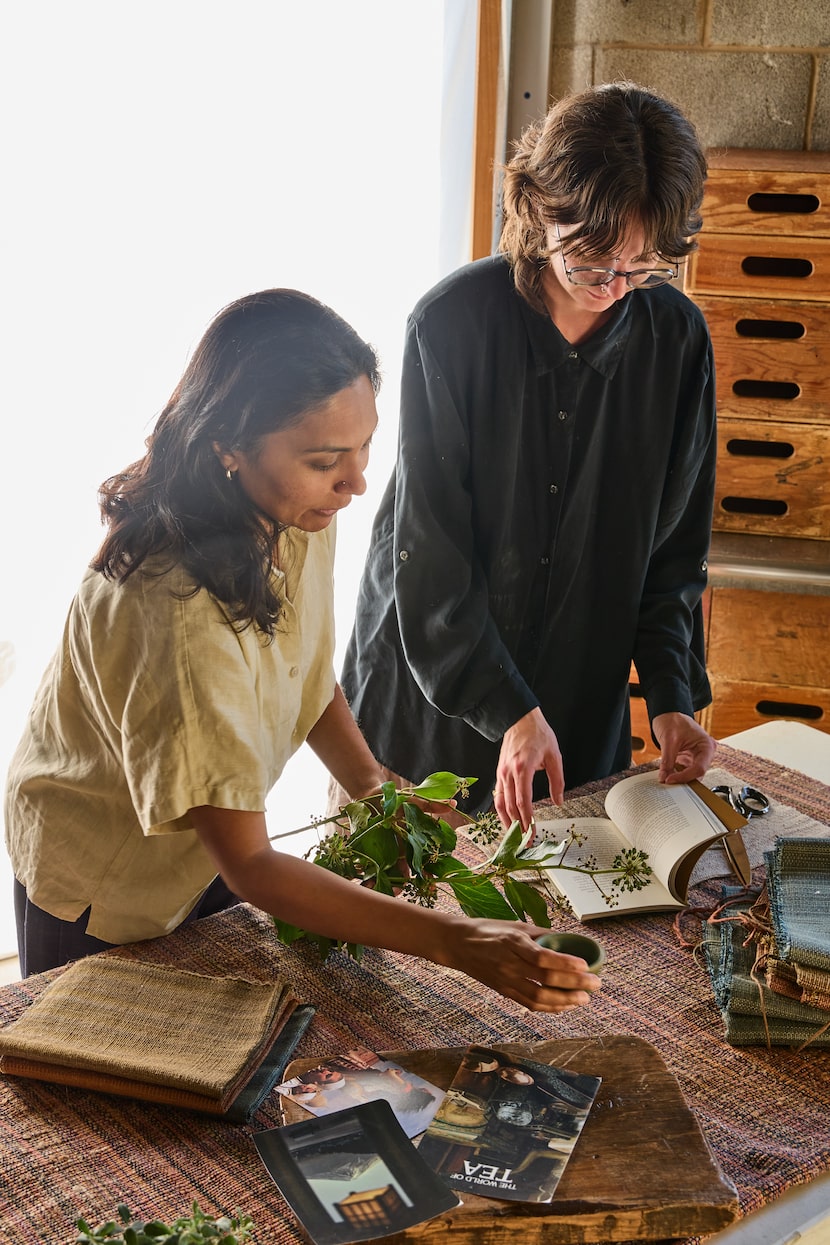
The sensory experience that comes with drinking tea is echoed in the textures of the Ritual fabrics. Here, Suleman and a member of her team review samples.
Marshall Cox/Stylist: Doug Voisin
Born in Bombay and raised in Oman, Suleman moved to the United States at 18 to attend Texas Christian University. She studied sociology before later returning to school for graphic design. She went to work in that field but quickly realized she didn’t want to chase technology. A monthlong trip exploring craft traditions across India led her to textile design. “That’s when I fell in love with textiles — specifically hand-woven textiles — and how cloth comes together,” she says. “When you’re wearing clothes every day, you don’t really think about where the fabric comes from or how it’s made. But when I saw weaving happening on a loom, it completely captured me.”
More than a decade after founding Kufri, Suleman still feels captivated by traditional weaving techniques passed down through generations of artisans. The company’s fabrics are designed to live comfortably in a home — whether as upholstery, drapery or pillows. “These are living textiles,” Suleman says. “You live with them.”
See the collection on the Kufri website. Suleman invites interior designers to stop by the Design District showroom at 1152 Mississippi Ave. for a cup of tea and conversation.
Love homes, gardens and design? Get more good stuff from Abode by following us on Instagram, Facebook and LinkedIn.
Your bathroom refresh is one clever tile pattern awaySmart swap: Designer-approved home decor dupes for all the style at a lower price