
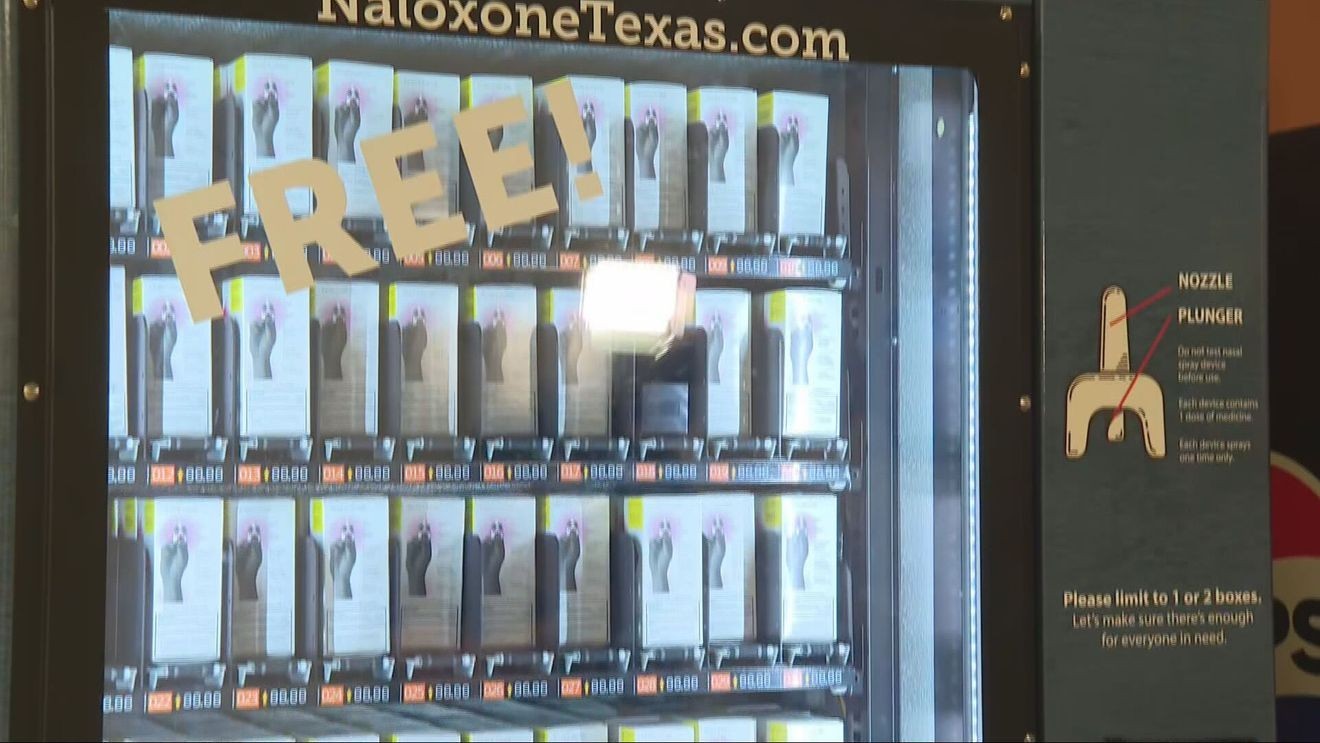
EL PASO, Texas (KFOX14/CBS4) — Students at the University of Texas at El Paso now have free, anonymous access to naloxone through the first Narcan vending machine in El Paso, a move organizers say could help prevent opioid overdose deaths and reduce stigma around drug use.
The machine is located inside UTEP’s student union and dispenses naloxone, a medication that can reverse an opioid overdose in minutes.
The vending machine was installed through a partnership with the El Paso Alliance for Recovery Alliance, which runs a naloxone distribution program in the region.
Maricela Tavares, the naloxone distribution hub project coordinator for Region Ten in Texas, which includes all of El Paso, said the goal is to make the medication easy to access and completely anonymous.
It’s free, it doesn’t take your name, your phone number, your address,” Tavares said. “So I think the easier it is, the more students might feel like they can approach the vending machine and get naloxone.
UTEP student Maricela said stigma can keep people from seeking help or resources.
“So I think there’s a lot of stigma around drug use, especially in colleges,” she said. “And having this vending machine here at UTEP might save a life.”
Tavares said fentanyl remains a concern, including on college campuses.
RECOMMENDED: El Paso’s Desert Spoon Food Hub marks 10 years, founded by mom and daughters
“So what we have heard is that fentanyl is big around campuses, not just campuses around the city,” Tavares said. “It could be unintentionally laced with fentanyl, sometimes intentional. But having the naloxone vending machine here can smash some of that stigma and save a life.”
The machine is designed to be simple to use. Users enter a number, and a box containing two doses of naloxone is dispensed. Tavares described how naloxone can be administered in an emergency.
“You insert it into their nose if you suspect they are having an overdose,” she said. “You spray it. You spray the first one. And if they don’t, if they’re not responsive, you wait two to three minutes and you use the other unit.”
Tavares added, “It’s easy if you’re not having an opioid overdose. It’s not bad for you. It’s safe to use on babies, kids, adults, anybody. Even your pets.”
The installation comes as first responders continue to handle overdose cases across El Paso, though recent response numbers show a downward trend.
Data from the El Paso Fire Department shows crews responded to 968 overdose incidents in 2023. That number dropped to 653 responses in 2024 and 450 in 2025. So far this year, the department has recorded 64 overdose responses.
El Paso Police Department data shows officers were dispatched to 276 overdose calls in 2023, 147 in 2024 and 120 last year. So far in 2026, police have responded to 25 cases.
Tavares said programs expanding access to naloxone are part of why some numbers are trending down.
“So here in El Paso County, opioid overdose deaths have declined by 26%,” she said. “And so it went from 220 opioid overdose deaths to 163. And I believe it’s because of programs like the ones that I offer.”
According to the National Institute of Health, some opponents of free Narcan nationwide worry that making naloxone more available could encourage drug use. Tavares said that belief is misguided.
“I know that’s a thing that sometimes people say, but I think being aware and admitting that this is something that happens, people are using drugs,” she said. “And why not be prepared to prevent a death when it’s readily available and it’s free.”
Organizers said the machine is already being used and has had to be refilled multiple times in the first few weeks since it was installed.
Students on campus said the discreet access could make a difference in an emergency. UTEP student Shalani Richard said, “I think it gets rid of the taboo of the potential for a jev-over-dose and gives students a free resource to protect each other themselves.”
Richard added, “You never know when someone’s going through something and the fact that it’s so discreet can help a lot of people actually take the step to help themselves.”
Tavares said the vending machine is just one part of a broader effort to expand access to naloxone at UTEP. The organization is also working with the university to install about 70 naloxone storage cabinets throughout buildings near existing defibrillators, with the goal of making the medication as easy to find as other emergency equipment.
Sign up to receive the top interesting stories from in and around our community once daily in your inbox.