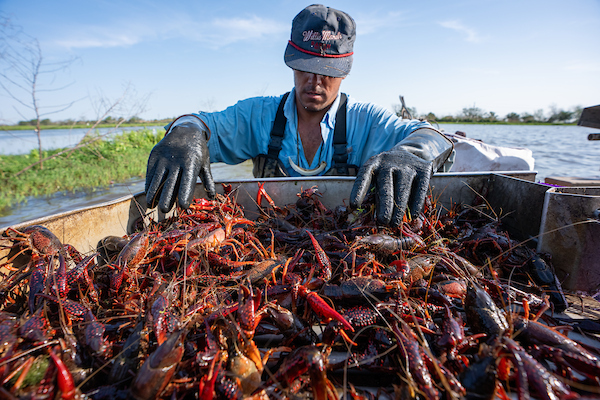
Despite a slow start, Texas crawfish production remains steady, and consumers can expect an average season amid ongoing demand, according to Texas A&M AgriLife Extension Service experts.
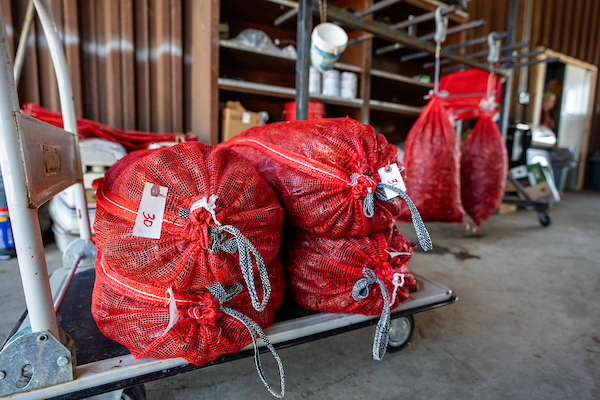 Texas crawfish production remains steady, and consumers can expect an average season amid ongoing demand, according to Texas A&M AgriLife Extension Service experts. (Courtney Sacco/Texas A&M AgriLife)
Todd Sink, Ph.D., AgriLife Extension aquaculture specialist and director of the Texas A&M AgriLife Aquatic Diagnostics Laboratory, Bryan-College Station, said that while the harvest delay may initially result in some limited in-store availability, overall farm inventory is on par with an average year, and the supply lag should resolve as harvest ramps up.
“In terms of production, crawfish farms are having a normal year,” Sink said. “The only thing we’re seeing is the product didn’t make it to retail vendors as rapidly because of the late January freeze that slowed harvest for a few weeks.”
Strong demand and steady prices
Crawfish prices typically start higher at the beginning of the season, peak around Lent — the 40-day religious observance leading to Easter — and taper off as the season slows in early summer.
Currently, live crawfish average around $5 per pound in Bryan-College Station and over $4 per pound in the Houston area. Few, if any, retailers currently have crawfish in stock in the Dallas and San Antonio areas.
Due to consistent high demand, Sink said he doesn’t anticipate consumers seeing much of a price break as the season progresses.
“We wouldn’t expect more than a 50-cent drop per pound from what we’re currently seeing,” Sink said. “In previous years, you could get crawfish down in the $3.50-$3.75 per pound range, but I don’t think we’re going to see that this year.”
Crawfish farm acreage remains steady
Texas ranks a distant second in crawfish production behind Louisiana, the nation’s top producer.
“Reporting in Texas is voluntary, so exact farm and harvest numbers are not available,” said Nikki Fitzgerald, AgriLife Extension coastal and marine resources agent in Jefferson and Chambers counties.
Sink estimates Texas has 15,000-20,000 acres in crawfish production, with most of the farms located in the southeast portion of the state. Jefferson and Chambers counties are home to 8,000 registered acres.
A past assessment conducted by Fitzgerald noted 14 Texas counties with at least one crawfish farm. Since then, she and Sink said additional acres and farms have been added along the coast, as well as in East Texas.
While production estimates vary, harvests typically range between 500-650 pounds per acre. Sink said some producers have reported harvests as high as 850 pounds per acre during a good year.
Texas crawfish avoids major invasive pest impacts
Sink said Louisiana still relies heavily on crawfish-and-rice field rotation farming. In contrast, many Texas producers have transitioned to year-round pond production and avoided major impacts from rice delphacid, an invasive pest that has devastated thousands of acres of rice across the state.
Still, the pest remains a concern for Texas crawfish producers who do use the rice field rotation.
“Rice delphacid affects the second growth of rice crops, or the ratoon crop, which is what crawfish feed on when using that rotational method,” Fitzgerald said.
She added that slight differences in production methods and farm connectivity have also allowed Texas crawfish producers to avoid the impacts of the invasive apple snail, which has caused significant economic losses in Louisiana.
“While our producers thankfully haven’t been hit hard by these invasive pests yet, they’re very much on their minds,” Sink said.
AgriLife Extension district reporters compiled the following summaries:
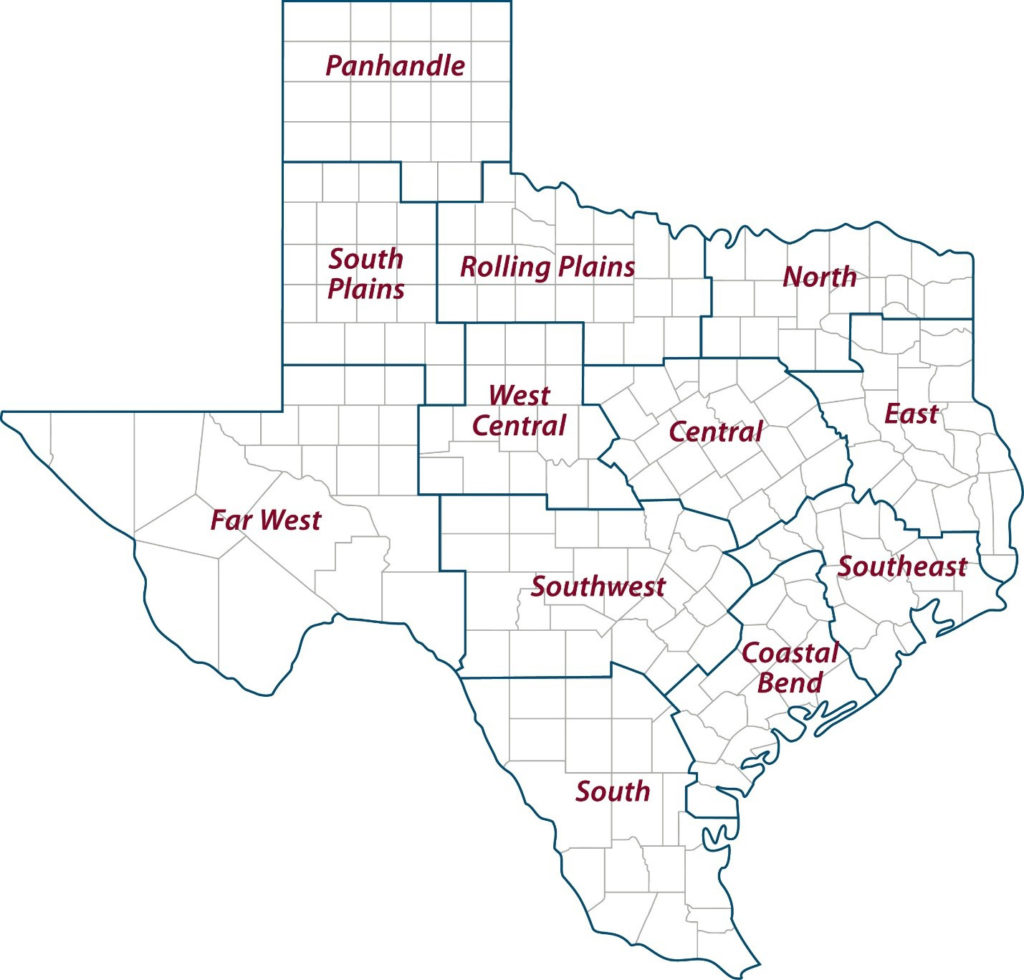 A map of the 12 Texas A&M AgriLife Extension Service districts.
Panhandle
Warm temperatures, sunny conditions and high winds continued to diminish upper and lower soil profile moisture reserves, with overall soil moisture ranging from very short to short. Spring field preparation continued, and cover crops contributed significant residue or ground cover for the upcoming warm season. Wheat continued to decline, and most farmers were considering using it as a cover crop rather than taking the crop to harvest. Forage resources on range and improved grass pastures declined. Pasture and range conditions were very poor to fair. Livestock conditions in areas using heavy stocking rates were not as strong as they were during the winter.
South Plains
High winds dried subsoil and topsoil moisture levels, and precipitation was needed. The majority of winter wheat was in poor condition. Preparations for the upcoming planting season began, including plowing, watering and compost application. Oats were planted. Producers irrigated some wheat to feed stocker cattle and were relying heavily on supplemental livestock feeding.
Rolling Plains
Severe storms brought scattered rainfall to roughly half the district, with a narrow band of large hail causing damage to homes, vehicles and farm equipment. Strong winds and wide temperature swings increased fire danger and further dried soils. Overall, spotty rainfall provided limited relief, and additional moisture will be critical in the coming weeks for crop and forage conditions. While wheat conditions appeared promising from a distance, closer inspection showed short stands with some fields already reaching the boot stage. Preparations for spring hay and cotton planting continued. Wheat grazing remained good in many areas due to lighter stocking rates, but overall conditions remained very dry. Additional rainfall was urgently needed to support wheat, oats and early pasture and rangeland growth. Pastures were rapidly losing carry-over grass, and livestock producers continued supplemental feeding while working their new calf crops. Some lighter calves from last fall were moved to local auctions, where prices remained strong.
North
Mid-week storms, along with warm and windy conditions were reported. Rainfall improved soil moisture and replenished ponds and lakes. Still, overall drought conditions persisted. Corn and sorghum were planted in many counties, and some corn emerged. Oats and winter wheat were in fair to good condition, and early signs of heading were observed. The pasture and range conditions varied from poor to good. Bermuda grass and winter rye grass flourished in many areas. Livestock conditions were fair to good, and livestock were being moved onto spring pastures with forage availability. Feral hogs were active. Noctuid moths, June beetles and crane flies were out and numerous. Hessian flies were observed in low-to-moderate levels in some wheat fields.
East
Some counties received adequate amounts of rainfall to relieve drought stress, while others remained in desperate need of moisture. Subsoil and topsoil moisture conditions were short to adequate, and pasture and rangeland conditions were fair overall. Livestock were in fair to good condition. While supplemental feeding continued, cattle in some areas began to rely on forage. Cattle markets remained strong in most of the district.
Far West
Dry, windy weather and temperature fluctuations continued. In many areas, extremely windy conditions contributed to dust storms and further depleted already limited soil moisture. Winter wheat and oats were in poor to fair condition. Producers remained active with early-season field operations. Corn planting began, and sorghum planting continued. Field preparation continued for cotton, with several producers beginning preirrigation. Pecan orchard activity continued with pruning, irrigation and the final harvest for a few operations. Irrigated crops progressed well despite the dry conditions. Water availability remained a concern in parts of the district, with irrigation allocations expected to be limited this season. Pasture and range conditions varied from very poor to fair. Livestock conditions remained fair across the district, though supplemental feeding continued in many areas due to limited pasture forage. Lambing and kidding activities were in full swing for sheep and goat producers. Wildlife activity remained steady, with feral hog damage reported in crop fields and increased sightings near residential areas. Predator pressure from coyotes persisted in some locations.
West Central
Some severe storms caused damage from hail, wind and one tornado. Some areas received up to 2 inches of rain, while other areas reported none. Soil moisture levels improved, and spring planting of sorghum continued. Fertilizer application was limited due to high prices and struggling small grains. Winter wheat improved in areas that received rain, and weed control began. Range and pasture conditions improved with spring green-up, but more moisture was needed. Cattle continued to improve with better grazing conditions.
Central
Half an inch to over 3 inches of rain was received. While precipitation was helpful to winter pastures, additional rainfall was needed to improve overall conditions. Bermuda grass began to emerge from dormancy, but an expected freeze may slow it down. Peach and fruit growers hope temperatures remain above freezing, or they stand to face losses. Wheat was ahead of schedule. Corn planting was slowed by recent rainfall but appeared to be off to a good start. Cotton planting was expected to begin in the next week or two. Fertilizer prices increased significantly, creating concern for input costs as the planting season progresses. Livestock were in good to fair condition and responding to improved grazing conditions. Supplemental feeding continued. The cattle market remained strong, providing positive outlooks for producers. Leaf rust remained active, and Hessian fly issues increased.
Southeast
Although some rainfall improved soil moisture levels, drought conditions continued. Soil moisture levels ranged from short to adequate. Corn planting was completed in some counties, and sorghum planting was nearly complete. Some corn emerged, and other vegetable planting began. Pasture and rangeland conditions ranged from very poor to good. Livestock conditions were fair to excellent overall.
Southwest
Precipitation of 0.65 to over 1 inch was reported along with tornadic activity and large hail in some parts of the district. Spring green-up was evident, but more rain was needed to sustain it. Corn and sorghum planting was delayed due to recent rains. There should be enough topsoil moisture for germination. Most trees had leafed out, except for pecan trees, and fruit trees were blooming. Recent rains brought some winter weeds and grasses. Gardeners began to plant tomatoes, peppers, radishes, green beans, potatoes and onions. Range and pasture conditions improved, although dry conditions persisted. Livestock received supplemental feeding and were in mostly fair condition. Lambing and kidding continued. Spring shearing also began. Rain and temperature changes led to increased wildlife activity, including feral hogs. Wildflowers were blooming but not as abundant as last year.
Coastal Bend
Cool temperatures and some wet weather delayed planting, but most fields should dry out soon. Some planting was delayed in hopes of more moisture, but corn planting should be done in the next week and sorghum planting should begin. Some annual winter grasses responded to light showers, easing supplemental livestock feeding of hay to a small degree.
South
Extreme drought continued, with some areas last receiving measurable rainfall in August. Topsoil, subsoil, pasture and range conditions were dry and very poor in most areas. Crop and livestock producers remained concerned about continued dry conditions and the potential for drought stress. There were very few signs of emergence in dryland fields planted several weeks ago. Many farmers planted to meet crop insurance deadlines, and a few fields reported uneven stands. Corn was planted, and some emergence began under irrigation. Most grain sorghum was planted, with some producers were watering to establish a stand. Wheat and oat crops continued to mature and should be prepared for harvest in the upcoming weeks. Cotton producers were planting if soil moisture allowed. Farmers prepared fields for peanut planting. Strawberries were coming on, and citrus trees were blooming and setting their fruit. Producers harvested leafy greens and cabbage, and onion harvest was nearly complete. Watermelon planting was complete; however, fields planted without preirrigation were already showing drought stress early in the day. Irrigated pastures started to green up and emerge from winter dormancy, but grazing availability was minimal. Most beef cattle producers were supplementing 100% of their herd’s nutritional requirements, and cattle were losing body condition. Feed and hay were in great demand and prices were high. Wildlife were experiencing stress and venturing closer to communities to find food and water. Deer producers were providing supplemental feeding with protein, cottonseed and corn.