
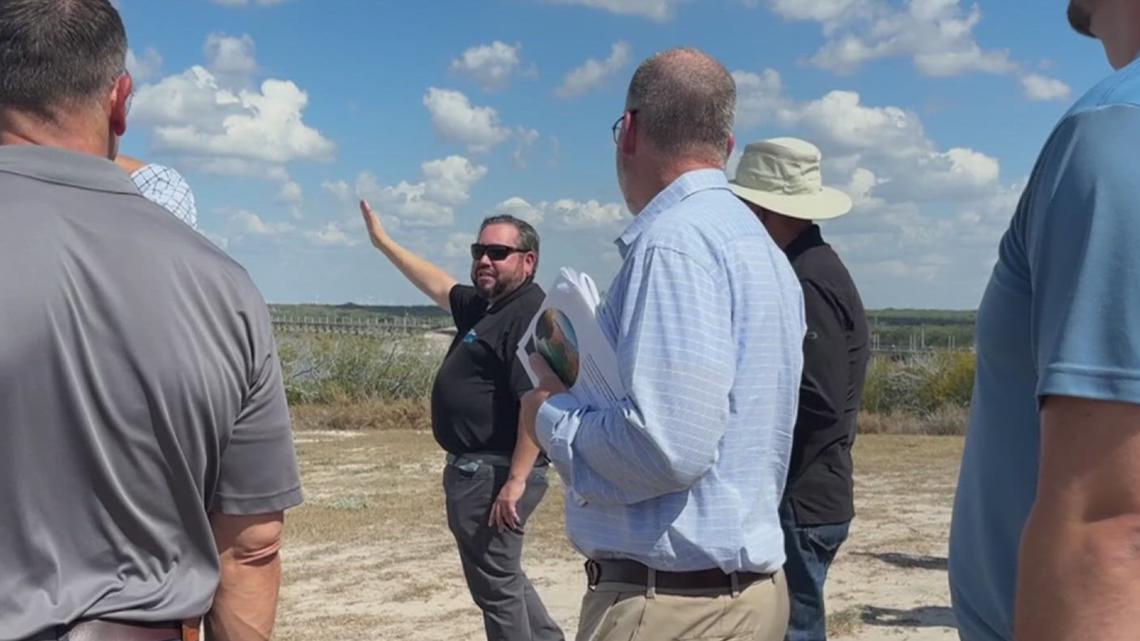
Officials say the Barney Davis power plant site may be one of the best locations along the Texas coast
CORPUS CHRISTI, Texas — Corpus Christi city leaders are once again searching for answers to the region’s growing water concerns, and a new proposal could put another desalination plant on the table.
City Council is now being asked to approve a motion allowing staff to work with CPS Energy in San Antonio to explore a seawater desalination project at the Barney Davis power plant in Flour Bluff. The proposal would begin discussions on whether the site could support a large-scale plant that converts Gulf seawater into drinking water.
The idea is not new. The Barney Davis location has been studied for years as a potential desalination site. Some council members say earlier environmental reviews have already pointed to the area as one of the most suitable places along the coast for such a project.
City Councilwoman Carolyn Vaughn says she supports taking another look at the site.
“Yes I want them to look at it. I have for a while,” Vaughn said. “So, I think Texas Parks and Wildlife said it was the only one that was in the green zone. So they are saying that is the best spot for desal and it’s been known for a while, it’s been studied, they’ve talked about it for years why they haven’t proceeded with that I do not know.”
City officials say discussions with CPS Energy have already started. The utility owns the Barney Davis power plant and any project at the site would require close coordination between the two cities.
Corpus Christi City Manager Peter Zanoni says there are two important conditions if the project moves forward. One is that discharge from the desalination process would have to be piped out into the Gulf of Mexico rather than released into nearby bays. The second involves how the plant would be built and operated.
“They do not want the city to build and operate,” he said. “Rather, they are more interested in a P3 type model, where a private entity would design and build and operate and the city would essentially be a customer with a take or pay contract.”
Under a public private partnership model, a private company would handle construction and operations while the city agrees to buy a set amount of water from the facility over time.
Even with that structure, council members acknowledge the project could carry a significant price tag. Estimates could reach tens of millions of dollars on top of other water projects the city is already pursuing.
City Councilman Mark Scott says leaders must consider every possible option as water supplies grow tighter.
“We can’t do them all but you also don’t want to leave any stones unturned,” Scott said. “I think there are some real headwinds on the Barney Davis power plant but I think those will work themselves out and will have a better sense of reality after we negotiate this project with San Antonio.”
City leaders also stress that a desalination plant would not provide immediate relief. Zanoni says permitting alone could take years before construction could even begin.
In the meantime, Corpus Christi is also considering creating a public utility authority that could help finance, develop and operate that desal plant at Barney Davis.
For now, council members say the next step is simply exploring whether a partnership with CPS Energy could make the Barney Davis site a viable long term water source for the Coastal Bend.