
Diabetes prevalence is increasing in both the U.S. and San Antonio, where the chronic condition remains one of the most pressing public health challenges facing the city.
To address that challenge, UT Health San Antonio launched the Center for Excellence in diabetes last summer, bringing together researchers and clinicians to study, treat and prevent the complex disease.
On Monday, university leaders and community supporters — including San Antonio Spurs owner R.C. Buford — gathered for a grand opening of the center.
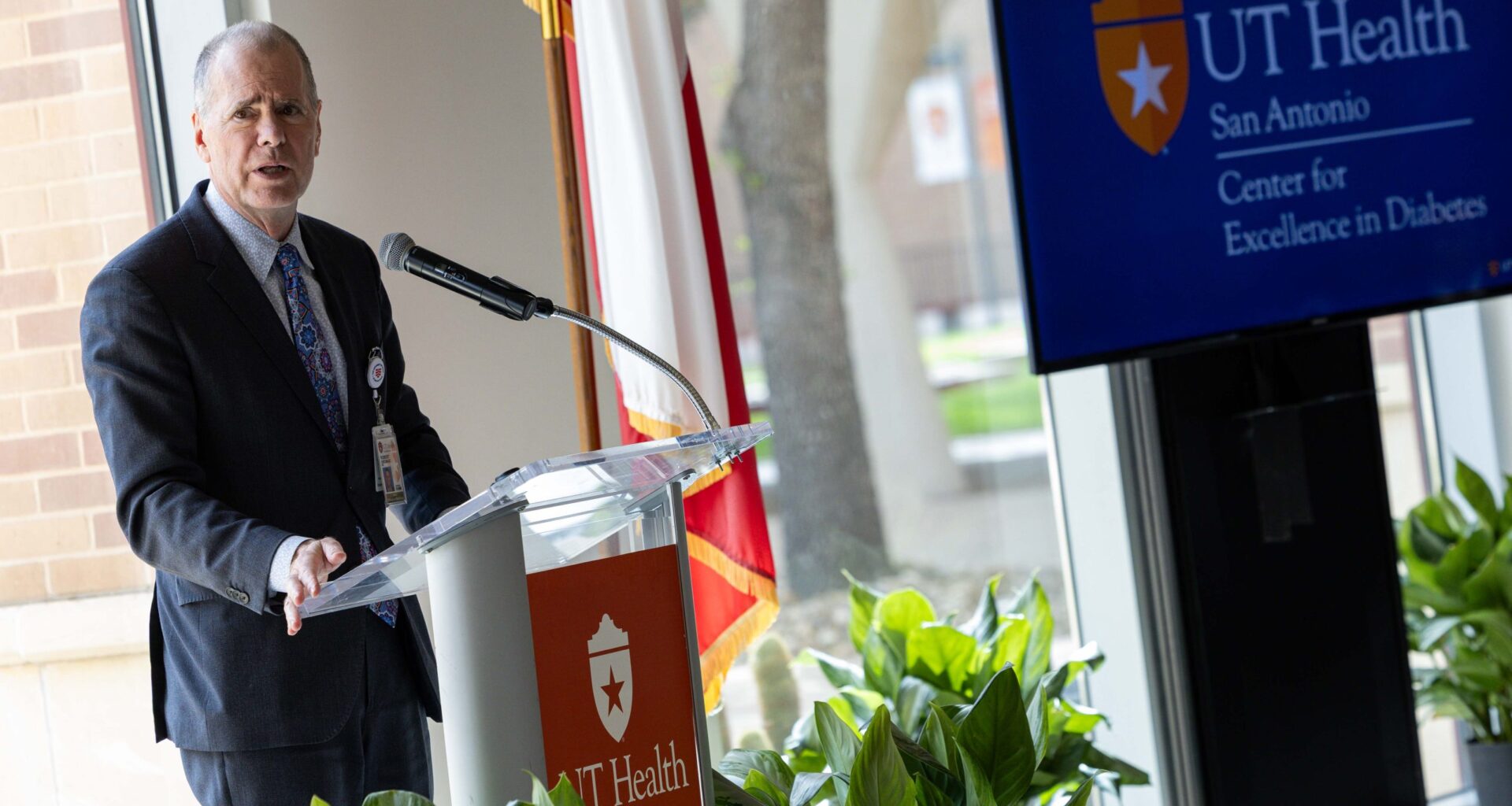
“All the easy things in diabetes are already done,” said Dr. Robert Hromas, dean of the university’s medical school. “What’s left is hard. What’s left is really complex, and it takes people from all different disciplines to attack the problem of diabetes.”
The center is already seeing about 1,000 patients a month and aims to significantly expand access in the coming years, according to Dr. Carolina Solis-Herrera, founding director of the center. The clinic is involved in 12 ongoing clinical trials, she added.
“Our mission is simple yet ambitious: to bring together outstanding clinicians, scientists, educators and innovators to transform how we prevent, understand and treat diabetes for a community like San Antonio,” Solis-Herrera said.
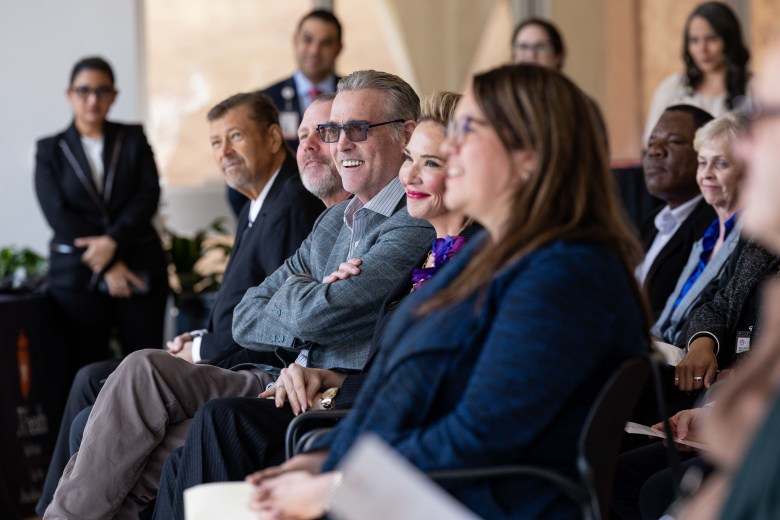 San Antonio Spurs CEO R.C. Buford, founding director Carolina Solis-Herrera and Councilwoman Ivalis Meza Gonzalez listen as UT Health leaders speak at the inauguration for the Center for Excellence in Diabetes on Monday. Credit: Amber Esparza / San Antonio Report
The new center was made possible by philanthropic support, but additional funding details weren’t provided.
Diabetes in Bexar County
The prevalence of diabetes has increased across the country and in Bexar County alongside growing rates of obesity, an aging population, sedentary lifestyles, among other factors.
It’s one of the most common chronic conditions in the U.S., affecting over 40 million people, according to the U.S. Centers for Disease Control and Prevention.
Bexar County faces even higher diabetes prevalence and mortality rates.
Nearly 17% of Bexar County residents 18 and older have been diagnosed with diabetes, higher than the state average of 14%, according to a 2025 report by the city’s Department of Metropolitan Health.
“It’s one of the most rapidly growing diseases,” Hromas said. “We’re not standing by and letting it sweep over us. We’re building a wall against it with this center, and we’re mobilizing all of our forces and all of our specialties against diabetes to stop the epidemic that’s happening right now in South Texas.”
In 2023, Bexar County had a diabetes mortality rate of 33 per 100,000 residents, higher than the Texas and U.S. averages of roughly 23. Death rates were significantly higher among Black and Hispanic residents compared to non-Hispanic white residents. And over a quarter of the diabetic population in Bexar County makes less than $25,000 in income annually.
In October, Metro Health director Claude Jacob announced that Metro Health’s Diabetes Prevention and Control Program — offering nutrition and exercise resources to residents since 2013 — will lose 72% of its funding amid the expiration of federal Medicaid funding.
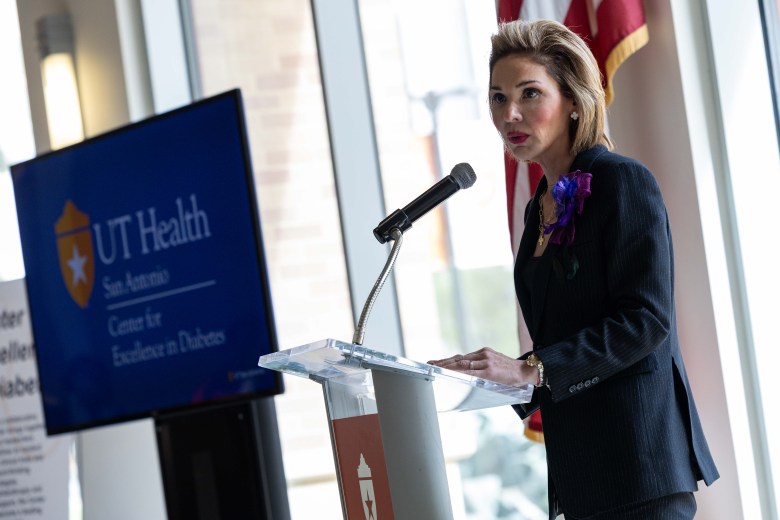 Dr. Carolina Solis-Herrera, UT Health San Antonio’s founding director of the Center for Excellence in Diabetes, speaks at the inauguration event on Monday. Credit: Amber Esparza / San Antonio Report
UT Health also works with University Health to run the Texas Diabetes Institute, one of the largest diabetes care centers in the U.S. Late last year, University Health launched the Limb Salvage Clinic as part of the center, aiming to reduce limb amputations in diabetic patients.
“This new center represents a transformative engine for community health,” said San Antonio Councilwoman Ivalis Meza Gonzalez (D8), “and will deliver preventative and culturally responsive care to families where they live, work and gather. This milestone marks more than the opening of a medical center.”
Spurs owner R.C. Buford, who has lived with Type 1 diabetes for 35 years and is a patient of Dr. Solis-Herrera, also attended the grand opening.
“The amazing programming that this university is building in these incredibly difficult times of health,” Buford said. “I couldn’t be more honored to share this journey with you all and to support what lies ahead of us.”