
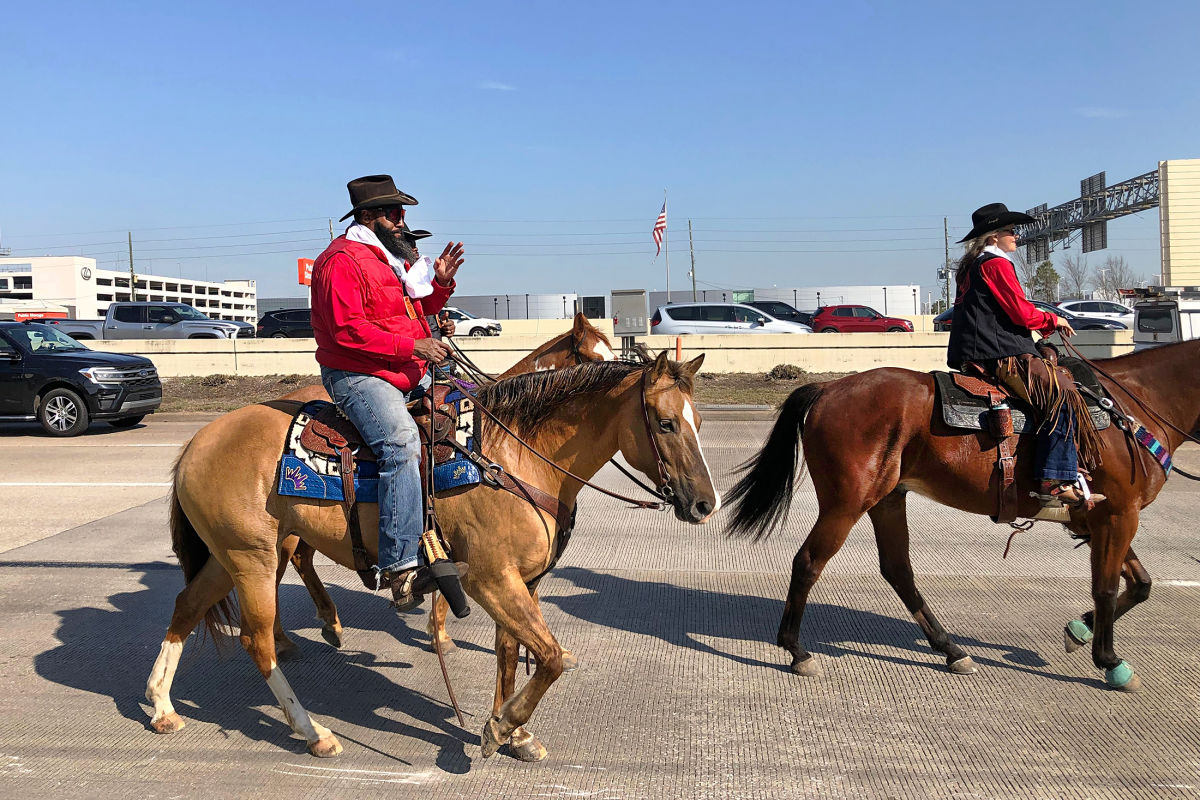
Trail riding has been a Houston tradition for years, signaling the beginning of the Rodeo season.
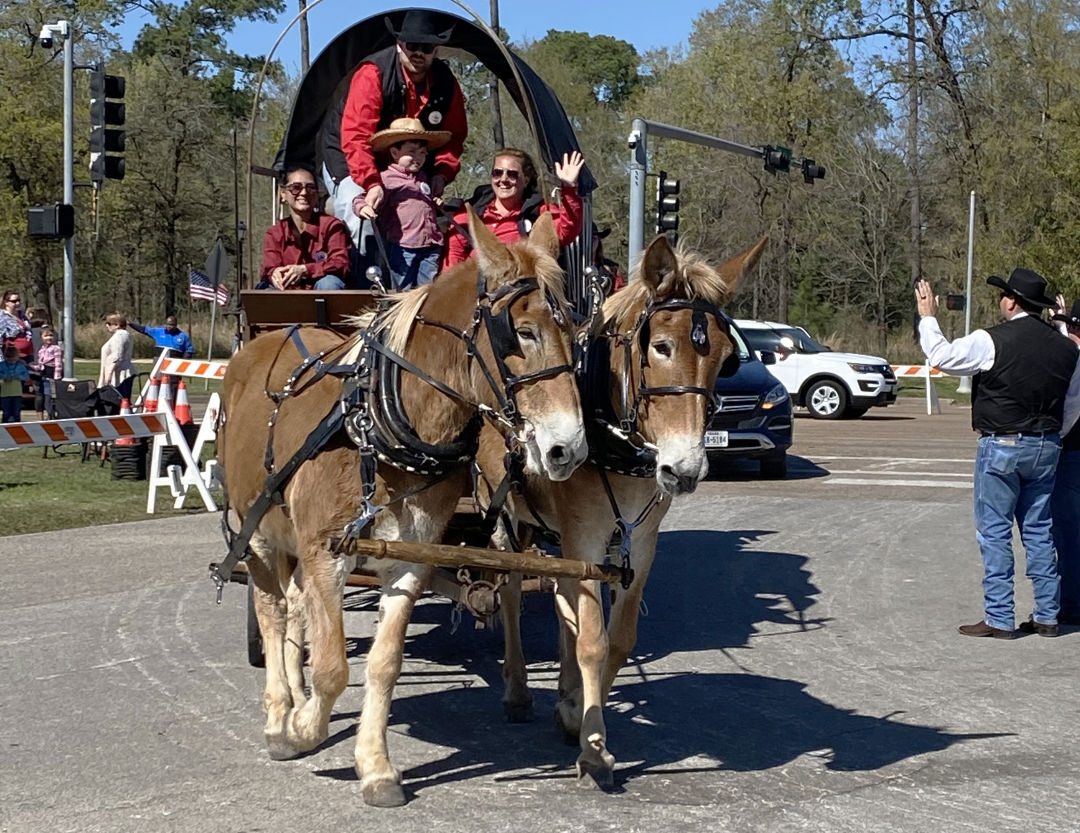
Every year, without fail, thousands of trail riders amble into Houston’s Memorial Park to kick off Rodeo season. Visitors gawk as horses overtake the city’s highways and urban core, trotting along as riders wave to onlookers. On journeys spanning days, trail riders hail from towns and cities as far as Hempstead and Goliad, giving urban dwellers a look into Western culture at its finest: horses, chuck wagons, and real cowfolk.
But the tradition isn’t what it used to be. Trail riders, with their emphasis on agriculture and slower, more analog living, are finding it harder to compete with the modern ways of the world. More Houstonians own cars than horses—meaning many prefer a 30-minute drive to a two-day ride on horseback. It’s become harder to recruit riders, sustain traditions, and share the road with a city that doesn’t always make room. For Houston’s trail riders, the road to Memorial Park faces challenges that go beyond Rodeo weekend.
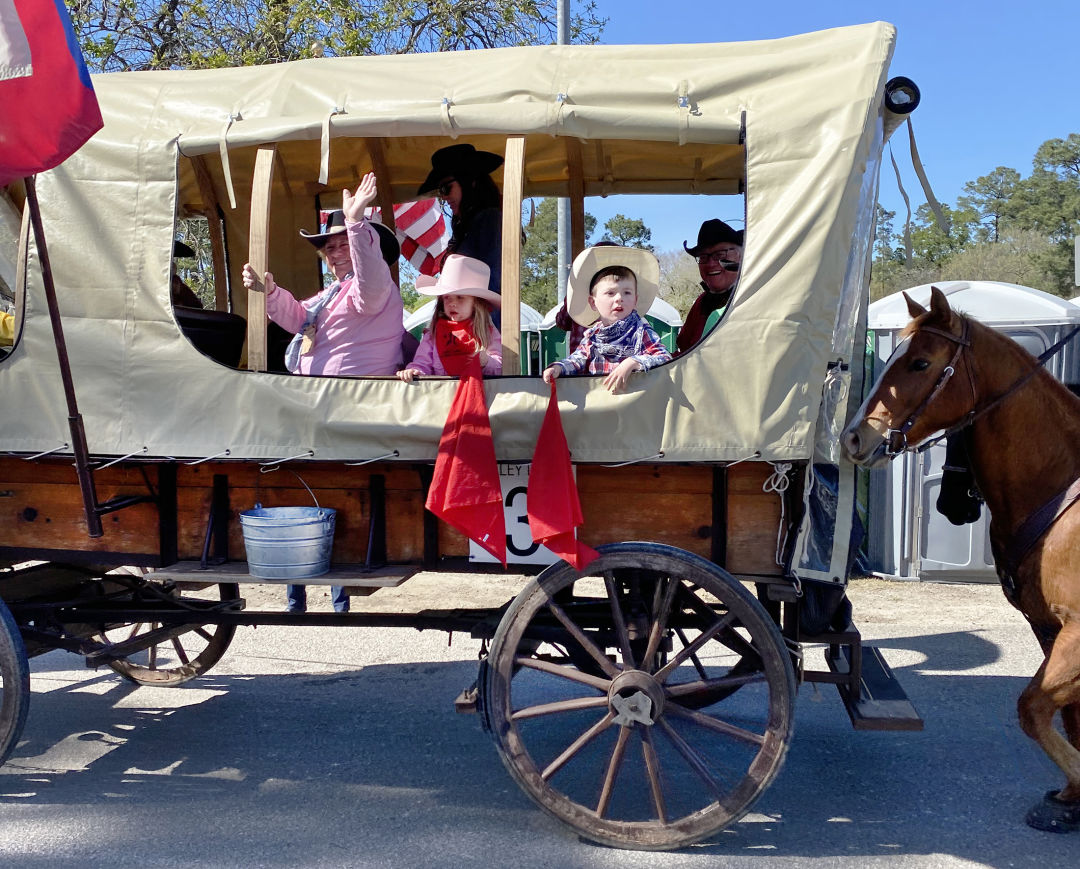
Challenges for Houston’s trail riders go beyond Rodeo weekend.
A long ride in
An American pastime, trail riding began when early European settlers used horses to survey lands, according to the nonprofit American Trails. In time, it became a large-scale mode of transportation, moving entire communities across the continent, not unlike the famed Oregon Trail. A vast migration of settlers from Missouri to Oregon in the 1800s, the Oregon Trail (and the video game) was known for treacherous challenges like wild animals, dysentery, and cholera. The voyage was perhaps the most famous and dangerous trail ride in American history.
In Houston, trail riding was once a major mode of transportation, but as the city industrialized, horses became less of a necessity, which meant trail riding largely declined. Automobiles took over, and within decades, horses were mostly owned by agricultural workers or wealthy elites who treated equestrianism as a sport.
In January 1952, four men traveled from Brenham to Houston to raise awareness of the Rodeo, then called the Houston Fat Stock Show and Livestock Exposition. The tradition stuck, and today, over 2,000 participants from 12 trail-riding associations ride into town, signaling the beginning of Rodeo season.
The riders cover around 1,300 miles across Texas, hauling rescued horses and even antique wagons, some centuries old. In some ways, it’s become a sport, with the Rodeo now presenting trail-riding awards that honor the top riders by team size and even spirit.
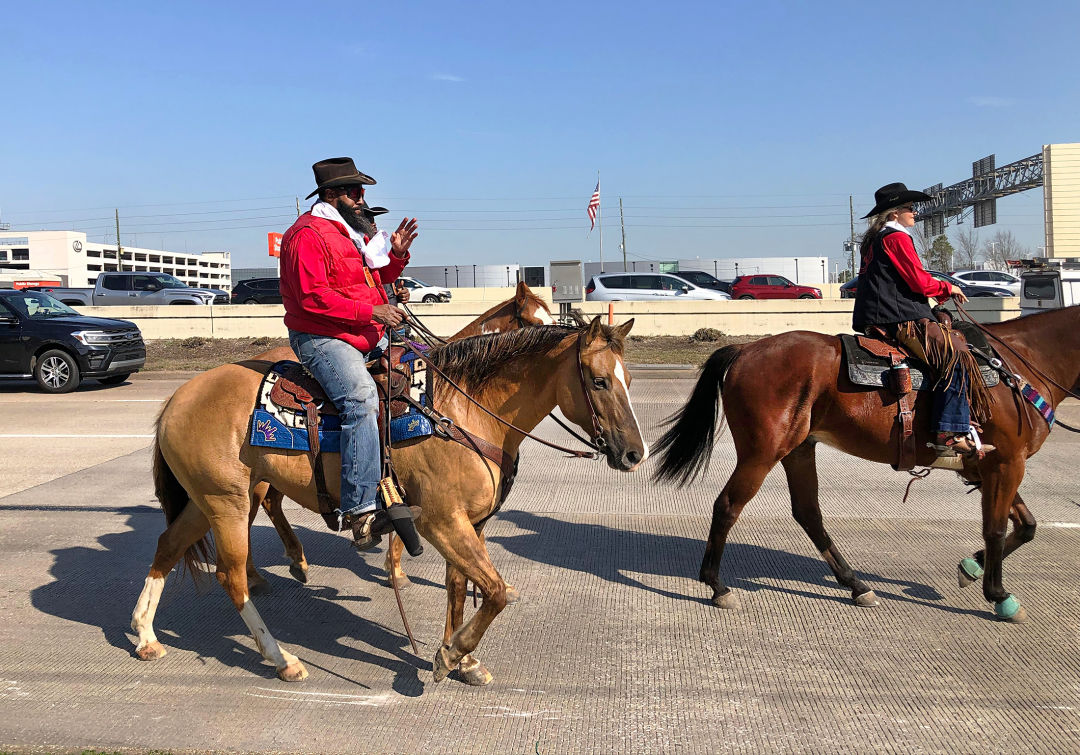
Mounted on horseback, trail riders traverse Houston’s cityscape.
The road gets harder
Willie Fry has been trail riding since he was 3 years old. Originally from Simonton, Fry is now in his 37th year and serves as the trail boss for Valley Lodge Trail Riders. As a trail boss, he owns the route itself and the safety of his crew, the animals, and the spectators. Under his eye, the 40-member group makes the trek from Brookshire to Houston, a trip that typically takes 40 minutes by car, several days by horse. “I haven’t missed a year,” he says proudly.
This year, Fry looped their Rodeo route through George Bush Park and the old Barker-Addicks reservoirs—an area where his father grew up. During his father’s childhood, the area was just bare land. Now, it’s a patchwork of highways, pastures, and strip malls. “Development has made it a little more difficult to navigate,” Fry says, noting busier roads and more traffic.
Slowed by entourages of trail riders, Houston’s infamously impatient drivers constantly blow their horns, which can scare the horses and disrupt the ride. “They don’t respect you for sure,” says Myrtis Dightman Jr., the trail boss for the historic Prairie View Trail Riders Association. To keep the riders safe, Fry and Dightman hire police escorts for the entire journey, even designating trail scouts that survey the area and keep the crew together.
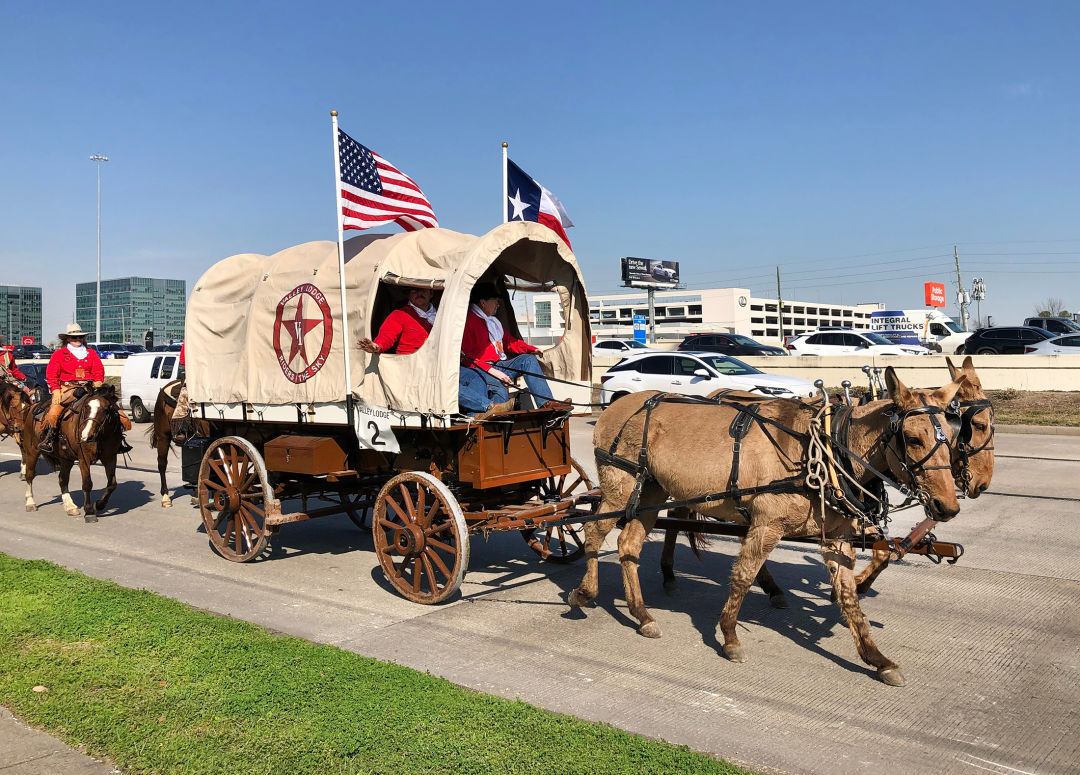
Trail riders have to travel amid road-raging drivers during the busy season.
Aside from the dangers of road rage, Houston’s trail riders face another threat: dwindling participation. Trail riding, with its demanding days of outdoor camping, constant animal care, and significant time away from work, makes it difficult to recruit new members. Jeremy Olivarez, trail boss for Mission Vaqueros, the Rodeo’s only Latino riding group, has seen firsthand how the modern world has drawn riders away. Olivarez started riding with Mission Vaqueros about 12 years ago; the group was “dying” when he joined, he says.
“At one point, 30 years ago, it was up to almost 200 riders. And then, about three years ago, [there were] almost only 20 riders,” Olivarez says. “It broke my heart.”
The Mission Vaqueros, who ride in from Goliad—over 200 miles out—partake in the longest trail ride at the Houston Rodeo. The adventure typically lasts two weeks, which presents another challenge: Many longtime members have difficulties taking time off from work, Olivarez says. Costs don’t make it any easier.
“Do y’all know the difference between a cowboy and a trail rider?” asks Dightman, quoting his favorite joke. “A trail rider uses his [own] money to feed horses.” Cowboys, on the other hand, get paid for their work.
Trail riding is an all-volunteer operation, which means every dollar is coming out of someone’s pocket. Maintenance and repairs on equipment like wagons and carts add up, while animal-related expenditures, including vet care, feed, and shelter, continue year-round. “That’s what you’re mainly preparing for, because it is expensive,” Dightman says. “You [take care of] the horse all year long. You got wagons that break down, and stuff like that.” For the 2025 season, Dightman estimates that maintenance and vet care cost trail riders around $25,000, and prices continue to climb each year.
Valley Lodge and Prairie View have had similar struggles, despite their varying route lengths. Dightman acknowledges it’s been challenging to lure younger riders away from their smartphones. He admits that the life of a cowboy might not be ideal for everyone. Fry, too, has seen his team dwindle. “Are the numbers as big as they were? No,” Fry says. “But as far as my ride, I’m encouraged, because our numbers have actually gone up since years past.”
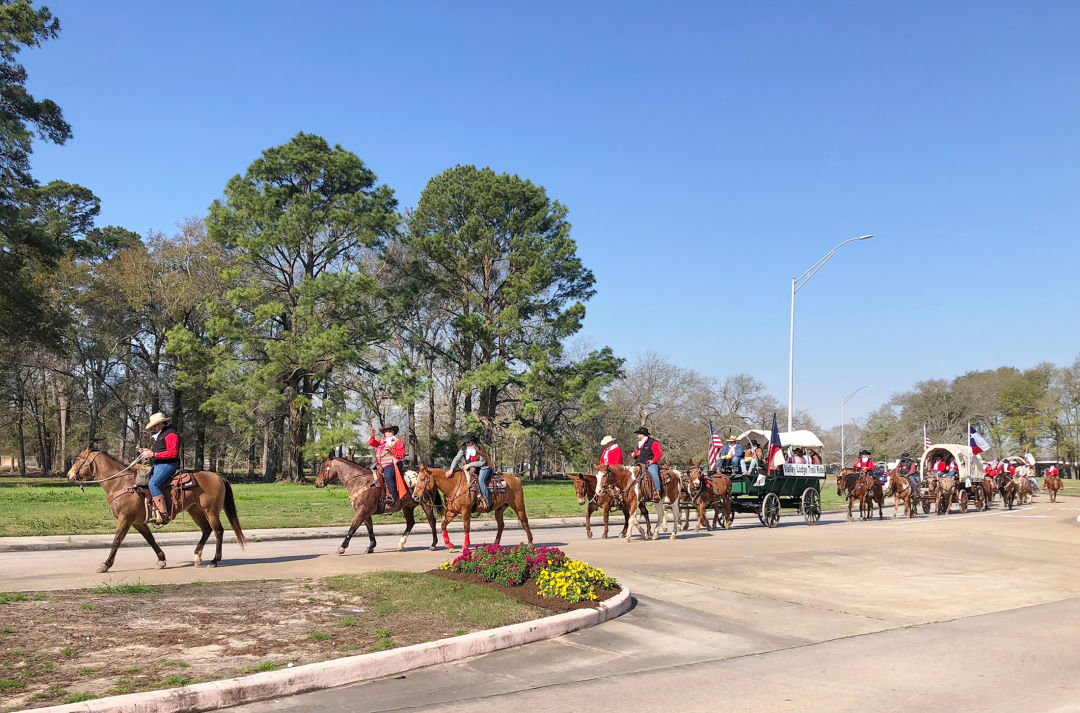
Numbers for popular trail riding groups have largely dwindled in recent years.
Holding the reins
Though the realities of trail riding present challenges that outlast the lively three week span of Rodeo season, Houston’s trail bosses aren’t deterred. Each association has worked to keep the younger generations interested in Western heritage. Each trail ride has cultivated its own reputation that keeps cowfolk coming back.
Three years ago, Olivarez, then a member of the Rodeo’s trail ride committee, took a leave of absence to join and rebuild Mission Vaqueros from within. Today, Mission Vaqueros and Prairie View are known for philanthropic events that build lasting bonds and fund scholarships for young trail riders. Students who log years on the trail can earn financial aid and often return to volunteer after graduating from college.
Mission Vaqueros even has international reach, Olivarez says. As the only Latino trail riding group at the Rodeo, it draws cowboys from Monterrey, Mexico, eager to ride. This year, 14 vaqueros (Spanish for “cow herder” or “cowboy”) from Mexico joined, and the hope is that Mission will invite more and restore the team to its glory.
For Fry, the future of trail riding is bright. Despite lower overall participant numbers, the group has grown in the past few years, he says, and he’s intent on keeping the tradition alive. His children’s interest in the sport also gives him hope.
Trail riding isn’t about Rodeo glory, nor is it about recapturing what’s been lost. “It’s important to understand that it’s family heritage. It’s in our roots,” Fry explains. It’s about the nostalgia. “It reminds us of where we came from and who we are.”
Because of that, there’s no sense in losing hope or giving up. “Unless some higher power comes down and tells us we can’t do it anymore, we’re going to keep going,” he says.