
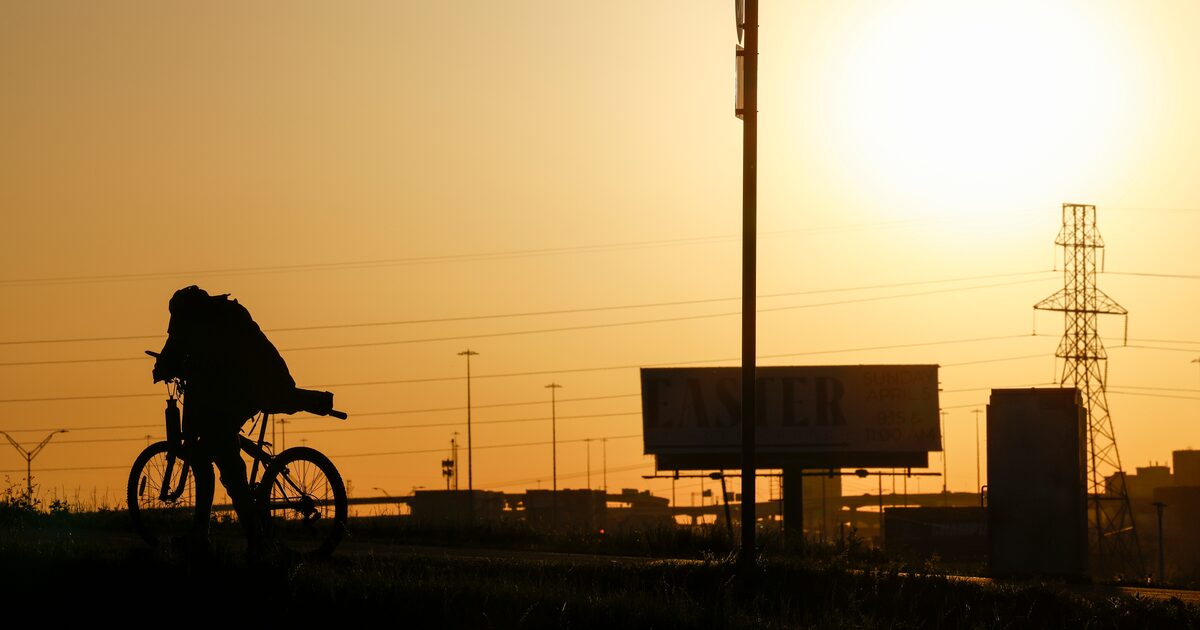
As climate change continues to reshape the environment and our lives, another place its impact can be found is in the earlier arrival of summer heat in North Texas.
Allison Prater, a meteorologist with the weather service, said since record-keeping began in 1899, the average arrival of the first 90-degree day at DFW International Airport is April 18. However, trends from the last decade prove earlier start dates year-after-year.
Part of a larger set, this data also tracks the first 95-degree day and 100-degree day, as well as how many triple-digit days the region sees each year. Typically, the 95-degree day arrives in May or June while the first 100-degree day is in late June or July.
D-FW Weather Wise
But why is this happening?
On the whole, all seasons are getting warmer faster. A recent analysis from Climate Central, a climate education nonprofit, found the average temperature of spring in D-FW is 3.5 degrees higher than in 1970, primarily caused by climate change. Although 3.5 degrees may not seem like a large increase, it encompasses more significant variations at the extreme end of the spectrum. This can result in record-setting heat waves, droughts and floods as extreme weather becomes more intense and more common.
And it’s not just North Texas; human-caused climate change is the leading driver of spring warming in 98% of the cities the report analyzed, including Amarillo, El Paso, Houston, San Antonio and Tyler.
Human-caused climate change stems primarily from burning fossil fuels such as coal, oil and methane gas, which creates heat-trapping pollution in the atmosphere. That activity has been the primary force reshaping our climate, but other sources of natural variability, like the El Niño Southern Oscillation, can also have an impact.
Warmer and earlier springs can prolong seasonal allergies and intensify wildfire risk. A 2024 report from the Office of the Texas State Climatologist examined future trends of extreme weather in Texas, noting wildfire season is likely to lengthen. Hotter conditions are expected to dry out grasses faster, making wildfires a growing threat for Texans – particularly in the spring, when fast-spreading wildfires are most common.
So when is the first day of 90-degree weather this year?
This weekend could bring Dallas-Fort Worth its first 90-degree day of 2026.
After a warmer-than-usual winter, the first few weeks of spring have been similarly toasty, with an average high 10 degrees above normal. A brief, intense cold front interrupted the pattern, but the heat is quickly reasserting itself.
The metro is expected to hit the low 90s on Friday, Saturday and Sunday, according to the National Weather Service’s Fort Worth office – earlier than usual.
Broadly, the warmer-than-normal conditions are expected to continue. The Climate Prediction Center, part of the weather service, forecasts above-normal temperatures through the end of May. However, Prater noted cold snaps and periods with cooler-than-usual temperatures could still occur.
The average temperature is projected to be above normal, she said, but weather variability remains.