
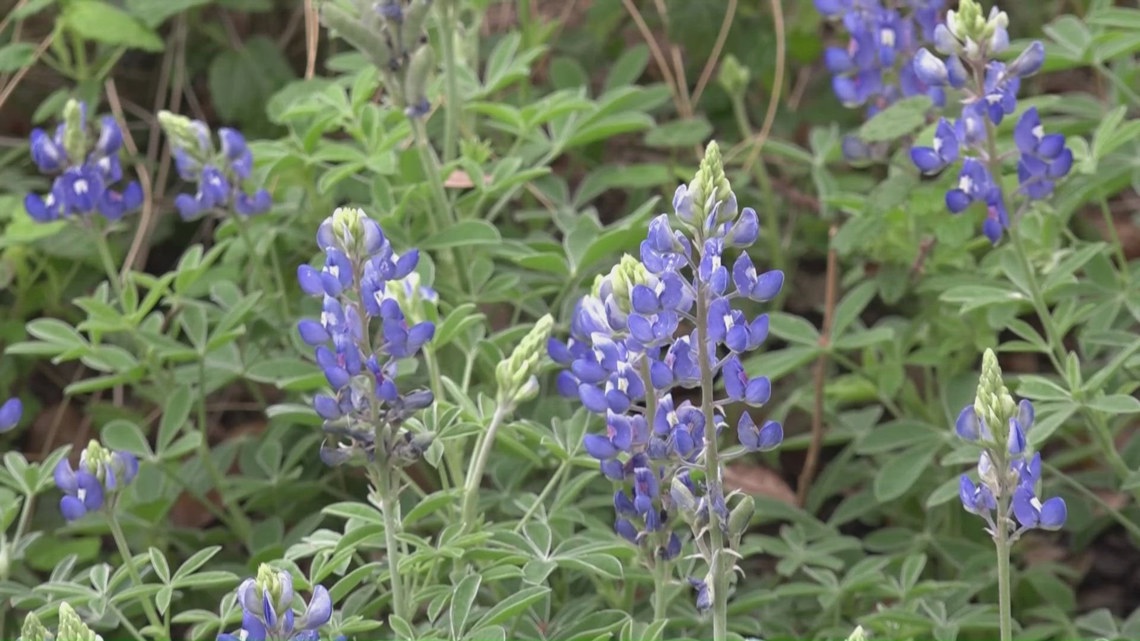
As bluebonnets begin to bloom in Central Texas, drought conditions threaten an uneven display. Experts say rain patterns will heavily influence spring wildflowers.
AUSTIN, Texas — Texas’ iconic bluebonnet season is beginning across Central Texas, but this year’s display is expected to be uneven, with drought conditions limiting blooms in some areas.
Early patches of bluebonnets have already appeared in parts of Travis County, offering a preview of the spring wildflower season. Still, experts say the overall outlook depends heavily on rainfall patterns that have varied widely across the state.
“It’s going to be spotty throughout Texas,” said Andrea DeLong-Amaya, a horticulture educator with the Lady Bird Johnson Wildflower Center. “Areas that have been in severe drought are probably not going to have the best bluebonnet season, but some parts of the state will look just fine.”
Bluebonnets, which germinate in the fall, rely on steady rainfall early in their life cycle. A lack of consistent fall and winter rain this season has reduced both germination and plant growth, leading to fewer and smaller blooms, particularly in drought-affected areas around Austin and farther south and west.
Regions that received more typical rainfall are expected to see stronger displays.
Last year’s bluebonnet season was considered robust, but DeLong-Amaya said 2026 is unlikely to match it. Some localized areas, however, could still produce vibrant patches depending on recent and upcoming rainfall.
Despite the mixed forecast for bluebonnets, other wildflowers may help fill in the gaps as spring progresses.
“We’re always looking forward to some of the other plants, too,” DeLong-Amaya said. “Even if the bluebonnets are not as strong in our area, there’s something else that’s going to do well this year.”
Perennial wildflowers — which typically have deeper root systems — tend to be more resilient during dry periods. Species such as winecups, prairie verbena and milkweed could provide a stronger showing later in the season if weather conditions improve.
Peak wildflower season in Central Texas occurs in early April, though blooms can vary depending on temperature and rainfall. Experts say April generally offers the widest variety of flowers, with additional species emerging into May if conditions remain favorable.
For those hoping to catch bluebonnets at their best, reliable options include managed locations such as the Lady Bird Johnson Wildflower Center. Irrigation at such sites helps support more consistent blooms compared to roadside patches.
The center also offers an online tool called “Wildflower Central,” which provides recommended driving routes and real-time updates from across the state, helping visitors track where blooms peak.
As always, officials encourage visitors to prioritize safety and respect when viewing wildflowers. While it’s not illegal to pick bluebonnets, doing so on public land could result in fines for damaging property, and trespassing on private land is prohibited.
With the season just beginning, experts say there’s still time for conditions to improve.
“It’s still early,” DeLong-Amaya said. “Depending on the weather, that could change a little bit.”