
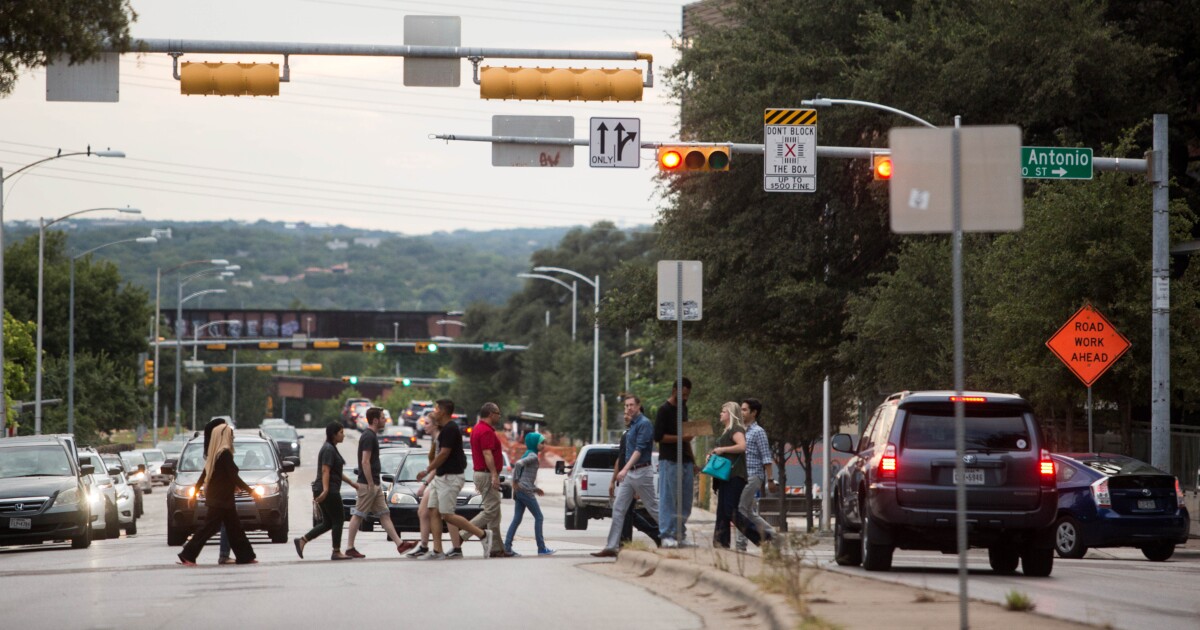
The city of Austin is considering renaming Cesar Chavez Street after allegations emerged that the late civil rights leader sexually assaulted women and girls.
Chavez died in 1993. Shortly after his death, Austin renamed First Street — which stretches from MoPac Expressway through downtown to U.S. 183 — in his honor.
Local nonprofit El Concillo Mexican-American Landowners de East Austin led the movement in the early ’90s to name the road after Chavez. The group is now pushing to rename the street again in the wake of the allegations.
“We as El Concillo, who initiated through petition the renaming of the street, for Cesar Chavez, feel compelled that we have to be accountable and be respectful of the women victims who were part of this experience,” said Gavino Fernandez Jr., a spokesperson for the group. “It is not in the best interest of our organization to be affiliated any longer with him.”
Council Member Vanessa Fuentes told KUT News on Wednesday that the city should respond quickly.
“These are very serious allegations,” Fuentes said. “Dolores Huerta is a living leader of the labor movement, and her sharing her story and personal experiences with Cesar Chavez is something we have to take seriously. We need to believe her, and I believe we need to act quickly in acknowledging what happened there.”
Fuentes, who was joined by council members José Velásquez and Chito Vela, who represent the city’s Latino Caucus, along with Travis County Attorney Delia Garza, put out a statement calling for the name change.
“We unequivocally stand with every individual who was harmed and those who bravely shared their stories,” the group said in a written statement. “The center of our city and the heart of East Austin should reflect our commitment to justice. We support the renaming of Cesar Chavez Street and will begin the discussion with the community at the forefront.”
Council Member Zo Qadri, whose district includes parts of Cesar Chavez Street, said he supported the move by his colleagues to change the street name.
“Abusers should always be held accountable, no matter who they are,” Qadri said. “Whether it is the President of the United States or the co-founder of a labor organization, we must hold people accountable, and survivors deserve justice.”
Michael Minasi
/
KUT News
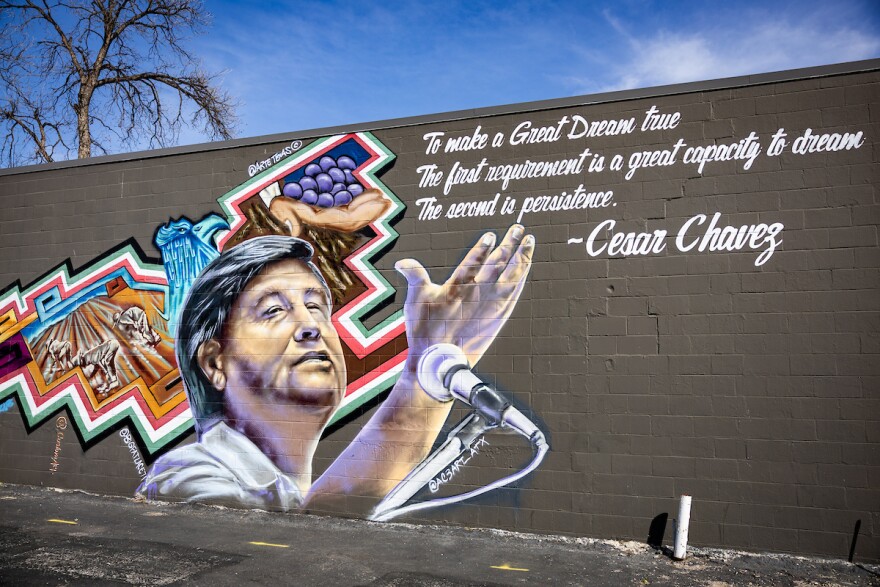
A mural of Cesar Chavez is pictured at the corner of Waller and Cesar Chavez streets on Wednesday, March 18, 2026, in Austin, Texas. Michael Minasi / KUT News
Austin has also honored Chavez with a mural on the side of the building at Waller and Cesar Chavez streets. Additionally, the University of Texas at Austin has a statue of him on campus.
Fernandez Jr. said the fate of those projects will be up to the entities that maintain them.
Earlier Wednesday, organizers of the annual Cesar Chavez parade and celebration in Austin announced they were canceling the event, which was scheduled for March 28.
Gov. Greg Abbott also said that he is directing all Texas state agencies to not observe Cesar Chavez Day in a post on X. He said he will ask the Legislature to remove the day from state law during the next legislative session.
Prior to Abbott’s post, the Mexican American Legislative Caucus Executive Committee said it would work to replace the state holiday with one that recognizes other leaders like Huerta.
The New York Times investigation revealed accusations from women and girls who say they were abused by Chavez — including civil rights leader Dolores Huerta.
To rename a street, City Council would have to approve it.
It is not yet known what the street would be renamed, but Fuentes said that decision would include public input.
Fuentes and Fernandez Jr. said they like the idea of naming the road after Huerta to illustrate her resilience and willingness to come forward — and as a reminder that the farm workers movement and fight for civil rights are bigger than any one person.
“We are not talking negative about the movement,” Fernandez Jr. said. “The movement continues, the injustices continue. We are not chastising that. We are chastising the person that was involved in that movement.”
KUT’s Greta Díaz González Vázquez contributed to this report.