
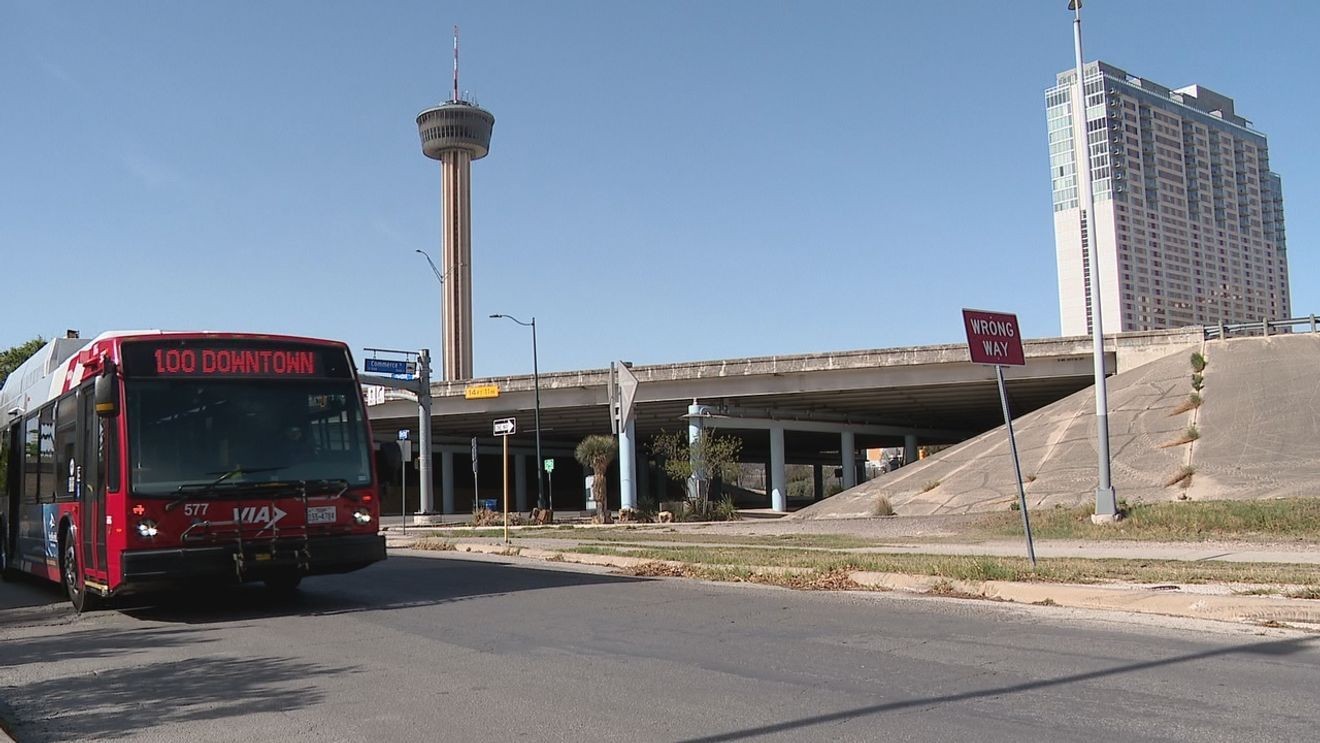
SAN ANTONIO – The city’s Project Marvel plan for downtown continues moving forward as $3.7 million tax dollars are now being spent to study how best to connect the eastside with downtown.
The contract was awarded to Los Angeles consulting firm AECOM Technical Services and will include a “preliminary design” to connect the eastside with the expanded convention center and Hemisfair in what the city calls a “seamless urban experience”.
James Nortey was on the committee that evaluated bids and chose AECOM.
Nortey is the CEO of San Antonio for Growth on the Eastside, or SAGE, which for years has been pushing for a land bridge over I-37, or burying the lanes underground.
“Think of Boston’s Big Dig, or think about Klyde Warren in Dallas, that park, where you completely put the highway below grade and then pedestrians are able to walk across on a grassy field,” Nortey said.
The City of San Antonion sent the I-Team a statement: “Planning and designing improved connections to Downtown costs money. In this case, the project is being funded primarily by a federal grant, rather than local tax dollars.”
“The planning grant is for studying a wide range of options to connect the East Side to downtown, which could include a land bridge. Other options include sidewalks, crosswalks, mid-block crossings, bike paths, an underpass, or a pedestrian bridge.”
“These dollars are being used exactly as intended: for community engagement, planning, and preliminary design so the City can carefully study the best ways to reconnect the East Side and downtown before moving toward any future construction.”
“That step matters because this is about more than infrastructure — it’s about repairing connections that were disrupted decades ago, improving safety and access for people walking and biking, addressing environmental impacts, and making sure any future solution is shaped by community input and grounded in a clear, workable plan.”
When the new Spurs arena is built, people will need a safe way to cross the highway from a proposed parking garage next to the Alamodome.
But city planners also say I-37 is a barrier that has historically cut off disadvantaged communities on the eastside.
“For many of our residents and businesses, they’ve often felt shut out of the process,” Nortey said.
Austin is spending millions to cover I-35 with public spaces that the city says are “inclusive and sustainable and support economic opportunity and equity”.
Dallas has completed a similar project.
This week tourist Ralph Sommer and Vanessa Vivero walked down East Commerce St. and waited for the light to change so they could cross beneath I-37 into downtown.
“We’re from Dallas and they have some of those (land bridges) and it seems to work out good there. It relieves some of the traffic,” Sommer said.
“Is it going to increase taxes? You know, that’s always going to be an issue,” Vivero added.
The city says the study will primarily be paid for by a $3 million federal Neighborhood Access and Equity Grant awarded during the Biden administration.
The rest comes from the local Hotel Occupancy Tax.
Nortey’s group, SAGE, also received a grant for $2 million to study covering sections of freeway.
“You got a grant for a study, the city got a big grant for a study, how many studies do we have to do?” I-Team Reporter Jaie Avila asked.
“It’s a fair question because I think people in San Antonio, regardless of whether you’re east side or west side, are sick and tired of being overstudied. In this instance though, it makes prudent sense to think about other ways we can combine both studies to get greater economies of scope and scale to be more efficient. That way we’re putting people’s tax dollars to good use,” Nortey said.
The study will be done between now and December with community engagement events beginning next month.