
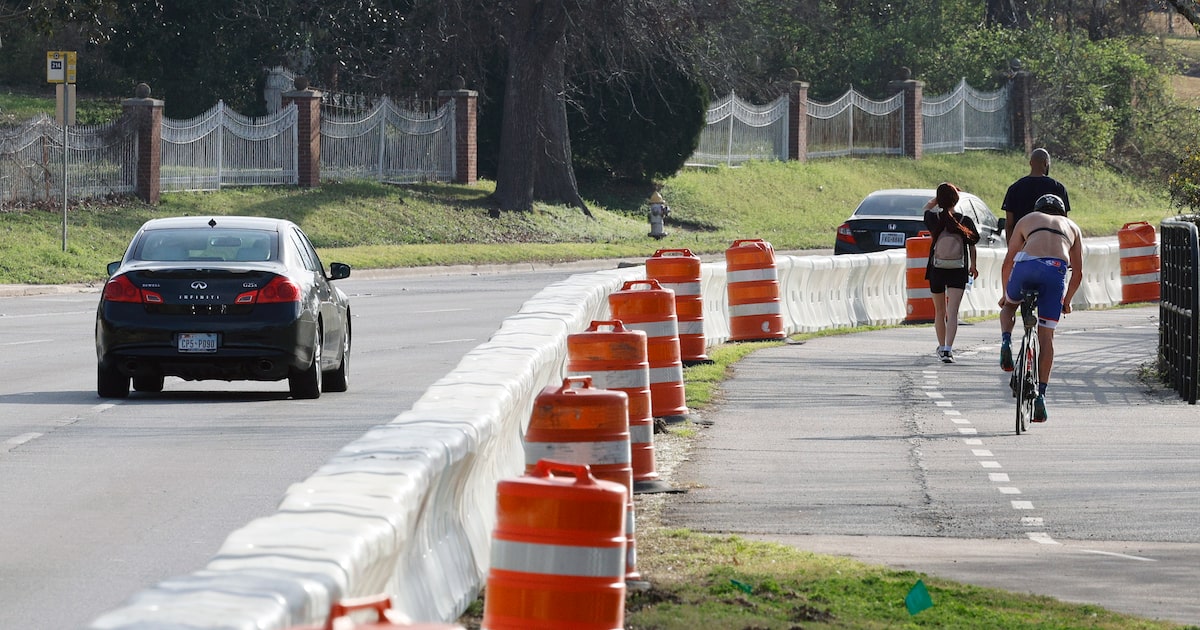
Trailgoers got a surprise at White Rock Lake two weekends ago when a sinkhole opened near the spillway on Garland Road, closing part of the path.
The gap in the ground was several feet wide and about 14 feet deep, exposing the unstable soil beneath the trail. Though quickly repaired, the sinkhole is a reminder of the ongoing challenges in maintaining the lake and its 9-mile trail.
The city said Friday that the portion of the trail along Garland Road near East Lawther Drive that was closed had reopened to the public. City crews discovered the sinkhole on March 6, and it appears that it was caused by an abandoned wastewater pipe. Dallas Water Utilities has since backfilled the hole and stabilized the surface.
This newspaper reported that the city is considering filling in the rest of the abandoned pipeline with grout. Taking that extra step would be smart to reduce the likelihood of future sinkholes popping up.
Opinion
While the city’s quick repair of the sinkhole shows its ability to respond when issues arise, the sinkhole also points to the layered challenges that come with maintaining natural systems and responding to changing environments like those at White Rock Lake.
Michael Jung, Dallas Park Board representative for District 9, which includes White Rock Lake, told us the sinkhole was not directly caused by shoreline erosion, which has been an ongoing problem at White Rock Lake.
Still, both the sinkhole and erosion affect the trail’s long-term safety. Infrastructure below ground and environmental pressures above ground don’t operate in isolation.
Jung said a project to install a metal sheet lining that would protect against erosion along the trail is in the planning stages and that DWU and the Park and Recreation Department would share responsibility for funding the project.
It’s smart to coordinate on an approach to erosion. Erosion may be gradual, but left unaddressed, it can quickly escalate into more serious and costly damage.
Erosion of the shoreline along Garland Road has been on the city’s radar for some time now. A report by engineers that warned about the potential for trail failure was presented to the Dallas Park and Recreation Board in 2024.
At the same time, DWU, which oversees the lake and the spillway, is in the process of replacing water and wastewater infrastructure in the area, relocating lines to replace the older ones, like the abandoned pipe under the trail that was linked to the sinkhole.
The sinkhole shows the need for continued coordination. White Rock Lake sits at the intersection of multiple responsibilities, from water utilities to the Park and Recreation Department to the Texas Department of Transportation, which is responsible for the roadway near the shoreline where erosion has impacted the trail. Each plays a role in keeping the lake safe for the runners, walkers, cyclists and rowers who use the trails and waterfront.
We welcome your thoughts in a letter to the editor. See the guidelines and submit your letter here.
If you have problems with the form, you can submit via email at letters@dallasnews.com