
Andrew Schneider/Houston Public Media
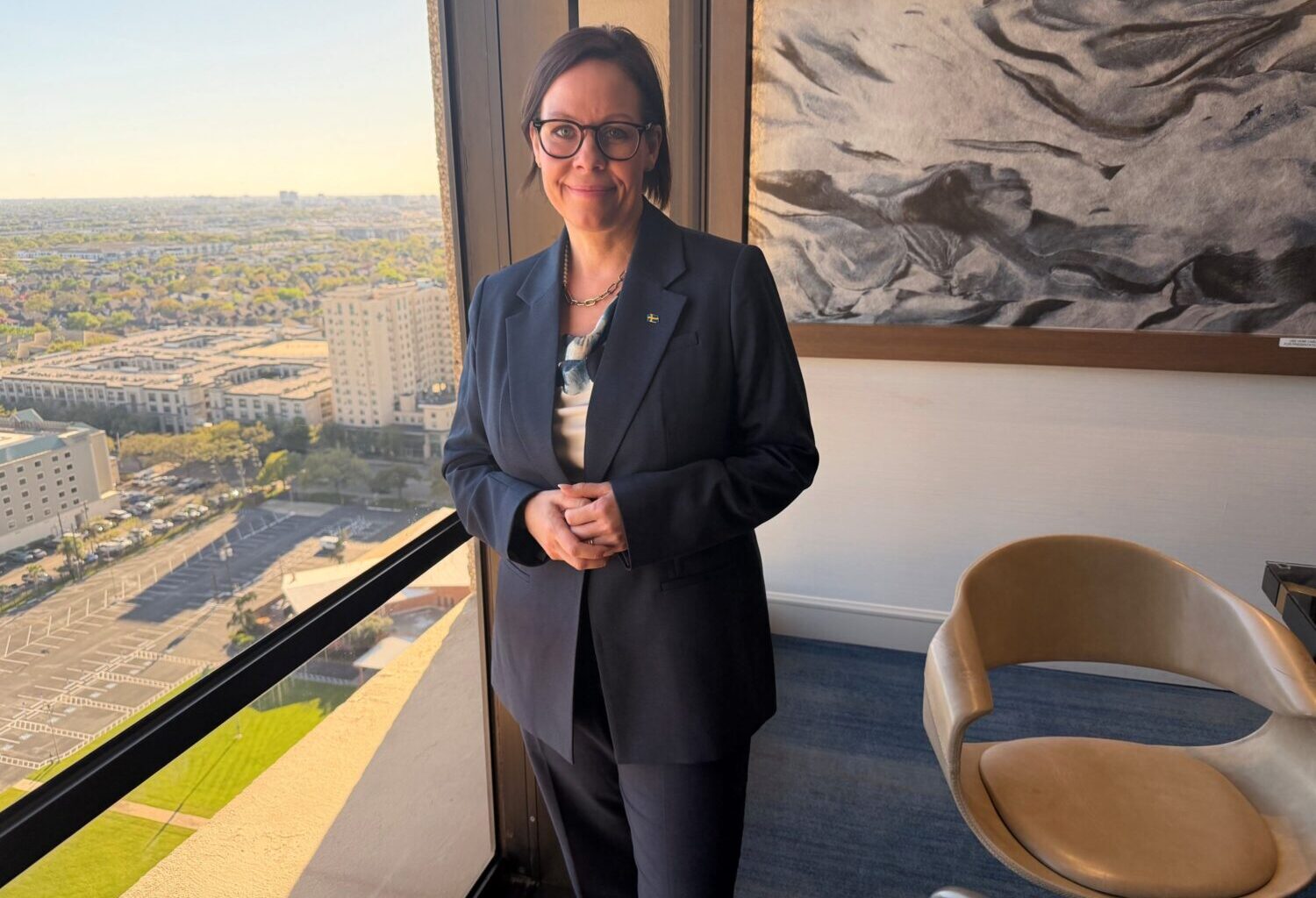
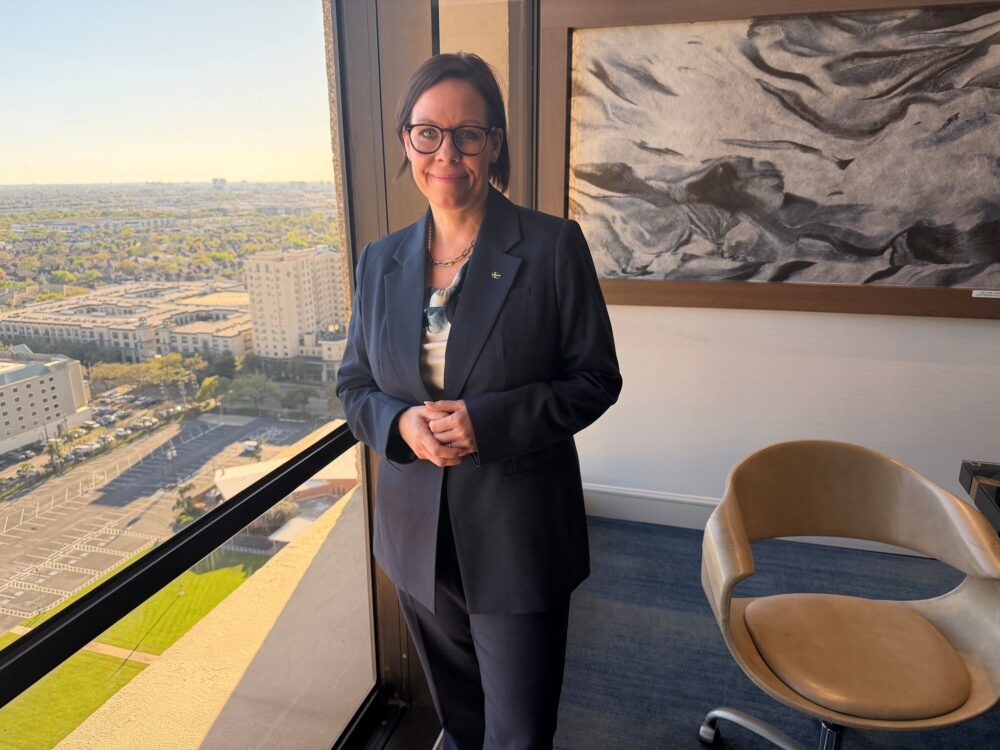
Maria Malmer Stenergard, Sweden’s minister for foreign affairs.
Crown Princess Victoria of Sweden visited Houston this week to inaugurate a new consulate general in the city – the kingdom’s fourth in the United States, including its Washington embassy.
Joining her and leading a diplomatic and trade mission to Texas was Maria Malmer Stenergard, Sweden’s minister for foreign affairs since 2024. Malmer Stenergard spoke with Houston Public Media about why Sweden chose Houston for its new consulate as well as about some of the leading foreign policy challenges involving Sweden and the U.S.
Sign up for the Hello, Houston! daily newsletter to get local reports like this delivered directly to your inbox.
This interview has been edited for length and clarity.
Tell us a little bit about what led your government to decide to open a consulate general here and what purpose it’s expected to serve.
Click here for more inDepth features.
“Well, first of all, I’ve had such a warm welcome here to Texas, and I really appreciate the cooperation that Sweden and Texas already have, and there are such strong people-to-people ties that go way back. But we want to invest in the future, and that is the reason we open this consulate general now. And we believe that there is enormous potential for collaboration in areas such as space, life science, but several areas such as energy as well. So, we have 90 companies approximately already here from Swedish side, and we create around 40,000 jobs, but I think we can do even more.”
What are some of the areas that you see for growth in Swedish-Texas business ties?
“Well, Sweden is ranked as the second-most-innovative country in the world, and we’ve been that for quite some time now. And Texas is also one of the hubs in the world for innovation. And I see an enormous potential in areas like the ones I mentioned, but also in the growing technologies like AI. And we really need to be in the forefront here. In order to be that, we need to collaborate with other companies that are in the forefront, such as here in Texas.”
You were part of a signing ceremony Tuesday morning at Space Center Houston for something called Pax Silica. What is the importance of that?
“Well, we are in a very shaky world. We need to collaborate with the ones that are likeminded, and we need to secure the supply chains for necessary technologies, such as the technologies needed for the development of AI. And therefore, I’m very grateful for the initiative that the U.S. has taken. The Pax Silica is a collaboration between companies that are to a large extent, likeminded, and I see great possibilities for us to secure these supply chains and make sure that we are more resilient in the future, less depending on partners that that we cannot trust.”
You’ve had to deal with quite a few significant foreign policy challenges in your few years as foreign minister. What are some of the ones that are occupying the most of your time right now?
“Well, first of all, that’s very true. I usually say that it’s like playing Whac-A-Mole. You know, when you hit one guy, the other one just pops up. So, there is constantly something going on.
“Our foreign policy foremost priority is the support to Ukraine, and Russia poses a big threat to Sweden and to Europe for the foreseeable future. And how the war ends will affect the security [of Europe] for at least a generation to come. Therefore, we provide a huge support to Ukraine, but we also take initiatives constantly to put more pressure on Russia. So, this is my number one priority.
“But then I’m also very, of course, occupied with investing in our own security. And now we see a burden shift from us to Europe and Canada that should have been done a long time ago. But we are now investing a lot in our own security, and we need to show that Europe is worth protecting.”
How is the U.S. and Israel’s war with Iran affecting Sweden and Europe?
“Well, we see a direct effect in oil prices, for instance, but also in increased insecurity. And we see increased threats towards some interests in Sweden, such as embassies, but also [the] Jewish community. This is extremely worrying. At the same time, we cannot allow Iran to develop nuclear weapons, and we need to support the Iranian people so that they can, in the future, live in a democracy. So, this is a very difficult time for the world. I’m very worried about the developments and what effects this could have, also, in the long run.”
Sweden is the newest member of NATO, and NATO is arguably in a more difficult position with regards to U.S.-European relations than it has been in some time. How do you address concerns about the future of NATO?
“Well, first of all, we now have 31 allies that will be there for us, and that makes us more secure now than we were before we joined NATO. And we are net contributors to NATO. We have a very strategic geography. We already lead the forward land forces in Finland. We’re contributing to Latvia but also to missions in the Baltic, to mention a few things.
“So, we are very dedicated, and we are very grateful for the collaboration that we have with countries in NATO, including the U.S.. That is of such importance to our security but also to our economy. So, this is a relationship that we are really invested in and will continue to invest in.
“But then, of course, our Nordic collaboration is one of our most important relationships that we have, and the rhetoric on Greenland has not helped our relationship with the U.S., but we have also been very clear on that.”
Is there anything else you think people ought to be aware of?
“I just want to emphasize how important it is to support Ukraine, because it’s not only about Ukraine. It is about Europe. I think it is about the principles that we want the world to live by — that is, it should not be rewarded if you, without any provocation, invade a friendly neighbor.”