
Across Texas and beyond, ranchers are facing growing pressure, from shifting weather patterns to volatile markets, that can affect both land health and long-term ranch profitability.
The Texas A&M AgriLife Center for Grazinglands and Ranch Management, CGRM, is bringing researchers and livestock producers together to better understand how grazing practices influence the ecological and economic resilience of rangeland ecosystems and ranching operations across the U.S.
Over the last four years, the center has partnered with 420 ranches across 17 states, engaging more than 9 million acres of grazing lands in collaborative research designed to equip producers with ranch-scale solutions to tackle modern grazing and rangeland management challenges from the soil up.
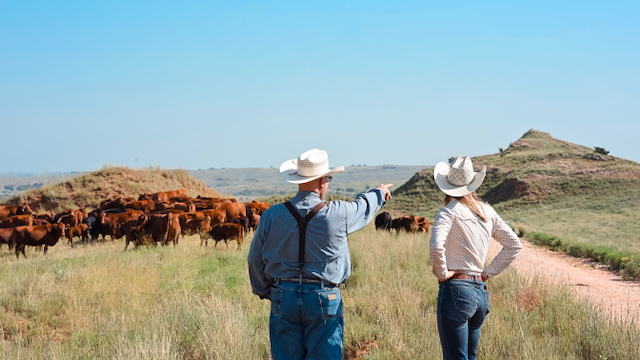
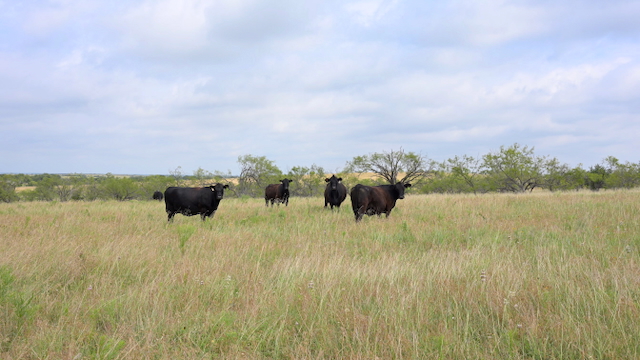
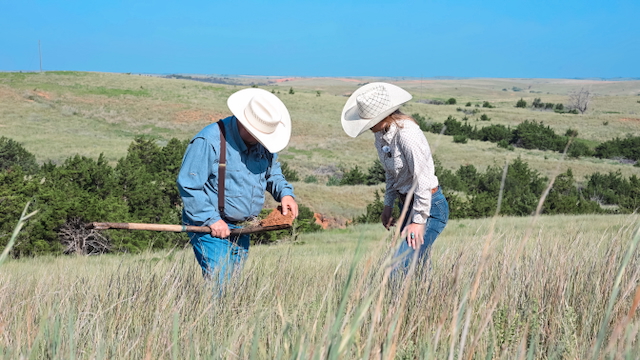
The Texas A&M Center for Grazinglands and Ranch Management brings researchers and livestock producers together to better understand how grazing practices influence the ecological and economic resilience of rangeland ecosystems and ranching operations across the U.S. (Rachel Haywood-Baize/Texas A&M AgriLife)
“Soil is the foundation of every acre of grazing land in the country,” said Jeff Goodwin, Ph.D., director of the CGRM and Texas A&M AgriLife Research assistant professor in the Texas A&M Department of Rangeland, Wildlife and Fisheries Management. “By ensuring ranchers have access to science-based management tools and practices that support soil health and regeneration, we are helping promote long-term grazing land productivity while promoting operational and economic resiliency.”
Producer-directed research tackles ranch-scale challenges
Texas is the nation’s leading beef-producing state and home to the largest amount of privately owned grazing lands in the country, Goodwin said.
These landscapes provide myriad services, ranging from food and fiber to water quality and biodiversity, yet the land and the industry they support face mounting obstacles ranging from soil degradation and woody encroachment to land conversion.
“Ranching operations face increasingly complex ecologic, economic and social challenges impacting the ability to maintain or enhance grazing land and operational health,” Goodwin said.
To address those challenges, the center utilizes ranch-based data collection and applied, ranch-scale research conducted directly on working lands.
Ranching is inherently complex and dynamic — from weather conditions to markets. Our efforts focus on helping producers make proactive decisions that promote ecologic and economic adaptability and foster long-term productivity and profitability — we want to keep them ahead of the curve.
Jeff Goodwin, Ph.D.
Director, Center for Grazinglands and Ranch Management
Much of CGRM’s work focuses on measuring key grazing management metrics, such as grazing duration, rest period and stock densities, to understand how these management “levers” shape ecological function, animal performance and economic outcomes.
The goal is to identify practical management adjustments that can improve forage production, water infiltration and overall ranch performance, said Jenna Likins, Ph.D., CGRM research program manager.
“We prioritize ranch-scale research,” Likins said. “Our focus is to understand the management actions taking place on working rangelands and how they correlate with ecological and economic outcomes for producers.”
Building producer networks to share knowledge
Documenting these management practices and quantifying positive outcomes is just part of the center’s mission. Equally important, Goodwin said, is ensuring those insights move beyond individual ranches.
Become a part of a producer-focused network
Learn how you can engage your ranch with the research, programs and resources available through the Center for Grazinglands and Ranch Management.
“We want that knowledge to cross the ranch gate and benefit all producers and the grazing lands they steward,” he said.
Through a collaboration with American Farmland Trust, the center has accelerated the adoption of adaptive grazing and soil health practices by assisting in the development of a statewide Grazing Network Mentor program that fosters producer-to-producer knowledge exchange through virtual and in-person workshops.
The Ranchworthy YouTube channel, produced and managed by CGRM, further amplifies this producer-led information network, allowing successful ranchers from across the U.S. to share the strategies, perspectives and technologies that have best served their operations.
CGRM has also made great strides in engaging producers with industry supply chain partners through the Resilient Ranch Network.
A partnership with the Texas Grazing Land Coalition and the Texas A&M AgriLife Extension Service, the Resilient Ranch Network connects livestock producers with industry professionals to facilitate impactful conversations about meaningful sustainability measures across the beef supply chain.
“Giving producers a seat at the table to share their perspectives has been very meaningful to us and the ranchers involved,” Likins said.
A focus on proactive decisions for a dynamic industry
Looking ahead, Goodwin and Likins said the center will continue to focus on providing producers, agencies and industry partners with actionable insights for data-driven, adaptive grazing management.
“Ranching is inherently complex and dynamic — from weather conditions to markets,” Goodwin said. “Our efforts focus on helping producers make proactive decisions that promote ecologic and economic adaptability and foster long-term productivity and profitability — we want to keep them ahead of the curve.”

Share or print this post: