
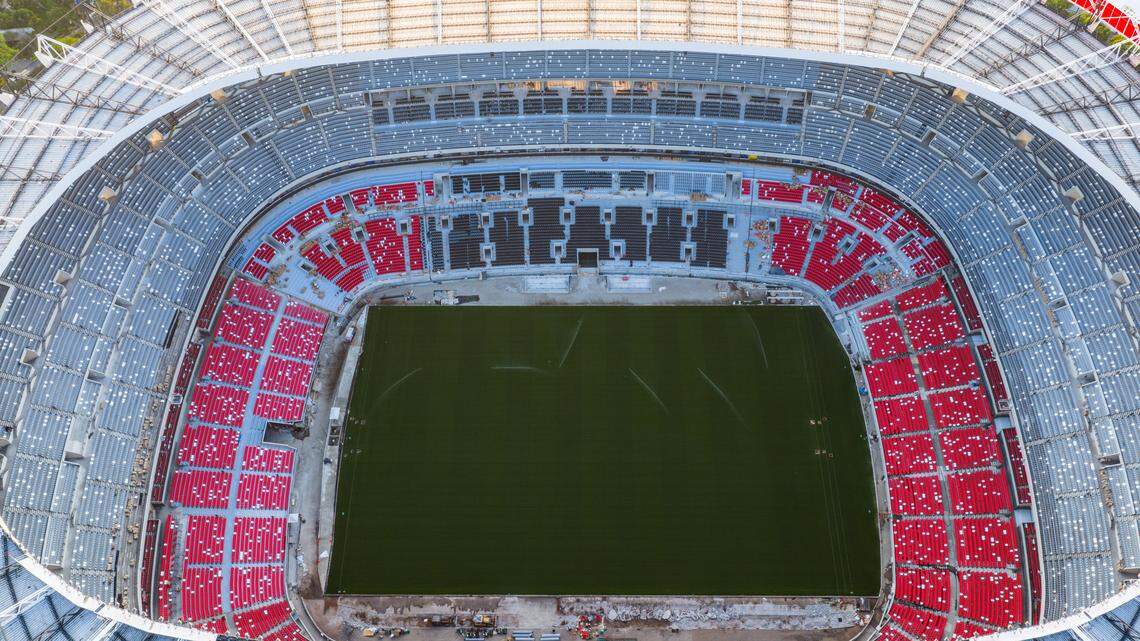

MEXICO CITY, MEXICO – MARCH 16: An aerial view of Mexico City Stadium on March 16, 2026 in Mexico City, Mexico. The Mexico City Stadium, officially named Estadio Banorte or better known by its former name, Estadio Azteca, was designed by architects Pedro Ramírez Vazquez and Rafael Mijares Alcerreca. Since May 2024, it has been undergoing renovations and it will reopen on March 28th with the friendly match between Mexico and Portugal. The stadium will host the opening match of the 2026 FIFA World Cup, marking its third World Cup appearance.
Hector Vivas
Getty Images
Long before the first whistle blows at a 2026 FIFA World Cup match, some travelers are already plotting what to do around the game. Fort Worth, just west of the action in Arlington, is an easy add-on — and it’s packed with family-friendly spots that feel far removed from packed stadiums and game-day chaos.
While plenty of World Cup visitors will stick to the usual tourist checklist, Fort Worth rewards anyone willing to dig a little deeper. Think world-class attractions, walkable green spaces and places where kids can actually burn off energy. Here’s an insider guide to three spots worth building a day around.
The zoo that ranks among America’s best
The Fort Worth Zoo has been voted No. 1 in North America by USA Today readers and consistently lands among the top-ranked zoos in the entire United States. Home to around 7,000 animals and more than 500 species, this 116-year-old facility has evolved into something remarkable.
Instead of distant enclosures, exhibits are designed to feel up close and personal. African Savanna puts you eye-to-eye with elephants and lions, while Asian Falls highlights some of the world’s most endangered species. And the Museum of Living Art (MOLA) houses one of the most impressive reptile and amphibian collections you’ll encounter anywhere.
Often the most raved about experience is the giraffe feeding. Hand-feeding a giraffe is the kind of thing kids talk about for years, and the zoo handles it thoughtfully and safely.
You’ll also find splash pads for hot days, a mini train that loops the grounds and a classic carousel that’s perfect for an old-school photo op.
Tip: Get there when the gates open (usually around 10 a.m.). Animals are more active in the morning, and you’ll beat the crowds and the worst of the heat. Plan on spending three to five hours if you want to see it properly.
The zoo is located at 1989 Colonial Parkway, Fort Worth, TX 76110. More info: fortworthzoo.org
Texas’s oldest major botanic garden
Established in 1934, the Fort Worth Botanic Garden is the oldest major botanic garden in Texas, and at 110 acres, it’s big enough to feel like a true escape. It’s a mix of landscaped gardens, wide walking paths and quiet corners that invite you to slow down.
The Japanese Garden is the star attraction, and it’s easy to see why. With koi ponds, arched bridges and meticulously raked gravel, it’s one of the most photographed spots in the city and feels a world away from game-day noise.
The Rose Garden shines in spring and fall, while the Conservatory offers a tropical, climate-controlled break when temperatures climb. Stroller-friendly paths make this an easy stop for families with younger kids.
Picnics are welcome here too, which makes it a great midday pause between activities. Pack a lunch, find a shaded bench and let the kids roam.
Most visitors spend one to two hours here, though you’ll want more time if you plan to picnic or explore every section.
The garden is located at 3220 Botanic Garden Blvd., Fort Worth, TX 76107. More info: fwbg.org
An architectural icon hiding downtown
The Fort Worth Water Gardens are an urban park that doubles as a work of modern art. Designed by renowned architect Philip Johnson and completed in 1974, this downtown destination features dramatic water features and geometric designs.
Three distinct pools create the experience. The Active Pool sends water cascading down terraced steps that visitors can descend. The Aerating Pool shoots water upward in patterns that catch afternoon light. The Quiet Pool offers still water and shaded seating.
The Water Gardens sit in downtown near the Fort Worth Convention Center. They’re open daily from 7 a.m. to 11:30 p.m. and cost nothing to visit, making them an easy addition to any itinerary. Plan for 30 to 60 minutes here. The space rewards wandering and photography but doesn’t require extended time. Located at 1502 Commerce St., Fort Worth, TX 76102.
Making it work with your World Cup schedule
All three spots are within a 15–30 minute drive of downtown Fort Worth and are easy to reach by rideshare or public transit from Dallas or Arlington, where matches take place.
They’re also close enough to combine in a single day. A morning at the zoo, lunch at the botanic garden and a late-afternoon stroll through the Water Gardens makes for a well-balanced itinerary that won’t exhaust kids (or adults).
Strollers and wheelchairs are welcome everywhere. The zoo and botanic garden both have cafés and picnic areas, while the Water Gardens sit within walking distance of downtown restaurants.
Beating the Texas heat
Summer World Cup matches mean Texas summer temperatures, and smart planning makes the difference between a memorable day and a miserable one. The zoo provides splash pads, shaded pathways and indoor exhibits. The botanic garden offers tree cover and the climate-controlled Conservatory. The Water Gardens deliver cooling mist and the psychological relief of being near moving water.
Arrive early. Morning temperatures in Fort Worth run significantly cooler than afternoon peaks, and you’ll share the space with fewer visitors.
The practical detailsFort Worth Zoo: Open daily, typically 10 a.m. to 5 p.m. (check website for seasonal variations). Paid admission with discounts for children, seniors and groups. On-site parking available with fees.Fort Worth Botanic Garden: Open daily, 8 a.m. to 5 p.m. Paid admission for main gardens; Japanese Garden may carry a separate fee. Parking available with possible fees.Fort Worth Water Gardens: Open daily, 7 a.m. to 11:30 p.m. Free admission. Street and nearby garage parking available.
Picnic areas exist at the zoo and botanic garden, though outside food isn’t permitted inside zoo exhibits. The Water Gardens have no food restrictions but also no designated picnic facilities.
This article was created by content specialists using various tools, including AI.