
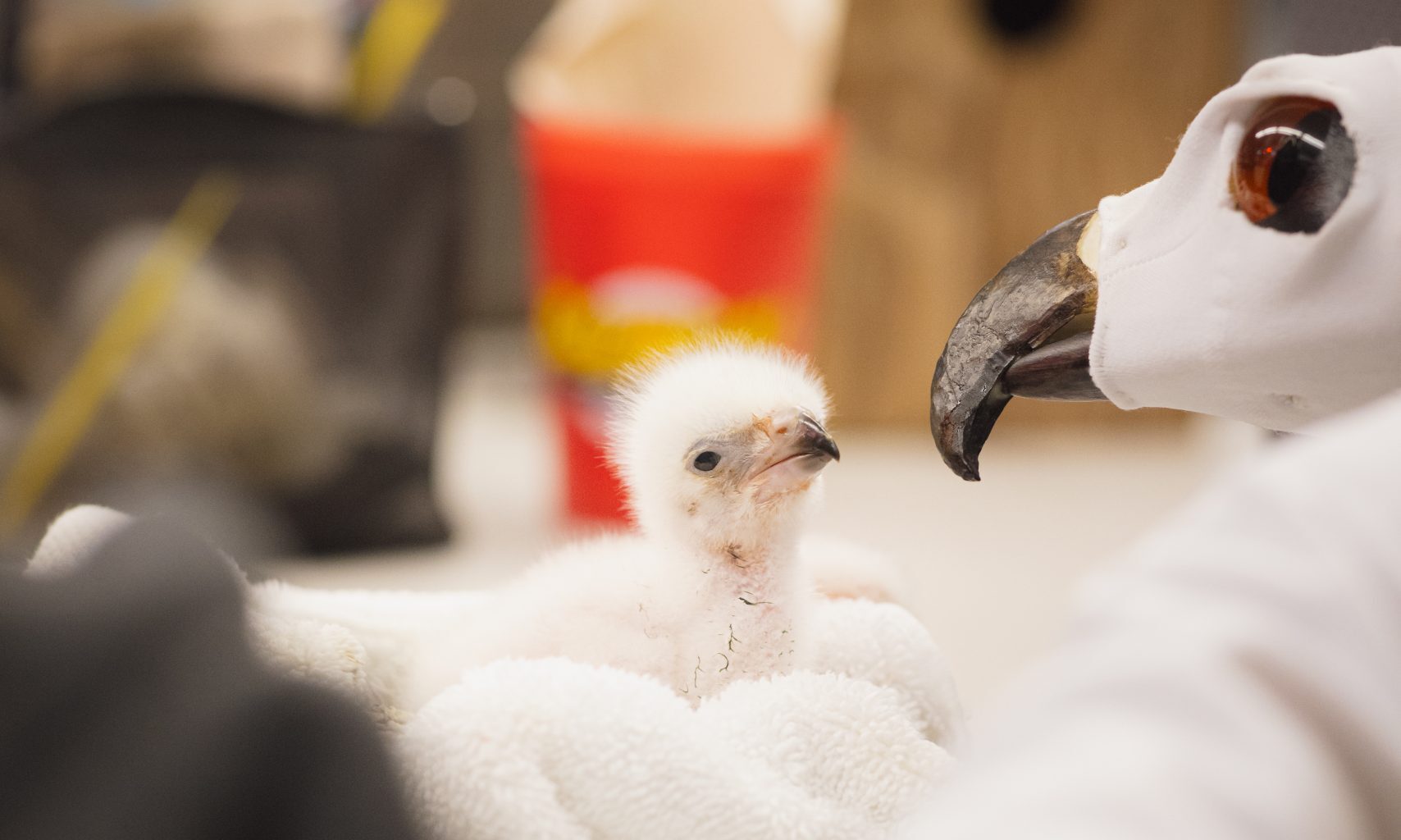
The Fort Worth Zoo made history with the arrival of its first-ever African fish eagle hatchling.
Difficult to breed, the fluffy baby marks the Fort Worth facility as one of only five institutions in North America to successfully hatch an African fish eagle in recent years, the zoo announced in a news release Thursday.
“This successful hatching is the direct result of years of dedicated work by the zoo’s animal care and veterinary teams,” the release states.
The chick hatched at 76.5 grams — roughly the size and weight of a tennis ball — and has made significant growth in the past six weeks, according to the release.
The baby eagle is near its full height of 25 to 30 inches and will reach an adult weight of 5 to 8 pounds. It will be a few more weeks before the hatchling’s mature white and brown feathers develop.
Carefully managed eagle pairings, nest building, egg laying, incubation and hatching led to the chick’s birth, officials said.
Born from first-time parents, the baby eagle will be hand-reared — the process of humans raising young animals — by zookeepers. That process involves providing around-the-clock feeding, monitoring and care to promote growth and development in the early stages of life.
Zoo staff used reflective shields and protective clothing during feedings. They had a puppet of an adult eagle with them to ensure the chick associated food with its species.
The chick is housed in a protected area of its parents’ enclosure, according to the release. Zookeepers will continue caring for the baby eagle until it is old enough to leave its nest.
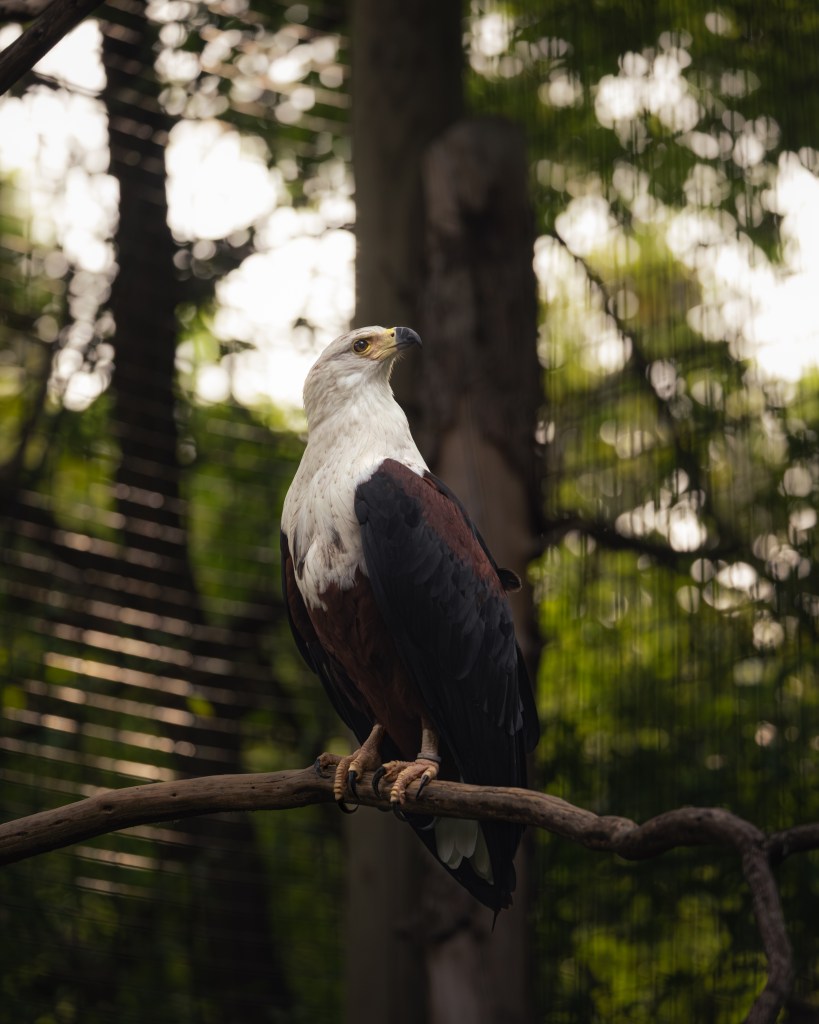 African fish eagles are rare in institutional settings. (Courtesy | Fort Worth Zoo)
The eagle species tend to fledge and fly on their own within 70 to 75 days of life. They remain close to their parents’ habitat for two to three months before finding their own territory.
Much like its name, the species is native to most of Africa and is commonly seen in the southern portion of the Sahara Desert. The animal is typically found living adjacent to waterways, where they prey on fish and nest in tall trees.
The birds are listed as “least concern” on the International Union for Conservation of Nature and Natural Resources’ Red List of Threatened Species.
However, the species are rare to find in professional care, making a successful hatch at the Fort Worth Zoo “an important step toward long-term population stability.”
Nicole Lopez is the environment reporter for the Fort Worth Report. Contact her at nicole.lopez@fortworthreport.org.
At the Fort Worth Report, news decisions are made independently of our board members and financial supporters. Read more about our editorial independence policy here.
This <a target=”_blank” href=”https://fortworthreport.org/2026/03/19/eagle-hatchling-is-fort-worth-zoos-newest-member-first-of-kind-in-institutions-history/”>article</a> first appeared on <a target=”_blank” href=”https://fortworthreport.org”>Fort Worth Report</a> and is republished here under a <a target=”_blank” href=”https://creativecommons.org/licenses/by-nd/4.0/”>Creative Commons Attribution-NoDerivatives 4.0 International License</a>.<img src=”https://i0.wp.com/fortworthreport.org/wp-content/uploads/2021/04/cropped-favicon.png?resize=150%2C150&quality=80&ssl=1″ style=”width:1em;height:1em;margin-left:10px;”>
<img id=”republication-tracker-tool-source” src=”https://fortworthreport.org/?republication-pixel=true&post=453130&ga4=2820184429″ style=”width:1px;height:1px;”><script> PARSELY = { autotrack: false, onload: function() { PARSELY.beacon.trackPageView({ url: “https://fortworthreport.org/2026/03/19/eagle-hatchling-is-fort-worth-zoos-newest-member-first-of-kind-in-institutions-history/”, urlref: window.location.href }); } } </script> <script id=”parsely-cfg” src=”//cdn.parsely.com/keys/fortworthreport.org/p.js”></script>