
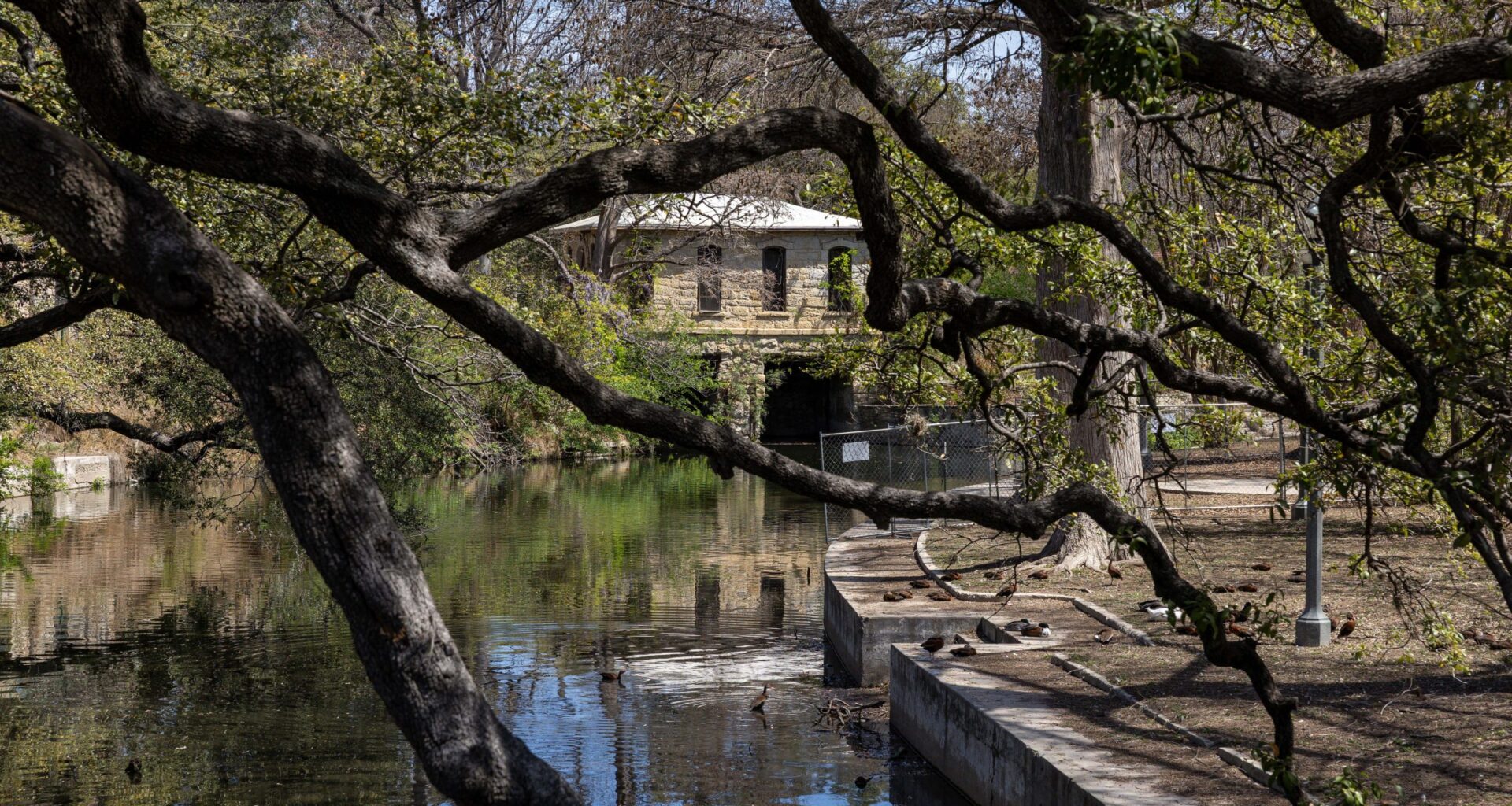
In a major step forward for a city bond project that languished for a decade and led to a lawsuit, a city panel on Wednesday approved a plan for improvements to Brackenridge Park.
The Historic and Design Review Commission gave city staff the green light for its request to begin work on a 2017 bond project approved by voters.
But the project scope approved by the commission includes only those elements in the second phase of the overall park improvement project, the separate phases having been established in 2024.
Phase 2 approved this week includes interior and exterior pumphouse renovations, roof replacement, a new cultural trail and plaza, improvements to the upper labor dam, acequia and waterworks raceway, underground utility work, new sewer and water lines, landscape restoration and interpretive signage.
Phase 1, which is concentrated on structural stabilization and repair of the pumphouse foundation underpinning and historic river wall and retaining wall repairs, remains mired in litigation. However, foundation repair around the pumphouse is set to begin in April, according to a city spokesman, as it is necessary for the full pumphouse renovations to occur in Phase 2.
The sweeping park at the heart of San Antonio and adjacent to the zoo and a golf course is a designated State Antiquities Landmark, National Register District, and locally designated landmark located within the River Improvement Overlay District (RIO-1).
In 2017, San Antonio voters approved an $850 million bond for city projects, with $116 million to improve parks. Of that, roughly $7.75 million was to be used to “repair and enhance” historic features of Brackenridge Park, including the lily pond, upper labor dam, upper labor acequia, the pumphouse and Lambert Beach.
The Brackenridge Park Conservancy also has raised $5.5 million in private donations to augment that project and has pushed for the work to start.
“Our goal as a conservancy is to create a more accessible, ecologically healthy and enjoyable park for all San Antonians and we see these critically needed investments as an important opportunity to demonstrate our shared love for Brackenridge Park,” said Suzanne Scott, Conservancy board chair and former general manager of the San Antonio River Authority.
Conservancy CEO Chris Maitre said some donors have pulled their funding because the project’s “been stalled for far too long.”
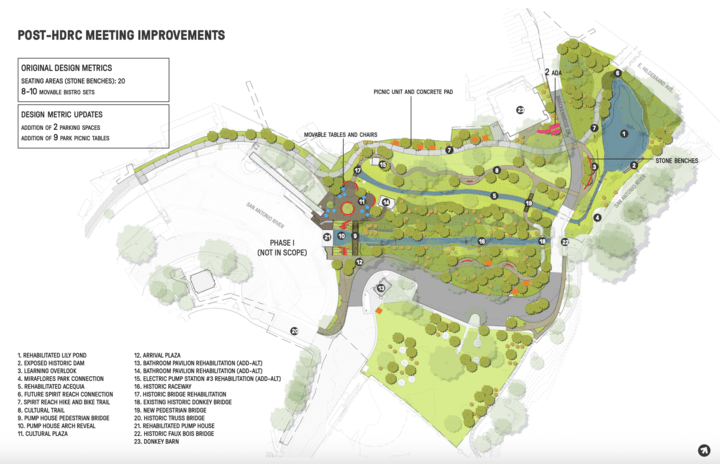 City staff presented the phase 2 plans for improvements to Brackenridge Park.
Since that time, staunch opposition to various plans to remove trees, discourage wildlife and other design issues has delayed design work.
In 2023, two indigenous advocates, Matilde Torres and Gary Perez, filed a federal lawsuit seeking to stall the project on religious grounds.
The lawsuit, filed on behalf of two members of a Native American church, claims the 2017 bond project’s planned tree removals and bird mitigation efforts interfere with the members’ ability to practice their religion.
It also claims the city has inhibited their access to a specific bend in the San Antonio River, making it impossible for them to practice core aspects of their religion and denying them their First Amendment rights.
Two years ago, the project was split into two phases, with the lawsuit affecting only the proposed work in phase 1, which must also go before the U.S. Army Corps of Engineers for approvals.
In February, the Fifth Circuit Court of Appeals denied a motion for a rehearing by all federal judges filed by the plaintiffs. The suit is still pending.
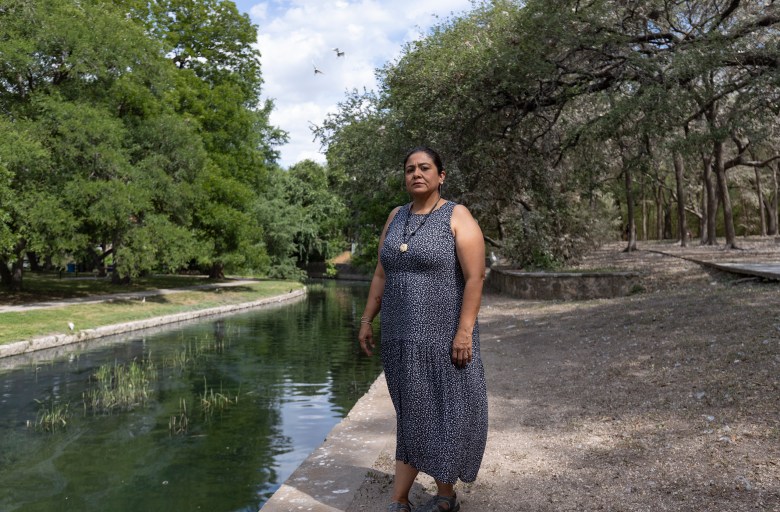 Matilde Torres, an Indigenous environmental advocate, says the San Antonio River and its surrounding trees in Brackenridge Park speak to thousands of years of native history and cosmology. Credit: Bria Woods / San Antonio Report
The recent request to approve the phase 2 designs was first heard by commissioners in January. During that hearing, members of the public again expressed concerns about tree removal, parking availability and placement of picnic tables. Commissioners postponed a decision until they could walk the park with city staff and the public and consider the plan again.
Michael Shannon, director of the Capital Delivery Department, said that the walk-through was helpful to the design team and several modifications were made based on their feedback.
He presented a revised design plan to commissioners following design review meetings with commissioners in recent weeks.
“There will be some trees taken down, there’ll be a lot of trees put back,” Shannon said, adding that 10 new trees that had been planned for the park won’t be installed in favor of picnic tables and parking spaces.
That will allow for more picnic tables and parking spaces, he said.
But, on Wednesday, five people spoke against the new plan and another nine left voice mail messages for the commission registering their opposition.
An attorney who said he was representing Torres and Perez in their lawsuit against the city, John Greil stated his clients’ concerns for certain trees that could be removed because the city has said they are threatening cultural resources in the park, namely the river walls and pumphouse.
“There are multiple cultural resources here, and to say that that tree is impacting the cultural resource ignores that, to the Native American church, to the Comanche Nation, and to a lot of indigenous San Antonians and Texans, those trees are a cultural resource. Those trees are a religious resource. Those trees are part of religious ceremonies,” he said.
“We really appreciate the walk-through that you allowed us to attend as members of the public, and the efforts that you’ve given that I do think that we still could get to a better plan in a timely way,” said Susan Strong, who attended the meeting to voice her disapproval of the plan.
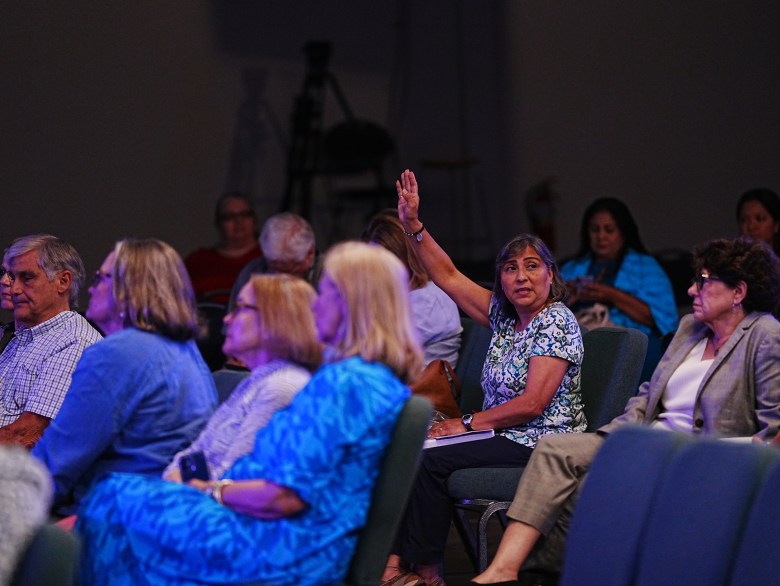 Ida Ayala raises her hand to ask a question at a community outreach meeting about projects at Brackenridge Park in April 2024. Credit: Brenda Bazán / San Antonio Report
Another resident, Ida Ayala said she was concerned about reducing the number of picnic tables from the park and accessible parking spaces.
“The city has consistently said that there are 340 more acres in the park,” she said. “However, this area is the heart of the park for generations of people. This is a vital picnic area of the park due to its accessibility for elderly and physically challenged.”
After some discussion during which Commissioner Gabriel Velasquez asked a number of questions about design, commissioners voted unanimously in support of the project, which must still go through the city’s permitting and final design before the work starts.
Commissioner Monica Savino urged the design team to work on plans for better exposing the acequia, and also work to protect trees and add picnic tables.
“I do also want to thank the city staff for providing a couple of more weeks for us to take a closer look and to express the concerns we have, and you’ve responded well to the ones that are of most importance, less the trees,” she said. “I, too, am concerned about the trees. I’m not supportive about removing, really any of the heritage trees, except for one of them in this scope.”
In approving the request, Commissioner Jeffrey Fetzer urged the city to continue seeking to add more picnic tables and parking spaces in the plan.
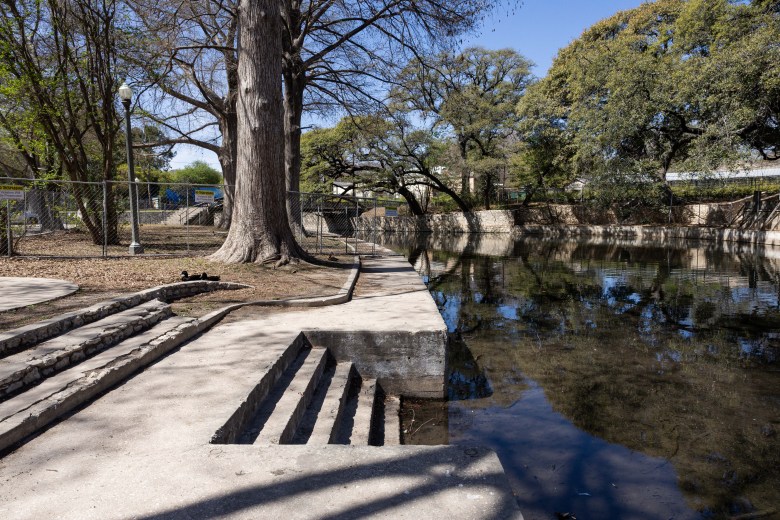 Sections of Lambert Beach looking towards the pedstrain bridge near the old water works pump house are fenced off on March 16, 2026. Credit: Amber Esparza / San Antonio Report
“From day one, the public, the design team, city staff put in a lot of effort, and I’m sure blood, sweat and tears have been shed to get us to this point,” Fetzer said. “As you delve into the details, since this is a fairly quick turnaround from the last meeting, if you can increase those numbers, I would encourage you to do so.”
The plan could be amended slightly as it goes through the construction design process and permitting and that’s normal, said Cory Edwards, interim director of the Office of Historic Preservation.
“Anything that comes in for a permit, we make sure it’s consistent with what you all saw and approved,” Edwards told commissioners. “So if Mike [Shannon] says there’s going to be 20 picnic tables, we’re going to make sure there’s 20 picnic tables.”