
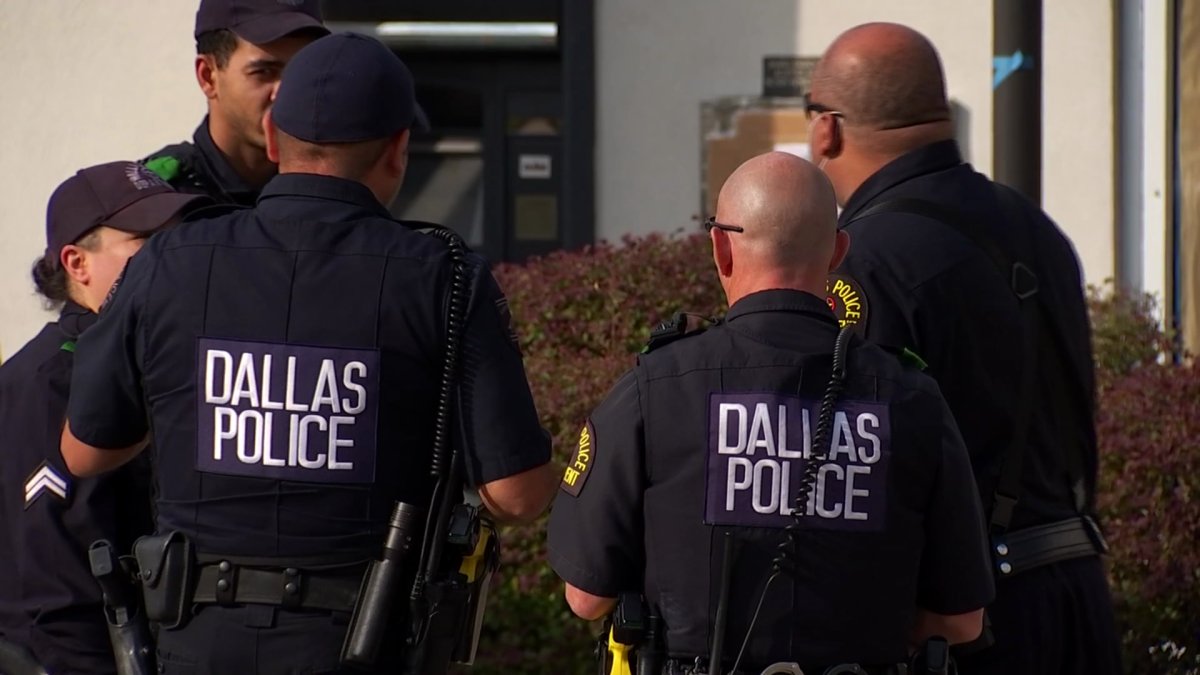
New details in the investigation into a man accused of posing as law enforcement before being killed in a standoff with Dallas police are raising concerns about how he was able to hire off-duty officers through a system designed to prevent exactly that.
Police say Diamon Robinson, also known as “Mike King,” was shot and killed by Dallas SWAT officers last week. Investigators allege Robinson posed as a law enforcement officer and, at some point, used a third-party platform to hire off-duty Dallas police officers.
Since 2024, the Dallas Police Department has required officers to use the platform RollKall to secure off-duty work. The policy defines off-duty employment as a privilege, not a right, and outlines an approval process intended to vet employers and assignments.
It remains unclear how long Robinson was operating or how many jobs were involved. However, Juan Hernandez, president of the National Latino Law Enforcement Organization Dallas chapter, said multiple officers may have unknowingly worked for him.
“A couple dozen less. It could be more,” Hernandez said.
Despite those safeguards, Robinson was still able to hire officers, raising questions about potential gaps in the system.
“It seems a little bit unusual that someone would be able to hire and obtain off-duty police officers, even though they weren’t licensed themselves,” said Craig Miller, a retired Dallas police officer.
Hernandez said several members of his organization are among those affected and are now considered victims.
Earlier this week, officers met with the CEO of RollKall to address concerns, including unpaid wages and the potential exposure of personal information.
“RollKall did provide us information that if any officers were affected … they would provide a credit company that would monitor the credit,” Hernandez said.
He added that some officers are still owed money, but the company indicated those payments would be addressed.
“There’s still some money that’s owed, but RollKall did reassure that that was going to get taken care of,” Hernandez said.
In a statement, RollKall said Robinson never had access to or disseminated officers’ personal data through its platform.
“We can also confirm that at no point was this individual able to access or disseminate the personal data or personally identifiable information of any other person on the platform,” a spokesperson for RollKall said.
The case is also renewing broader concerns about off-duty police work nationwide.
“There’s a reason why police officers around this nation work off-duty employment, and that is generally because we don’t pay our police officers enough to begin with,” said Sgt. Betsy Brantner Smith of the National Police Association.
Miller said some departments handle off-duty job assignments internally, which can be more cumbersome but potentially more secure.
“I think when you do it in-house, your success is going to be far greater than hiring an outside third-party vendor,” he said.
The National Latino Law Enforcement Organization’s Dallas chapter plans to continue working with RollKall to review and strengthen vetting processes for off-duty jobs.
The investigation into Robinson and how he was able to navigate the system remains ongoing.