
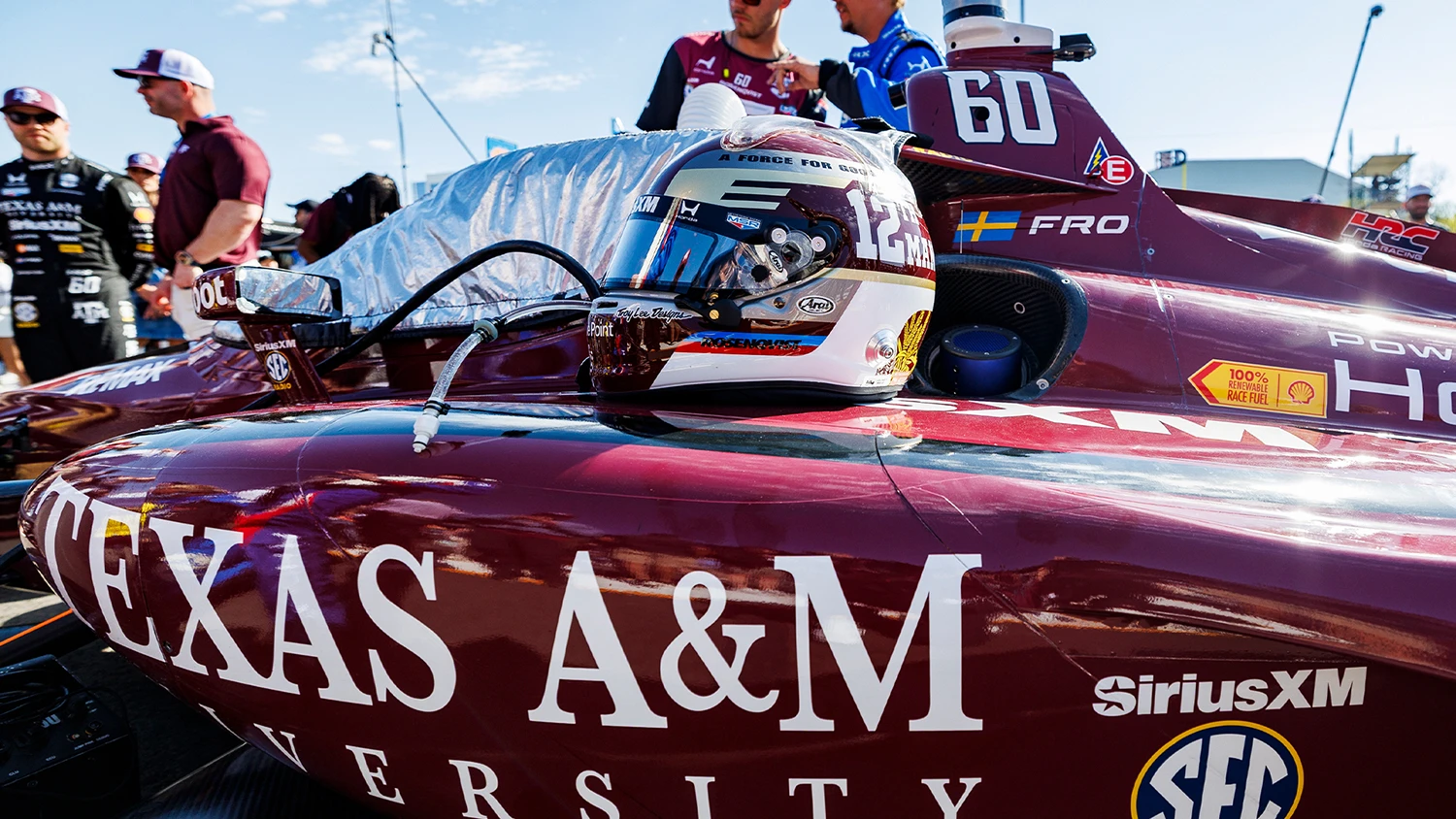
Texas A&M University was in the spotlight on a national stage Sunday, March 15, at the inaugural Java House Grand Prix of Arlington.
In a year when the university is building momentum toward its 150th anniversary, Arlington was a Texas-sized stage to reflect what Texas A&M represents for the state: a public research institution serving all 254 counties and the No. 1 research university in Texas, with $1.4 billion in annual research expenditures that account for nearly 1 out of every 5 research dollars invested across Texas public universities. The Arlington weekend also engaged one of the university’s largest concentrations of former students in the Dallas-Fort Worth metroplex.
One of those Dallas-Fort Worth metroplex former students in attendance was Eddy Badrina ’98, who has spent 20 years in corporate, entrepreneurial and government roles. He is an advisory board member for Texas A&M’s College of Agriculture and Life Sciences and Texas A&M AgriLife agencies and research entities.
“I am just excited to be at the inaugural race and then also showing that Texas A&M is being a force for good,” he said.
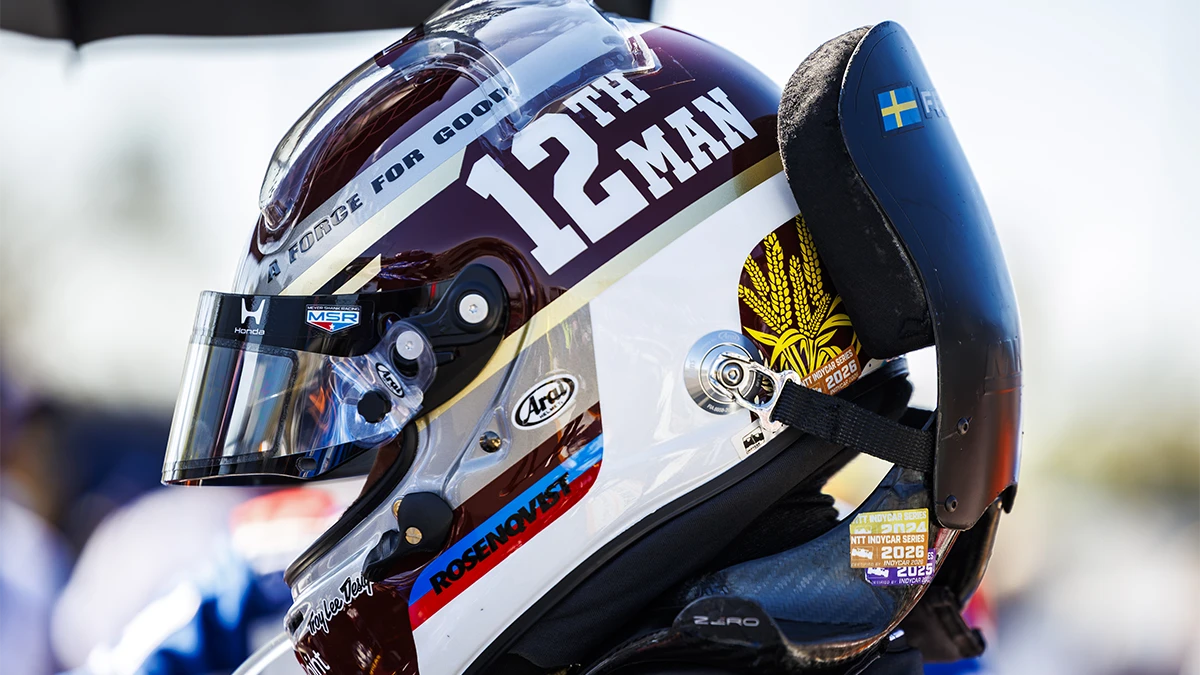
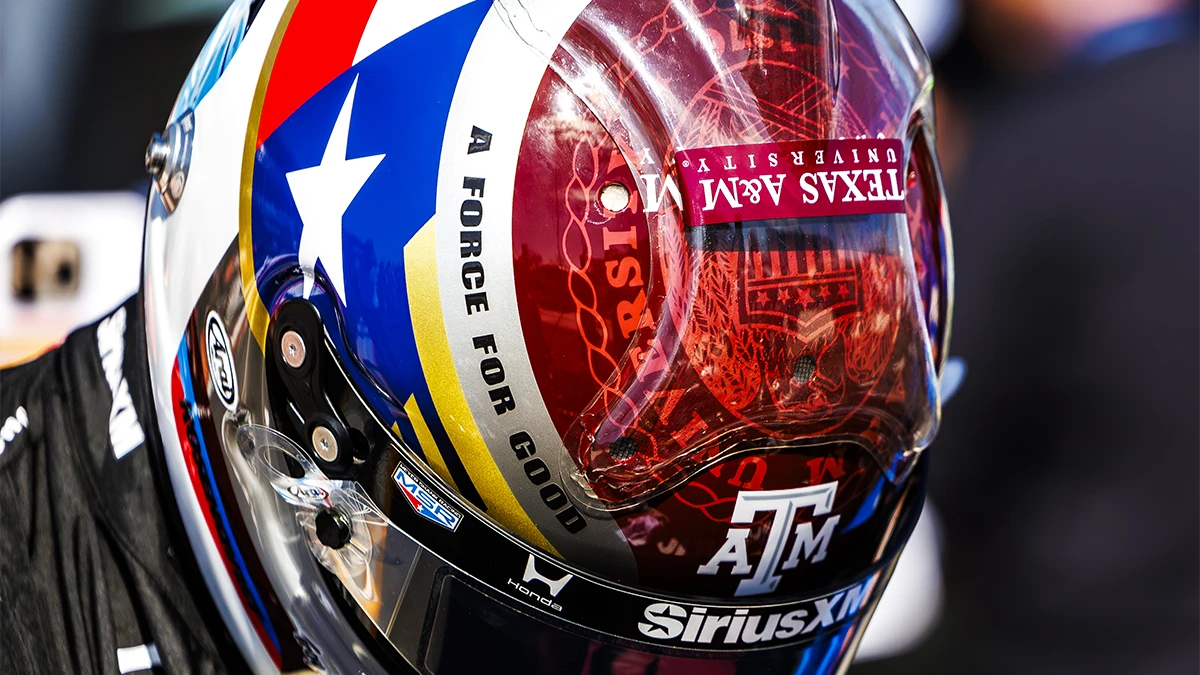
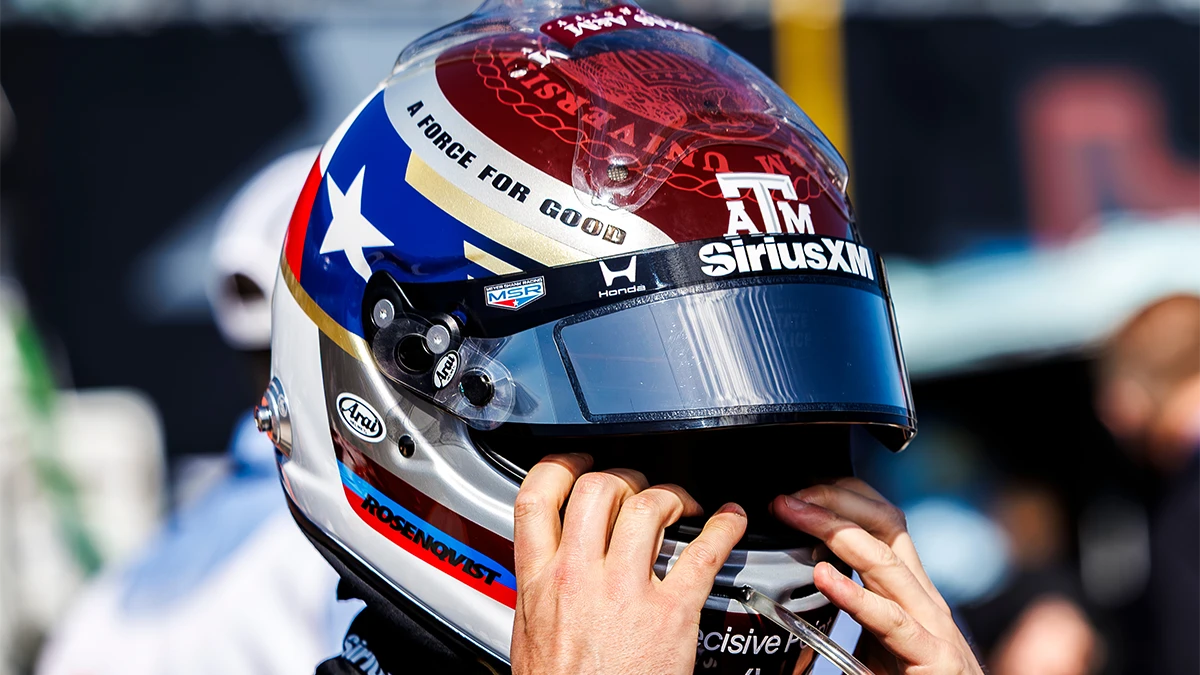
IndyCar driver Felix Rosenqvist wore a custom Texas A&M University helmet at the inaugural Java House Grand Prix of Arlington. The helmet, crafted by Troy Lee Designs, one of the most recognized names in motorsports helmet art, was created specifically for the Arlington race and featured the Aggie Ring, Texas A&M scenes and A Force for Good branding.
Photos by Abbey Toronjo/Texas A&M University Division of Marketing & Communications
Also in attendance alongside Badrina were fellow former students and Aggie faculty, including Tommy Williams ’87, interim president of Texas A&M; Matt Williams ’25, Medal of Honor recipient; Robert Ahdieh, vice president for professional schools and programs at Texas A&M, chief operating officer at Texas A&M-Fort Worth and dean of the Texas A&M School of Law; and Hayden Schott ’25, a former Texas A&M baseball player.
Texas A&M served as a sponsor of the No. 60 Meyer Shank Racing Honda driven by Felix Rosenqvist in the NTT IndyCar Series, part of a yearlong presence across NASCAR and IndyCar to deliver sustained national visibility and marquee moments that position the university as a force for good. The Aggie maroon livery was a highlight of the national Fox broadcast, as Rosenqvist led for seven laps midway through the 70-lap road course race and remained near the front of the pack for much of the afternoon.
Rosenqvist, who started from the fifth position, drove the car to an eventual 20th-place finish. In addition to driving the Aggie-themed Indy car, Rosenqvist wore a Texas A&M firesuit and a custom helmet by Troy Lee Designs, one of the most recognized names in motorsports helmet art and visual storytelling. Created specifically for the Arlington race, the helmet features the Aggie Ring, Texas A&M scenes and A Force for Good branding.
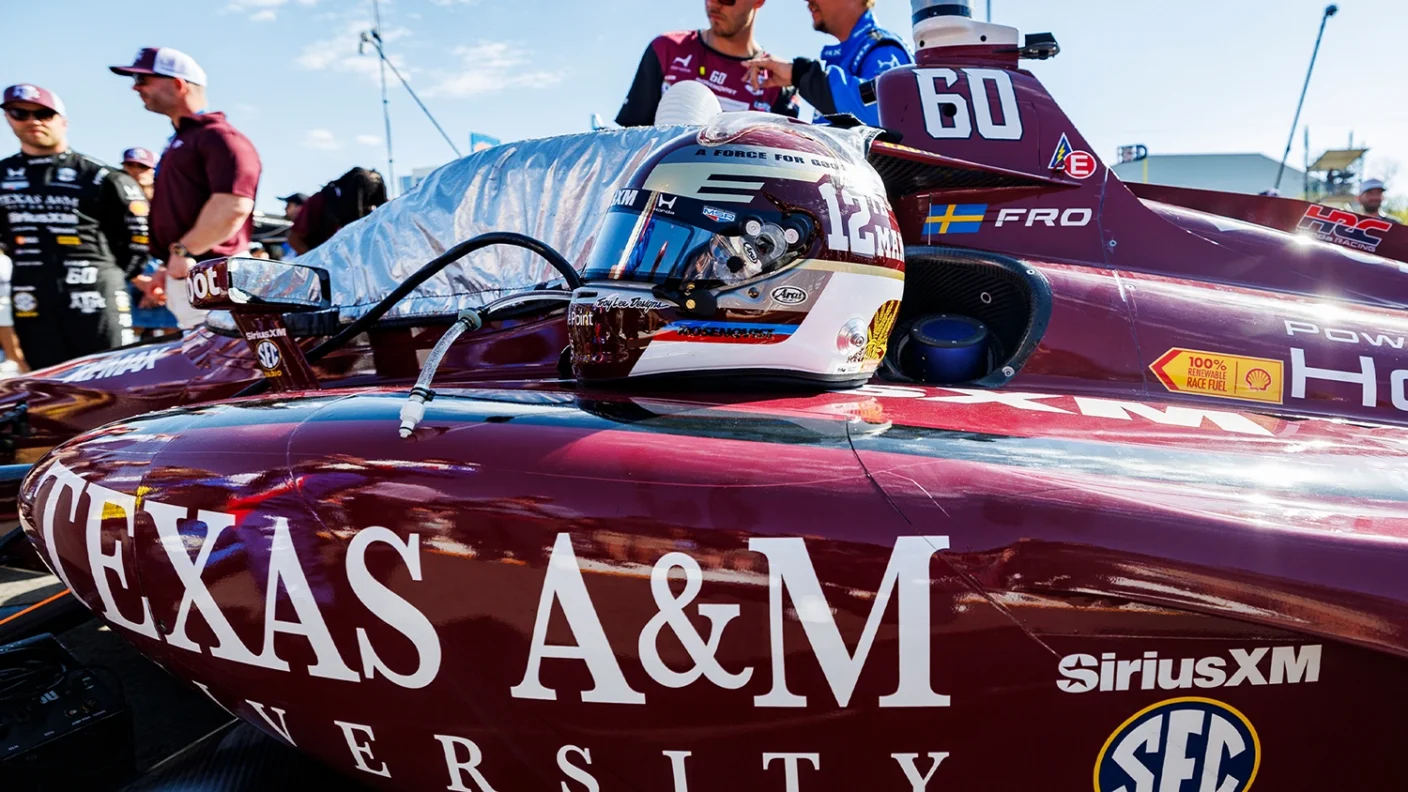
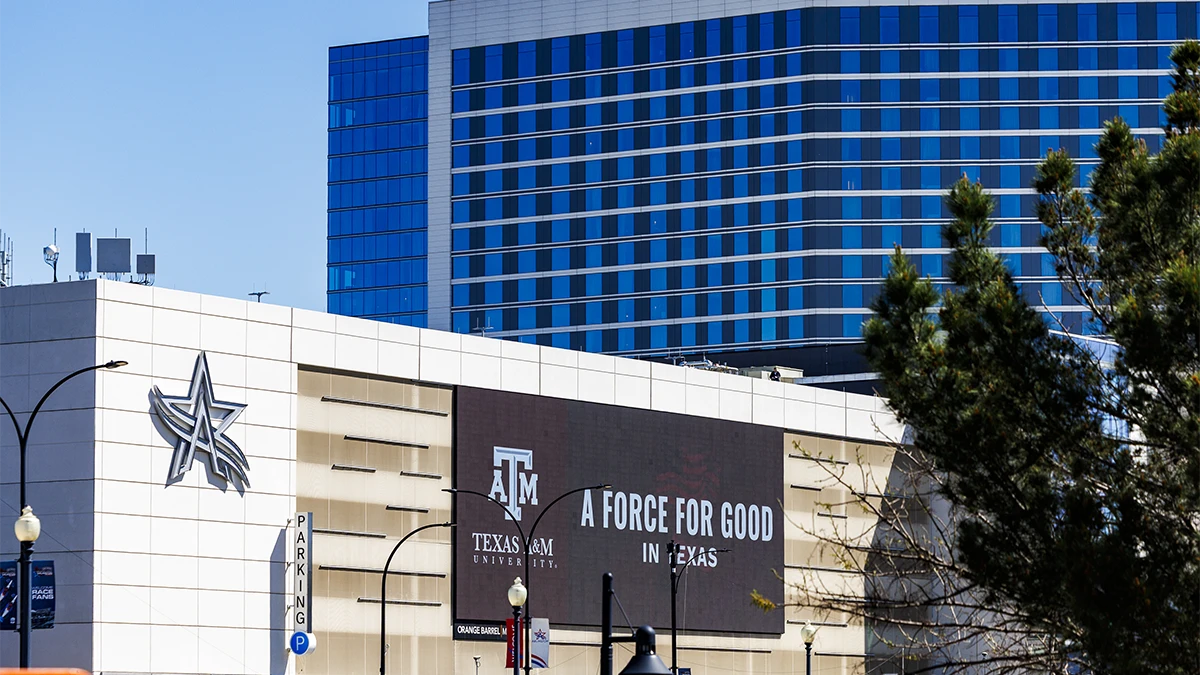
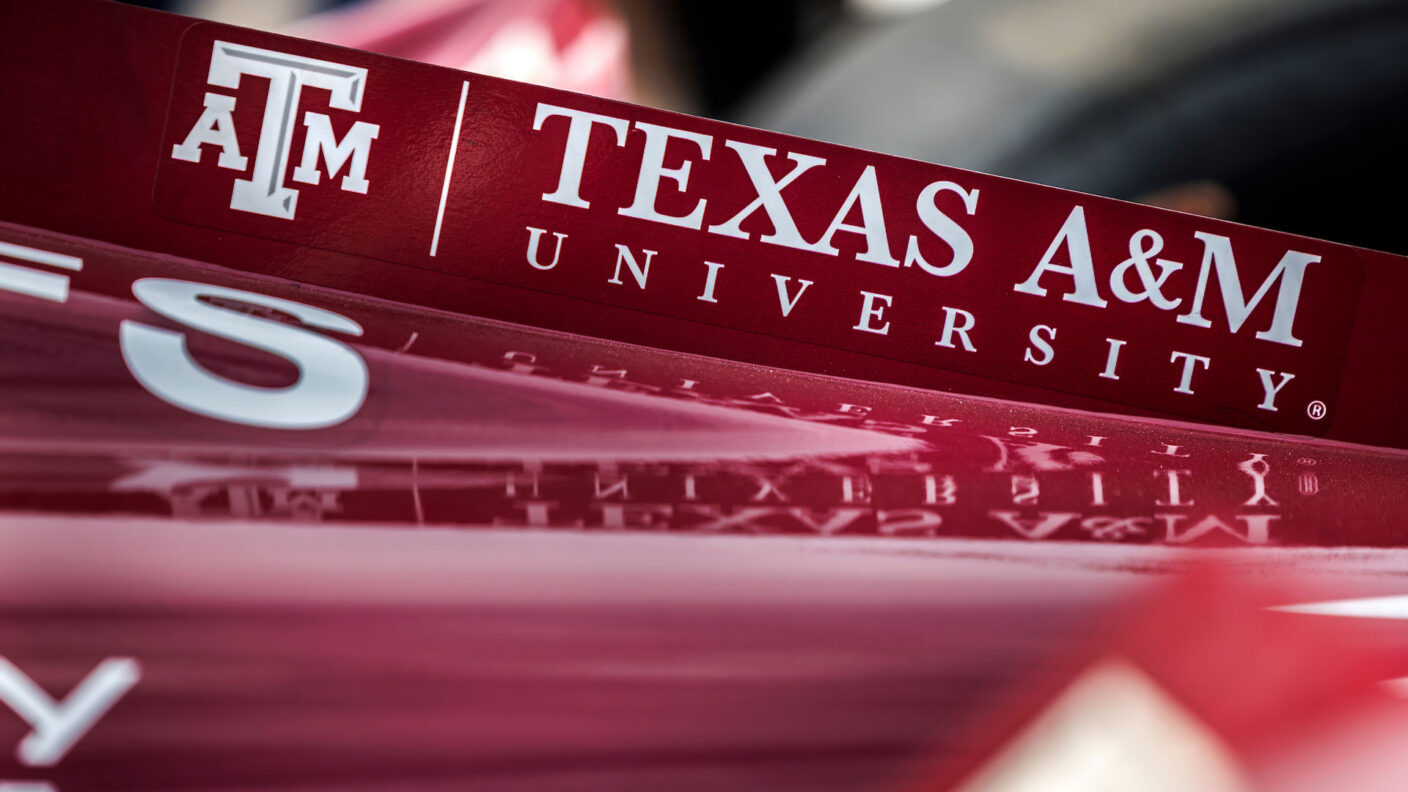
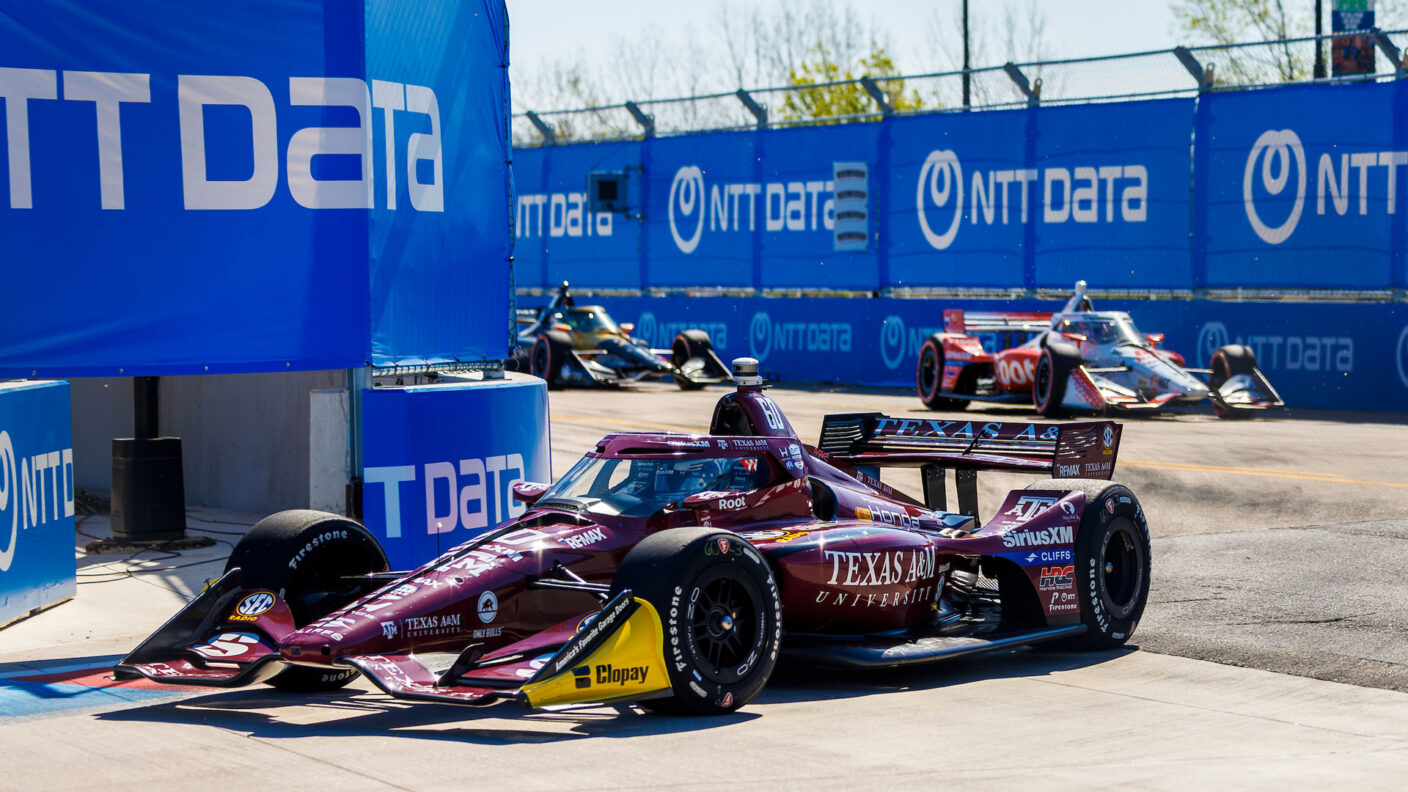
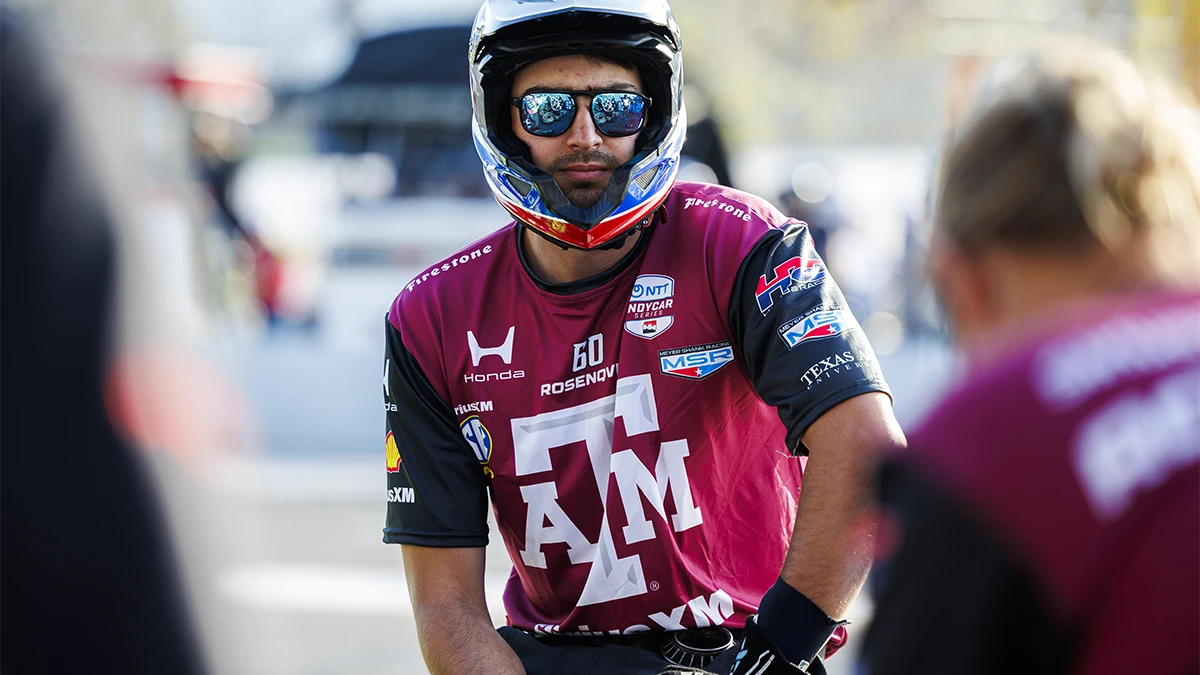
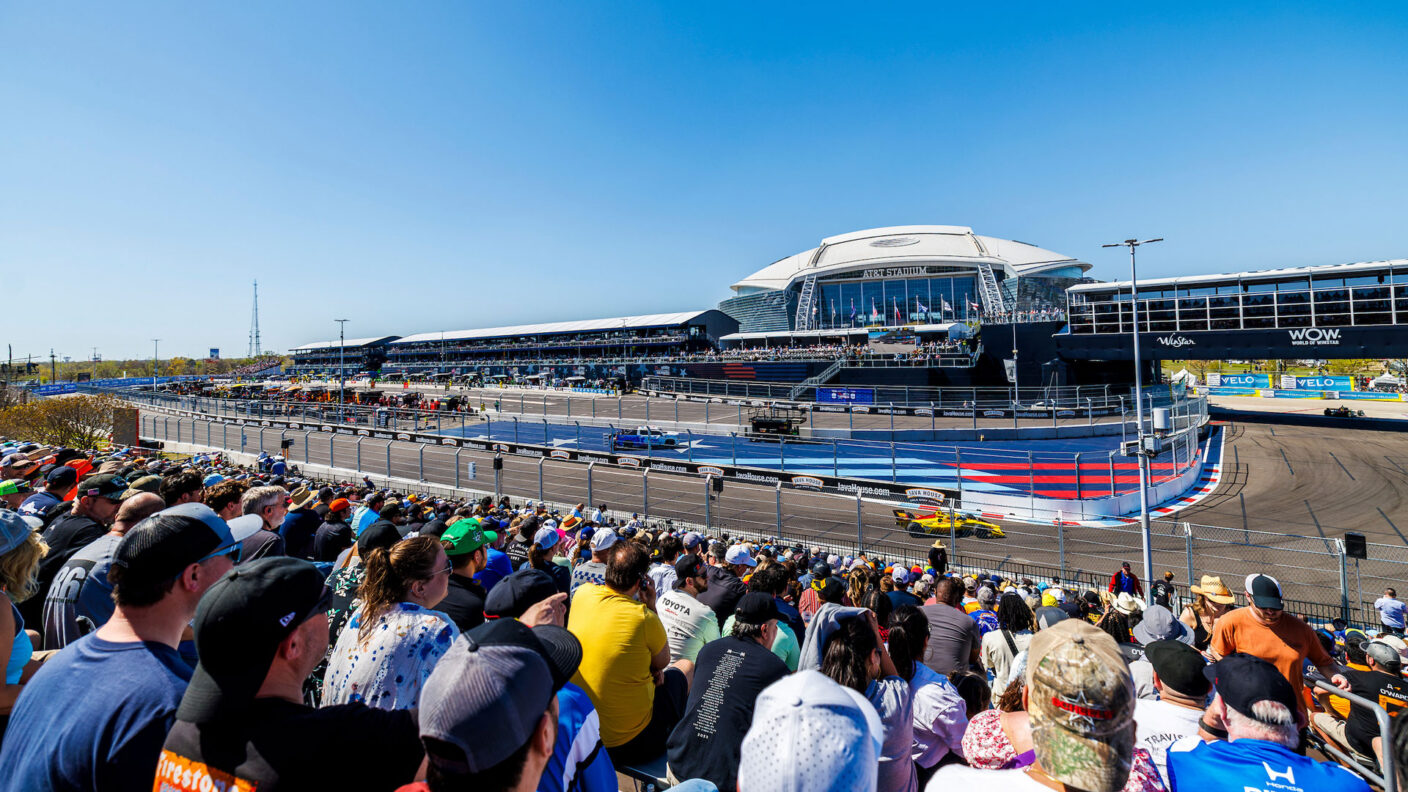
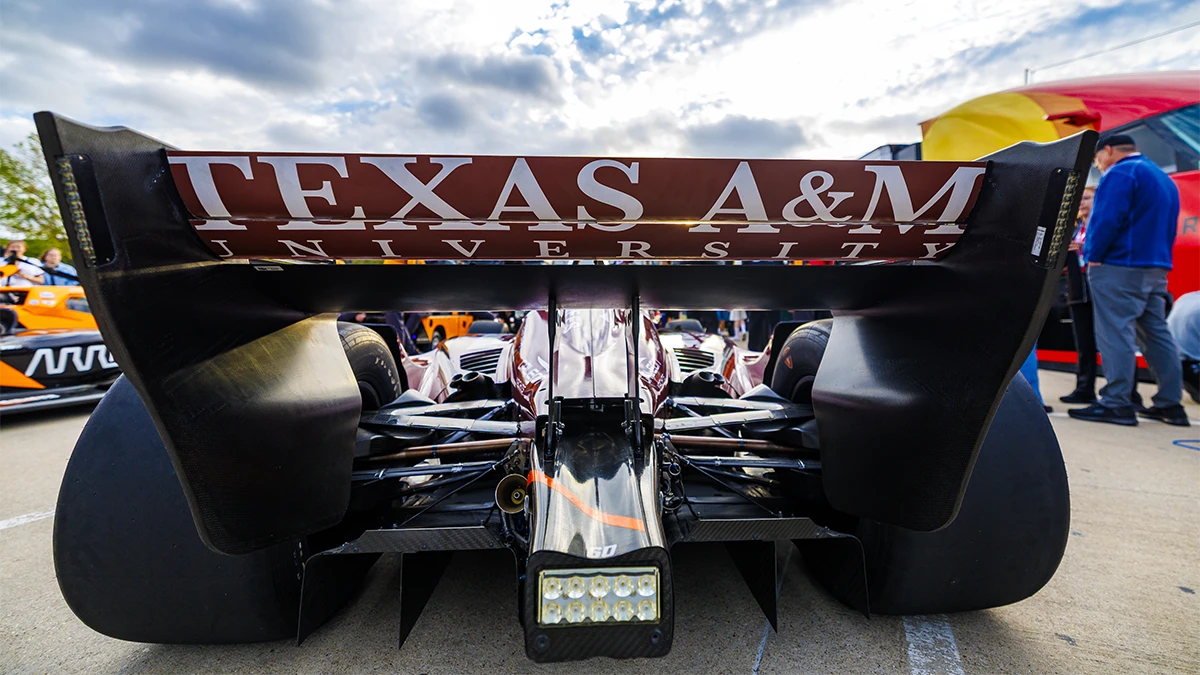
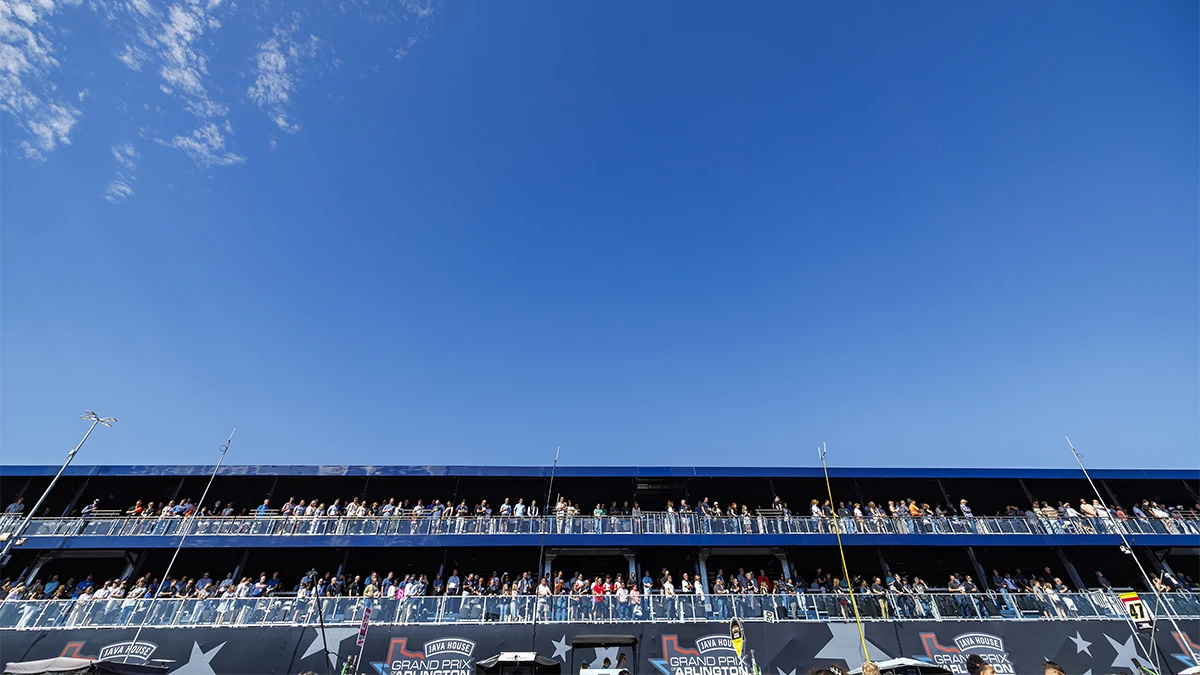
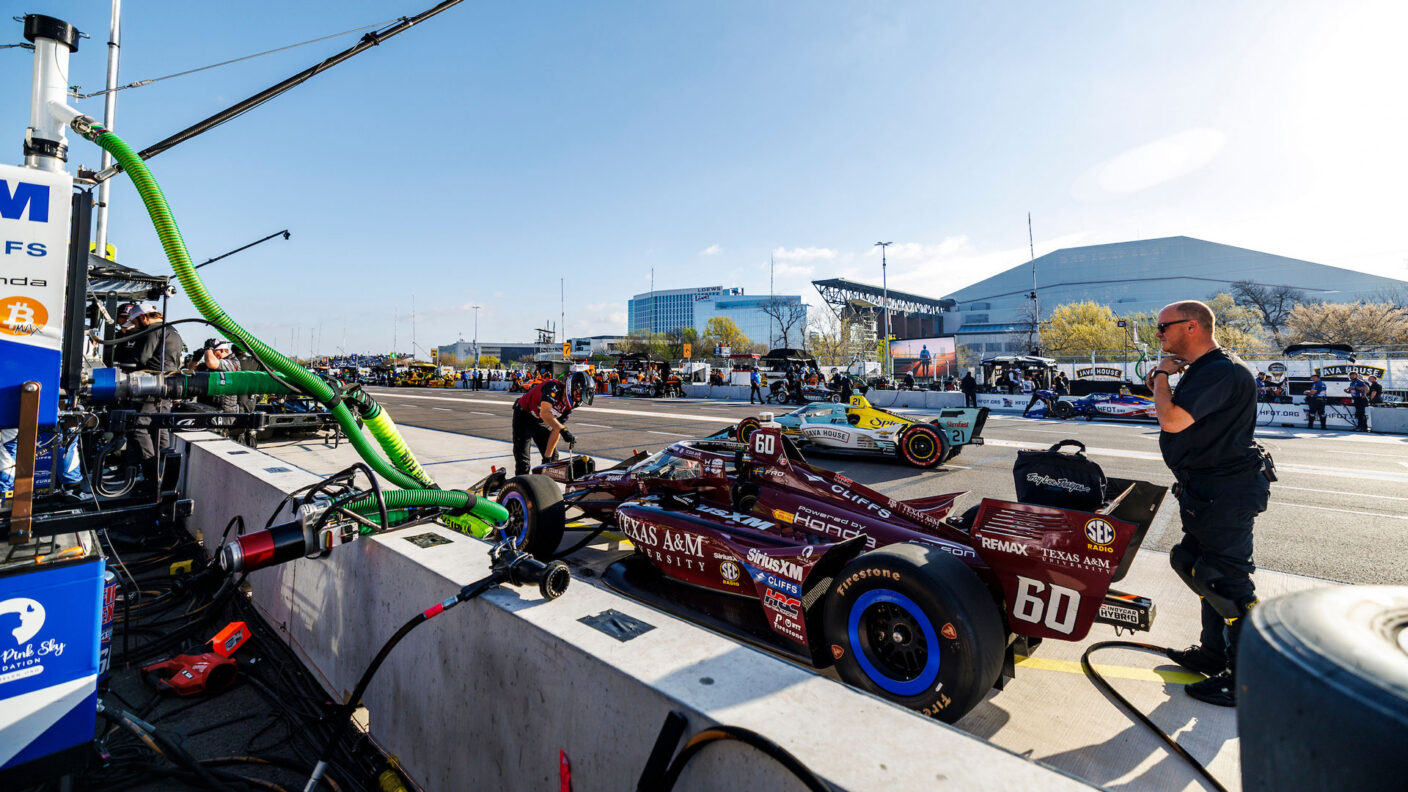
Texas A&M served as a sponsor of the No. 60 Meyer Shank Racing Honda, which featured a special maroon and branded Texas A&M livery. Even the pit crew wore Texas A&M-themed gear. A capacity crowd was on hand for the inaugural road race that featured a course which wound down Arlington city streets and between AT&T Stadium – home of the Dallas Cowboys – and Globe Life Field – home of the Texas Rangers. The Arlington race represented one of the most visible moments of Texas A&M’s 2026 motorsports program, and provided a Texas-sized platform to position Texas A&M as a force for good in the university’s 150th year.
Photos by Abbey Toronjo/Texas A&M University Division of Marketing & Communications
Texas A&M will offer a tangible fan and stakeholder collectible from the Arlington race, reproducing the custom helmet as a limited-run miniature replica for retail sale.
The Arlington race represented one of the most visible moments of Texas A&M’s 2026 motorsports program and launched a third year of sweeping activations across IndyCar and NASCAR that will place the Texas A&M brand in front of millions of Americans.
As one of the few national platforms that match the university’s scale and mission, this racing series delivers consistent reach at efficient economics. In a fragmented media environment, higher education brands rarely earn repeated national exposure in live, high-attention settings. NASCAR and IndyCar provide exactly that, week after week, in contexts that align naturally with Texas A&M’s strengths in engineering, research, leadership and service. Just as importantly, very few peer universities participate meaningfully in this space, which makes Texas A&M immediately distinctive when it appears and enables it to pair visibility with purpose, connecting new audiences to how Texas A&M serves Texas and the nation.