
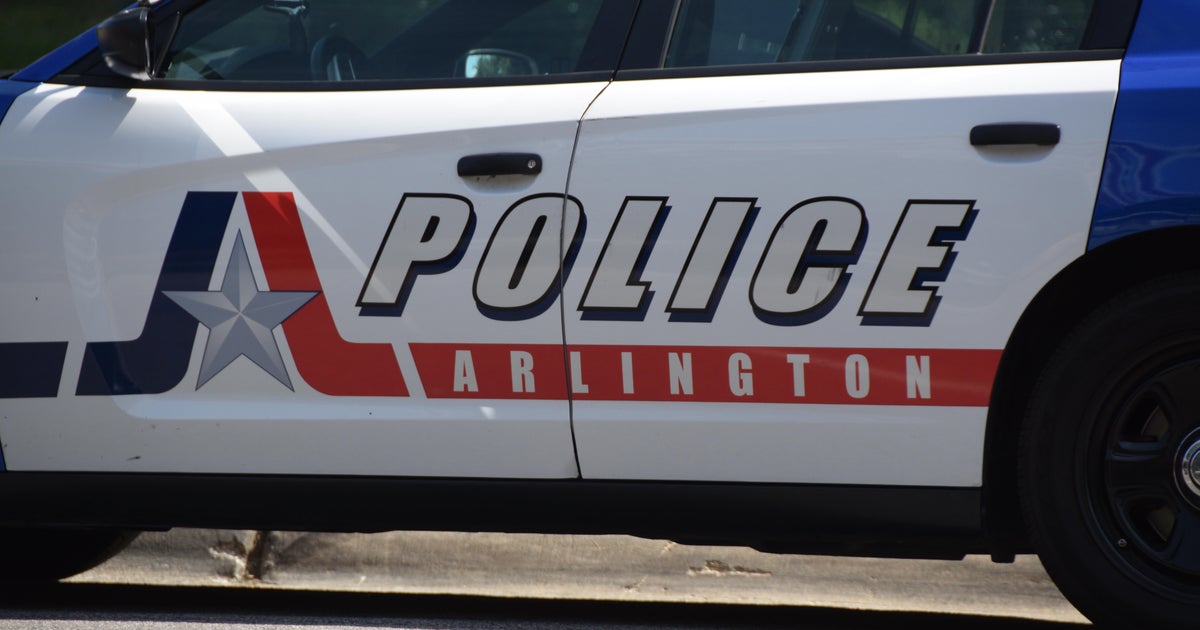
A Tarrant County grand jury declined to indict a woman that Arlington police claimed was behind a cold case murder from 1991. The decision, called a no bill, means that Janie Perkins is cleared of a capital murder charge in the death of Cynthia Gonzalez.
The case gained renewed attention in November when Perkins was arrested. The Arlington Police Department said that detectives identified Perkins as the suspect after working with students at the University of Texas at Arlington through a new partnership.
At the start of the fall semester, UTA’s Department of Criminology & Criminal Justice launched a course that allows students to review cold cases in an effort to develop new leads. The Gonzalez case was one of three the students were presented with, and it was assigned to a small group.
The students started asking detectives questions about Perkins, who had appeared in the files. That prompted detectives to take a deeper look at her.
Arlington PD said Perkins did not have an alibi on the night of Gonzalez’s death. They also said they found that a witness had come forward who told detectives that Perkins admitted involvement.
Ultimately, the Tarrant County District Attorney’s office was not able to convince the grand jury when it met on Friday.
“The Perkins family is grateful to the Tarrant County Criminal District Attorney’s Office and to the members of the Grand Jury for taking the time to conduct a thorough, evidence-based review,” D. Miles Brissette, a defense attorney representing Perkins, said in a statement on Saturday morning.
“Their evaluation was grounded in the facts—not in the narrative advanced publicly by the Arlington Police Department and UTA. We appreciate their commitment to fairness and to the integrity of the judicial process.”
The statement said Perkins and her family are looking forward to moving past the scrutiny brought by “premature and highly publicized accusations.”
The Tarrant County District Attorney’s office also issued a statement Saturday, saying that cold cases can be difficult to get past grand juries.
“Over time, witnesses can pass away or become unable to restify. Also, cold cases don’t have some of the modern technological resources like cell phone data and cameras,” sad trial specialist Kim D’Avignon with the DA’s office. “Sometimes these factors can leave us without the admissible evidence needed to prove a case beyond a reasonable doubt.”
D’Avignon also said the DA’s office is hopeful that new information will come to light that will allow them to reopen the investigation and “present the case again to the Grand Jury for a future indictment.”