
TEXAS — Achievement gaps at Austin Independent School District are narrowing. The district is projecting eight of its schools will drop their “F” ratings for the 2026 testing year based on reports from a mid-year test for elementary students. Austin ISD is attributing this success to some changes that have been made in recent years regarding instructional material and professional training.
Most of Austin ISD’s 79 elementary schools transitioned into using the same curriculum for both reading and math last school year. This was done to have more standardized material for every student across the district, no matter which school they attend.
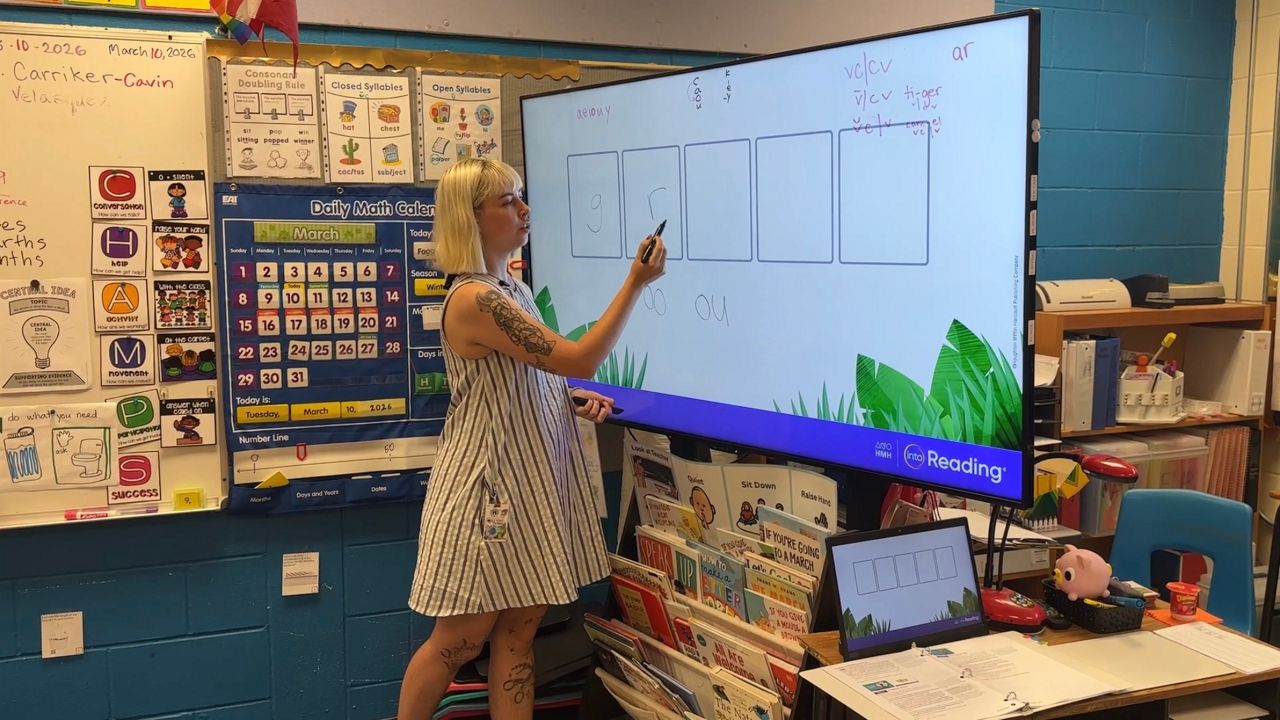
“All teachers district-wide are aligned with the type of instruction that we’re giving students is going a really long way into making sure that students are all getting equitable instruction,” said Grace Carriker-Cavin, a second-grade teacher at Pleasant Hill Elementary School.
A mid-year aptitude test reveals achievement gaps are narrowing with historically underserved student groups making the fastest gains.
“What we’re seeing now is that who had previously been underperforming are now starting to catch up to students that did not historically underperform,” said Mary Ann Maxwell, the assistant superintendent of academics for Austin ISD.
According to the district, 31% of its second graders were recommended for intervention at the beginning of the school year for math. That percentage fell to 22% after the mid-year testing. Literacy also saw a positive trend, with 26% of students needing intervention at the beginning of the year to now 21% during the middle of the year.
Maxwell says their approach is a top-down effort focusing strongly on training administrators.
“They can support teachers with observations, with coaching feedback on what they’re seeing in the classroom, then it becomes a much more sustainable system very early on,” Maxwell said.
San Antonio ISD is also seeing improvements with its second graders from the beginning of the year to now. For math, it dropped from 61% of students needing intervention to 50%. For reading, it fell from 52% being recommended for intervention to 47%.
At Pleasant Hill Elementary School, Carriker-Cavin and her second-grade team show students their scores from the testing, align goals and discuss what they need to work on to achieve them.
“We found that that has been a really effective way to get them motivated and to buy in to their own learning,” Carriker-Cavin said.
These efforts at Austin ISD appear to be working. Carriker-Cavin says she and her team were thrilled at the results of the mid-year tests.
“My team and I celebrated together,” Carriker-Cavin said. “It is really rewarding to see that the hard work that we’ve put into our students is measurable, is recognized and just to feel that what we’re doing is making a difference.”
The district is projecting that the number of schools with “F” ratings is expected to drop from 23 to less than 15 for the 2026 testing year.