
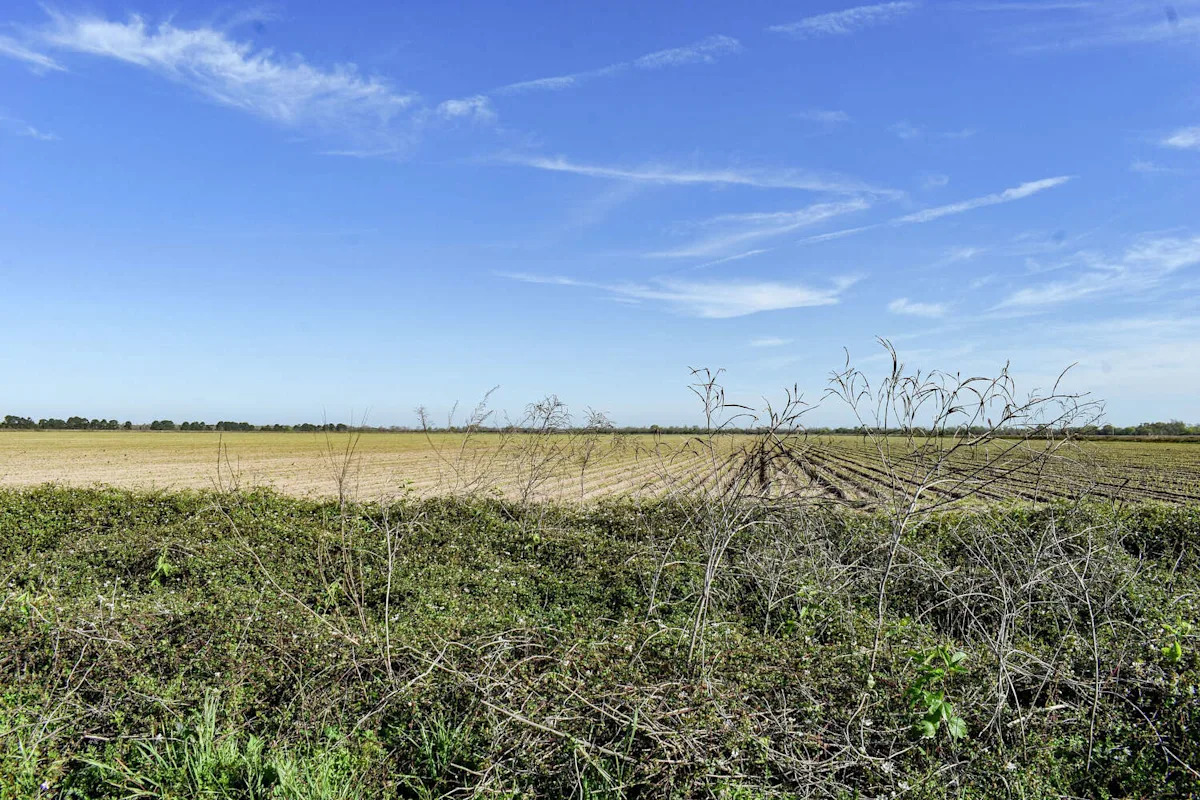
A stretch of open prairie west of Houston rolls out in muted greens and golds, where tall grasses bend in the wind and shallow wetlands hold onto the last of a recent rain. In the distance, birds lift off in clusters, moving across a landscape that, despite being surrounded by one of the nation’s fastest-growing metro areas, still functions much as it has for generations.
That landscape just got bigger.
The Coastal Prairie Conservancy has permanently protected the final 221 acres of Three Oaks Farm, completing a years-long effort to conserve the property and closing a critical gap in the Katy Prairie Preserve. With the deal finalized, the preserve now spans nearly 20,000 acres, making it one of the largest connected stretches of protected open land in the greater Houston region.
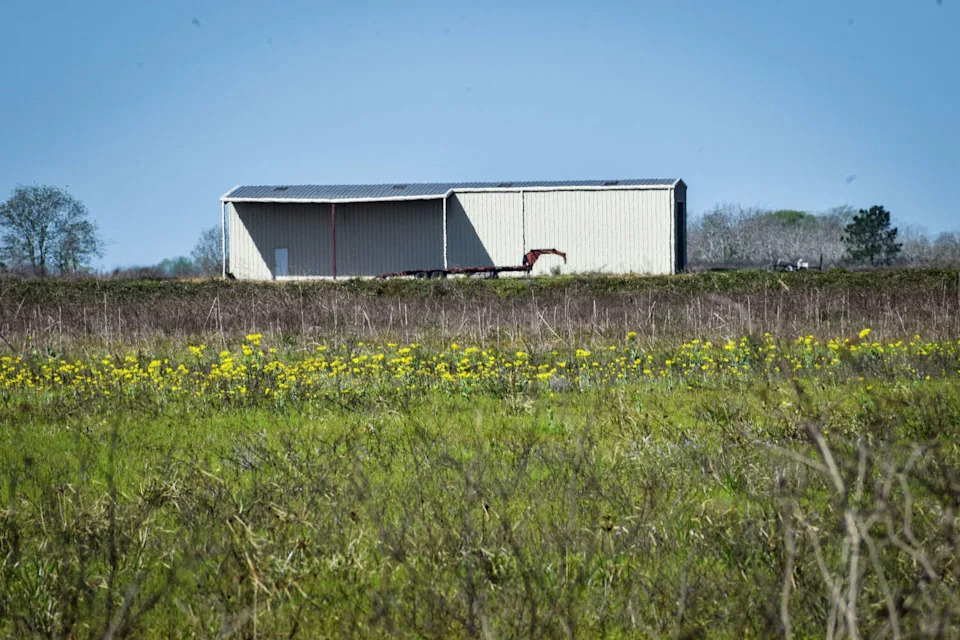
Land on the Katy Prairie is actively managed for habitat, including crops planted to support birds and other wildlife. (Ariana Garcia)
The newly conserved tract sits at the center of the preserve system, linking lands near the Indiangrass Preserve and Hebert Reservoir.
“The main thing is that it’s filling that hole with good habitat… that hole is filled permanently for our Katy Prairie preserve system,” said Wesley Newman, conservation director at the Coastal Prairie Conservancy.
Elisa Donovan, the organization’s vice president and general counsel, said protecting that central piece was critical to maintaining everything around it.
“The name of the project was the Heart of the Katy Prairie-it truly is the center heart,” she said. “If we couldn’t protect the middle, it would not only be the loss of the middle, but it would also degrade everything around it.”
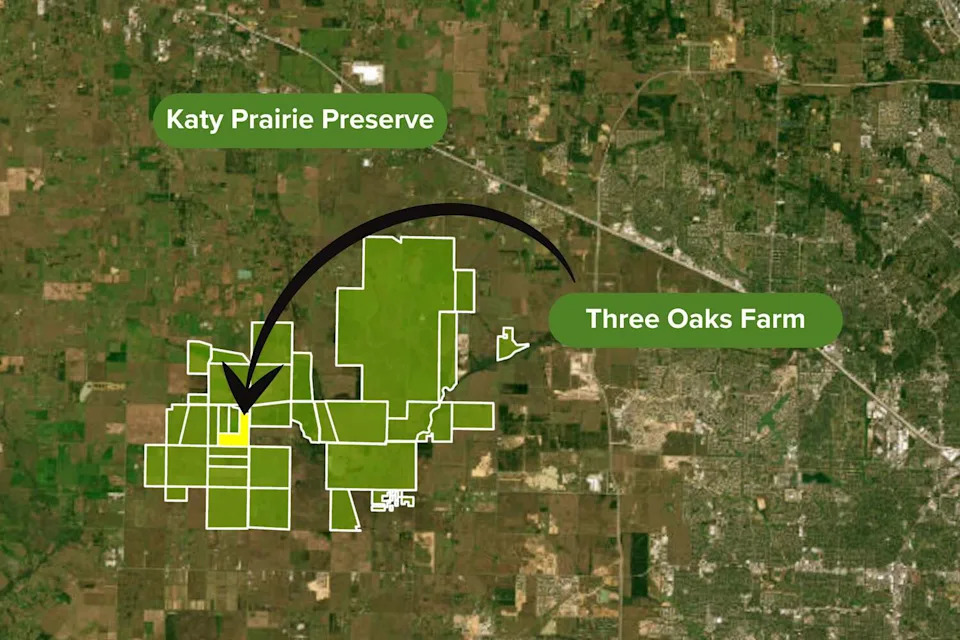
A map shows the Katy Prairie Preserve west of Houston, where newly protected land fills a key gap in the landscape. ( Coastal Prairie Conservancy)
Three Oaks Farm lies within the Cypress Creek watershed, where undeveloped land plays a visible role during heavy rains. Parts of the property flood during major storm events, holding water long after surrounding areas have drained.
“When we’ve had major storm events-Tax Day floods, Harvey-it’ll flood out here, and the water will sit for like a week,” Donovan said. “It slowly trickles off.”
That ability to hold water is a defining feature of prairie land-and a key difference from developed areas.
“Development regulations have required detention, but it does not make up for the natural infiltration that happens, especially when you have native grasses and wetlands that really hold water and slow how fast they move off,” Donovan said. “So anything we do out here to not cover it up with impermeable surfaces is beneficial downstream.”
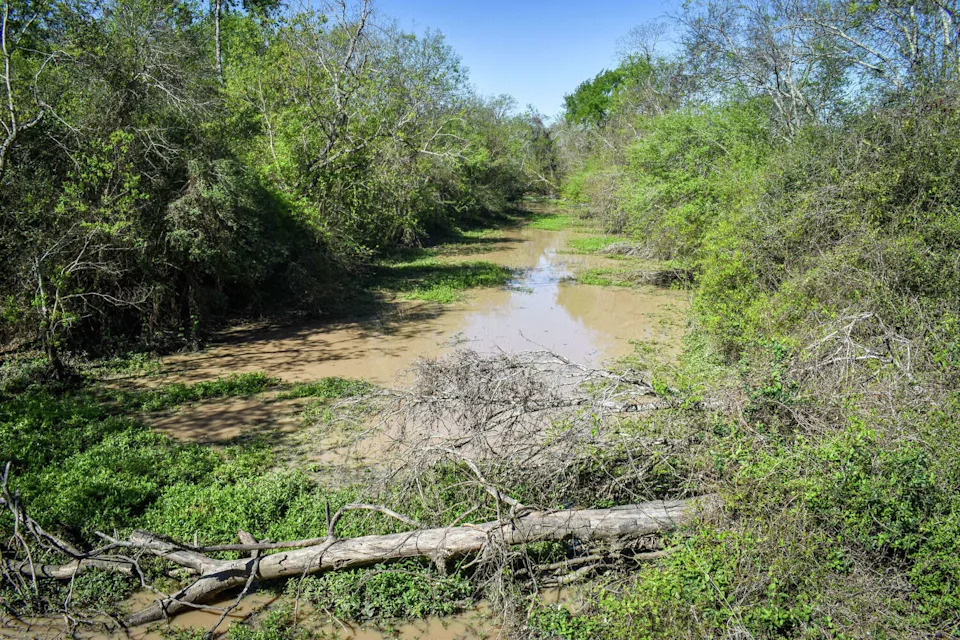
A creek flows through protected prairie west of Houston, where waterways connect the land within the Cypress Creek watershed. (Ariana Garcia)
Newman said prairie landscapes can absorb significantly more water than developed land because of what lies beneath the surface.
“A lot more water,” he said, comparing prairie to turf grass and developed areas. “The deep root systems allow water to infiltrate, and the grass slows the movement of water across the surface.”
Beyond managing water, the prairie supports a dense and interconnected ecosystem of plants, insects and birds that depend on one another to survive.
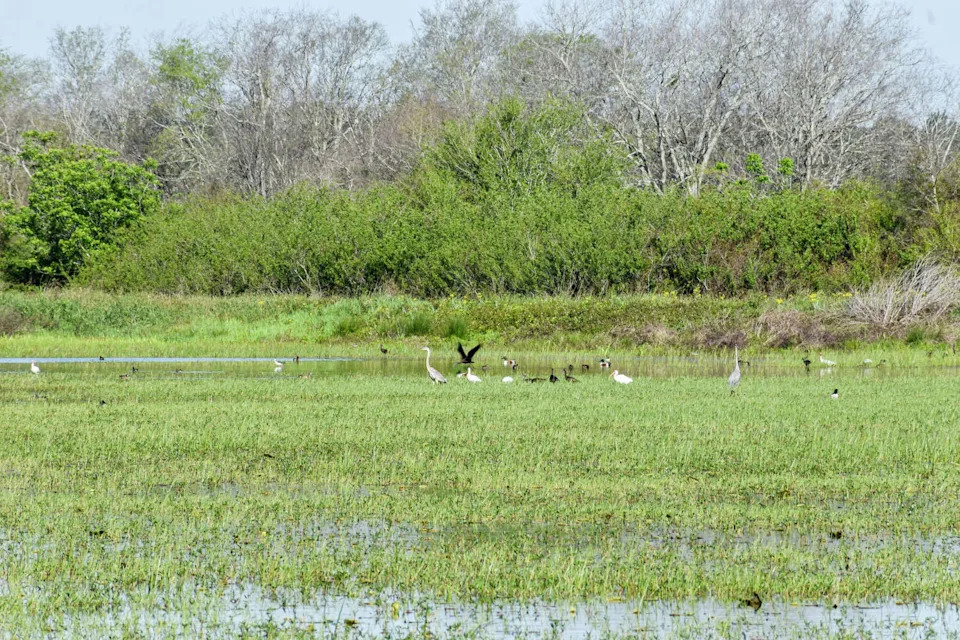
Birds gather on the Katy Prairie west of Houston, where protected land provides critical habitat for migratory and resident species. (Ariana Garcia)
“You know, birds are kind of the hot-ticket item as far as conservation goes, but if you can think of it, we probably have it out here,” Newman said. “The birds need the bugs, and the bugs need the plants.”
Filling gaps in the preserve is especially important for species that rely on large, uninterrupted landscapes, including migratory birds that move through the region each year.
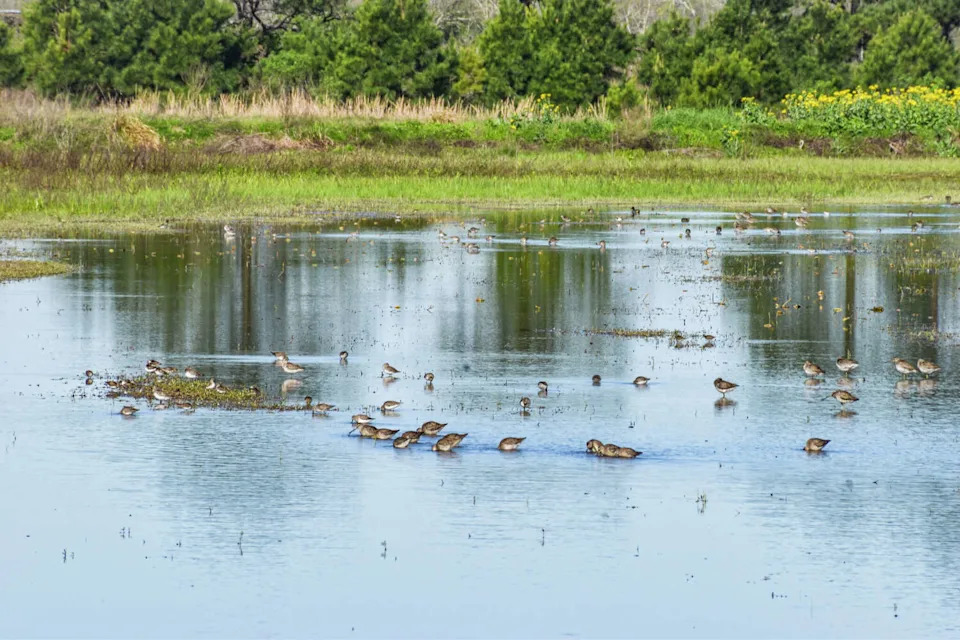
Wetlands on the Katy Prairie west of Houston help absorb and slow floodwaters during major storm events. (Ariana Garcia)
“Anything that plugs holes in our Katy Prairie preserve system is going to be beneficial to species that live here year-round as well as those that migrate in and out,” Newman said.
Three Oaks Farm has long been managed with wildlife in mind by its landowner. Though historically used for rice farming, parts of the property are still actively managed to support birds and other species, with habitat prioritized over production.
“He’s basically farming for birds,” Newman said, describing fields planted and left standing to provide food for wildlife. “He very much still maintains the land. He likes to keep habitat out there for all the things that use it, besides migratory waterfowl.”
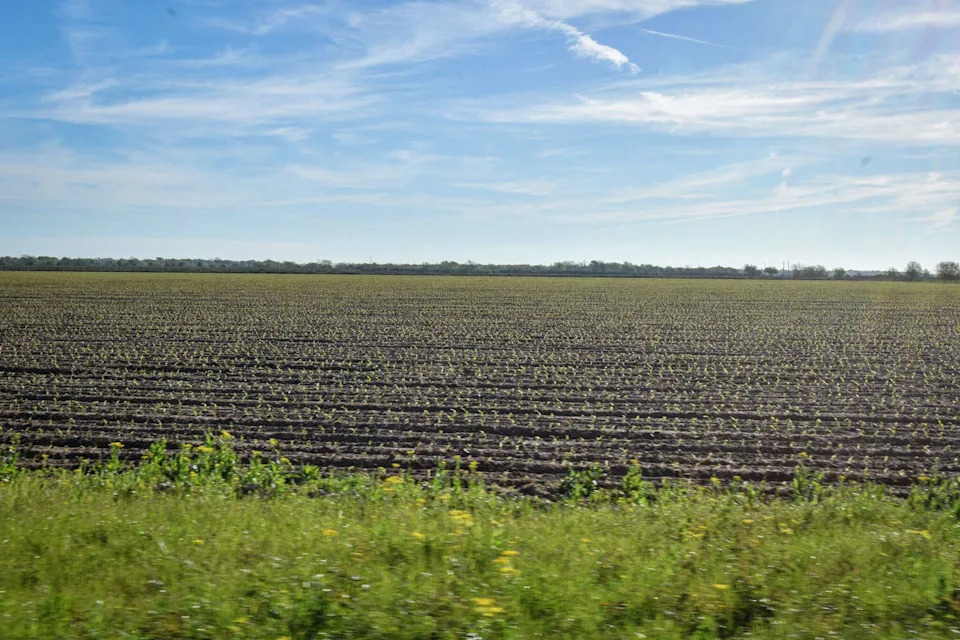
A cornfield planted for wildlife provides food for birds and other species on protected land west of Houston. (Ariana Garcia)
Under the conservation easement, that approach can continue with protections in place. Wetlands must remain intact, while farmland and grassland can be improved but not converted into more intensive uses that would degrade habitat.
“And things that he does that will enhance habitat for various species are usually allowed,” Newman said. “You just don’t want to destroy something, like take a restored prairie and then turn it back into a cornfield.”
The agreement comes as development pressure continues to push westward out of Houston, driving up land prices and increasing the urgency to protect what remains of the coastal prairie.
“It’s development-houses, rooftops, industrial,” Newman said. “We’re being surrounded, and anything we can protect before it turns into rooftops is just going to be a plus.”
Securing an easement now ensures the land will remain intact long after ownership changes, even as surrounding areas continue to grow.
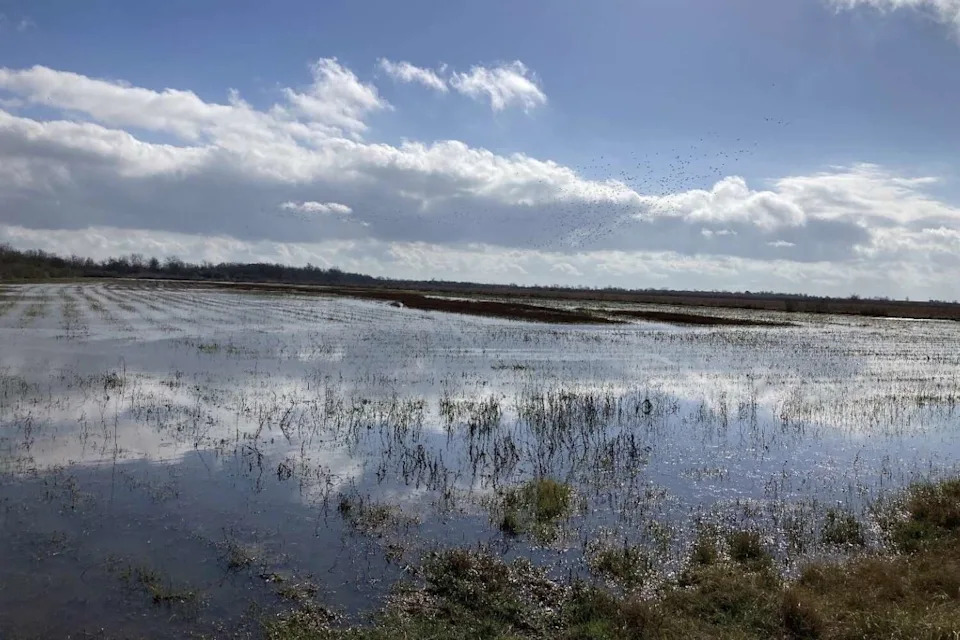
Wetlands on the Katy Prairie provide habitat for wildlife and help manage stormwater in a growing region. (Wesley Newman)
“You never know-if you don’t enter the easement, then this generation dies, or 10 or 20 years from now, who knows who’s going to be the owner, and they might develop it,” Newman said. “By making sure to do the easement now, they’re assured it.”
For conservationists, the significance of the acquisition goes beyond acreage. It’s about preserving a landscape that still functions as prairie-where water lingers, wildlife moves freely and the rhythms of agriculture and ecology continue side by side.
“That’s the good news-it keeps it from changing,” Donovan said. “It keeps it as is, so that we’re not losing anything.”
More Parks & Wildlife
Dangerous | Texas scientists issue warning as rare ‘blue dragons’ hit beaches
Shocking | Driver survives after vehicle plunges off cliff at Texas park
Research | Texas’ 2021 freeze devastated migrating birds, new study finds
Moving | 20,000 cranes reportedly arrive in Colorado as part of migration
For the latest and best from Chron, sign up for our daily newsletter here.
This article originally published at Texas prairie near Houston gains new protection as development grows.