
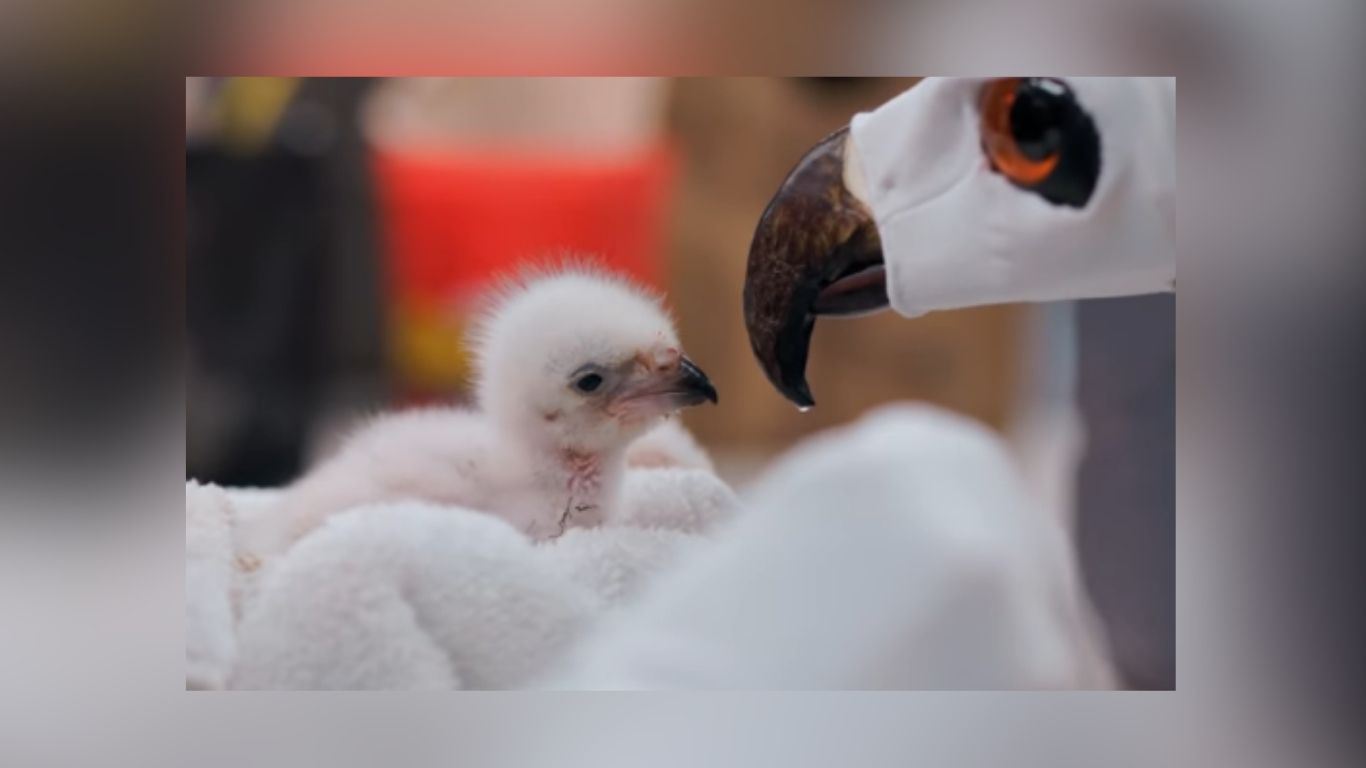
The Fort Worth Zoo has celebrated the first successful hatching of an African fish eagle chick in its 117-year history, a notable conservation step for a species that has proven exceptionally difficult to breed in professional care.
The chick, which emerged at 76.5 grams — roughly the size and weight of a tennis ball — has grown rapidly over the past six weeks and is now approaching its adult height of 25 to 30 inches and weight of 5 to 8 pounds. Full white-and-brown adult plumage is expected in a few more weeks.
Zoo officials called the birth a direct result of sustained expertise in raptor reproduction.
“This successful hatching is the direct result of years of dedicated work by the zoo’s animal care and veterinary teams,” a zoo news release stated.
“From carefully managed pairings and nest building to egg laying, incubation, and hatching, each step requires precision, patience, and expertise.”
Because the parents were first-time breeders, keepers opted to hand-rear the chick, providing round-the-clock feeding and monitoring during its critical early stages.
To prevent the young bird from imprinting on humans, staff wore reflective shields and protective clothing and used an adult eagle puppet during feedings so the chick would associate food with its own species.
The chick currently lives in a protected area inside its parents’ habitat while zookeepers continue to care for it until it is ready to fledge. In the wild, African fish eagle chicks typically begin flying at 70 to 75 days old and remain near their parents’ territory for two to three months before establishing their own.
The Fort Worth Zoo is one of only five institutions in North America that house African fish eagles, making this hatch an important contribution toward building a sustainable population of the species in human care. It is the only Association of Zoos & Aquariums-accredited facility to report a successful hatching of the African fish eagle in recent years.
The birds are native to waterways across much of Africa, where they hunt fish and nest in tall trees. Although listed as “least concern” on the International Union for Conservation of Nature’s Red List, the species remains rare in professional settings.