

On a mural in South Dallas, there’s a quote from Malcolm X: “To have once been a criminal is no disgrace. To remain a criminal is the disgrace.”
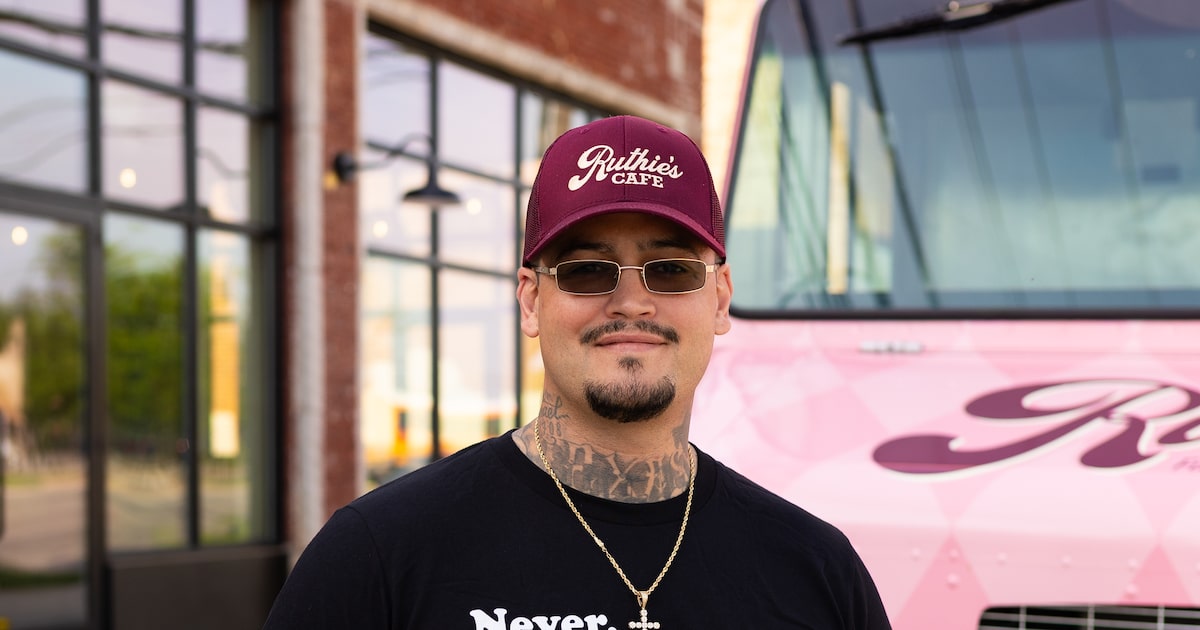
Less than a mile up the road, an entrepreneurial 40-year old man named Roy Morales is living that truth as manager of Ruthie’s Cafe, turning his back on roughly 18 years of prison-gang membership.
Owner Ashlee Kleinert has hired Morales and a team of other ex-prisoners to staff the restaurant named after her grandmother with help from the Unlocking Doors nonprofit organization.
Ruthie’s serves the grilled cheeses that made a reputation for Kleinert’s food-truck, Ruthie’s Rolling Cafe, along with a range of other tasty American classics. The brick-and-mortar store is an airy modern building, and the owners hope it will draw people from all over Dallas.
As viewers of “The Bear” will tell you, there are plenty of fires – literal and otherwise – to put out as manager of a restaurant, and plenty of conflicts to de-escalate. Morales, said owner Kleinert, handles it all with grace, strength and street smarts.
Opinion
Leading a car
In prison, Morales was the head of his “car.” A prison car is a chapter of a gang. Its members trust their leader with their lives. Morales said the leadership skills he learned in prison have helped him to be an effective manager of Ruthie’s.
In state and federal prison, Morales said, tempers flare easily, and scuffles in the recreation yard can easily escalate into violence.
“This guy felt disrespected so he decides to swing, and then it’s a domino effect, one guy fell down so this guy jumps and that guy jumps…then the tear gas flies and they start putting people in ties,” said Morales, who has the tattoos of a prison tough guy but the demeanor of a helpful concierge. The prison authorities often respond to these fights by placing inmates on lockdown, he said. During those lockdowns, “speakers” like Morales, who could represent the views of their car, often conducted tense negotiations.
“If the situation isn’t over with, as soon as the door opens, people are going to be running at one another again,” Morales said. So it was critical to broker a resolution before lockdown ended.
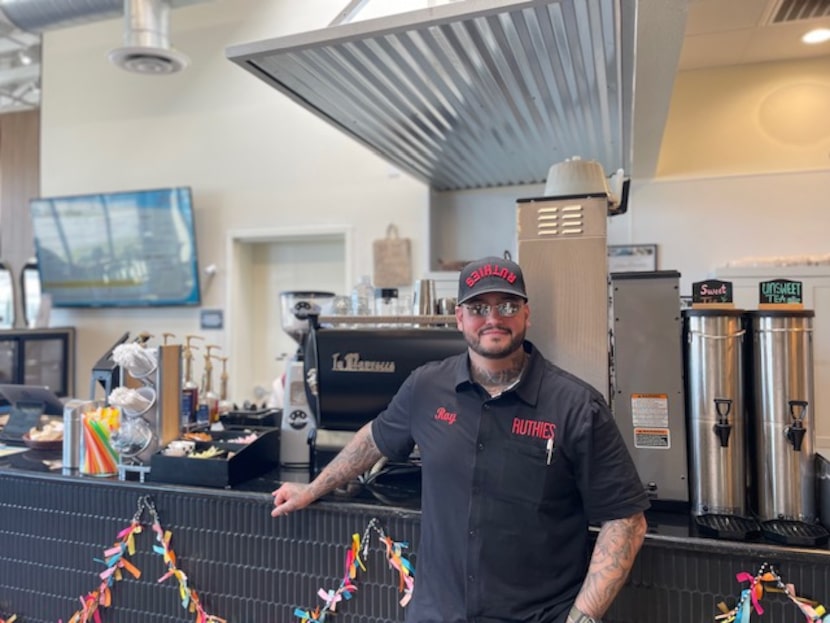
Roy Morales is manager at Ruthie’s Café in South Dallas.
Rob Curran
Prison’s revolving door
The trouble that landed Morales in prison started while he was still in high school in San Angelo. He had good influences. His dad was a military veteran, and his mom worked for Verizon. A brother went on to work in law enforcement.
“I was the black sheep,” he said.
He started taking methamphetamines, and soon got hooked, dealing and robbing to keep up with his habit. At 18, he was sent to a state penitentiary. He was terrified of the tattooed, muscle-bound gangsters who surrounded him, he told me. Soon, he had grown into one of them.
“I fully invest in everything I do, and so I fully invested in prison,” Morales said. He invested so heavily in prison-gang life, he was transferred to a supermax prison. After three years inside, Morales came back to San Angelo in 2007, with a chip on his shoulder, eager to prove how bad a man can become behind bars.
That approach landed him back in state prison within eight months. The next time he got out, in 2011, he was still doing meth and “running the streets,” he said.
Morales told me he wanted to go back to prison, where he knew how to climb the pecking order, where he didn’t have to juggle all the responsibilities required “outside” – finding a job, paying bills, managing relationships.
Soon after release, police found meth in his car. He fled, jumped fences, but was caught in a nearby convenience store. He soon faced other charges besides the meth. He and a companion violently robbed another tough guy while he was awaiting trial.
In 2011, Morales was sentenced to 14 years in federal prison. This time, the cycle started to break. He kicked his drug habit by “working the program” at groups like Alcoholics Anonymous and Narcotics Anonymous. He learned prison crafts like making his own tattoo gun out of an electric shaver and a metal spring. He rose through the ranks of the Tango gang to become a car leader and a speaker.
Morales was released from prison in 2023. Again, he was on his heels. He compared his disorientation at the prospect of life “outside” to how a civilian might feel if they were suddenly landed in the middle of a supermax penitentiary. So he was pleased to enter a halfway house, even if complying with the strict requirements sometimes felt like “jumping through hoops of fire.” As in prison, the halfway house came with a “program,” and he was determined to work it.
He joined Unlocking Doors, an organization founded by Christina Melton Crain, the former chair of the Texas Board of Criminal Justice, and the only woman to ever fill that role.
As head of the board that oversees the nation’s largest state prison system by population, Melton Crain had seen first-hand how the iron cell doors around the state have a way of revolving, just as they had in Morales’ case.
“I had a bird’s eye view of what we were doing right, and what we were doing wrong,” Melton Crain told me.
She founded Unlocking Doors as a “reentry brokerage” to help people avoid common pitfalls upon release by keeping them connected to support networks and to employers.
Unlike other organizations that work with ex-prisoners, Unlocking Doors does not “graduate” people, she noted. More than two years after leaving his halfway house, Morales is still calling his mentor at Unlocking Doors.
Behind the curtain
For Morales, a sentence for federal crimes turned out to be a blessing in disguise. On the day of his release from state prison, he was given $50 and the number to his parole officer. That’s it. On the other hand, the structured federal system of release, where his comings-and-goings were tracked by the halfway house and he had to hold down a job, worked better.
First, Morales worked in a warehouse. He liked the job, and learned how to use the machinery. He noticed how the boss simultaneously relied on his aptitude and refused to give him full responsibility. He was always asked to fill in for machine operators on their days off, but it was made clear to him that he would never be promoted. He was “kept behind the curtain,” he felt, because he was a convicted felon.
He called his mentor at Unlocking Doors and asked how he could find employment where he wouldn’t be stuck at the bottom. His mentor recommended he get his commercial driver’s license. It was not easy. He failed his CDL licensing exam several times. But Morales, remember, is the kind of guy who fully invests, and he was invested in truck driving. He saw it through and got his license.
‘I’m not that crazy’
Around the same time, Ashlee Kleinert was looking for an enterprising employee who could help a business thrive in a tough neighborhood. When the premises became available on Martin Luther King Jr. Boulevard, Terry Flowers, the head of nearby St. Philips School and Community Center, called Kleinert to see if she would be his neighbor. Would Kleinert, a long-time supporter of the center, open a bricks-and-mortar location?
“And I said, ‘Absolutely not…I’m crazy, but I’m not that crazy,’” Kleinert said.
One concept that made her come around to the idea was the prospect of making the restaurant a “second-chance” employer. Staffing the whole restaurant with this group seemed a fitting way to give back to a community that has, at times, been hollowed out by high incarceration rates.
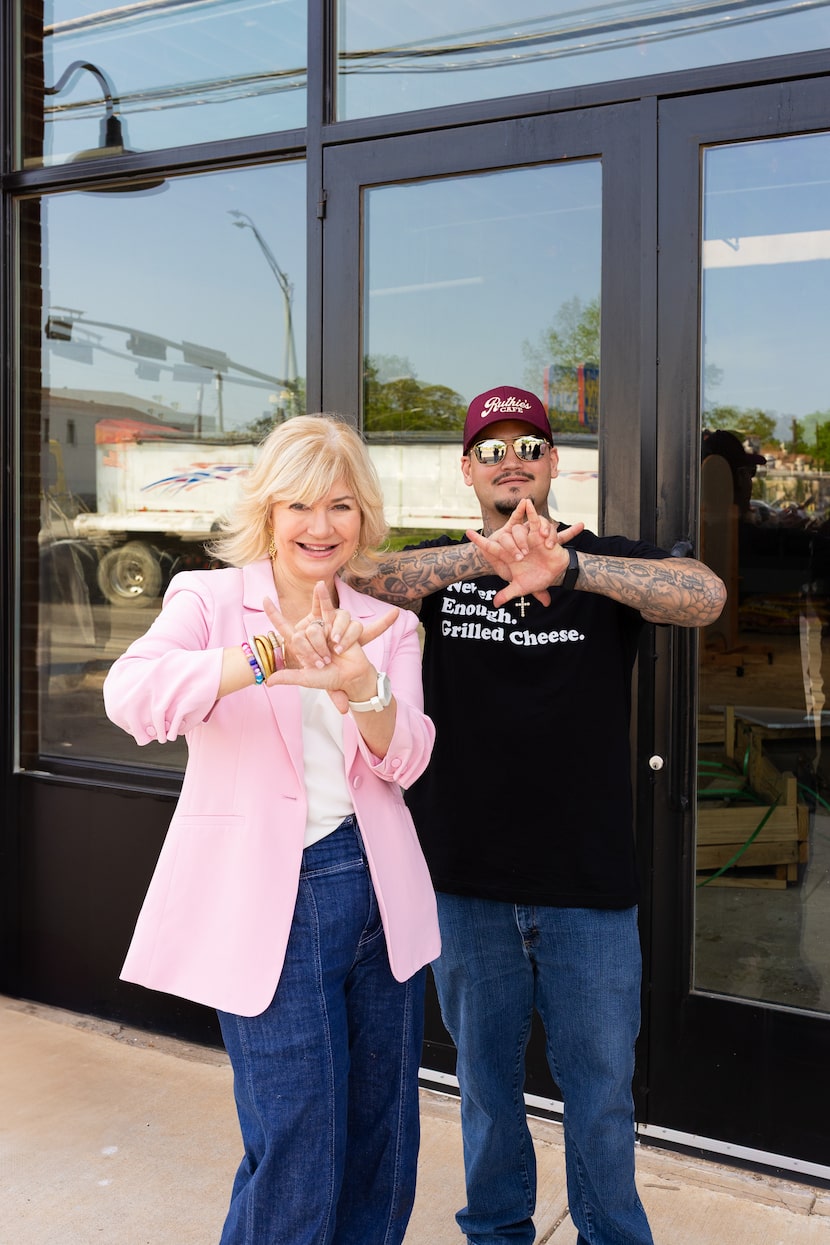
Ashlee Kleinert hired Roy Morales to manage Ruthie’s Café in South Dallas in part because of the leadership skills he learned in prison.
Nat Bell Photography
Kleinert had already had good experiences hiring ex-prisoners for her food truck. But making that a business model seemed risky. How could she be sure of a person’s character without the traditional references?
Kleinert’s mother happened to be at an event where Melton Crain was speaking. The two connected and, over a long lunch meeting, realized they could help one another. The Unlocking Doors staff provided vetting for ex-prisoners seeking employment and helped them stay on the right path. Ruthie’s provided steady employment.
It was through Unlocking Doors that Morales first came to work for Ruthie’s, starting part-time at the food truck while he was studying for his CDL. Kleinert noticed how dedicated he was to the job at hand – no matter how menial – and how he exhibited leadership skills working with others.
Kleinert suggested to Morales that the skills he had learned managing difficult gang members in life-or-death situations could make him the ideal manager of her restaurant. Morales could make more money driving trucks, but he took the Ruthie’s job because he liked the idea of coming out from behind the curtain. He wanted to make the other ex-prisoners working with him feel like they were seen, too.
What someone needs
Leading his car, Morales learned how to de-escalate and make sure everyone feels heard – invaluable skills in the restaurant business, Kleinert said. Now, working with other ex-prisoners, Morales understands their sensitivity when it comes to authority figures. He hopes, “not tell them what to do but explain to them the different options they have, and how they can work it … a lot of the time that’s what someone needs,” Morales said.
Ruthie’s would like to draw the white-collar lunch crowd to the location.
“We are 10 minutes from downtown, instead of going 10 minutes north, or 10 minutes east or west for lunch,” come 10 minutes south, Kleinert said.
The brisket-and-cheese sandwich I sampled, The Boss, tasted great – a little like a crispy grilled cheese with a twist.
And a lot like redemption.
We welcome your thoughts in a letter to the editor. See the guidelines and submit your letter here.
If you have problems with the form, you can submit via email at letters@dallasnews.com