
Deirdre Murphy was working two jobs and earning a degree in public administration when she was diagnosed with Type 1 diabetes. The diagnosis came as a complete shock for the 34-year-old San Antonio resident.
“To be told, ‘You’re gonna be on insulin the rest of your life,’” she said. “It threw me for a huge loop.”
Murphy, now 54, is a staunch diabetes advocate. She has traveled to Washington D.C. almost every year since 2013, meeting directly with members of Congress as part of the American Diabetes Association’s annual Call to Congress.
Last week, Murphy was one of 130 advocates from across the country at this year’s Call to Congress, and the only advocate from San Antonio, where diabetes remains one of the most significant public health issues facing the city.
Living with diabetes
Murphy was misdiagnosed with Type 2 diabetes in 2001, a common problem for adults with Type 1 diabetes, which accounts for up to about 10% of diabetes cases.
Both types share many of the same key symptoms and stem from body’s inability to properly regulate blood glucose levels due to problems with insulin, a hormone produced by the pancreas.
Type 2 diabetes, which accounts for over 90% of cases, occurs when the body becomes resistant to insulin or doesn’t produce enough of it. Type 1 diabetes, a rarer autoimmune disease, happens when the immune system destroys insulin-producing cells. Though previously thought of as a childhood disease, a growing share of cases are diagnosed in adulthood, researchers have found.
Following her diagnosis in 2001, Murphy was told to manage her weight and prescribed medication to manage her blood sugar.
She initially felt better, but as years went by, Murphy started to notice that she was losing weight quickly, feeling constantly thirsty and experiencing unrelenting fatigue. After lunch with friends one Sunday afternoon in 2006, Murphy could hardly walk without needing to catch her breath.
She was admitted to the hospital with diabetic ketoacidosis, a life-threatening condition that occurs when your body doesn’t have enough insulin, most commonly associated with Type 1 diabetes.
Murphy was treated and re-diagnosed with latent autoimmune diabetes in adults (LADA), a slower-progressing form of Type 1 diabetes. That’s when doctors told her that her body was producing little to no insulin on its own.
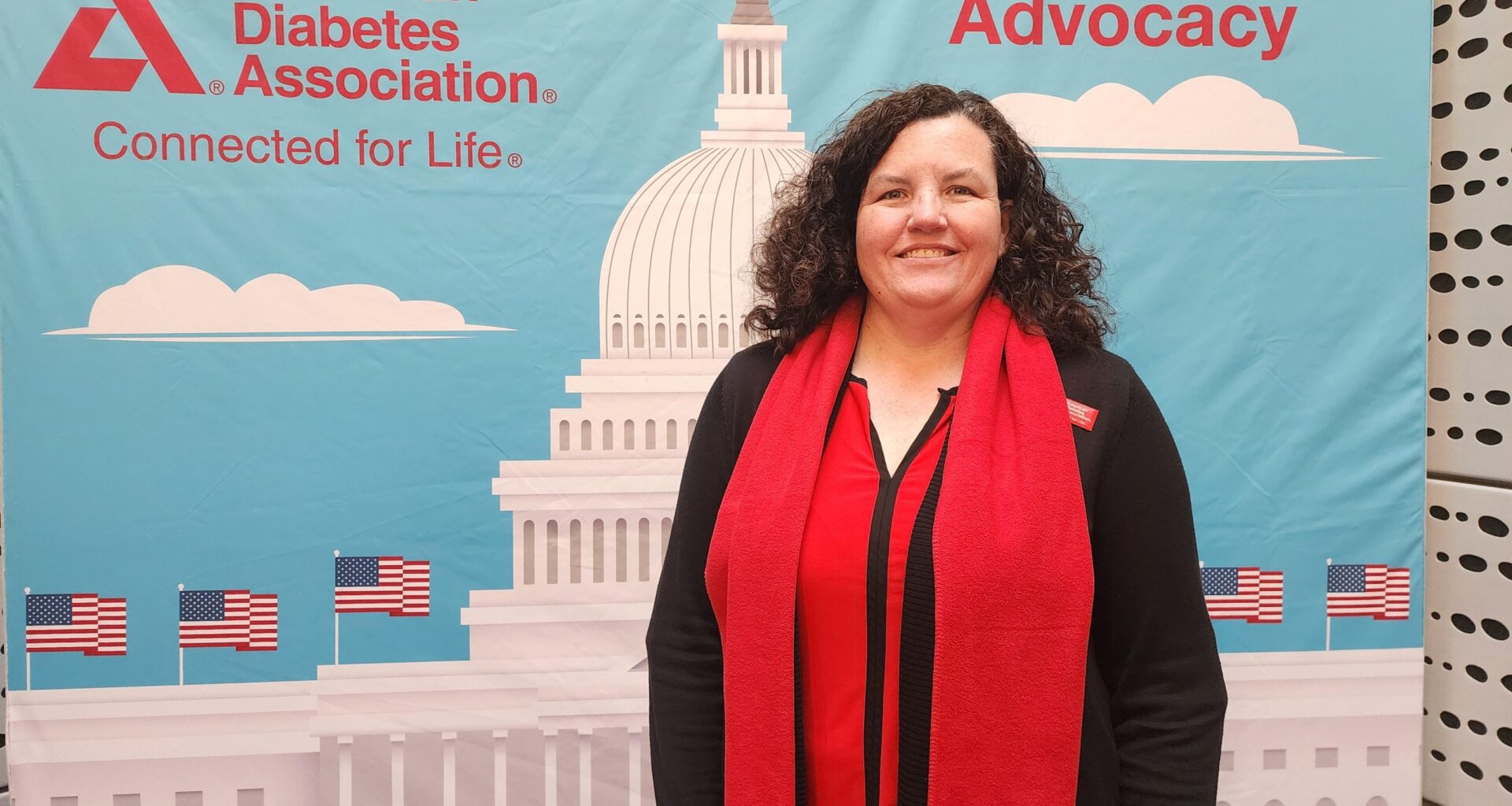
 San Antonio diabetes advocate Deirdre Murphy in Washington, D.C. during the American Diabetes Association’s most recent Call to Congress. Credit: Courtesy / American Diabetes Association
The obstacles that came with the diagnosis — meal planning, portion control, administering the right amount of insulin — were immensely challenging, Murphy said. She also had to accept that the constant management and mental load that accompanied the disease would never end.
“I’ve gone through my own periods in the last 20 years of burnout and being frustrated with a disease that doesn’t stop,” she said. “There is nothing I can do to give myself a break from it. The break doesn’t exist.”
Murphy previously spent 22 years working for the City of San Antonio in a variety of roles, including with its Metropolitan Health District. In October, the health department’s director, Claude Jacob, announced that its Diabetes Prevention and Control Program would lose 72% of its funding amid the expiration offederal Medicaid funding.
The longstanding program offered workshops and education to residents on healthy eating and other lifestyle changes to prevent and manage diabetes. Murphy said she was dismayed by the news.
“Budget choices are hard and as a former employee of the city, I don’t wish the current budget crisis on anyone in any department,” she said. “I have high hopes that someone might pick up the Diabetes Garage program, which is an innovative program focused specifically on men with pre-diabetes to teach them the skills to keep it at bay.”
A decade of advocacy
“This is my pancreas — without it, I would die,” Murphy said, retrieving her insulin pump out of her pocket. “Having the technology that we have today saved my life.”
Murphy’s advocacy efforts have in recent years been focused on securing funding for research toward improvements in such technology. She’s worn her pump, which provides a continuous supply of insulin, helping to maintain consistent blood glucose levels, since 2007.
In 2012, she also started wearing a continuous glucose monitor, offering detailed blood glucose level data without the burden of daily finger pricking with fingerstick tests.
These devices have improved significantly over the last several decades, and researchers are working toward developing a fully automated “closed-loop” system of insulin delivery and glucose monitoring.
“We are so close to a totally complete closed loop system where,” Murphy said. “It’s [still] going to be an artificial pancreas that I’m wearing on the outside of my body, but without me having to do the work. They’re close to finding cures and finding ways to help people not have to live with it 24/7.”
Advocates also asked federal lawmakers to address the rising cost of insulin and routine care for diabetes patients. It’s a challenge that Murphy says she has luckily not personally struggled with like others she knows.
Last week, advocates asked members of Congress to increase funding across federal diabetes programs — including research, access to care and prevention efforts — to roughly $3 billion, about a 5% increase from current levels, according to the ADA.
The total annual cost of diabetes in the U.S. exceeds $400 billion, according to data from the association.
“We had a lot of meetings in Republican lawmakers’ offices. $412 billion — with a B — that’s how much money is spent on the care of people living with diabetes,” Murphy said, echoing conversations with members of Congress. “[$3 billion is] a drop in the bucket compared to what you’re spending on it.”
Murphy has met with a variety of federal lawmakers on both sides of the aisle over the years, including all of the current San Antonio congressional delegation.
“We had no bad meetings [this year],” she said. “At this point, it’s a growing enough problem that it’s very hard to meet a person that doesn’t know somebody who has some kind of connection to diabetes.”